
lovethailand home >North Travel Attractions >Chiang Mai Travel Attractions >San Kamphaeng >Buak Khang > Wat Pa Tan
TL;DR: Wat Pa Tan is located at Ban Pa Tan, Village No. 4, Buak Khang Subdistrict, San Kamphaeng District, Chiang Mai Province.

Wat Pa Tan
Operating day: Daily
Operating time: 08.00 - 17.00
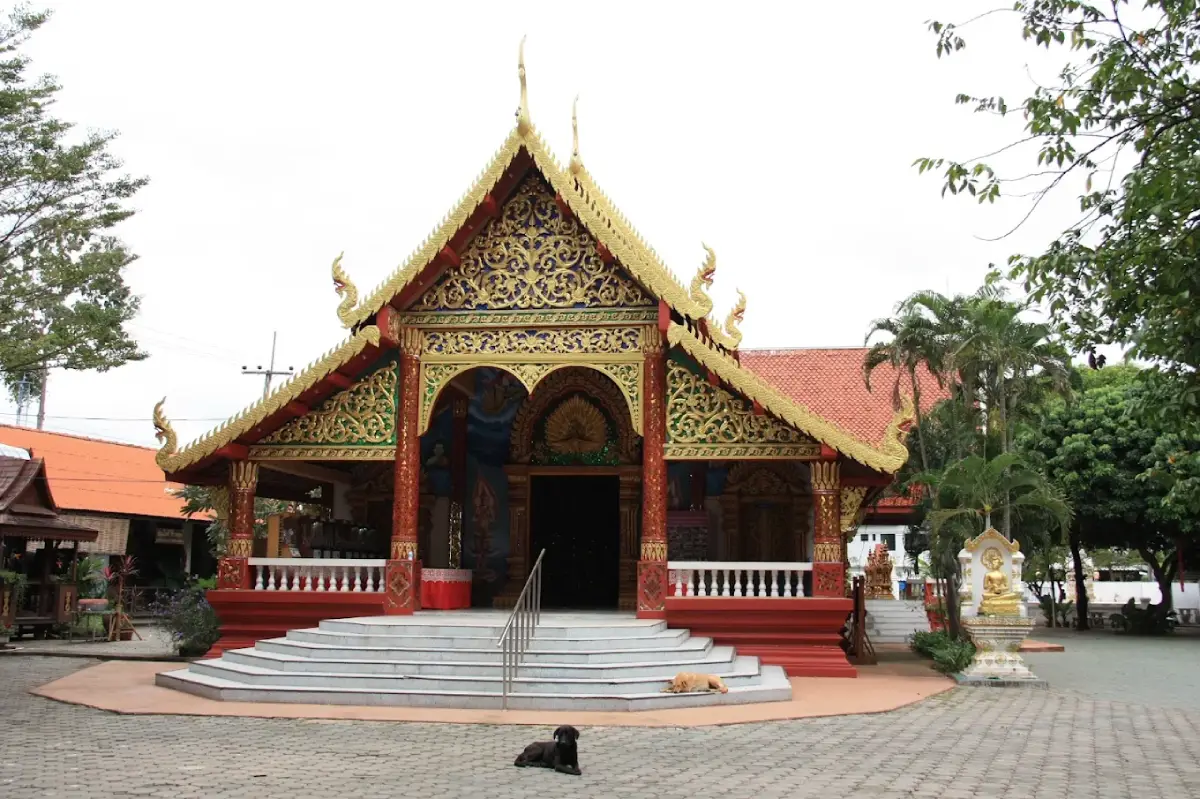
Wat Pa Tan, also known as Wat Pa Tan (Nang Liao), is a local Buddhist temple under the Mahanikaya sect, located at 49 Ban Pa Tan, Village No. 4, Buak Khang Subdistrict, San Kamphaeng District, Chiang Mai Province 50130. The temple was built in 1782 and received Wisungkhamasima on 8 September 1944. Its current abbot is Phra Achan Samuh Mongkol Thitamangkhalo. Wat Pa Tan is one of the old temples of the Yong community in Buak Khang, serving as a religious center, a cultural learning site, a place preserving old Buddha images, and a spiritual center for Ban Pa Tan, Ban Ton Du, and Ban Mae Tae.
Ban Pa Tan, Village No. 4, is located in Buak Khang Subdistrict, San Kamphaeng District, Chiang Mai Province. Buak Khang is an important Yong cultural area where temples, village life, local language, food traditions, merit-making, and religious customs remain closely connected. Wat Pa Tan is therefore more than a place of worship. It is a place where community history, Yong identity, and Buddhist devotion come together.
The history of Wat Pa Tan begins with an old abandoned temple site. The area was once covered with bamboo forest and grass, and traces of an old sacred structure or ruined chedi were found. Local tradition says that an elderly couple once lived to the north of the temple area and planted pumpkins that grew over the old ruin. When villagers recognized the remains, they believed that the place had once been a temple and should be restored as a Buddhist temple for the community.
The old ruin is connected with the current location of the main Buddha image inside the viharn. This makes Wat Pa Tan especially interesting from the perspective of local history. The temple was not simply built on empty land, but revived from an older sacred site and brought back to life through the faith of the community.
Wat Pa Tan was restored and developed during the period when Yong people settled in Buak Khang. The Yong people were connected with Mueang Yong and the wider Kengtung cultural area, and their settlement in Buak Khang formed a community with a distinct language, lifestyle, and Buddhist ritual tradition. Wat Pa Tan became one of the places where this community could gather, make merit, preserve memory, and maintain identity.
Receiving Wisungkhamasima on 8 September 1944 was an important religious milestone. In Thai Buddhist tradition, Wisungkhamasima is the consecrated boundary used for formal monastic acts. This status confirms the temple’s recognized role within the monastic system and its importance as a complete religious institution for the community.
The temple land covers 2 rai, 3 ngan, and 37 square wah, with one plot of monastic land measuring 1 rai and 84 square wah. The temple has three main supporting villages: Ban Pa Tan, Ban Ton Du, and Ban Mae Tae, with about 300 households. This shows that Wat Pa Tan is not only a temple for one village, but a shared spiritual center for several nearby communities.
One of the most important sacred objects at Wat Pa Tan is the old Singha-style Buddha image known as “Luang Pho Metta” or “Phra Sing Yong.” This Buddha image has long been respected by local villagers and is considered a sacred image of the temple. Visitors should pay respect to Luang Pho Metta with calm attention because it is closely connected with the spiritual identity of the Yong community.
The main Buddha image in the viharn is a graceful stucco image with refined Buddhist artistic features. Its location is linked with the old ruin found in the temple area. The viharn is therefore the heart of the temple, serving as the main worship space and as a place where the old sacred site and the present living temple meet.
Important areas and structures inside Wat Pa Tan include the viharn, monks’ quarters, sala kan parian, sala bat, entrance gate, temple wall, Phra That Chao Chom Yong, a viharn for old Buddha images, and the Yong folk museum. These features make Wat Pa Tan a temple with religious, educational, and cultural roles rather than only a worship site.
Phra That Chao Chom Yong is an important sacred feature that connects Buddhist devotion with Yong cultural identity. Its name reflects the community’s Yong roots and the relationship between local people and Buddhism. Visitors should include this sacred point when walking through the temple grounds.
The Yong folk museum is one of the temple’s major highlights. It displays objects, tools, and materials connected with the everyday life and culture of the Yong people. The museum was initiated through the effort of Phra Achan Samuh Mongkol Thitamangkhalo and the local community to preserve cultural objects and memories before they disappear from everyday life.
Wat Pa Tan’s learning role extends beyond objects on display. The temple supports cultural activities such as preserving the Yong language, teaching younger generations about customs, maintaining community wisdom, and encouraging villagers to recognize the value of their heritage. In this way, the temple functions as both a religious center and a cultural center for Ban Pa Tan.
Ban Pa Tan has a strong Yong cultural identity. Local heritage includes language, food, handicrafts, textile traditions, lantern making, basketry, handmade paper, and community rituals. Today, the temple and community continue to support learning activities so that younger generations can understand and value the identity of their village.
A major period of prosperity at Wat Pa Tan occurred during the abbacy of Chao Athikan Kham Ai Punnathinno, who served for more than 60 years from 1907 to 1970. During his period, the temple developed important buildings and became a strong center of monastic life, with many monks ordained and residing there. Nearby temples that lacked resident monks sometimes requested monks from Wat Pa Tan, showing the temple’s strength in earlier times.
The temple’s influence also appears in the history of monks connected with other temples. Phra Athikan Duang Dee Sumano was invited from Wat Pa Tan to become abbot of Wat Phaya Chomphu in Saraphi, while Phra Khru Rattanathirachan, also known as Khru Ba In Kaew Kaviro, was ordained at Wat Pa Tan before later moving to Chiang Saen and becoming abbot of Wat Si Don Mun. These stories reflect the temple’s past importance in the wider monastic network.
The recorded abbots of Wat Pa Tan include Khru Ba Kham, Khru Ba Chom, Khru Ba Pan, Chao Athikan Kham Ai Punnathinno, Phra Athikan Boon Tha Inthanetto, Phra Athikan Chanta Inthanetto, Phra Athikan Prasert Thappachatiko, Phra Athikan Phai San Phimmasiriwanno, and Phra Athikan Mongkol Thitamangkhalo. This continuity of abbots shows the temple’s long-standing monastic presence and community support.
Key things to see and respect at Wat Pa Tan include Luang Pho Metta or Phra Sing Yong, the main Buddha image in the viharn, Phra That Chao Chom Yong, the viharn, the Yong folk museum, sala kan parian, sala bat, entrance gate, temple wall, and the surrounding atmosphere of Ban Pa Tan. The temple combines Buddhist faith, local history, and Yong cultural identity in one place.
Wat Pa Tan is suitable for visitors interested in old Yong community temples, ancient Buddha images, Lanna Buddhist art, folk museums, and cultural routes in Buak Khang. Visitors can make merit, pay respect to the Buddha images, explore the museum, learn about Yong heritage, and continue to nearby temples in the same cultural route.
Religious activities at Wat Pa Tan follow the Buddhist calendar and local Lanna practice. These include Kathin, forest robe offerings, Buddhist holy days, Buddhist Lent, the end of Buddhist Lent, Makha Bucha, Visakha Bucha, Asalha Bucha, and annual community merit-making. During these events, villagers gather to prepare the temple, offer food, listen to Dhamma, and support community religious life.
Wat Pa Tan is also part of community-based tourism in Ban Pa Tan. The village offers local food, products, and cultural learning experiences such as Yong food, handwoven textiles, herbal products, cotton cloth, and containers made from palm leaves. A visit to Wat Pa Tan can therefore be connected with a broader experience of the village and its living cultural traditions.
Wat Pa Tan can be linked with several nearby cultural sites in Buak Khang, including Wat Buak Khang, Wat Ko Saliam, Wat Chang Phian, Wat Ban Pong, Wat Long Ko Kham, and the Tai Yong cultural learning routes of Buak Khang. A wider San Kamphaeng trip can continue to Bo Sang Umbrella Village, Ban Ton Pao, or contemporary art attractions in nearby Ton Pao.
Getting There from Chiang Mai city is convenient by private car, rental car, or local hired transport. Take the Chiang Mai–Mae On new road, also known locally as the Super Don Chan route. At the Ban Ton Du intersection, turn right into Ban Ton Du and continue to Ban Pa Tan and Wat Pa Tan. The temple is located at 49 Ban Pa Tan, Village No. 4, Buak Khang Subdistrict, San Kamphaeng District.
A half-day itinerary can begin at Wat Pa Tan to pay respect to Luang Pho Metta, see the main Buddha image, visit Phra That Chao Chom Yong, and explore the Yong folk museum. Visitors can then continue to Wat Buak Khang to see Phra Non La, Ku Dam, and the twin-roofed viharn, before stopping for local food in Buak Khang. With more time, Wat Ko Saliam, Wat Chang Phian, or Bo Sang Umbrella Village can be added to the route.
Visitors should dress modestly, keep noise low, avoid disturbing monks or local devotees, and behave respectfully inside the temple grounds. When visiting the folk museum, avoid touching displayed objects without permission. If a ceremony, merit-making event, or community activity is taking place, visitors should give space to participants and follow temple etiquette.
Wat Pa Tan deserves a place in San Kamphaeng’s cultural travel routes because it combines a temple history dating to 1782, an old abandoned temple site restored by the Yong community, Luang Pho Metta or Phra Sing Yong, a graceful stucco main Buddha image, Phra That Chao Chom Yong, and a folk museum preserving Yong ways of life. For travelers who want to understand Buak Khang through faith, community, and living culture, Wat Pa Tan offers a meaningful and calm village-temple experience.
| Name | Wat Pa Tan / Wat Pa Tan (Nang Liao) |
| Location | Ban Pa Tan, Village No. 4, Buak Khang Subdistrict, San Kamphaeng District, Chiang Mai Province |
| Address | 49 Ban Pa Tan, Village No. 4, Buak Khang Subdistrict, San Kamphaeng District, Chiang Mai 50130, Thailand |
| Type | Local Buddhist temple under the Mahanikaya sect and Yong cultural learning site |
| Highlights | Luang Pho Metta / Phra Sing Yong, stucco main Buddha image in the viharn, Phra That Chao Chom Yong, Yong folk museum, and the story of an old abandoned temple revived by the Yong community |
| History | Built in 1782 on an old abandoned temple site and received Wisungkhamasima on 8 September 1944 |
| Founding Context | Restored by the Yong community after traces of an old sacred structure or ruined chedi were found in the area |
| Main Supporting Villages | Ban Pa Tan, Ban Ton Du, and Ban Mae Tae, totaling about 300 households |
| Abbot / Caretaker | Phra Achan Samuh Mongkol Thitamangkhalo |
| Important Former Abbot | Chao Athikan Kham Ai Punnathinno, who served from 1907 to 1970 and played a major role in the temple’s development |
| What To See / Worship | Luang Pho Metta / Phra Sing Yong, main Buddha image in the viharn, Phra That Chao Chom Yong, viharn, Yong folk museum, sala kan parian, sala bat, entrance gate, and temple courtyard |
| Main Areas / Structures | Viharn, monks’ quarters, sala kan parian, sala bat, entrance gate, temple wall, Phra That Chao Chom Yong, old Buddha image viharn, and Yong folk museum |
| Important Sacred Objects | Old Singha-style Buddha image known as Luang Pho Metta / Phra Sing Yong, and the stucco main Buddha image in the viharn |
| Temple Land | 2 rai, 3 ngan, and 37 square wah, with one plot of monastic land measuring 1 rai and 84 square wah |
| Community Context | Ban Pa Tan is a Yong community in Buak Khang Subdistrict, known for language, traditions, local food, handicrafts, and the Yong folk museum |
| Religious Activities | Kathin, forest robe offerings, Buddhist holy days, Buddhist Lent, the end of Buddhist Lent, Makha Bucha, Visakha Bucha, Asalha Bucha, and Yong cultural learning activities |
| Community Importance | Spiritual center of Ban Pa Tan, Ban Ton Du, and Ban Mae Tae, used for Buddhist ceremonies, Dhamma listening, merit-making, and Yong cultural learning |
| Travel Information | From Chiang Mai city, take the Chiang Mai–Mae On new road or Super Don Chan route; at Ban Ton Du intersection, turn right through Ban Ton Du toward Ban Pa Tan and Wat Pa Tan |
| Current Status | Active community Buddhist temple and Yong cultural learning site used for religious ceremonies and community activities |
| Main Areas / Zones | 1. Viharn and main Buddha image 2. Luang Pho Metta / Phra Sing Yong worship area 3. Phra That Chao Chom Yong 4. Yong folk museum 5. Halls, monks’ quarters, courtyard, and community activity area |
| Nearby Tourist Attractions | 1. Wat Buak Khang, about 2 km 2. Wat Ko Saliam, about 4 km 3. Wat Chang Phian, about 4 km 4. Wat Ban Pong, about 5 km 5. Bo Sang Umbrella Village, about 9 km |
| Nearby Restaurants | 1. Huen Jai Yong, about 1 km, Tel. 086-671-8710, 086-730-2673 2. Bar Buak Khang @ San Kamphaeng, about 2 km 3. Aroi Ploen Phung, about 2 km, Tel. 085-151-5409 4. Huen Chao Khun, about 3 km, Tel. 090-317-3521 5. To Lao San Kamphaeng, about 5 km, Tel. 062-396-5653 |
| Nearby Accommodations | 1. Boon Homestay, about 2 km, Tel. 093-494-8000 2. Huanmaisakngam Resort, about 4 km, Tel. 065-495-5365 3. 749 Baan Suan Resort, about 6 km 4. LaMoon Cottage SanKampang, about 9 km, Tel. 094-723-5395 5. The Vet Boutique Hotel, about 11 km, Tel. 052-011-179 |
Frequently Asked Questions (FAQ)
Q: Where is Wat Pa Tan located?
A: Wat Pa Tan is located at 49 Ban Pa Tan, Village No. 4, Buak Khang Subdistrict, San Kamphaeng District, Chiang Mai Province 50130.
Q: What type of temple is Wat Pa Tan?
A: Wat Pa Tan is a local Buddhist temple under the Mahanikaya sect and an important Yong community temple in Buak Khang Subdistrict.
Q: When was Wat Pa Tan built?
A: Wat Pa Tan was built in 1782 and received Wisungkhamasima on 8 September 1944.
Q: What are the main highlights of Wat Pa Tan?
A: Highlights include Luang Pho Metta or Phra Sing Yong, the stucco main Buddha image in the viharn, Phra That Chao Chom Yong, the viharn, and the Yong folk museum.
Q: Why is Phra Sing Yong important?
A: Phra Sing Yong, also known as Luang Pho Metta, is an old Singha-style Buddha image long respected as a sacred image of Wat Pa Tan and the Yong community.
Q: Does Wat Pa Tan have a museum?
A: Yes. Wat Pa Tan has a Yong folk museum that displays everyday objects, tools, and cultural materials related to Yong life and identity.
Q: Who is the abbot of Wat Pa Tan?
A: The abbot of Wat Pa Tan is Phra Achan Samuh Mongkol Thitamangkhalo.
Q: What nearby places can be visited with Wat Pa Tan?
A: Nearby places include Wat Buak Khang, Wat Ko Saliam, Wat Chang Phian, Wat Ban Pong, and Bo Sang Umbrella Village.
 Category: ●Places of Worship
 Group: ●Temple
Last Update : 2 MonthAgo
 Last Update : 2 MonthAgo
 Click to Access the Navigation Map GPS
Wat Pa Tan Map
Recommend

 Muang Chiang Mai(121)Chom Thong(47)Mae Chaem(25)Chiang Dao(33)Doi Saket(68)Mae Taeng(85)Mae Rim(69)Samoeng(29)Fang(71)Mae Ai(59)Phrao(70)San Pa Tong(103)San Kamphaeng(66)San Sai(73)Hang Dong(73)Hot(32)Doi Tao(22)Omkoi(11)Saraphi(74)Wiang Haeng(15)Chai Prakan(28)Mae Wang(32)Mae On(22)Doi Lo(33)Galyani Vadhana(1)


