
lovethailand home >North Travel Attractions >Chiang Mai Travel Attractions >San Kamphaeng >Buak Khang > Wat Chang Phian
TL;DR: Wat Chang Phian is located at Ban Chang Phian, Village No. 10, Buak Khang Subdistrict, San Kamphaeng District, Chiang Mai Province.

Wat Chang Phian
Operating day: Daily
Operating time: 08.00 - 17.00
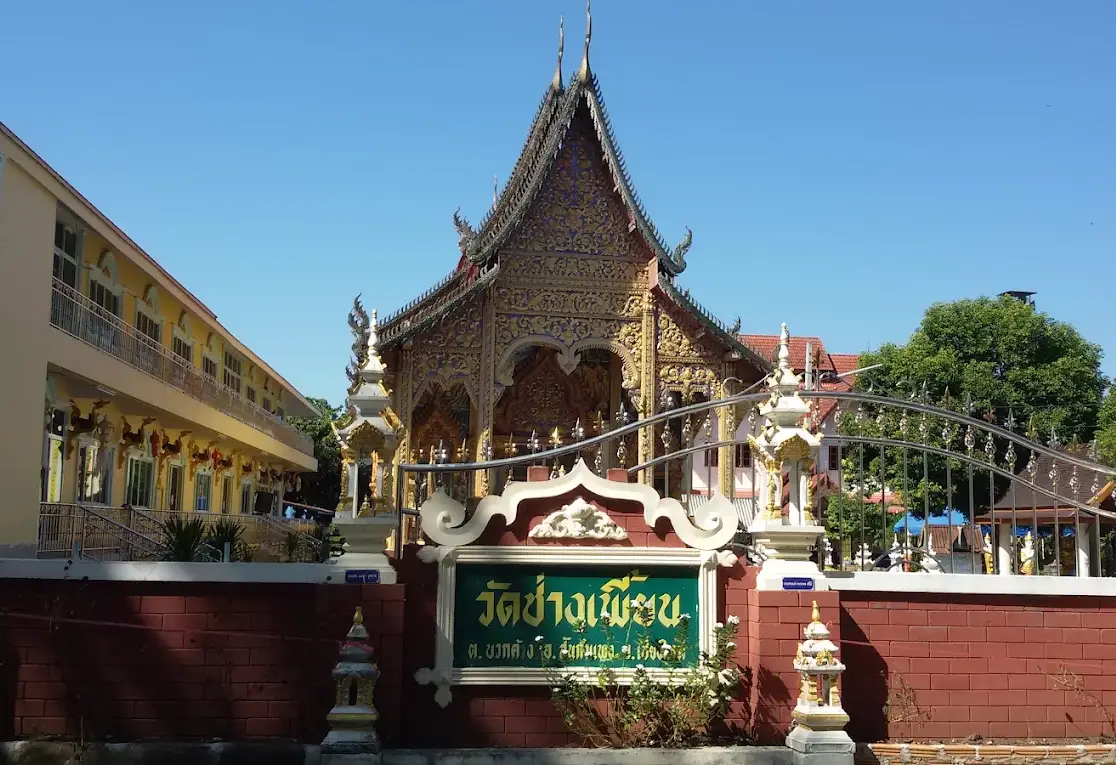
Wat Chang Phian is a local Buddhist temple under the Mahanikaya sect, located at 74 Ban Chang Phian, Village No. 10, Buak Khang Subdistrict, San Kamphaeng District, Chiang Mai Province 50130. The temple was officially established in 1657 and is now led by Phra Khru Piyasila Phrot Kantasilo. Wat Chang Phian remains an active community temple with resident monks and continuing religious activities. It serves as the spiritual center of Ban Chang Phian, supporting Buddhist ceremonies, merit-making, Kathin, forest robe offerings, and the religious life of the local community in Buak Khang.
Ban Chang Phian is one of the villages of Buak Khang Subdistrict, an area of San Kamphaeng with strong Lanna and Yong cultural roots. In this subdistrict, temples are closely connected with village life, agriculture, local language, customs, and annual merit-making. Wat Chang Phian therefore stands not only as a place of worship, but also as a community landmark preserving local history, oral memory, and Buddhist identity.
The history of Wat Chang Phian is strongly shaped by local oral tradition. Elders in the community say that a local ruler named Chao Saen Sa Ri, or Chao Saen Si, first settled in the area and built the temple. At first, the temple had no formal name. Because the surrounding land was covered with pa phiao, a type of thornless bamboo forest, he named it “Wat Pa Phiao.” This first name shows how temple names in old communities often came directly from the natural landscape around them.
The temple name later changed from Wat Pa Phiao to “Wat Chang Wen.” According to local legend, traders and villagers brought elephants to the edge of Ban Pa Phiao, but some elephants repeatedly refused to enter the village and walked around it instead. Seeing this, the local ruler and villagers began calling the temple Wat Chang Wen, meaning the temple associated with elephants avoiding or bypassing the village. Over time, the name changed again through local pronunciation and usage until it became Wat Chang Phian.
The story of the temple’s names—from Pa Phiao to Chang Wen and finally Chang Phian—makes this temple culturally distinctive. The name is not only a label, but also a vessel of community memory. It preserves stories of bamboo forest, elephant routes, local leadership, and the changing language of the village through time.
Being officially established in 1657 gives Wat Chang Phian a history of more than 360 years. Across that long period, the temple has witnessed the transformation of Buak Khang from forested and village-based settlement into a developed subdistrict connected with San Kamphaeng’s cultural routes. The temple is therefore important as a long-standing witness to village history and Buddhist life.
The temple land covers 6 rai, 2 ngan, and 80 square wah according to the information supplied for this article. Older temple-history records also list temple land at 4 rai and 80 square wah. Such differences can appear in long-established temples because of changes in land use, documentation, and time of record. For this article, the supplied current data is used as the main land-area reference in the summary table.
Important structures recorded for Wat Chang Phian include a sala kan parian, monks’ quarters, viharn, and chedi behind the viharn. The sala kan parian supports Dhamma listening, community meetings, and merit-making activities. The monks’ quarters support monastic residence. The viharn serves as the worship and ritual space for lay devotees, while the chedi adds an important sacred focus to the temple grounds.
The sala kan parian is more than a multipurpose hall. In a village temple, it is a shared space where people gather for sermons, Kathin, forest robe offerings, merit-making, and community activities. It reflects the role of the temple as a public religious space where villagers meet, cooperate, and maintain social ties.
The monks’ quarters are important because they support the daily life of resident monks. Recent temple data lists 5 resident monks at Wat Chang Phian, showing that the temple is still active in religious practice. A temple with resident monks remains part of everyday village life through chanting, merit-making, consultation, ceremonies, and local Buddhist observances.
The chedi behind the viharn is another feature visitors should respect. In Lanna Buddhist culture, a chedi often functions as a sacred symbol, a visual center, and a focus of devotion. Visitors should approach the worship area and chedi respectfully, taking time to understand the temple as a living community sacred space.
Phra Khru Piyasila Phrot Kantasilo is the abbot of Wat Chang Phian. In a community temple, the abbot plays a central role in caring for monks, maintaining temple buildings, leading ceremonies, supporting annual merit-making, and preserving the relationship between the temple and local villagers. Wat Chang Phian continues through cooperation between monks and lay devotees.
Temple-history records mention several earlier abbots, including Phra Athikan Sukha, Phra Athikan Phrommaseno, Phra Athikan Kham Ton Nanthiyo, and Phra Chamlong Kantasilo. These names show the continuity of monastic care through generations. A temple survives not only through buildings, but also through monks, devotees, and local people who keep it active.
The wider setting of Buak Khang is important for understanding Wat Chang Phian. Buak Khang is known as a Yong cultural area of San Kamphaeng. Local history connects the subdistrict with the resettlement and expansion of Yong communities, whose language, customs, ritual life, and temple patronage remain visible. Wat Chang Phian is part of this network of temples and villages that help preserve Buak Khang’s local identity.
Wat Chang Phian serves as the spiritual center of Ban Chang Phian. Villagers use the temple for merit-making, Dhamma listening, food offerings, Kathin, forest robe offerings, Buddhist holy days, Buddhist Lent, the end of Buddhist Lent, and major Buddhist observances. During temple events, local people help prepare the grounds, support food offerings, organize ceremonies, and maintain community cooperation.
Wat Chang Phian is suitable for visitors interested in old community temples, village oral history, temple names, and cultural routes in Buak Khang. Its main value lies in its calm village atmosphere, long history, and distinctive naming legend rather than large-scale tourism. Visitors should experience the temple slowly and respectfully, paying attention to its relationship with the surrounding community.
Key things to see and respect include the viharn, worship area, chedi behind the viharn, sala kan parian, monks’ quarters, temple courtyard, and the atmosphere of Ban Chang Phian. From a cultural perspective, the temple is especially interesting for understanding how village names and temple names preserve natural features, animal stories, and community memory.
Religious activities at Wat Chang Phian follow the Buddhist calendar and local Lanna practice. These include Kathin, forest robe offerings, Buddhist holy days, Makha Bucha, Visakha Bucha, Asalha Bucha, Buddhist Lent, the end of Buddhist Lent, and annual community merit-making. These activities bring villagers together and continue the relationship between temple and community.
Wat Chang Phian can be linked with several nearby cultural sites in Buak Khang, including Wat Ko Saliam, Wat Buak Khang, Wat Pa Tan, Wat Long Ko Kham, Wat Rong Kong Khao, and Wat Pong Chang Khot. A wider San Kamphaeng route can continue to Bo Sang Umbrella Village, Ban Ton Pao, and cultural attractions in nearby Ton Pao. This route allows visitors to experience temples, village history, Yong culture, and handicraft heritage in one journey.
Getting There from Chiang Mai city is convenient by private car, rental car, or local hired transport. Take the Chiang Mai–San Kamphaeng route toward San Kamphaeng District, then continue to Buak Khang Subdistrict and Ban Chang Phian, Village No. 10. The temple is located at 74 Ban Chang Phian and can be combined with Wat Ko Saliam, Wat Buak Khang, and Wat Pa Tan on a local cultural route.
A half-day itinerary can begin at Wat Chang Phian to pay respect and learn the story of its name, then continue to Wat Ko Saliam and Wat Buak Khang. With more time, visitors can add Wat Pa Tan to learn more about Yong cultural heritage, stop for local food in Buak Khang, or continue to Bo Sang Umbrella Village. This gives San Kamphaeng travel more depth beyond only visiting major tourist spots.
Visitors should dress modestly, keep noise low, avoid disturbing monks or local devotees, and behave respectfully inside the temple grounds. If a ceremony, merit-making event, or community activity is taking place, visitors should give space to participants. Photography should be discreet and should not disturb rituals or private monastic areas.
Wat Chang Phian deserves a place in San Kamphaeng’s cultural travel routes because it combines a long history since 1657, a distinctive naming legend from Pa Phiao to Chang Wen and Chang Phian, important temple structures such as the sala kan parian, monks’ quarters, viharn, and chedi behind the viharn, and its location within Buak Khang’s Yong cultural landscape. For travelers who want to understand San Kamphaeng through faith, village memory, and local culture, Wat Chang Phian offers a calm and meaningful community-temple experience.
| Name | Wat Chang Phian |
| Location | Ban Chang Phian, Village No. 10, Buak Khang Subdistrict, San Kamphaeng District, Chiang Mai Province |
| Address | 74 Ban Chang Phian, Village No. 10, Buak Khang Subdistrict, San Kamphaeng District, Chiang Mai 50130, Thailand |
| Type | Local Buddhist temple under the Mahanikaya sect |
| Highlights | Old community temple of Ban Chang Phian, naming legend from Wat Pa Phiao to Wat Chang Wen and Wat Chang Phian, sala kan parian, monks’ quarters, viharn, chedi behind the viharn, and calm village-temple atmosphere |
| History | Officially established as a temple in 1657; local tradition says Chao Saen Sa Ri or Chao Saen Si built the temple in an area once covered with thornless bamboo forest |
| Former / Related Names | Wat Pa Phiao, Wat Chang Wen, Wat Chang Phian, Wat Chang Phian / Wat Chang Phien in older spellings |
| Name Origin | First named after pa phiao, a thornless bamboo forest; later renamed Wat Chang Wen after an elephant-related local story, before the name gradually changed to Wat Chang Phian |
| Legendary Founder | Chao Saen Sa Ri or Chao Saen Si |
| Abbot / Caretaker | Phra Khru Piyasila Phrot Kantasilo |
| Resident Monks | 5 monks |
| What To See / Worship | Viharn, worship area, chedi behind the viharn, sala kan parian, monks’ quarters, temple courtyard, and the surrounding atmosphere of Ban Chang Phian |
| Main Areas / Structures | Sala kan parian, monks’ quarters, viharn, chedi, temple courtyard, and community merit-making area |
| Sacred Feature | Chedi located behind the viharn |
| Temple Land | 6 rai, 2 ngan, and 80 square wah |
| Community Context | Located in Buak Khang Subdistrict, a Yong cultural area of San Kamphaeng where temples remain central to language, customs, merit-making, and community identity |
| Religious Activities | Kathin, forest robe offerings, Buddhist holy days, Buddhist Lent, the end of Buddhist Lent, Makha Bucha, Visakha Bucha, Asalha Bucha, and annual community merit-making |
| Community Importance | Spiritual center of Ban Chang Phian, used for Buddhist ceremonies, Dhamma listening, merit-making, Kathin, forest robe offerings, and village activities throughout the year |
| Travel Information | From Chiang Mai city, take the Chiang Mai–San Kamphaeng route toward San Kamphaeng District, then continue to Buak Khang Subdistrict and Ban Chang Phian, Village No. 10; best accessed by private car, rental car, or local hired transport |
| Current Status | Active community Buddhist temple used for local religious ceremonies |
| Main Areas / Zones | 1. Viharn and worship area 2. Chedi behind the viharn 3. Sala kan parian 4. Monks’ quarters 5. Temple courtyard and community merit-making area |
| Nearby Tourist Attractions | 1. Wat Ko Saliam, about 2 km 2. Wat Buak Khang, about 3 km 3. Wat Pa Tan, about 4 km 4. Wat Long Ko Kham, about 4 km 5. Bo Sang Umbrella Village, about 10 km |
| Nearby Restaurants | 1. Bar Buak Khang @ San Kamphaeng, about 3 km 2. Huen Jai Yong, about 5 km, Tel. 086-671-8710, 086-730-2673 3. Aroi Ploen Phung, about 5 km, Tel. 085-151-5409 4. Huen Chao Khun, about 6 km, Tel. 090-317-3521 5. Tam Zaap San Kamphaeng, about 9 km, Tel. 089-559-0298 |
| Nearby Accommodations | 1. Boon Homestay, about 4 km, Tel. 093-494-8000 2. Huanmaisakngam Resort, about 6 km 3. 749 Baan Suan Resort, about 7 km 4. LaMoon Cottage SanKampang, about 11 km, Tel. 094-723-5395 5. The Vet Boutique Hotel, about 13 km, Tel. 052-011-179 |
Frequently Asked Questions (FAQ)
Q: Where is Wat Chang Phian located?
A: Wat Chang Phian is located at 74 Ban Chang Phian, Village No. 10, Buak Khang Subdistrict, San Kamphaeng District, Chiang Mai Province 50130.
Q: What type of temple is Wat Chang Phian?
A: Wat Chang Phian is a local Buddhist temple under the Mahanikaya sect and an important community temple of Ban Chang Phian.
Q: When was Wat Chang Phian established?
A: Wat Chang Phian was officially established as a temple in 1657, making it one of the long-established temples of Buak Khang.
Q: What is the origin of the name Wat Chang Phian?
A: The temple was first called Wat Pa Phiao after a thornless bamboo forest. It later became Wat Chang Wen from an elephant-related local story, before the name gradually changed to Wat Chang Phian.
Q: Who is the abbot of Wat Chang Phian?
A: The abbot of Wat Chang Phian is Phra Khru Piyasila Phrot Kantasilo.
Q: What are the highlights of Wat Chang Phian?
A: Highlights include the temple’s old community history, naming legend, sala kan parian, monks’ quarters, viharn, chedi behind the viharn, and its calm village-temple atmosphere.
Q: What nearby places can be visited with Wat Chang Phian?
A: Nearby places include Wat Ko Saliam, Wat Buak Khang, Wat Pa Tan, Wat Long Ko Kham, and Bo Sang Umbrella Village.
 Category: ●Places of Worship
 Group: ●Temple
Last Update : 2 MonthAgo
 Last Update : 2 MonthAgo
 Click to Access the Navigation Map GPS

 Muang Chiang Mai(121)Chom Thong(47)Mae Chaem(25)Chiang Dao(33)Doi Saket(68)Mae Taeng(85)Mae Rim(69)Samoeng(29)Fang(71)Mae Ai(59)Phrao(70)San Pa Tong(103)San Kamphaeng(66)San Sai(73)Hang Dong(73)Hot(32)Doi Tao(22)Omkoi(11)Saraphi(74)Wiang Haeng(15)Chai Prakan(28)Mae Wang(32)Mae On(22)Doi Lo(33)Galyani Vadhana(1)


