
lovethailand home >North Travel Attractions >Chiang Mai Travel Attractions >San Kamphaeng >Sai Mun > Wat San Khong
TL;DR: Wat San Khong is located at Ban San Khong, Village No. 4, Sai Mun Subdistrict, San Kamphaeng District, Chiang Mai Province.

Wat San Khong
Operating day: Daily
Operating time: 08.00 - 17.00
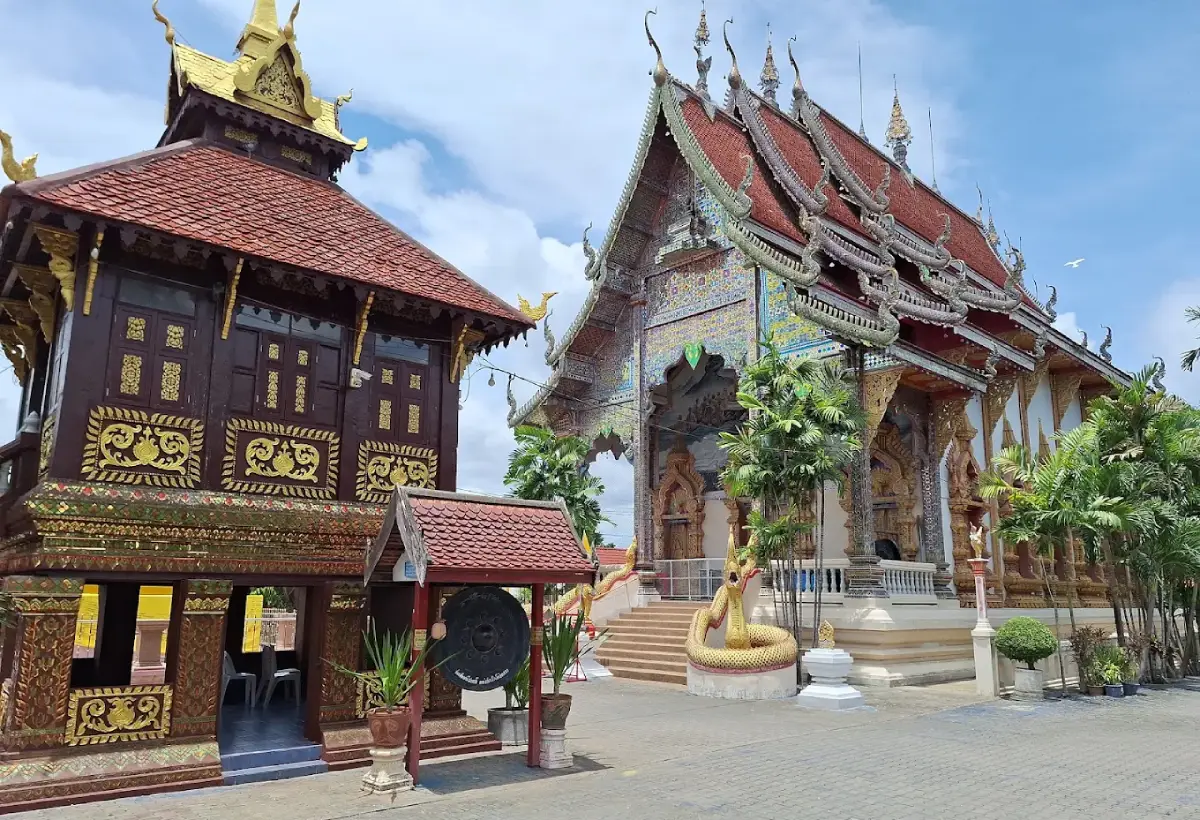
Wat San Khong is a local Buddhist temple under the Mahanikaya sect, located at No. 13, Ban San Khong, Village No. 4, Sai Mun Subdistrict, San Kamphaeng District, Chiang Mai Province 50130. The temple is one of the old temples of San Kamphaeng. It was founded around 1532 and received Wisungkhamasima on 12 January 2003. Wat San Khong is especially important because its relic chedi enshrines relics of the Buddha, making it a sacred place of worship and a spiritual center for the local community.
Ban San Khong is a village community in Sai Mun Subdistrict, where temples, houses, local roads, irrigation channels, and agricultural land have long been connected as part of Lanna village life. Wat San Khong is therefore not merely a place for Buddhist ceremonies. It is part of the community structure, a place where villagers make merit, listen to Dhamma, join annual religious events, and maintain the relationship between local life and Buddhism.
The name “San Khong” is linked with the local landscape and community memory. In the Lanna context, “san” often refers to a ridge or raised land, while “khong” suggests a bend or curved form in the landscape or local route. The temple name follows the village name, a common pattern in Lanna communities where temples were created and maintained through the faith of the people living around them.
The history of Wat San Khong is significant because of its early founding date around 1532. This gives the temple almost 500 years of historical depth. Across that long period, the temple has witnessed changes in San Kamphaeng from an agrarian Lanna community to a modern cultural district near Chiang Mai city. Its value lies not only in age, but also in its continuing role as a living community temple.
Wat San Khong is also historically connected with Wat Don Mun, also known as Wat San Khong Mai. Local history describes Wat Don Mun as a newer temple that separated from the older Wat San Khong. This relationship shows that Wat San Khong was an earlier religious center in the area and had influence on the later development of nearby village temples in Sai Mun Subdistrict.
Receiving Wisungkhamasima on 12 January 2003 was an important religious milestone. In Thai Buddhist tradition, Wisungkhamasima is the consecrated boundary used for formal monastic acts. This confirms the temple’s recognized status within the Buddhist monastic system and supports its role as a complete Buddhist temple for the community.
The most important sacred feature of Wat San Khong is its relic chedi, which enshrines relics of the Buddha. A relic chedi is a highly revered Buddhist monument because it represents direct remembrance of the Buddha. Visitors should first pay respect to the chedi before walking around the temple grounds and observing other areas of the temple.
The relic chedi of Wat San Khong has long served as a spiritual anchor for local devotees. The community’s faith is shown through regular temple support, annual ceremonies, and continued care of the sacred site. Wat San Khong is therefore not only an old temple recorded in history, but also a living sacred space that remains important to the villagers of Sai Mun.
The temple’s major annual tradition is the relic chedi bathing ceremony, held on the full moon day of the eighth lunar month, or the ninth northern lunar month. The ceremony has continued for more than 100 years. Monks and villagers gather to pay respect to the relic chedi, make merit, and strengthen the unity of the community.
In Lanna culture, bathing a relic chedi is an act of reverence, purification, and collective devotion. It renews the community’s relationship with Buddhism and keeps the temple active in the annual ritual cycle. For Wat San Khong, this tradition helps preserve local faith, community memory, and Lanna Buddhist identity.
Important areas and structures at Wat San Khong include the sala kan parian, monks’ quarters, Tripitaka hall, Buddha images, the chedi, the temple courtyard, and community merit-making areas. The sala kan parian supports Dhamma listening and community religious events. The monks’ quarters support monastic residence. The Tripitaka hall reflects respect for Buddhist scripture, while the Buddha images and chedi form the main devotional focus of the temple.
The Tripitaka hall is especially meaningful because in Lanna temple culture, a scripture hall or scripture area is more than storage for texts. It represents respect for the Dhamma and the preservation of Buddhist learning. Its presence at Wat San Khong shows that the temple has functioned not only as a ritual site, but also as a place connected with Buddhist education and knowledge.
Temple history also mentions Dhamma education at Wat San Khong. The temple opened a Buddhist Dhamma study program in 1955. This shows that Wat San Khong has supported not only worship and ceremonies, but also religious learning for monks, novices, and people interested in Buddhist teaching.
Phra Chutphon Chandasaro appears in recent temple data as the abbot of Wat San Khong. In a community temple, the abbot plays an important role in caring for monastic life, maintaining temple buildings, leading religious ceremonies, supporting annual merit-making, and preserving the relationship between the temple and local devotees.
Wat San Khong has a calm Lanna village-temple atmosphere. Its appeal is not large-scale tourism, but its long history, sacred relic chedi, annual relic bathing tradition, and continuing role in community life. Visitors should move quietly, observe respectfully, and understand that this is still an active temple used by local people.
Key things to see and respect include the relic chedi enshrining relics of the Buddha, Buddha images, sala kan parian, Tripitaka hall, monks’ quarters, temple courtyard, and the surrounding atmosphere of Ban San Khong. During the relic chedi bathing ceremony, visitors can see the living faith of the community and the continuation of Lanna Buddhist tradition.
Religious activities at Wat San Khong include the relic chedi bathing ceremony, Kathin, forest robe offerings, Buddhist holy days, Buddhist Lent, the end of Buddhist Lent, and major Buddhist observances. These activities bring villagers together to make merit, listen to Dhamma, support temple work, and maintain community relationships.
Wat San Khong can be connected with several nearby temples and cultural attractions in San Kamphaeng, including Wat Don Mun or Wat San Khong Mai, Wat Sai Mun, Wat San Kang Pla, Wat Chai Chana Mongkhon or Wat Pa Pao, Bo Sang Umbrella Village, Ban Ton Pao, and MAIIAM Contemporary Art Museum. This route allows visitors to experience San Kamphaeng through temples, community life, handicrafts, contemporary art, and Lanna culture.
Getting There from Chiang Mai city is convenient by private car, rental car, or local hired transport. Take the Chiang Mai–San Kamphaeng road, or Highway 1006, toward San Kamphaeng District, then continue to Sai Mun Subdistrict and Ban San Khong, Village No. 4. The temple can easily be combined with Wat Don Mun, Wat Sai Mun, and Wat Chai Chana Mongkhon on a local temple route.
A half-day itinerary can begin at Wat San Khong to pay respect to the relic chedi, then continue to Wat Don Mun, Wat Sai Mun, or Wat San Kang Pla before stopping for food in San Kamphaeng. A longer route can continue to Bo Sang Umbrella Village, Ban Ton Pao, or MAIIAM Contemporary Art Museum. This type of itinerary helps visitors understand San Kamphaeng beyond souvenir shopping by adding old temples, community history, and local faith.
Visitors should dress modestly, keep noise low, avoid disturbing monks or local devotees, and behave respectfully inside the temple grounds. If a ceremony, merit-making activity, or relic bathing event is taking place, visitors should follow temple or community guidance. Photography should be discreet and should not disturb rituals or worshippers.
Wat San Khong deserves a place in San Kamphaeng’s cultural travel routes because it combines a long history from around 1532, Wisungkhamasima granted in 2003, a relic chedi enshrining relics of the Buddha, a relic bathing tradition continued for more than a century, and historical links with Wat Don Mun or Wat San Khong Mai. For travelers who want to understand San Kamphaeng’s Buddhist and Lanna community heritage, this temple offers a calm and meaningful view of living village faith.
| Name | Wat San Khong |
| Location | Ban San Khong, Village No. 4, Sai Mun Subdistrict, San Kamphaeng District, Chiang Mai Province |
| Address | 13 Moo 4, Sai Mun Subdistrict, San Kamphaeng District, Chiang Mai 50130, Thailand |
| Type | Local Buddhist temple under the Mahanikaya sect |
| Highlights | Old temple of Sai Mun, relic chedi enshrining relics of the Buddha, annual relic chedi bathing tradition, sala kan parian, Tripitaka hall, and historical connection with Wat Don Mun or Wat San Khong Mai |
| History | Founded around 1532 and received Wisungkhamasima on 12 January 2003 |
| Local Name | Wat San Khong Kao |
| Name Origin | Linked with Ban San Khong, a village name reflecting raised land and a curved landscape or route in the old community setting |
| Abbot / Caretaker | Phra Chutphon Chandasaro |
| Resident Monks | 5 monks |
| What To See / Worship | Relic chedi enshrining relics of the Buddha, Buddha images, sala kan parian, Tripitaka hall, monks’ quarters, temple courtyard, and the local atmosphere of Ban San Khong |
| Main Areas / Structures | Sala kan parian, monks’ quarters, Tripitaka hall, Buddha images, chedi, temple courtyard, and community merit-making area |
| Important Sacred Site | Relic chedi enshrining relics of the Buddha |
| Temple Land | 5 rai, 3 ngan, and 66 square wah |
| Religious Activities | Annual relic chedi bathing ceremony on the full moon day of the eighth lunar month or ninth northern lunar month, Kathin, forest robe offerings, Buddhist holy days, Buddhist Lent, the end of Buddhist Lent, and major Buddhist observances |
| Community Importance | Spiritual center of Ban San Khong and Sai Mun Subdistrict, used for Buddhist ceremonies, merit-making, annual relic chedi bathing, and local community activities |
| Travel Information | From Chiang Mai city, take the Chiang Mai–San Kamphaeng road or Highway 1006 toward San Kamphaeng District, then continue to Ban San Khong, Village No. 4, Sai Mun Subdistrict; best accessed by private car, rental car, or local hired transport |
| Current Status | Active community Buddhist temple used for local religious ceremonies |
| Main Contact Number | 053-394-815 |
| Main Areas / Zones | 1. Relic chedi 2. Sala kan parian and worship area 3. Tripitaka hall 4. Monks’ quarters 5. Temple courtyard and community merit-making area |
| Nearby Tourist Attractions | 1. Wat Don Mun / Wat San Khong Mai, about 2 km 2. Wat Sai Mun, about 2 km 3. Wat Chai Chana Mongkhon / Wat Pa Pao, about 3 km 4. Bo Sang Umbrella Village, about 6 km 5. MAIIAM Contemporary Art Museum, about 7 km |
| Nearby Restaurants | 1. Huen Chan Peng, about 2 km, Tel. 081-783-7981 2. Tam Zaap San Kamphaeng, about 3 km, Tel. 089-559-0298 3. Khao Soi View Na San Kamphaeng, about 4 km, Tel. 096-686-9779 4. Sahrey Chanta, about 4 km, Tel. 062-397-9566 5. Som Tum Huan Peng, about 5 km, Tel. 094-324-8645 |
| Nearby Accommodations | 1. LaMoon Cottage SanKampang, about 4 km, Tel. 094-723-5395 2. Huanmaisakngam Resort, about 8 km, Tel. 065-495-5365 3. The Vet Boutique Hotel, about 9 km, Tel. 052-011-179 4. Chiangmai Lanna Modern Loft Hotel, about 10 km, Tel. 062-181-9696, 063-465-7785, 082-347-2527 5. Viewdoi Art and Resort, about 11 km, Tel. 088-866-2562 |
Frequently Asked Questions (FAQ)
Q: Where is Wat San Khong located?
A: Wat San Khong is located at 13 Moo 4, Ban San Khong, Sai Mun Subdistrict, San Kamphaeng District, Chiang Mai Province 50130.
Q: What type of temple is Wat San Khong?
A: Wat San Khong is a local Buddhist temple under the Mahanikaya sect and an old community temple of Ban San Khong in Sai Mun Subdistrict.
Q: When was Wat San Khong founded?
A: Wat San Khong was founded around 1532 and received Wisungkhamasima on 12 January 2003.
Q: Who is the abbot of Wat San Khong?
A: Recent temple data lists Phra Chutphon Chandasaro as the abbot of Wat San Khong.
Q: What are the highlights of Wat San Khong?
A: Highlights include the relic chedi enshrining relics of the Buddha, the temple’s long history, sala kan parian, Tripitaka hall, and the annual relic chedi bathing tradition.
Q: What important annual tradition is held at Wat San Khong?
A: The important annual tradition is the relic chedi bathing ceremony, held on the full moon day of the eighth lunar month or the ninth northern lunar month and continued by the community for more than 100 years.
Q: What nearby places can be visited with Wat San Khong?
A: Nearby places include Wat Don Mun, Wat Sai Mun, Wat Chai Chana Mongkhon, Bo Sang Umbrella Village, and MAIIAM Contemporary Art Museum.
 Category: ●Places of Worship
 Group: ●Temple
Last Update : 1 DayAgo
 Last Update : 1 DayAgo
 Click to Access the Navigation Map GPS
Wat San Khong Map
Recommend

 Muang Chiang Mai(121)Chom Thong(47)Mae Chaem(25)Chiang Dao(33)Doi Saket(68)Mae Taeng(85)Mae Rim(69)Samoeng(29)Fang(71)Mae Ai(59)Phrao(70)San Pa Tong(103)San Kamphaeng(66)San Sai(73)Hang Dong(74)Hot(32)Doi Tao(22)Omkoi(11)Saraphi(74)Wiang Haeng(15)Chai Prakan(28)Mae Wang(32)Mae On(22)Doi Lo(34)Galyani Vadhana(1)


