
lovethailand home >North Travel Attractions >Chiang Mai Travel Attractions >Samoeng >Samoeng Nuea > Wat Pong Pa
TL;DR: Wat Pong Pa is located at 47 Moo 6, Ban Mae Pa, Samoeng Nuea Subdistrict, Samoeng District, Chiang Mai Province 50250, open Daily, hours 08.00 - 17.00.

Wat Pong Pa
Open Days: Daily
Opening Hours: 08.00 - 17.00
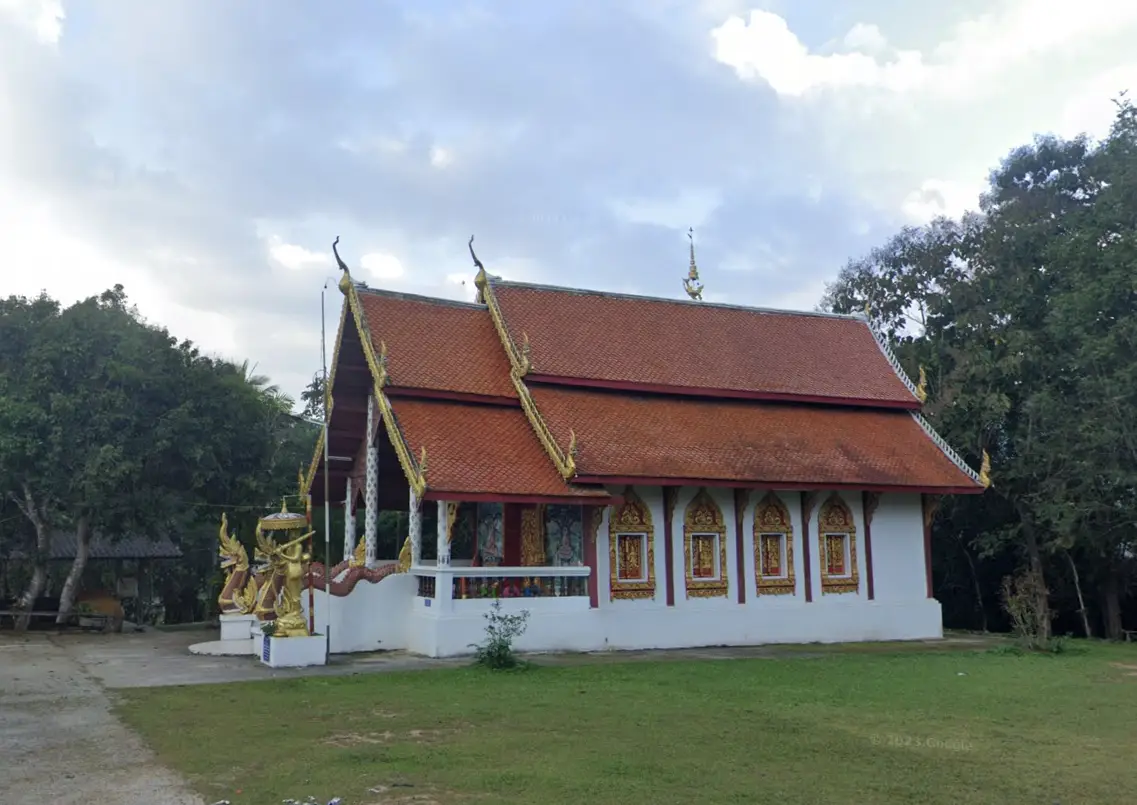
Wat Pong Pa is a local Buddhist temple under the Maha Nikaya order, located at 47 Moo 6, Ban Mae Pa, Samoeng Nuea Subdistrict, Samoeng District, Chiang Mai Province. The temple was established in B.E. 2369 and received its royal consecrated boundary on May 27, B.E. 2547. The consecrated boundary measures 10 meters wide and 20 meters long. The abbot is Phra Athikan Mongkhon, monastic name Chansaro. Wat Pong Pa is an important community temple of Ban Mae Pa, a center for moral and ethical development in Samoeng Nuea, and a temple that operates a Sunday Buddhist study center.
Wat Pong Pa has historical, religious, and local-cultural value. Its importance does not come from being a large tourist attraction, but from being a long-standing village temple with a distinctive origin legend. The temple is closely connected with the landscape of Ban Mae Pa, the idea of a natural wetland or “pong,” and the local story of a golden deer linked with the Bodhisattva. Visitors can therefore experience the temple as a place of living faith and community memory, not merely as a quick stop along a travel route.
The temple was established in B.E. 2369, making it one of the old community temples in Samoeng Nuea. In the context of a mountain village, a temple was essential for worship, merit-making, Dhamma listening, ceremonies, moral learning, and community gatherings. Wat Pong Pa has therefore served as both a religious and social center for Ban Mae Pa across many generations.
Ban Mae Pa is Moo 6 of Samoeng Nuea Subdistrict in Samoeng District, Chiang Mai. The surrounding area is a rural mountain community shaped by natural landscapes, local agriculture, waterways, and village routes. The community is associated with a local legend that was once recorded in Lanna script on palm-leaf manuscripts. After the palm-leaf record became damaged, the story was rewritten in the Lanna language. This gives Ban Mae Pa and Wat Pong Pa a strong connection with local memory, script, language, and Buddhist belief.
The main local legend says that the Bodhisattva was reborn as a golden deer and came to drink water at a “pong,” a low wetland area where water collected. This place became known as Pong Pa. The story also mentions golden deer footprints found on rocks at Doi Kio Phra Chao, the mountain above the village. This legend gives Wat Pong Pa a deeper meaning because it connects landscape, wildlife, Buddhist belief, and community faith in one narrative.
In local usage, “pong” refers to a low, wet, water-holding area where animals may come to drink. When this landscape is connected with the golden deer legend and the footprints on Doi Kio Phra Chao, the name Wat Pong Pa becomes more than an administrative name. It becomes a cultural record of how the community understands nature through Buddhist imagination and local memory.
Wat Pong Pa received its royal consecrated boundary on May 27, B.E. 2547. This is an important religious milestone because a consecrated boundary provides an officially recognized area for formal Sangha ceremonies according to Buddhist discipline. The boundary measures 10 meters wide and 20 meters long, confirming the temple’s role as a complete Buddhist institution serving monks and laypeople in the community.
The temple land covers 2 rai, 1 ngan, and 30 square wah, with Sangha land totaling 12 rai, 3 ngan, and 80 square wah. The temple compound includes a sermon hall, viharn, monk’s residence, temple grounds, worship area, ceremony area, and community Buddhist activity space. These areas support Dhamma listening, worship, annual merit-making, village gatherings, and the daily monastic life of the temple.
The sermon hall measures 8 meters wide and 20 meters long and was built in B.E. 2548. It is an important space for Dhamma listening, merit-making, community meetings, and religious events. In a village temple, the sermon hall is more than a multi-purpose building. It is where villagers gather, listen to teachings, help organize ceremonies, and pass on Buddhist practice through repeated participation.
The viharn measures 10 meters wide and 20 meters long and was built in B.E. 2539. It is the main devotional area where local residents pay respect, chant, listen to Dhamma teachings, make merit, and participate in Buddhist activities. In a northern Thai community temple, the viharn often functions as the spiritual heart of the temple and the most accessible sacred space for laypeople.
The temple has one monk’s residence, used as the living quarters of resident monks and as part of the daily religious life of the temple. The presence of a monk’s residence shows that the temple is not only a place for occasional ceremonies, but an active religious space with regular monastic care and an ongoing relationship between monks and villagers.
Phra Athikan Mongkhon, Chansaro, is the abbot of Wat Pong Pa. His role includes caring for the temple, leading Buddhist activities, guiding lay devotees, and maintaining the continuity of Buddhist practice in Ban Mae Pa. In a community temple, the abbot serves as a Dhamma leader, caretaker, and connection between the Sangha and the local community.
Wat Pong Pa is important as a center for moral and ethical development in Samoeng Nuea. It is a place where villagers cultivate the mind, observe precepts, make merit, listen to Dhamma teachings, and join Buddhist activities. This role makes the temple both a sacred space and a community learning space that supports social harmony across generations.
Another important role of Wat Pong Pa is its Sunday Buddhist study center. This gives the temple an educational dimension for children, youth, and local residents. The center helps connect Buddhist faith with learning, moral development, and the transmission of community values to younger generations.
Religious activities at Wat Pong Pa follow the rhythm of northern Thai village temples. These include Buddhist holy day observances, Kathin ceremonies, forest robe offerings, Buddhist Lent activities, end-of-Lent merit-making, major Buddhist holy days, and Northern Thai New Year traditions. During these occasions, villagers gather to make offerings, listen to Dhamma teachings, prepare the temple grounds, and preserve local Buddhist culture.
In the Lanna cultural context, Wat Pong Pa connects local belief with everyday life. The golden deer legend explains the landscape and the village name through a Buddhist narrative, while annual merit-making and Buddhist study activities keep the temple active in the present. The temple is therefore a meeting point between past, present, and future in the life of Ban Mae Pa.
For visitors, the main points of interest are the viharn, sermon hall, village-temple atmosphere, and the golden deer legend connected with Doi Kio Phra Chao. Visitors should take time to pay respect, observe the temple grounds, and understand that the name Wat Pong Pa records a relationship between landscape, legend, Buddhist belief, and community identity.
The atmosphere of Wat Pong Pa is calm and modest, typical of a mountain village temple. It is suitable for travelers who want to make merit while exploring Samoeng Nuea, learn about local Thai communities, or understand temple routes in Samoeng more deeply. The temple should be approached as a living religious space and a center of community memory.
Visitors should dress modestly, speak quietly, and respect the viharn, sermon hall, monk’s residence, and ceremony areas. During Buddhist holy days, merit-making events, or Sunday Buddhist study activities, travelers should avoid disturbing monks, children, youth, or villagers who are participating in temple activities.
Getting There is most convenient by private car or rental car. From Chiang Mai city, travelers can drive toward Samoeng District via the Mae Rim–Samoeng route or the Hang Dong–Samoeng route, then continue to Samoeng Nuea Subdistrict and Ban Mae Pa, Moo 6. The route includes mountain roads and rural village roads, so careful driving is recommended, especially during the rainy season or late afternoon.
A visit to Wat Pong Pa can be combined with nearby places in Samoeng Nuea, including Wat Ban Pok, Wat Mae Phae, Wat Mae Loei, Wat Ton Lan, Wat Thung Lom, Wat Sala Pong Kwao, and Pong Kwao Hot Spring. This route is suitable for travelers who want to experience community temples, the golden deer legend, Ban Mae Pa’s local history, agricultural villages, nature, hot springs, cafés, restaurants, and mountain accommodation in western Chiang Mai.
| Name | Wat Pong Pa |
| Type | Local Buddhist temple under the Maha Nikaya order |
| Location | 47 Moo 6, Ban Mae Pa, Samoeng Nuea Subdistrict, Samoeng District, Chiang Mai Province 50250 |
| Highlights | An old community temple of Ban Mae Pa, established in B.E. 2369, with a local golden deer legend connected with a wetland area and Doi Kio Phra Chao |
| History | Established in B.E. 2369 and granted a royal consecrated boundary on May 27, B.E. 2547 |
| Temple Area | Temple land: 2 rai, 1 ngan, and 30 square wah; Sangha land: 12 rai, 3 ngan, and 80 square wah |
| Consecrated Boundary | Granted on May 27, B.E. 2547; 10 meters wide and 20 meters long |
| Name Origin | Connected with a legend in which the Bodhisattva was reborn as a golden deer and came to drink water at a “pong,” a low wetland area. The story also mentions golden deer footprints on rocks at Doi Kio Phra Chao above the village. |
| Distinctive Features | A Lanna community temple of Ban Mae Pa with the golden deer legend, Doi Kio Phra Chao, Sunday Buddhist study, and a moral-development role in Samoeng Nuea |
| Main Areas / Zones | Viharn, sermon hall, monk’s residence, temple grounds, worship area, ceremony area, and Sunday Buddhist study activity space |
| Important Structures | Sermon hall: 8 by 20 meters, built in B.E. 2548 Viharn: 10 by 20 meters, built in B.E. 2539 One monk’s residence |
| Abbot / Caretaker | Phra Athikan Mongkhon, Chansaro |
| Educational Role | Operates a Sunday Buddhist study center to support Buddhist learning, morality, and ethics in the community |
| Traditions / Religious Activities | Kathin ceremonies, forest robe offerings, Buddhist holy day observances, Buddhist Lent activities, end-of-Lent merit-making, major Buddhist holy days, and Northern Thai New Year traditions |
| Community Role | A center for moral and ethical development in Samoeng Nuea, a spiritual center of Ban Mae Pa, and a community space for worship, sermons, Buddhist study, and local cultural memory |
| Open Days | Daily |
| Opening Hours | 08.00 - 17.00 |
| Travel Information | Best reached by private car or rental car from Chiang Mai city to Samoeng District, then onward to Samoeng Nuea Subdistrict and Ban Mae Pa, Moo 6. The route includes mountain and rural roads. |
| Current Status | A Maha Nikaya community temple of Ban Mae Pa, used for worship, merit-making, sermons, community activities, and Sunday Buddhist study |
| Facilities | Viharn, sermon hall, monk’s residence, temple grounds, worship area, and community Buddhist activity space |
| Nearby Tourist Attractions | 1. Wat Ban Pok, about 7 km 2. Wat Mae Phae, about 8 km 3. Wat Mae Loei, about 12 km 4. Pong Kwao Hot Spring, about 13 km 5. Wat Sala Pong Kwao, about 13 km 6. Wat Ton Lan, about 9 km 7. Wat Thung Lom, about 11 km |
| Nearby Restaurants | 1. Food service area at Pong Kwao Hot Spring, about 13 km 2. Ice Cream Café At Samoeng, about 18 km, Tel. 081-751-2191 3. Baan Coffee Samoeng, about 19 km, Tel. 082-763-3400 4. Cafe De Mountain, about 20 km, Tel. 098-506-5306 5. Coffee By Aitsara, about 22 km, Tel. 084-378-0821 |
| Nearby Accommodations | 1. Baan Amphor Hotel, Pong Kwao Hot Spring, about 13 km, Tel. 097-429-1453 2. Pong Kwao Community Homestay, about 14 km 3. Forest Guesthouse, about 20 km, Tel. 084-371-5055 4. Lhongkhao Samoeng, about 22 km, Tel. 089-504-8108 5. Rai Nap-Phupha, about 25 km, Tel. 088-404-2553, 081-603-9800, 053-378-414 |
Frequently Asked Questions (FAQ)
Q: Where is Wat Pong Pa located?
A: Wat Pong Pa is located at 47 Moo 6, Ban Mae Pa, Samoeng Nuea Subdistrict, Samoeng District, Chiang Mai Province 50250.
Q: What are the open days and opening hours of Wat Pong Pa?
A: Wat Pong Pa is open daily from 08.00 to 17.00.
Q: What is the history of Wat Pong Pa?
A: Wat Pong Pa was established in B.E. 2369 and received its royal consecrated boundary on May 27, B.E. 2547. It is a Maha Nikaya community temple of Ban Mae Pa in Samoeng Nuea.
Q: What is the origin of the name Wat Pong Pa?
A: The name is linked with a local legend in which the Bodhisattva was reborn as a golden deer and came to drink water at a low wetland area called a “pong.” The story also mentions golden deer footprints on rocks at Doi Kio Phra Chao above the village.
Q: What important structures are inside Wat Pong Pa?
A: The temple has a sermon hall, viharn, monk’s residence, temple grounds, worship area, and community Buddhist activity space.
Q: Who is the abbot of Wat Pong Pa?
A: The abbot of Wat Pong Pa is Phra Athikan Mongkhon, Chansaro.
Q: Why is Wat Pong Pa important to the local community?
A: Wat Pong Pa is a center for moral and ethical development in Samoeng Nuea, a spiritual center of Ban Mae Pa, and a temple that operates a Sunday Buddhist study center.
Q: What nearby places can travelers visit with Wat Pong Pa?
A: Travelers can combine the visit with Wat Ban Pok, Wat Mae Phae, Wat Mae Loei, Pong Kwao Hot Spring, Wat Sala Pong Kwao, Wat Ton Lan, and Wat Thung Lom.
 Category: ●Places of Worship
 Group: ●Temple
Last Update : 2 MonthAgo
 Last Update : 2 MonthAgo
 Click to Access the Navigation Map GPS

 Muang Chiang Mai(121)Chom Thong(47)Mae Chaem(25)Chiang Dao(33)Doi Saket(68)Mae Taeng(85)Mae Rim(69)Samoeng(29)Fang(71)Mae Ai(59)Phrao(70)San Pa Tong(103)San Kamphaeng(66)San Sai(73)Hang Dong(73)Hot(32)Doi Tao(22)Omkoi(11)Saraphi(74)Wiang Haeng(15)Chai Prakan(28)Mae Wang(32)Mae On(22)Doi Lo(33)Galyani Vadhana(1)


