
lovethailand home >North Travel Attractions >Chiang Mai Travel Attractions >Samoeng >Samoeng Tai > Wat Pa Kluai
TL;DR: Wat Pa Kluai is located at Moo 4, Ban Sala–Pa Kluai, Samoeng Tai Subdistrict, Samoeng District, Chiang Mai Province, open Daily, hours 08.00 - 17.00.

Wat Pa Kluai
Open Days: Daily
Opening Hours: 08.00 - 17.00
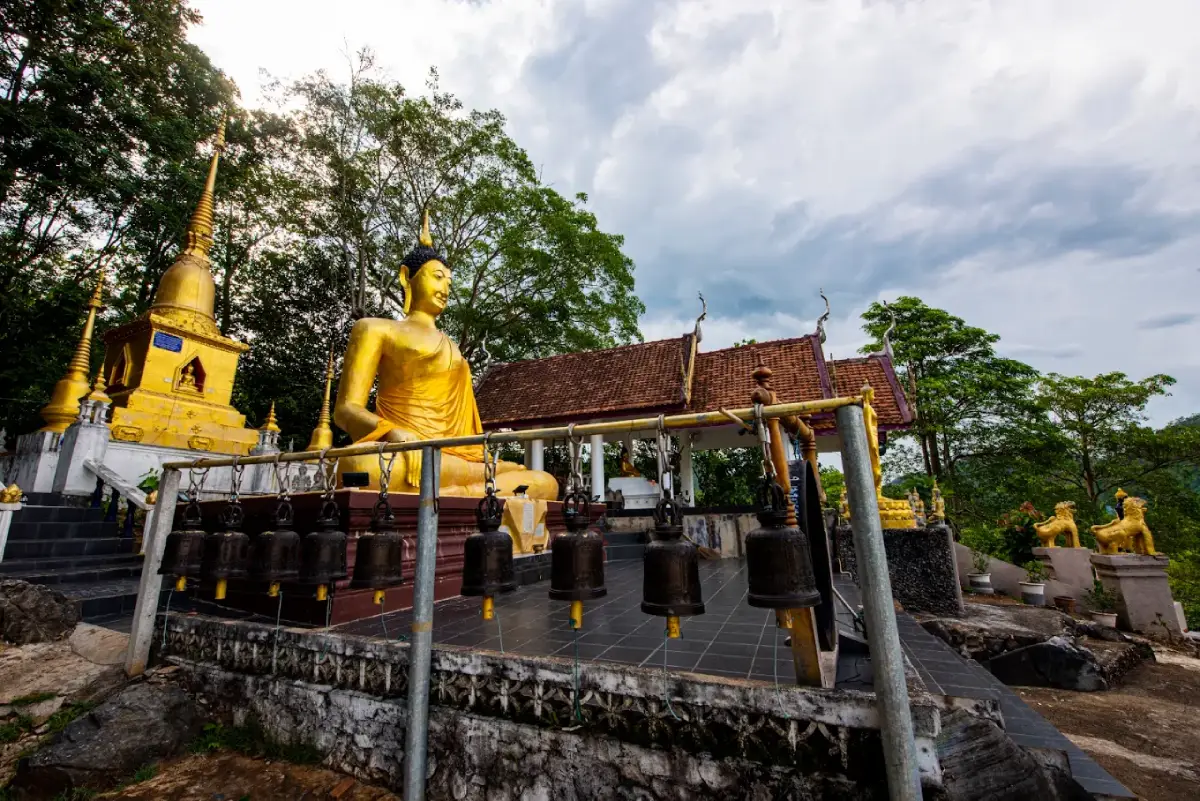
Wat Pa Kluai is a local Buddhist temple under the Maha Nikaya order, located in Moo 4, Ban Sala–Pa Kluai, Samoeng Tai Subdistrict, Samoeng District, Chiang Mai Province. The temple was officially permitted to be established in B.E. 2455 and remains an important community temple for Ban Sala–Pa Kluai. It serves as a place for worship, merit-making, Dhamma listening, and Buddhist activities throughout the year. One of its distinctive features is its connection with the Buddha footprint of Wat Pa Kluai and the annual Song Nam Phra Phutthabat tradition held in April.
Wat Pa Kluai is best understood as a peaceful village temple rather than a large tourist attraction. Its value lies in its role as a living religious space where local residents make merit, gather for Buddhist holy days, join Kathin and forest robe offerings, and preserve community traditions. Visitors can experience the quiet atmosphere of a northern Thai community temple that still functions as a spiritual center for the local village.
The documented history of Wat Pa Kluai begins with its official establishment in B.E. 2455. This period reflects the development of settlement and community life in Samoeng Tai. A village temple was essential for Buddhist ceremonies, merit-making, moral learning, and community gatherings. Wat Pa Kluai therefore developed from local faith and has continued to serve the religious life of Ban Sala–Pa Kluai for more than a century.
Ban Sala–Pa Kluai is Moo 4 of Samoeng Tai Subdistrict in Samoeng District, Chiang Mai. The subdistrict has a mountain and valley landscape, with important waterways including Nam Mae Khan and the Mae Samoeng River. Local livelihoods are closely linked with agriculture, including garlic, eggplant, rice, bananas, soybeans, corn, tobacco, and small-scale household processing. In this setting, Wat Pa Kluai is part of a cultural landscape where temple, village, farming, and nature remain closely connected.
The name “Pa Kluai” is tied to the local village area where the temple is located. Because the temple shares its name with the community, Wat Pa Kluai is inseparable from the identity of Ban Sala–Pa Kluai. It is both a sacred place and a cultural symbol of the village, preserving community memory through Buddhist ceremonies, annual merit-making, and local traditions.
Wat Pa Kluai continues to have resident monks and Buddhist activities. Recent Kathin-related public information lists Phra Buntha Chanthasilo as the abbot and notes that five monks reside at the temple. The presence of resident monks helps the temple maintain daily Buddhist practice, religious guidance, community merit-making, and the continuity of local Buddhist traditions in Samoeng Tai.
The most distinctive sacred focus of Wat Pa Kluai is the Buddha footprint associated with the temple. The local Song Nam Phra Phutthabat tradition in April is one of the customs recognized in Samoeng Tai. This tradition shows that Wat Pa Kluai is not only a village temple, but also a local devotional site connected with a specific annual ceremony and the shared faith of the community.
The Buddha footprint at Wat Pa Kluai is an important object of devotion for visitors and local residents. Bathing the Buddha footprint during the Northern Thai New Year period symbolizes respect, purification, blessing, and renewal. When villagers gather for this ceremony, the temple becomes a center for both religious practice and community participation.
The April Song Nam Phra Phutthabat tradition helps preserve Lanna cultural continuity. Villagers gather at the temple to make merit, prepare the temple grounds, offer food to monks, listen to Dhamma teachings, and participate in the ceremony. Younger generations learn local customs through direct participation, while elders help transmit community memory and religious practice.
Other religious activities at Wat Pa Kluai follow the rhythm of northern Thai village temples. These include Buddhist holy day observances, Kathin ceremonies, forest robe offerings, Buddhist Lent activities, end-of-Lent merit-making, and Northern Thai New Year traditions. These occasions bring villagers together and strengthen the relationship between the temple and the community.
The role of Wat Pa Kluai can be understood in several dimensions. Religiously, it is a place for worship, merit-making, Dhamma listening, and Buddhist ceremonies. Socially, it is a gathering place for local residents and a center for cooperative merit-making events. Culturally, it preserves the Song Nam Phra Phutthabat tradition, local Buddhist customs, and the relationship between village life and the temple.
For visitors, Wat Pa Kluai is suitable for making merit, paying respect to the Buddha footprint, and learning about a quiet community temple in Samoeng Tai. It is particularly meaningful for travelers interested in Lanna Buddhist traditions, village temples, and local ceremonies rather than crowded tourist sites. The temple’s peaceful atmosphere makes it a good stop on a slower cultural route through Samoeng.
The atmosphere around Wat Pa Kluai is calm and rural, reflecting the mountain community setting of Samoeng District. Visitors should appreciate the temple as an active place of worship, not only as a travel stop. Modest dress, quiet behavior, and respect for worship areas, the Buddha footprint area, and monastic spaces are important when visiting.
Getting There is most convenient by private car or rental car. From Chiang Mai city, travelers can drive toward Samoeng District via the Mae Rim–Samoeng route or the Hang Dong–Samoeng route, then continue to Samoeng Tai Subdistrict and Moo 4, Ban Sala–Pa Kluai. The route includes mountain roads and rural village roads, so careful driving is recommended, especially during the rainy season or late afternoon.
A visit to Wat Pa Kluai can be combined with nearby places in Samoeng Tai, including Wat Tha Sala, Wat Nam Rin, Wat Sai Mun, Sop Samoeng, Samoeng Forest Viewpoint in Khun Khan National Park, and Phra That Doi Nok. This route is suitable for travelers who want to connect village temples, the Buddha footprint tradition, local community life, mountain scenery, cafés, restaurants, and accommodation in western Chiang Mai.
| Name | Wat Pa Kluai |
| Type | Local Buddhist temple under the Maha Nikaya order |
| Location | Moo 4, Ban Sala–Pa Kluai, Samoeng Tai Subdistrict, Samoeng District, Chiang Mai Province |
| Highlights | A community temple of Ban Sala–Pa Kluai, established in B.E. 2455 and associated with the Buddha footprint and the April Song Nam Phra Phutthabat tradition |
| History | Permitted to be established as a temple in B.E. 2455 and maintained as a Maha Nikaya village temple in Samoeng Tai |
| Name Origin | Named after Ban Sala–Pa Kluai, the Moo 4 community in Samoeng Tai where the temple is located |
| Distinctive Features | A rural Lanna community temple connected with the Buddha footprint, April merit-making, farming life, and local Buddhist faith in Samoeng Tai |
| Main Areas / Zones | Buddha footprint area, worship area, temple grounds, ceremony area, and community Buddhist activity space |
| Important Sacred Object / Site | The Buddha footprint of Wat Pa Kluai, which is associated with the annual Song Nam Phra Phutthabat tradition in April |
| Abbot / Caretaker | Phra Buntha Chanthasilo |
| Traditions / Religious Activities | Song Nam Phra Phutthabat ceremony in April, Kathin ceremonies, forest robe offerings, Buddhist holy day observances, Buddhist Lent activities, end-of-Lent merit-making, and Northern Thai New Year traditions |
| Community Role | A spiritual center for Ban Sala–Pa Kluai, supporting worship, merit-making, Dhamma listening, and the preservation of the Buddha footprint tradition in Samoeng Tai |
| Travel Information | Best reached by private car or rental car from Chiang Mai city to Samoeng District, then onward to Samoeng Tai Subdistrict and Ban Sala–Pa Kluai. The route includes mountain and rural roads. |
| Current Status | Open as a local community temple for worship, merit-making, and Buddhist activities |
| Open Days | Daily |
| Opening Hours | 08.00 - 17.00 |
| Facilities | Temple grounds, worship area, Buddha footprint area, and community Buddhist activity space |
| Nearby Tourist Attractions | 1. Wat Tha Sala, about 2 km 2. Wat Nam Rin, about 4 km 3. Wat Sai Mun, about 5 km 4. Sop Samoeng, about 7 km 5. Samoeng Forest Viewpoint, Khun Khan National Park, about 18 km 6. Phra That Doi Nok, about 20 km |
| Nearby Restaurants | 1. Cafe De Mountain, about 4 km, Tel. 098-506-5306 2. Ice Cream Café At Samoeng, about 6 km, Tel. 081-751-2191 3. Baan Coffee Samoeng, about 7 km, Tel. 082-763-3400 4. Khwamsukh Cafe, about 9 km, Tel. 064-339-2582 5. Coffee By Aitsara, about 11 km, Tel. 084-378-0821 |
| Nearby Accommodations | 1. Forest Guesthouse, about 4 km, Tel. 084-371-5055 2. Lhongkhao Samoeng, about 6 km, Tel. 062-789-9444 3. Khum Samoeng - Samoeng Center, about 7 km, Tel. 081-122-2324 4. Wongwan Strawberry Farm, about 8 km, Tel. 082-560-9710 5. Rai Nap-Phupha, about 10 km, Tel. 088-404-2553, 081-603-9800, 053-378-414 |
Frequently Asked Questions (FAQ)
Q: Where is Wat Pa Kluai located?
A: Wat Pa Kluai is located in Moo 4, Ban Sala–Pa Kluai, Samoeng Tai Subdistrict, Samoeng District, Chiang Mai Province.
Q: What are the open days and opening hours of Wat Pa Kluai?
A: Wat Pa Kluai is open daily from 08.00 to 17.00.
Q: What is the history of Wat Pa Kluai?
A: Wat Pa Kluai was officially permitted to be established as a temple in B.E. 2455 and remains a Maha Nikaya community temple of Ban Sala–Pa Kluai in Samoeng Tai.
Q: What is the main highlight of Wat Pa Kluai?
A: The main highlight is the Buddha footprint of Wat Pa Kluai, which is associated with the annual Song Nam Phra Phutthabat tradition held in April.
Q: Who is the abbot of Wat Pa Kluai?
A: The abbot of Wat Pa Kluai is Phra Buntha Chanthasilo.
Q: Why is Wat Pa Kluai important to the local community?
A: Wat Pa Kluai is a spiritual center for Ban Sala–Pa Kluai, supporting worship, merit-making, Dhamma listening, and the preservation of the Buddha footprint tradition in Samoeng Tai.
Q: What kind of travelers is Wat Pa Kluai suitable for?
A: It is suitable for travelers interested in Lanna community temples, local Buddhist traditions, the Buddha footprint, and quiet cultural travel in Samoeng Tai.
Q: What nearby places can travelers visit with Wat Pa Kluai?
A: Travelers can combine the visit with Wat Tha Sala, Wat Nam Rin, Wat Sai Mun, Sop Samoeng, Samoeng Forest Viewpoint, and Phra That Doi Nok.
 Category: ●Places of Worship
 Group: ●Temple
Last Update : 6 DayAgo
 Last Update : 6 DayAgo
 Click to Access the Navigation Map GPS
 Muang Chiang Mai(121)Chom Thong(47)Mae Chaem(25)Chiang Dao(33)Doi Saket(68)Mae Taeng(85)Mae Rim(69)Samoeng(29)Fang(71)Mae Ai(59)Phrao(70)San Pa Tong(103)San Kamphaeng(66)San Sai(73)Hang Dong(73)Hot(32)Doi Tao(22)Omkoi(11)Saraphi(74)Wiang Haeng(15)Chai Prakan(28)Mae Wang(32)Mae On(22)Doi Lo(34)Galyani Vadhana(1)


