
lovethailand home >North Travel Attractions >Chiang Mai Travel Attractions >Samoeng >Yang Moen > Wat Yang Moen
TL;DR: Wat Yang Moen is located at No. 5, Ban Yang Moen, Moo 3, Yang Moen Subdistrict, Samoeng District, Chiang Mai Province 50250, open Daily, hours 08.00 - 17.00.

Wat Yang Moen
Open Days: Daily
Opening Hours: 08.00 - 17.00
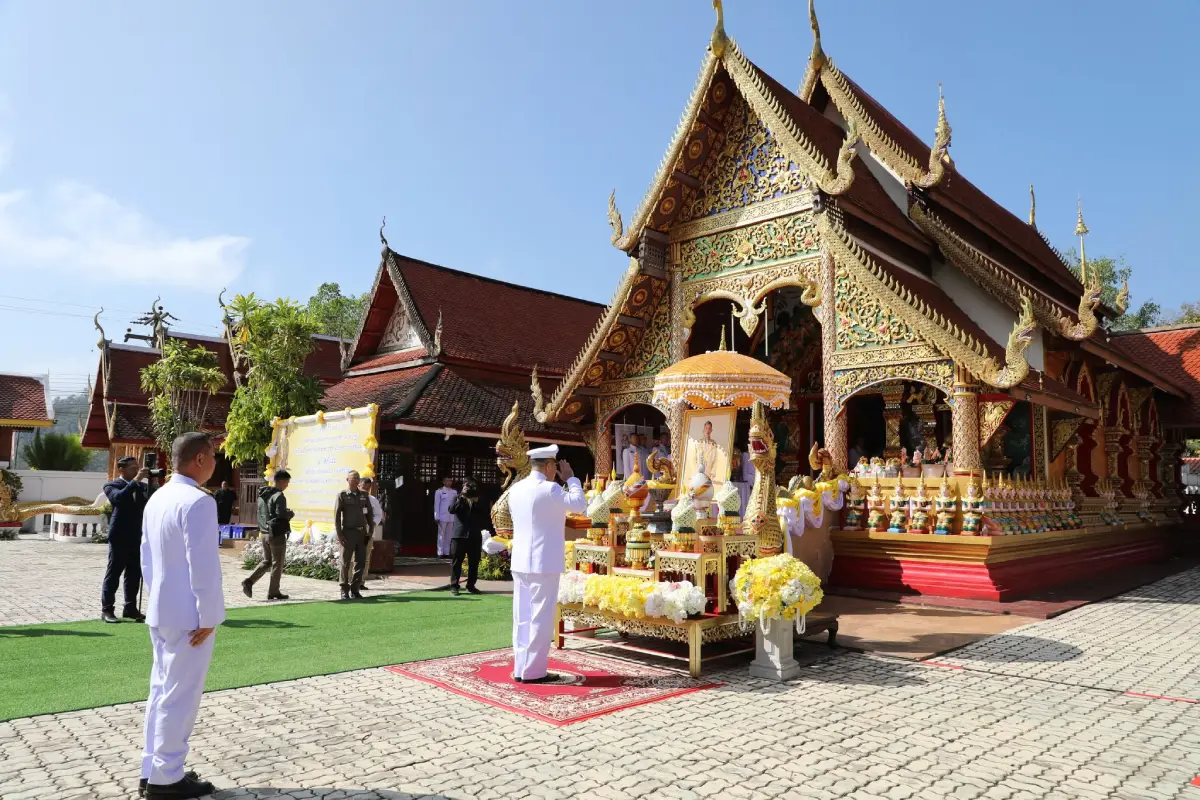
Wat Yang Moen is located at No. 5, Ban Yang Moen, Moo 3, Yang Moen Subdistrict, Samoeng District, Chiang Mai Province. It is a non-royal Buddhist temple under the Mahanikaya order and has long served as an important spiritual center for the Ban Yang Moen community. The temple stands in a mountainous part of Samoeng, where village life, Buddhist faith, forest landscapes, local roads, and highland agriculture are closely connected.
Wat Yang Moen is not a large commercial tourist temple. Its value lies in its authenticity as a living community temple. Visitors come here to see a quiet Lanna-style village temple, pay respect to Buddha images, observe the temple’s role in local life, and understand the cultural layers of Yang Moen village. The temple contains important religious structures such as an ordination hall, viharn, monks’ residences, three merit-making halls, and a kitchen, along with sacred objects including Buddha images, a chedi, and a Dharma pulpit.
The history of Wat Yang Moen contains several important chronological markers. One historical record states that the temple was built in 1922. Another record states that it was officially permitted as a temple in 1862 and received its royal boundary for monastic rites in 1897. A further temple history record mentions the royal boundary around July 5, 1940, with the boundary measuring 8.5 meters wide and 12 meters long. These dates show that the temple and the surrounding village have a long and layered history, combining older community memory with later formal Buddhist administration.
The temple land covers 2 rai, 3 ngan, and 1 square wah. Its northern boundary borders Wat Yang Moen School, while its southern boundary borders a public road. The temple also has one plot of monastic land measuring 1 rai, 2 ngan, and 96 square wah. This location reveals how closely the temple is connected to the village’s daily structure. The temple, the school, the road, and the residential area form a shared community space rather than isolated institutions.
The main religious structures at Wat Yang Moen include the ordination hall, viharn, monks’ residences, three merit-making halls, and a kitchen. The ordination hall is the area for formal monastic rites. The viharn serves as a worship space for villagers and visitors. The monks’ residences support monastic life. The merit-making halls are used for Buddhist ceremonies, funeral rites, communal gatherings, and merit-making events. The kitchen reflects the temple’s role in traditional village merit-making, where local people gather to prepare food, offer meals, and support temple ceremonies.
The temple’s important sacred objects include Buddha images, a chedi, and a Dharma pulpit. The Buddha images are the main objects of worship. The chedi represents Buddhist devotion and the accumulation of merit in the community. The Dharma pulpit is especially meaningful in a Lanna village temple because it is associated with sermons, Dharma listening, and Buddhist observances. These elements make Wat Yang Moen a complete religious space for worship, teaching, and community life.
The name “Yang Moen” is one of the most culturally meaningful aspects of the temple and village. In the local context, “yang” is associated with stopping or pausing, while “moen” suggests a long period of time. Local narratives connect the name with a long stop or rest during a journey. The name therefore preserves both place memory and cultural storytelling. It is not only the name of a temple, but also the name of the village, subdistrict, school, and wider community identity.
The surrounding village has a layered local history. Oral accounts describe the early area as connected with Lua or Lawa communities, followed by migration of northern Thai people from nearby areas such as Mae Chaem and San Pa Tong. Over time, Ban Yang Moen became a settled highland community where Buddhist practice, agriculture, forest resources, local waterways, and mountain routes shaped everyday life. Wat Yang Moen therefore stands within a place that carries long memories of migration, settlement, and cultural continuity.
Yang Moen Subdistrict is home to both northern Thai residents and several highland ethnic groups, including Karen, Hmong, and Lisu communities. Houses are found along roads, waterways, mountain slopes, and foothill areas. In this landscape, temples, schools, and local administrative spaces play an important role in connecting people across the area. Wat Yang Moen serves the Buddhist community in Ban Yang Moen and reflects the coexistence of religious practice, local identity, and highland village life.
Phra Khru Thaworn Mongkhon Wat, also known as Khruba Intha Thitathammo, is an important former abbot associated with Wat Yang Moen. He is remembered by local residents and disciples for his role in the temple and his spiritual significance. After his passing on July 4, 2014, his name continued to be strongly connected with Wat Yang Moen. For many devotees, the temple is not only a village temple, but also a place linked with the memory of a respected monk who helped shape its later history.
Another name connected with the temple is Phra Witoon Katasaro, who appears in published temple information as an acting abbot during one period. For current religious activities or specific merit-making arrangements, visitors should contact local community representatives or ask at the temple before traveling. Community temples in mountain districts often follow schedules shaped by monastic duties, village ceremonies, and seasonal activities.
The main appeal of Wat Yang Moen is its calm, rural Lanna atmosphere. The temple is not designed as a fast-paced sightseeing attraction. Instead, it is a place to slow down, pay respect, observe a working village temple, and understand how Buddhist spaces function in a mountain community. Visitors can see the ordination hall, viharn, chedi, Dharma pulpit, and merit-making halls while also recognizing that these are not display objects; they are spaces actively used by villagers for ceremonies, prayer, funeral rites, and Buddhist observances.
Religious traditions at Wat Yang Moen follow the pattern of many Lanna village temples. The temple supports Buddhist holy days, merit-making, Kathin ceremonies, robe offering ceremonies, memorial merit-making, Dharma listening, and community gatherings. Although no fixed annual temple festival with confirmed public details was found, the presence of three merit-making halls and a kitchen clearly reflects the temple’s function as a place for communal Buddhist activity throughout the year.
Wat Yang Moen also connects well with nature and cultural routes in Yang Moen Subdistrict. Nearby places in the subdistrict include Mon Ang Ket, Pang Khum village, cool-climate flower gardens, Mae Chum Waterfall, Mae Khan headwater areas, and strawberry farms in Ban Ang Khai. These destinations show the natural richness of the area, including forests, headwaters, highland agriculture, and ethnic cultural landscapes. A visit to Wat Yang Moen can therefore be combined with nature-based and community-based travel in Samoeng.
Getting There is easiest by private car or rental car. From Chiang Mai city, travel toward Samoeng District and continue to Yang Moen Subdistrict, Moo 3, Ban Yang Moen. The route includes mountain roads, curves, and uphill sections, so careful driving is recommended, especially during rain, fog, early morning, or late afternoon. Travelers can combine Wat Yang Moen with Mon Ang Ket, Pang Khum flower gardens, Mae Chum Waterfall, Ban Ang Khai strawberry farms, or attractions in Samoeng Tai depending on time and road conditions.
Visitors should dress modestly, speak quietly, and respect monastic areas. Wat Yang Moen is a working community temple, not a commercial attraction. Photography should be done with discretion, especially around monks, local residents, ceremonies, and funeral or merit-making events. If a ceremony is taking place, visitors should avoid entering active ritual areas unless invited by temple representatives or local residents.
Wat Yang Moen is a meaningful stop for travelers interested in Lanna village temples, local Buddhist history, Samoeng’s highland communities, and quiet cultural routes in Chiang Mai. Its strength is not spectacle, but rootedness. The temple grew together with Ban Yang Moen and continues to reflect the spiritual and social life of the village. For travelers who want to understand Samoeng more deeply, Wat Yang Moen offers a calm and culturally rich experience.
| Name | Wat Yang Moen |
| Place Type | Non-Royal Buddhist Temple Under The Mahanikaya Order |
| Location | No. 5, Ban Yang Moen, Moo 3, Yang Moen Subdistrict, Samoeng District, Chiang Mai Province 50250 |
| Temple Land Area | 2 Rai, 3 Ngan, 1 Square Wah, Plus One Monastic Land Plot Measuring 1 Rai, 2 Ngan, 96 Square Wah |
| Important Boundaries | The Northern Boundary Borders Wat Yang Moen School, And The Southern Boundary Borders A Public Road |
| Highlights | A Long-Established Village Temple In Ban Yang Moen With An Ordination Hall, Viharn, Chedi, Dharma Pulpit, And Strong Community Role |
| History | Built In 1922 In One Temple Record, While Another Registry Notes Official Temple Permission In 1862 |
| Royal Boundary | Granted In 1897, With Another Record Mentioning July 5, 1940; Boundary Size 8.5 Meters Wide And 12 Meters Long |
| Name Origin | The Name Is Connected With The Idea Of Stopping Or Resting For A Long Time In Local Narrative |
| Important Structures | Ordination Hall, Viharn, Monks’ Residences, Three Merit-Making Halls, Kitchen |
| Sacred Objects | Buddha Images, Chedi, Dharma Pulpit |
| Important Former Abbot | Phra Khru Thaworn Mongkhon Wat, Also Known As Khruba Intha Thitathammo |
| Travel Information | Best Reached By Private Car Or Rental Car From Chiang Mai City Toward Samoeng District, Then To Yang Moen Subdistrict, Moo 3 |
| Current Status | A Non-Royal Buddhist Temple In Yang Moen Subdistrict, Samoeng District, Chiang Mai Province, Serving The Local Community |
| Open Days | Daily |
| Opening Hours | 08.00 - 17.00 |
| Facilities | Three Merit-Making Halls, Kitchen, Worship Area, Community Religious Space |
| Main Areas / Zones | Ordination Hall, Viharn, Chedi, Monks’ Residences, Merit-Making Halls, Kitchen |
| Nearby Tourist Attractions | 1. Wat Yang Moen School, about 0.1 km 2. Mon Ang Ket, Ban Pang Khum, about 18 km 3. Pang Khum Cool-Climate Flower Gardens, about 18 km 4. Mae Chum Waterfall, about 12 km 5. Ban Ang Khai Strawberry Farms, about 10 km |
| Nearby Restaurants | 1. Cafe De Mountain, about 28 km, Tel. 098-506-5306 2. Khwamsukh Cafe, about 35 km, Tel. 064-339-2582 3. Coffee By Aitsara, about 30 km, Tel. 084-378-0821 4. Ice Cream Café At Samoeng Chiang Mai, about 28 km, Tel. 081-751-2191 5. Max Wine & Coffee On Hill, about 48 km, Tel. 086-654-5555, 098-749-3501 |
| Nearby Accommodations | 1. Lhongkhao Samoeng, about 28 km, Tel. 062-789-9444 2. The Terrace @Samuang, about 28 km, Tel. 081-597-9514 3. Nai Khun Khao Resort, about 29 km, Tel. 098-296-1628 4. Khum Samoeng-Samoeng Center, about 28 km, Tel. 081-122-2324 5. Samoeng Resort, about 29 km, Tel. 053-487-074-5 |
Frequently Asked Questions (FAQ)
Q: Where is Wat Yang Moen located?
A: Wat Yang Moen is located at No. 5, Ban Yang Moen, Moo 3, Yang Moen Subdistrict, Samoeng District, Chiang Mai Province 50250.
Q: When was Wat Yang Moen built?
A: One temple history record states that it was built in 1922, while another registry notes official temple permission in 1862.
Q: What important structures are inside Wat Yang Moen?
A: The temple has an ordination hall, viharn, monks’ residences, three merit-making halls, and a kitchen.
Q: What sacred objects can visitors find at Wat Yang Moen?
A: Important sacred objects include Buddha images, a chedi, and a Dharma pulpit.
Q: Who was Khruba Intha Thitathammo?
A: Khruba Intha Thitathammo, also known as Phra Khru Thaworn Mongkhon Wat, was an important former abbot of Wat Yang Moen who remains respected by local devotees.
Q: What type of traveler is Wat Yang Moen suitable for?
A: It is suitable for travelers interested in Lanna village temples, local Buddhist history, Samoeng’s highland communities, and quiet cultural routes.
Q: How can travelers get to Wat Yang Moen?
A: The easiest way is by private car or rental car from Chiang Mai city toward Samoeng District, then onward to Yang Moen Subdistrict, Moo 3.
Q: What nearby places can be combined with a visit to Wat Yang Moen?
A: Travelers can combine the visit with Mon Ang Ket, Pang Khum flower gardens, Mae Chum Waterfall, Ban Ang Khai strawberry farms, and other nature routes in Yang Moen Subdistrict.
 Category: ●Places of Worship
 Group: ●Temple
Last Update : 3 DayAgo
 Last Update : 3 DayAgo
 Click to Access the Navigation Map GPS
 Muang Chiang Mai(121)Chom Thong(47)Mae Chaem(25)Chiang Dao(33)Doi Saket(68)Mae Taeng(85)Mae Rim(69)Samoeng(29)Fang(71)Mae Ai(59)Phrao(70)San Pa Tong(105)San Kamphaeng(66)San Sai(73)Hang Dong(74)Hot(32)Doi Tao(22)Omkoi(11)Saraphi(74)Wiang Haeng(15)Chai Prakan(28)Mae Wang(32)Mae On(22)Doi Lo(34)Galyani Vadhana(1)


