
lovethailand home >North Travel Attractions >Chiang Mai Travel Attractions >Wiang Haeng >Muang Haeng > Wat Huai Hok
TL;DR: Wat Huai Hok is located at Ban Huai Hok, Moo 5, Mueang Haeng Subdistrict, Wiang Haeng District, Chiang Mai Province 50350, Thailand, open Daily, hours 08.00 – 17.00.

Wat Huai Hok
Open Days: Daily
Opening Hours: 08.00 – 17.00
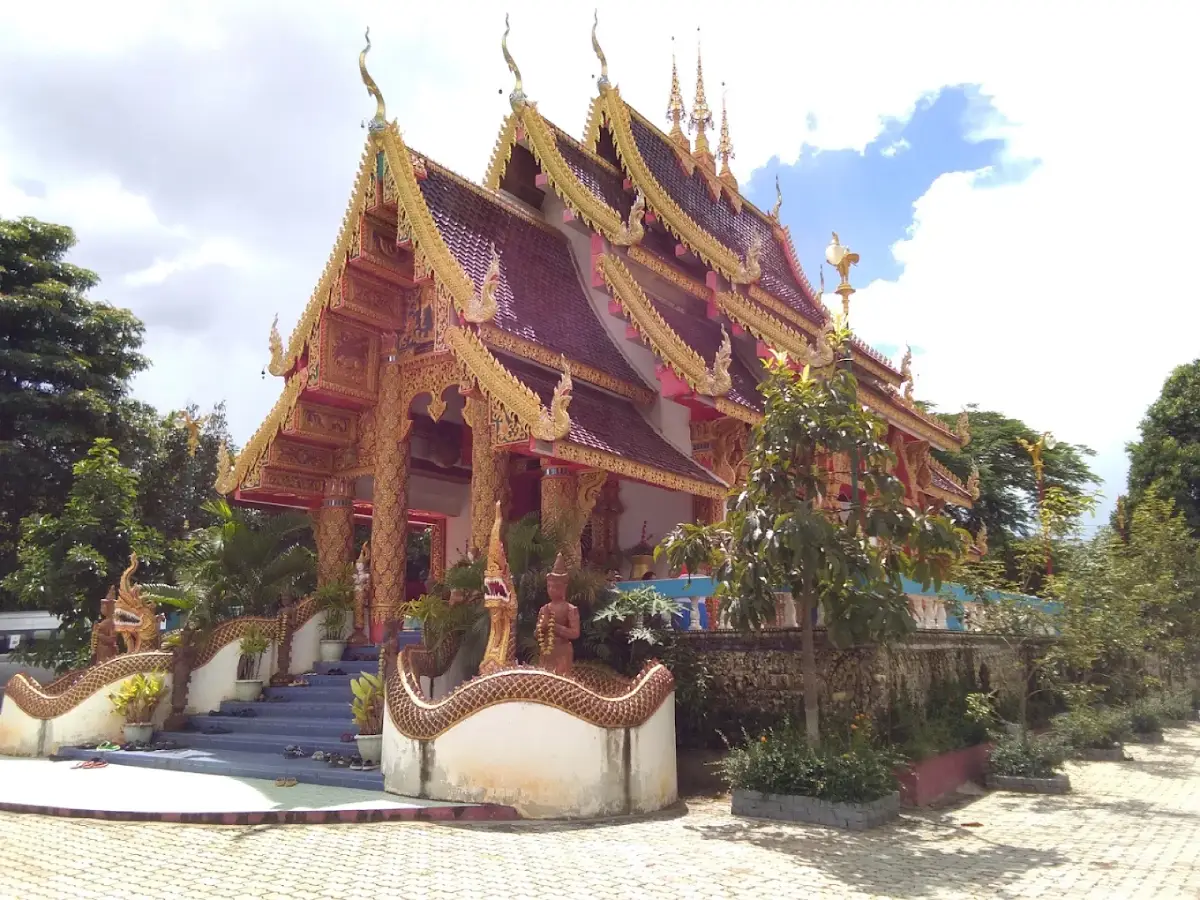
Wat Huai Hok is a historic Maha Nikaya community temple in Ban Huai Hok, Moo 5, Mueang Haeng Subdistrict, Wiang Haeng District, Chiang Mai Province. Established in B.E. 2465, equivalent to 1922, the monastery has served its mountain community for more than a century. Its most important sacred object is an early Lanna-style Singh One Buddha image associated with a long-standing local legend about its discovery in the Huai Hok stream. The temple also remains a functioning community institution today. During severe flash flooding in August 2026, Wat Huai Hok was used as a temporary safe shelter for families evacuated from affected homes. The temple therefore represents both historic Lanna Buddhist heritage and a living community center that remains important in modern Wiang Haeng.
Wat Huai Hok remains an active registered Buddhist monastery. It is listed under temple code 350200107 within the Maha Nikaya order in Mueang Haeng Subdistrict. Contemporary temple databases continue to include Wat Huai Hok, confirming that the site is not an abandoned monastery. Its continuing importance became particularly clear during the August 2026 flooding, when local authorities used the temple as a safe evacuation point.
The temple is located in Ban Huai Hok, Moo 5, within the mountain basin of Wiang Haeng. The surrounding landscape includes villages, agricultural fields, streams, forest, and mountain slopes. The approximate coordinates are 19.5413, 98.6463. The site lies relatively close to central Mueang Haeng, making it easier to reach than temples farther north near the international border while still retaining the atmosphere of a rural highland community.
The historical temple grounds cover approximately 1 rai, 2 ngan, and 16 square wah. The northern boundary extended around 27 wa toward a road, the southern side bordered a road and village, and the western side bordered a road and village. Wat Huai Hok also has one parcel of monastic land measuring approximately 1 rai, 2 ngan, and 30 square wah.
Monastic land has traditionally been important to the economic continuity of rural Thai temples. Such land may support religious activities and help provide resources needed to maintain a resident monastic community. The presence of both temple land and additional monastic property reflects the long-standing relationship between Wat Huai Hok and local supporters.
Wat Huai Hok was founded in 1922, at a time when Wiang Haeng remained geographically isolated from Chiang Mai city. Traveling into and out of the valley was far more difficult than it is today. Community temples were therefore essential institutions, providing places for worship, Buddhist instruction, funeral ceremonies, holy-day merit-making, and communal gatherings.
The temple developed during the same broad period in which several other important monasteries were being established across Mueang Haeng. Wat Kong Lom, Wat Kamphaeng Mai, and Wat Wiang Haeng all developed during the early twentieth century. Together, these temples reveal the growth of permanent Buddhist institutions alongside villages across the Wiang Haeng valley.
The historically recorded monastic buildings at Wat Huai Hok include monks' residences and a sermon hall. When the earlier temple history was compiled, the sermon hall was still under construction. This reflects the gradual development of rural monasteries, where buildings are expanded, replaced, and renovated according to available community support.
The monks' residences provide living and study space for resident monastics. Visitors should treat these areas as private and avoid entering without permission. Wat Huai Hok is a functioning monastery rather than a museum, and the daily routines of monks take priority over tourism.
The sermon hall serves the lay community as a space for Buddhist teaching, merit-making, village meetings, and ceremonies involving larger groups. In rural areas, temple halls can also become important public facilities during emergencies, a role demonstrated dramatically during the 2026 flood.
The temple's most distinctive sacred object is an early Lanna-style Singh One Buddha image. Singh One Buddha images are associated with important early phases of Lanna Buddhist art and are recognized for characteristic proportions and facial features. The presence of such an image gives Wat Huai Hok significance beyond its twentieth-century foundation date.
The image is also linked to a well-known local legend. According to community tradition, the Buddha image was discovered in the Huai Hok stream. Eight villagers initially tried to lift it but were unable to do so. After a formal religious invitation ceremony was performed to bring the image to the temple, only four people were reportedly needed to lift it.
This story belongs to the religious memory of the community rather than to scientific history. Its importance lies in what it reveals about local faith. The discovery of the image in a stream sharing the name of the village and temple created a particularly strong bond between the sacred object and Ban Huai Hok.
Visitors should give priority to respectfully worshipping and observing the Buddha image if its sanctuary is open. Appropriate clothing should be worn, shoes removed where required, and the image itself should not be touched or climbed upon. Those interested in Buddhist art can pay attention to the face, body proportions, posture, and other characteristics associated with Lanna sculpture.
The Buddha image also connects the temple with a historical period much older than the present monastery. A sacred image can predate the temple where it is currently housed by centuries, particularly when Buddhist objects are recovered from abandoned religious sites or transferred between monasteries.
The Wiang Haeng basin preserves numerous traces of older settlement and Buddhist activity. Wat Huai Hok, Wat Wiang Haeng, Wat Kamphaeng Mai, and other temples should therefore be viewed as parts of a broader historical landscape rather than isolated institutions.
The historical succession of abbots begins with Phra Duang Kaeng Uttamo, who served from B.E. 2465 to 2470, followed by Phra Si Chan Kovido from B.E. 2470 to 2485 and Phra Thong Kham Kammasaro from B.E. 2485 to 2496. Their service covered the decades before and after the Second World War, when rural communities depended heavily on local temples.
Later abbots included Phra Chuen Katasaro from B.E. 2496 to 2500, Phra Kham Ai Thitasilo from B.E. 2500 to 2506, Phra Chai Khemavaro from B.E. 2506 to 2511, and Phra Phon Obhaso from B.E. 2511 to 2515.
The succession continued with Phra Thip Kham Suphakamo from B.E. 2515 to 2524, Phra Charoen Panyasaro from B.E. 2524 to 2527, and Phra Manit Silanando from B.E. 2527 according to the historical temple record.
A nationwide novice ordination document from 2016 also identified Phrakhru Wapi Khanthawimon as head of a novice training center at Wat Huai Hok. This demonstrates that the monastery later developed an educational role involving young monastics. A current 2025 public temple listing does not publish a verified abbot name, so the older training-center record is treated as dated historical information rather than a current leadership claim.
Novice training has particular importance in remote mountain districts. Young people from rural and ethnic communities can enter temples to learn Buddhist teachings, discipline, communal responsibility, and formal religious studies. Wat Huai Hok's documented participation in novice training therefore adds an educational dimension to its role in the community.
Ban Huai Hok is now a substantial village within Mueang Haeng Subdistrict and includes people from several ethnic backgrounds. Community-forest records identify Northern Thai, Tai, Lisu, and Lahu residents. This diversity is typical of Wiang Haeng, where migration and settlement across mountain and border routes have created culturally mixed communities.
Agriculture remains central to local livelihoods. Across Mueang Haeng, villagers grow rice, garlic, corn, chili, soybeans, peanuts, mangoes, lychees, and other crops suited to the highland basin. Farming depends on streams, local water systems, and forest resources, making environmental management essential to community stability.
Ban Huai Hok also maintains a community forest within the Chiang Dao National Forest Reserve. Forestry records identify more than 580 rai in a community-forest registration dating from 2019. The forest helps protect water sources and provides an environmental buffer around agricultural and residential areas.
The connection between Wat Huai Hok and the natural environment is visible in the village itself. Streams, forest, farmland, and mountain slopes define settlement patterns, while the temple provides the spiritual and communal center. Understanding the monastery together with this landscape gives a more accurate picture of life in Mueang Haeng.
The temple's contemporary social importance became especially clear during severe flooding in August 2026. Heavy rainfall caused mountain runoff and streams to flood Ban Huai Hok. More than 50 households were affected, agricultural land was damaged, and some roads became impassable.
During the emergency, at least three families were evacuated to Wat Huai Hok as a temporary safe shelter, while other residents were moved to Wat Wiang Haeng. Local administrative officers, military personnel, police, volunteers, and community organizations worked together to move vulnerable residents away from danger.
After the flooding, vocational students and teachers also entered Ban Huai Hok to repair damaged electrical appliances, electronic equipment, motorcycles, and work tools. The recovery effort illustrates how the village, schools, government agencies, and religious institutions work together during local crises.
This emergency role demonstrates the continuing relevance of a rural temple. Wat Huai Hok is not valuable only because it is old. Its halls and open areas can serve the community in circumstances that go far beyond religious ceremonies.
The temple's annual religious cycle follows the broader Buddhist traditions of northern Thailand, including Buddhist holy days, the rains retreat, the end of the rains retreat, Kathin, community robe offerings, and other merit-making ceremonies. Although a complete annual calendar is not publicly maintained, the temple continues to appear in contemporary Kathin databases.
During Buddhist Lent, villagers traditionally provide food, candles, and necessities for resident monks. After the retreat, Kathin and other ceremonies help support temple maintenance and strengthen relationships among families and the monastic community.
Wat Huai Hok is particularly suitable for travelers interested in living community temples and Lanna Buddhist art rather than monumental tourist architecture. Its main appeal comes from the Singh One Buddha image, the temple's century-long history, the succession of abbots, and its continuing relationship with Ban Huai Hok.
The atmosphere remains closely connected with village life. Houses, agricultural land, roads, streams, and mountains are all nearby. Walking slowly through the public temple areas allows visitors to understand how the monastery fits naturally into the settlement.
Visitors should dress modestly, cover shoulders and knees, remove shoes where required, and avoid entering monks' residences without permission. Photography of monks or villagers should be requested in advance, particularly during ceremonies or private activities.
Photography is most meaningful when the temple is shown together with Ban Huai Hok's landscape. Village roads, fields, mountain backdrops, and waterways explain the identity of Wat Huai Hok more fully than isolated architectural photographs.
Wat Wiang Haeng is one of the most useful nearby companion visits. The two temples reveal different artistic traditions within the same valley. Wat Huai Hok is especially significant for its Lanna Singh One Buddha image, while Wat Wiang Haeng is known for Shan-Burmese architecture and paintings.
Wat Kamphaeng Mai at Ban Pa Phai is another nearby historic monastery. Its history and archaeological setting add a deeper understanding of ancient settlement in the Wiang Haeng basin.
Wat Kong Lom provides another perspective because of its role in district-level Sangha administration and monastic education. Phra That Wiang Haeng can also be included for travelers interested in local religious traditions and the history of the old settlement.
Mae Hat Waterfall provides a natural extension to a cultural itinerary. A practical plan is to visit Wat Huai Hok and nearby temples in the morning, then continue toward the waterfall in the afternoon if weather and access conditions are suitable.
A half-day itinerary can combine Wat Huai Hok, Wat Wiang Haeng, Phra That Wiang Haeng, and Wat Kamphaeng Mai. A full-day route can add Wat Kong Lom and Mae Hat Waterfall without requiring a long drive toward the northern border.
Food and coffee options are available around central Mueang Haeng. Chapter four, Cafe Amazon at PTT Wiang Haeng, Wiang Haeng Coffee, Chamuk Jab Dood Sushi Kham To, and Pa Khin Restaurant are all within a short drive of the temple.
Accommodation options include Chiang Tung Apartment, Kru Ae Homestay, Muang Haeng Resort & Spa, Wianghaengresort, and Baan Somwang Resort. Staying in Mueang Haeng allows travelers to avoid driving the mountain route back to Chiang Mai after dark and makes it easier to continue toward Saen Hai or Piang Luang the next morning.
For a two-day, one-night itinerary, the first day can focus on Wat Huai Hok, Wat Wiang Haeng, Phra That Wiang Haeng, Wat Kamphaeng Mai, and Wat Kong Lom. The second day can continue to Wat Phra That Saen Hai and the Shan cultural communities of Piang Luang.
The cool season from approximately November to February is generally the most comfortable time to visit. The valley has cooler mornings and evenings than central Chiang Mai, while mountain views are often clearer.
The rainy season offers lush green scenery but requires greater caution. The August 2026 flood demonstrated that Ban Huai Hok can be affected by rapid mountain runoff during periods of intense rainfall. Travelers should monitor weather conditions and avoid low-lying routes near streams during severe weather.
Getting There from Chiang Mai city is easiest by private car or rental vehicle. Follow Highway 107 toward Chiang Dao, then take the mountain route into Wiang Haeng District. Continue through Mueang Haeng toward Ban Huai Hok, Moo 5. Mapping systems list the temple as Wat Huai Hok at Plus Code GJRW+V4M, approximately 19.5413, 98.6463.
The road into Wiang Haeng contains many curves and mountain sections. Brakes, tyres, fuel, and lights should be checked before departure. Daytime driving is recommended, particularly during the rainy season.
Wat Huai Hok is best suited to travelers interested in historic temples, Lanna Buddhist art, community history, forest landscapes, and the everyday life of mountain villages. It is not designed as a large commercial tourism site, and this is one of its main strengths.
The Singh One Buddha image represents the temple's connection with Lanna history, while the 2026 flood response illustrates its continuing role in contemporary community life. These two dimensions allow visitors to understand the temple as both heritage and living infrastructure.
The Ban Huai Hok community forest adds another important layer. Residents maintain not only a temple but also forest and water resources that support agriculture and village life. Religion, environmental management, and local livelihoods remain closely connected.
Viewed as a whole, Wat Huai Hok is far more than a small rural monastery. Its 1922 foundation, succession of abbots, revered Lanna Buddha image, stream legend, novice education, community forest, and role as a flood shelter create a continuous story of more than a century.
For travelers who want to understand Wiang Haeng beyond its image as a remote border district, Wat Huai Hok offers a valuable starting point. The temple connects Lanna art, village settlement, agriculture, ethnic diversity, forest conservation, Buddhist education, and disaster resilience within one living mountain community.
| Name | Wat Huai Hok |
| Temple Type | Public Buddhist Temple, Maha Nikaya Order |
| Temple Registry Code | 350200107 |
| Location | Ban Huai Hok, Moo 5, Mueang Haeng Subdistrict, Wiang Haeng District, Chiang Mai Province 50350, Thailand |
| Coordinates | Approximately 19.5413, 98.6463 |
| Map Position | Plus Code GJRW+V4M, Mueang Haeng, Wiang Haeng |
| Established | B.E. 2465 / 1922 |
| Temple Area | 1 Rai, 2 Ngan, 16 Square Wah |
| Monastic Land | One Parcel, Approximately 1 Rai, 2 Ngan, 30 Square Wah |
| Historical Boundaries | Road to the north; road and village to the south; road and village to the west |
| Important Structures | Monks' Residences And Sermon Hall |
| Important Sacred Object | Early Lanna-Style Singh One Buddha Image Revered By The Ban Huai Hok Community |
| Local Legend | The Buddha image is traditionally said to have been found in the Huai Hok stream. Eight villagers could not initially lift it, while four people were later able to move it after a formal religious invitation ceremony. |
| Historical Abbots | 1. Phra Duang Kaeng Uttamo, B.E. 2465-2470 2. Phra Si Chan Kovido, B.E. 2470-2485 3. Phra Thong Kham Kammasaro, B.E. 2485-2496 4. Phra Chuen Katasaro, B.E. 2496-2500 5. Phra Kham Ai Thitasilo, B.E. 2500-2506 6. Phra Chai Khemavaro, B.E. 2506-2511 7. Phra Phon Obhaso, B.E. 2511-2515 8. Phra Thip Kham Suphakamo, B.E. 2515-2524 9. Phra Charoen Panyasaro, B.E. 2524-2527 10. Phra Manit Silanando, From B.E. 2527 According To The Historical Temple Record |
| Documented Educational Role | In 2016, Wat Huai Hok was listed as a novice training center under Phrakhru Wapi Khanthawimon. |
| Contemporary Community Role | Spiritual center and temporary emergency shelter for families affected by the August 2026 Ban Huai Hok flash flood |
| Nearby Community Forest | Ban Huai Hok Community Forest Within The Chiang Dao National Forest Reserve |
| Open Days | Daily |
| Opening Hours | 08.00 – 17.00 |
| Current Status | Active Registered Maha Nikaya Temple |
| Travel Information | Travel From Chiang Mai Via Highway 107 And Chiang Dao, Then Continue Into Wiang Haeng District And Ban Huai Hok, Moo 5. Private Car Or Rental Vehicle Is Recommended. |
| Nearby Tourist Attractions | 1. Wat Wiang Haeng, About 2 km 2. Phra That Wiang Haeng, About 3 km 3. Wat Kamphaeng Mai, About 3 km 4. Wat Kong Lom, About 6 km 5. Wat Mae Hat, About 8 km 6. Mae Hat Waterfall, About 10 km |
| Nearby Restaurants & Cafes | 1. Cafe Amazon PTT Wiang Haeng, About 2 km, Tel. 098-382-3956 2. Chapter four, About 2 km, Tel. 090-742-4044 3. Chamuk Jab Dood Sushi Kham To, About 2 km, Tel. 084-117-0101 4. Wiang Haeng Coffee, About 2 km, Tel. 087-496-5932 5. Pa Khin Restaurant, About 2 km, Tel. 089-854-9071 |
| Nearby Accommodations | 1. Chiang Tung Apartment, About 2 km, Tel. 089-335-4932 2. Muang Haeng Resort & Spa, About 3 km 3. Kru Ae Homestay, About 3 km, Tel. 087-179-4631 4. Baan Somwang Resort, About 3 km 5. Wianghaengresort, About 5 km, Tel. 090-891-8392 |
Frequently Asked Questions (FAQ)
Q: Where is Wat Huai Hok located?
A: Wat Huai Hok is located in Ban Huai Hok, Moo 5, Mueang Haeng Subdistrict, Wiang Haeng District, Chiang Mai Province 50350. Its map position is GJRW+V4M, approximately 19.5413, 98.6463.
Q: When was Wat Huai Hok established?
A: Wat Huai Hok was established in B.E. 2465, equivalent to 1922, making it one of the century-old community temples of Mueang Haeng.
Q: What important Buddha image is kept at Wat Huai Hok?
A: The temple is known for an early Lanna-style Singh One Buddha image that is deeply revered by the local community.
Q: What is the legend of the Wat Huai Hok Buddha image?
A: Local tradition says the image was discovered in the Huai Hok stream. Eight villagers were initially unable to lift it, but after a religious invitation ceremony, four people were able to move it to the temple.
Q: Is Wat Huai Hok still active?
A: Yes. Wat Huai Hok remains registered under temple code 350200107 in the Maha Nikaya order. In August 2026, the temple was also used as temporary shelter for families evacuated during severe flash flooding in Ban Huai Hok.
Q: What role does Wat Huai Hok play in the community?
A: The temple serves as a spiritual center for Buddhist ceremonies, has a documented history of novice training, and remains a practical community space that can support residents during emergencies.
Q: What nearby places can be combined with Wat Huai Hok?
A: Nearby destinations include Wat Wiang Haeng, Phra That Wiang Haeng, Wat Kamphaeng Mai, Wat Kong Lom, Wat Mae Hat, and Mae Hat Waterfall.
Q: What type of traveler will appreciate Wat Huai Hok?
A: Wat Huai Hok is especially suitable for travelers interested in historic temples, Lanna Buddhist art, community history, rural mountain life, community forests, and cultural travel beyond mainstream Chiang Mai attractions.
 Category: ●Places of Worship
 Group: ●Temple
Last Update : 1 MonthAgo
 Last Update : 1 MonthAgo
 Click to Access the Navigation Map GPS

 Muang Chiang Mai(121)Chom Thong(47)Mae Chaem(25)Chiang Dao(33)Doi Saket(68)Mae Taeng(85)Mae Rim(69)Samoeng(29)Fang(71)Mae Ai(59)Phrao(70)San Pa Tong(103)San Kamphaeng(66)San Sai(73)Hang Dong(73)Hot(32)Doi Tao(22)Omkoi(11)Saraphi(74)Wiang Haeng(15)Chai Prakan(28)Mae Wang(32)Mae On(22)Doi Lo(33)Galyani Vadhana(1)


