
lovethailand home >North Travel Attractions >Chiang Mai Travel Attractions >Wiang Haeng >Muang Haeng > Wat Mae Hat
TL;DR: Wat Mae Hat is located at Ban Mae Hat, Moo 1, Mueang Haeng Subdistrict, Wiang Haeng District, Chiang Mai Province 50350, Thailand, open Daily, hours 08.00 – 17.00.

Wat Mae Hat
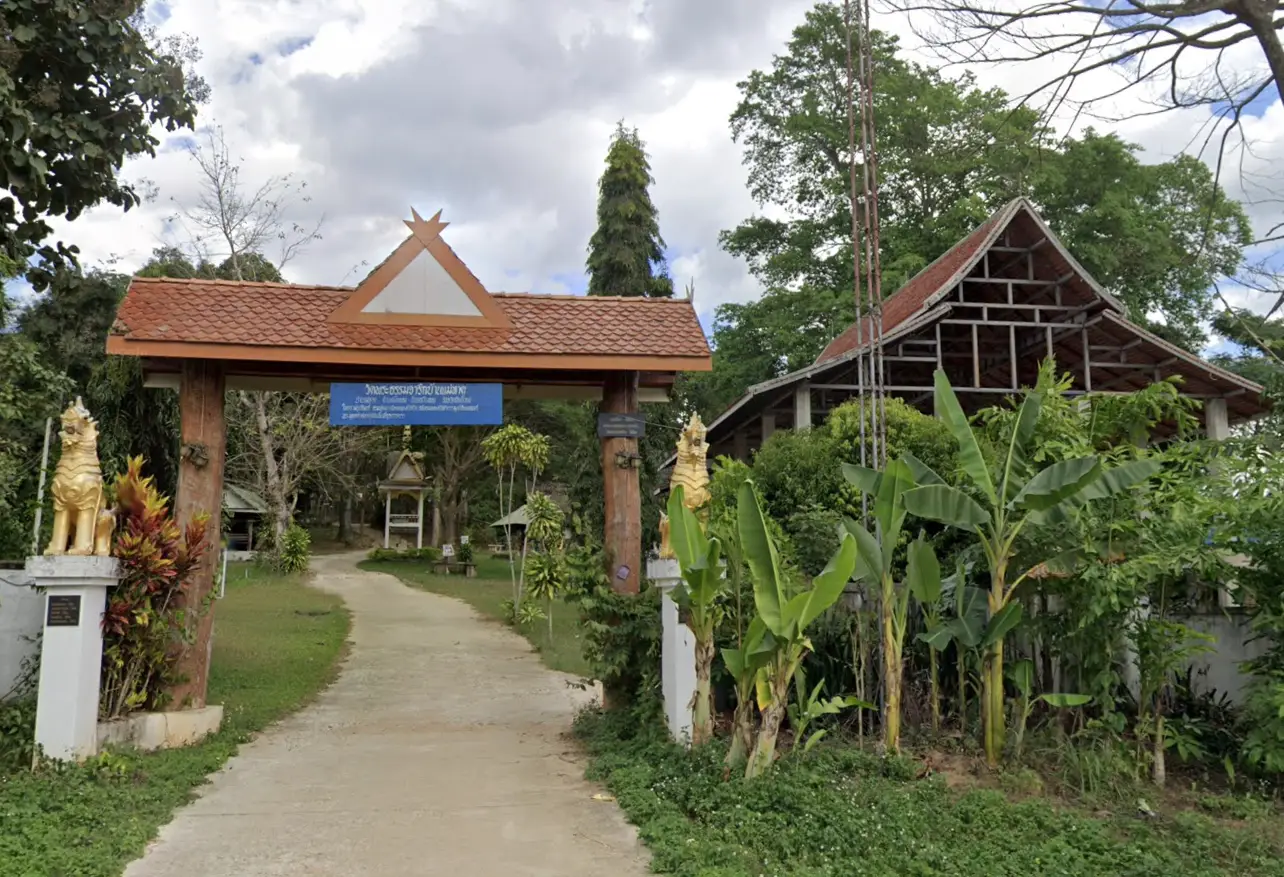
Open Days: Daily
Opening Hours: 08.00 – 17.00
Wat Mae Hat is a historic community Buddhist temple in Ban Mae Hat, Moo 1, Mueang Haeng Subdistrict, Wiang Haeng District, Chiang Mai Province. Established in B.E. 2479, equivalent to 1936, the temple has an unusual history shaped by ethnic settlement, migration, abandonment, fire, and community reconstruction. Historical records state that the original monastery was founded by Karen villagers. The temple later became abandoned when residents moved away, and in 1957 a major fire destroyed what remained of the monastery. Two years later, in 1959, local residents worked together to rebuild the monastic structures. Wat Mae Hat therefore represents not only a Buddhist institution but also the resilience of a mountain community that repeatedly restored its spiritual center after major social and physical disruption.
Today, Wat Mae Hat remains registered as an active Maha Nikaya temple under temple code 350200105. Contemporary records continue to list the monastery in Mueang Haeng Subdistrict, and a 2024 Kathin record identified five resident monks at the temple. The evidence confirms that Wat Mae Hat remains a functioning religious site rather than an abandoned monastery or a heritage ruin.
The temple stands in Ban Mae Hat, Moo 1, one of the established communities of Mueang Haeng Subdistrict. The surrounding landscape consists of mountain forest, streams, farmland, village homes, and roads extending across the Wiang Haeng basin. Historical boundary records describe a stream and village to the north, village land to the south and west, and forest to the east, illustrating the temple's original position between settlement and nature.
The historical temple site covered approximately 2 rai. Wat Mae Hat also possessed one parcel of monastic land measuring approximately 3 rai and 20 square wah. Such monastic land formed part of the economic and institutional foundation of rural temples and could support religious activities and the long-term maintenance of the monastery.
Modern mapping sources identify a monastery in Ban Mae Hat under the name Wat Mae Hat Chaloem Phra Kiat, at approximately 19.58856, 98.60047 and an elevation of around 743 metres above sea level. The site lies close to Ban Mae Hat School. Official Buddhist registry sources, however, continue to use the shorter name Wat Mae Hat, which remains the primary name used in this article.
The history of Ban Mae Hat is essential to understanding the temple. The monastery was founded by Karen villagers in 1936, demonstrating that Buddhism formed part of the religious landscape of the community before the Second World War. Northern Karen communities have historically shown considerable religious diversity, and Ban Mae Hat itself later developed both Buddhist and Christian institutions.
In the early twentieth century, Wiang Haeng was geographically isolated from central Chiang Mai. Villages were separated by mountain terrain, forest, and limited transportation routes. A community temple therefore provided much more than ritual space. It offered a place for merit-making, funerals, Buddhist teaching, community gatherings, and moral education.
Wat Mae Hat was established in 1936 by Karen residents of the village. This is particularly significant because the temple developed within an ethnic highland community rather than a large lowland town. The monastery became one of the institutions through which the village organized religious and social life.
At a later stage, population movement caused the monastery to become abandoned. When villagers leave a small rural settlement, a temple can lose the lay community necessary to support resident monks, maintain buildings, and organize religious ceremonies. Wat Mae Hat's period of abandonment therefore reflects changes in settlement rather than simply physical deterioration.
In 1957, a fire devastated the monastery. Historical accounts describe the buildings as being reduced to ashes. For a community temple that had already experienced abandonment, the fire represented a second major disruption and effectively erased much of the original built environment.
Local residents responded by rebuilding the monastery in 1959. This reconstruction is central to Wat Mae Hat's identity. The community did not merely repair a damaged building; it recreated a functioning Buddhist center after both population decline and fire. The rebuilding demonstrates that religious continuity depended on collective local commitment rather than on the survival of the original architecture.
The main monastic structures historically recorded at Wat Mae Hat are a sermon hall and monks' residences. These buildings reveal the practical nature of the temple. The sermon hall provides space for Buddhist teaching, merit-making, ceremonies, and larger village gatherings, while the monks' residences support year-round monastic life.
Wat Mae Hat is therefore best understood as a working community monastery rather than a monumental architectural attraction. Its value lies in its history, the collective reconstruction after the 1957 fire, and the continuing relationship between monks and the local community.
The historical succession of abbots includes Phra Jo Rueang Panyachoto, whose recorded starting year is unclear in the surviving source but whose tenure extended to 1957. He was followed by Phra Khwa Pabhaso from 1957 to 1959, a period corresponding with the fire and initial reconstruction.
Later abbots included Phra Thip Kham Suthiro from B.E. 2522 to 2523, Phra Praphan Sophano from B.E. 2523 to 2524, Phra Thongsuk Obhaso from B.E. 2524 to 2525, Phra Bunpeng Katapanyo from B.E. 2525 to 2526, Phra Niran Abhijoto from B.E. 2526 to 2527, and Phra Suai Jantasuwanno from B.E. 2527 according to the surviving temple history.
A more recent Kathin record from 2024 identifies Phra Prasit Sujitto as abbot at that time and states that five monks were resident at Wat Mae Hat. The 2025 temple listing continued to include Wat Mae Hat but did not publish a new abbot name. For this reason, Phra Prasit Sujitto should be understood as the most recently confirmed abbot in a dated public source rather than automatically assumed to hold the position today.
The presence of five resident monks in the 2024 record is strong evidence that Wat Mae Hat remains a living religious institution. Resident monks maintain daily Buddhist practice, observe the rains retreat, receive alms, support village ceremonies, and serve as spiritual resources for local families.
The Kathin ceremony also confirms the continuing relationship between monastery and lay community. Kathin is one of the major annual Buddhist events following the rains retreat. Families, former residents, local supporters, and neighboring communities may participate in offering robes and other necessities to monks.
Ban Mae Hat remains an active settlement. Population data from late 2024 recorded approximately 773 residents and around 238 households. Ban Mae Hat School and an early childhood development center also continue to operate within the community, demonstrating that this is a functioning village with families and children rather than a historical settlement without a permanent population.
The proximity of school and temple reflects the traditional northern Thai relationship between home, monastery, and education. The school provides formal education, the temple supports religious and moral life, and families connect the two institutions through community participation.
Ban Mae Hat also maintains a strong ethnic craft tradition. A registered community enterprise produces Karen textiles dyed with natural colors. Traditional weaving involves knowledge of fibers, natural dyes, patterns, and techniques transmitted across generations. This cultural activity reinforces the historical connection between Wat Mae Hat and the Karen community that originally founded the monastery.
A separate community group continues local basketry traditions. Together, weaving and basketry demonstrate that Ban Mae Hat's cultural identity extends well beyond the temple. Travelers interested in community culture can use the monastery as an entry point into a broader understanding of craft, food, ethnic identity, and village life.
Ban Mae Hat is equally important for its community forest. Government forest records identify a large community forest in Moo 1, Mueang Haeng. The forest lies within the Chiang Dao National Forest Reserve and has long formed part of the village's environmental resource base.
The community forest is now also part of a registered carbon-storage project under Thailand's T-VER voluntary greenhouse-gas reduction program. The project was registered in the 2026 fiscal year for a ten-year crediting period and is expected to reduce or store approximately 359 tonnes of carbon-dioxide equivalent per year.
This contemporary environmental work adds a distinctive dimension to Ban Mae Hat. The community contains a functioning Buddhist temple, school, ethnic craft groups, and a forest-conservation project. Religion, culture, education, and environmental stewardship therefore exist within the same local landscape.
Religious diversity is another part of Ban Mae Hat's identity. Provincial cultural records also list a Christian church in the Mae Hat area. The presence of both Buddhist and Christian institutions reflects the complex religious history of highland ethnic communities in northern Thailand.
The main reason to visit Wat Mae Hat is consequently not monumental architecture. The temple's most important story is one of community continuity: establishment by Karen villagers, abandonment after migration, destruction by fire, and reconstruction through local cooperation.
Visitors should spend time observing the sermon hall, the public areas around the monks' residences, the relationship between the temple and nearby houses, and the surrounding mountain environment. Understanding the monastery in its village setting provides more insight than viewing the buildings in isolation.
Temple etiquette should be observed at all times. Visitors should dress modestly, remove shoes before entering designated religious buildings, keep noise low, and avoid entering monks' residential spaces without permission.
Photography of buildings and landscapes can generally be done respectfully, but permission should be requested before photographing monks, villagers, ethnic cultural activities, or private religious ceremonies.
Wat Mae Hat is particularly suitable for travelers who want to combine culture with nature. The Ban Mae Hat community forest and Mae Hat Waterfall can be incorporated into the same local route, allowing visitors to see how the monastery, village, forest, and water systems form one cultural landscape.
Mae Hat Waterfall lies within Mueang Haeng Subdistrict and provides a natural contrast to temple visits. Seasonal water conditions vary, so travelers should check local access and weather before visiting, particularly during the rainy season.
Wat Kong Lom is another useful cultural stop in Mueang Haeng. Its abbot, Phrakhru Kantasilanuyut, serves as the ecclesiastical head of Wiang Haeng District, and the temple has a long history of monastic and novice education.
Wat Kamphaeng Mai at Ban Pa Phai offers a different historical perspective. The temple traces its history to the early twentieth century and is connected with the archaeological landscape of ancient Wiang Haeng. Combining Wat Mae Hat and Wat Kamphaeng Mai allows travelers to compare an ethnic Karen community temple with a temple rooted in the historical lowland settlement of the Wiang Haeng basin.
Wat Wiang Haeng is another important temple connected with the ancient settlement and Lanna Buddhist art, while Wat Huai Hok adds another community monastery to the route. Together these temples create a practical full-day cultural itinerary within Mueang Haeng Subdistrict.
A balanced one-day program can begin at Wat Mae Hat and Ban Mae Hat, continue to the community forest or Mae Hat Waterfall if conditions are suitable, and then proceed toward central Mueang Haeng for lunch and additional temple visits.
Food options in central Mueang Haeng include Wiang Haeng Coffee, FoodFactory, Pa Khin Restaurant, Sukjai Cafe, and Por Patcha. Pa Khin Restaurant is especially associated with local northern Thai dishes, while FoodFactory provides a practical all-day dining option in Ban Wiang Haeng.
Travelers who want to stay overnight can choose accommodation in Mueang Haeng, including Wianghaengresort, Kru Ae Homestay, Muang Haeng Resort & Spa, Chiang Tung Rooms, and Pa Khin Rooms. Staying within the district avoids a long mountain drive back to Chiang Mai after sunset.
An overnight stay is particularly useful because access to Wiang Haeng involves prolonged mountain driving. A two-day itinerary allows visitors to explore Mueang Haeng and Ban Mae Hat on the first day and continue to Saen Hai or Piang Luang on the second.
The cool season is generally the most comfortable period to visit. At more than 700 metres above sea level, the valley experiences cooler mornings and evenings than central Chiang Mai. The rainy season provides greener forests and potentially stronger waterfalls but can also bring wet roads, fog, and reduced visibility.
Getting There from Chiang Mai city is easiest by private car or rental vehicle. Follow Highway 107 toward Chiang Dao, then take the mountain route into Wiang Haeng District. Continue through Mueang Haeng toward Ban Mae Hat, Moo 1. Mapping systems may list the site as Wat Mae Hat or Wat Mae Hat Chaloem Phra Kiat, at approximately 19.58856, 98.60047.
Drivers should check brakes, tyres, fuel, and vehicle lighting before departure. The route into Wiang Haeng includes many mountain curves, making daylight travel preferable for visitors unfamiliar with the area.
A half-day visit can focus on Wat Mae Hat, Ban Mae Hat, the community forest, and Mae Hat Waterfall. A full-day route can continue to Wat Kong Lom, Wat Kamphaeng Mai, Wat Wiang Haeng, and Wat Huai Hok.
With two days and one night, travelers can use the first day to explore Mueang Haeng and the Karen history of Ban Mae Hat, then continue on the second day to Wat Phra That Saen Hai and the Shan and Yunnanese Chinese communities of Piang Luang. The route provides a broader view of Wiang Haeng's ethnic and cultural diversity.
Wat Mae Hat is best suited to travelers interested in community temples, Karen history, ethnic culture, forest conservation, and places where religious history is closely tied to migration and environmental change. Its importance is not defined by the scale of its architecture but by the continuity of the community that rebuilt and sustained it.
The temple's history clearly demonstrates the meaning of a living community monastery. Wat Mae Hat survived not because its original structures remained intact, but because local residents repeatedly chose to restore a Buddhist center for the village.
Today, Ban Mae Hat remains home to hundreds of residents, a school, traditional Karen textile and basketry groups, and a major community forest participating in carbon-storage initiatives. The monastery therefore stands inside a community that continues to adapt while maintaining cultural and environmental traditions.
Viewed in its full context, Wat Mae Hat tells a story that extends far beyond a small rural temple. It connects Karen settlement, Buddhism, migration, fire, reconstruction, education, traditional crafts, forest conservation, and contemporary climate action within one mountain community. For travelers seeking a deeper understanding of Wiang Haeng beyond its border landscapes, Wat Mae Hat offers one of the district's most meaningful examples of living local heritage.
| Name | Wat Mae Hat |
| Map Name | Wat Mae Hat Chaloem Phra Kiat |
| Temple Type | Public Buddhist Temple, Maha Nikaya Order |
| Temple Registry Code | 350200105 |
| Location | Ban Mae Hat, Moo 1, Mueang Haeng Subdistrict, Wiang Haeng District, Chiang Mai Province 50350, Thailand |
| Coordinates | Approximately 19.58856, 98.60047 |
| Elevation | Approximately 743 Metres Above Sea Level |
| Established | B.E. 2479 / 1936 |
| Original Founding Community | Karen Residents Of Ban Mae Hat |
| Major Historical Events | The monastery became abandoned after population migration, was destroyed by fire in 1957, and was rebuilt by local residents in 1959 |
| Temple Area | Approximately 2 Rai |
| Monastic Land | One Parcel, Approximately 3 Rai And 20 Square Wah |
| Historical Boundaries | Stream and village to the north, village to the south and west, and forest to the east |
| Important Structures | Sermon Hall And Monks' Residences |
| Abbot Confirmed In 2024 | Phra Prasit Sujitto |
| Resident Monks In 2024 Record | 5 Monks |
| Historical Abbots | 1. Phra Jo Rueang Panyachoto, until B.E. 2500 2. Phra Khwa Pabhaso, B.E. 2500-2502 3. Phra Thip Kham Suthiro, B.E. 2522-2523 4. Phra Praphan Sophano, B.E. 2523-2524 5. Phra Thongsuk Obhaso, B.E. 2524-2525 6. Phra Bunpeng Katapanyo, B.E. 2525-2526 7. Phra Niran Abhijoto, B.E. 2526-2527 8. Phra Suai Jantasuwanno, From B.E. 2527 According To The Historical Record |
| Open Days | Daily |
| Opening Hours | 08.00 – 17.00 |
| Contact | 053-477-114 |
| Current Status | Active Registered Maha Nikaya Temple With Contemporary Kathin Activity |
| Community Role | Spiritual Center Connected With Karen Community History, Local Education, Community Forestry, Traditional Crafts, And Buddhist Ceremonies |
| Travel Information | Travel from Chiang Mai via Highway 107 toward Chiang Dao, then continue into Wiang Haeng District and Ban Mae Hat. Private car or rental vehicle is recommended. |
| Nearby Tourist Attractions | 1. Ban Mae Hat Community Forest, About 2 km 2. Mae Hat Waterfall, About 5 km 3. Wat Kong Lom, About 5 km 4. Wat Kamphaeng Mai, About 7 km 5. Wat Wiang Haeng, About 8 km 6. Wat Huai Hok, About 10 km |
| Nearby Restaurants & Cafes | 1. Wiang Haeng Coffee, About 6 km, Tel. 087-496-5932 2. FoodFactory, About 7 km, Tel. 089-968-5520 3. Pa Khin Restaurant, About 7 km, Tel. 089-854-9071 4. Sukjai Cafe, About 7 km, Tel. 098-981-1177 5. Por Patcha, About 8 km, Tel. 088-269-1516 |
| Nearby Accommodations | 1. Wianghaengresort, About 5 km, Tel. 090-891-8392 2. Kru Ae Homestay, About 6 km, Tel. 087-179-4631 3. Muang Haeng Resort & Spa, About 7 km, Tel. 088-430-5658 4. Chiang Tung Rooms, About 7 km, Tel. 053-477-251, 089-835-4932, 082-895-6271 5. Pa Khin Rooms, About 7 km, Tel. 089-854-9071 |
Frequently Asked Questions (FAQ)
Q: Where is Wat Mae Hat located?
A: Wat Mae Hat is located in Ban Mae Hat, Moo 1, Mueang Haeng Subdistrict, Wiang Haeng District, Chiang Mai Province 50350. The approximate coordinates used for navigation are 19.58856, 98.60047.
Q: When was Wat Mae Hat established?
A: Wat Mae Hat was established in B.E. 2479, equivalent to 1936, by Karen residents of Ban Mae Hat. The monastery later became abandoned, was destroyed by fire in 1957, and was rebuilt by local residents in 1959.
Q: Is Wat Mae Hat still active?
A: Yes. The temple remains registered under the Maha Nikaya order with temple code 350200105, and a 2024 Kathin record listed five resident monks.
Q: Who is the current abbot of Wat Mae Hat?
A: A 2024 Kathin record identified Phra Prasit Sujitto as abbot at that time. The 2025 listing continues to show the temple but does not publish a new abbot name, so Phra Prasit Sujitto should be treated as the most recently confirmed abbot in a dated public source.
Q: What is special about Wat Mae Hat?
A: Its history is closely connected with the Karen community of Ban Mae Hat. The temple survived population migration, abandonment, and a major fire before being rebuilt through community cooperation.
Q: What important structures are recorded at Wat Mae Hat?
A: Historically recorded structures include the sermon hall and monks' residences, which support community Buddhist ceremonies and residential monastic life.
Q: What nearby attractions can be combined with Wat Mae Hat?
A: Nearby places include Ban Mae Hat Community Forest, Mae Hat Waterfall, Wat Kong Lom, Wat Kamphaeng Mai, Wat Wiang Haeng, and Wat Huai Hok.
Q: What type of traveler will appreciate Wat Mae Hat?
A: Wat Mae Hat is particularly suitable for travelers interested in community temples, Karen culture, ethnic history, traditional crafts, forest conservation, and quieter cultural destinations in northern Chiang Mai.
 Category: ●Places of Worship
 Group: ●Temple
Last Update : 1 MonthAgo
 Last Update : 1 MonthAgo
 Click to Access the Navigation Map GPS

 Muang Chiang Mai(121)Chom Thong(47)Mae Chaem(25)Chiang Dao(33)Doi Saket(68)Mae Taeng(85)Mae Rim(69)Samoeng(29)Fang(71)Mae Ai(59)Phrao(70)San Pa Tong(103)San Kamphaeng(66)San Sai(73)Hang Dong(73)Hot(32)Doi Tao(22)Omkoi(11)Saraphi(74)Wiang Haeng(15)Chai Prakan(28)Mae Wang(32)Mae On(22)Doi Lo(33)Galyani Vadhana(1)


