
lovethailand home >North Travel Attractions >Chiang Mai Travel Attractions >Mae Ai >Mae Sao > Wat Mae Sao
TL;DR: Wat Mae Sao is located at Mae Sao Subdistrict, Mae Ai District, Chiang Mai Province, open Daily, hours 08.00 – 17.00.

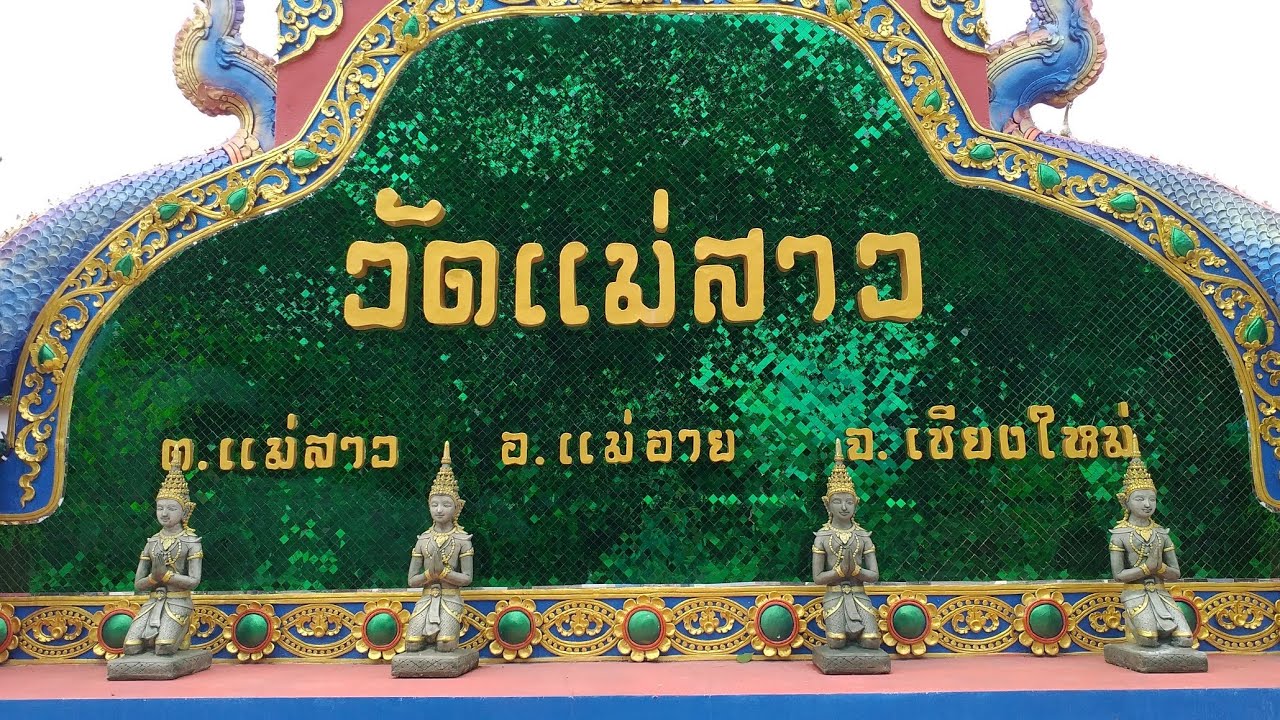
Wat Mae Sao
Open Days: Daily
Opening Hours: 08.00 – 17.00
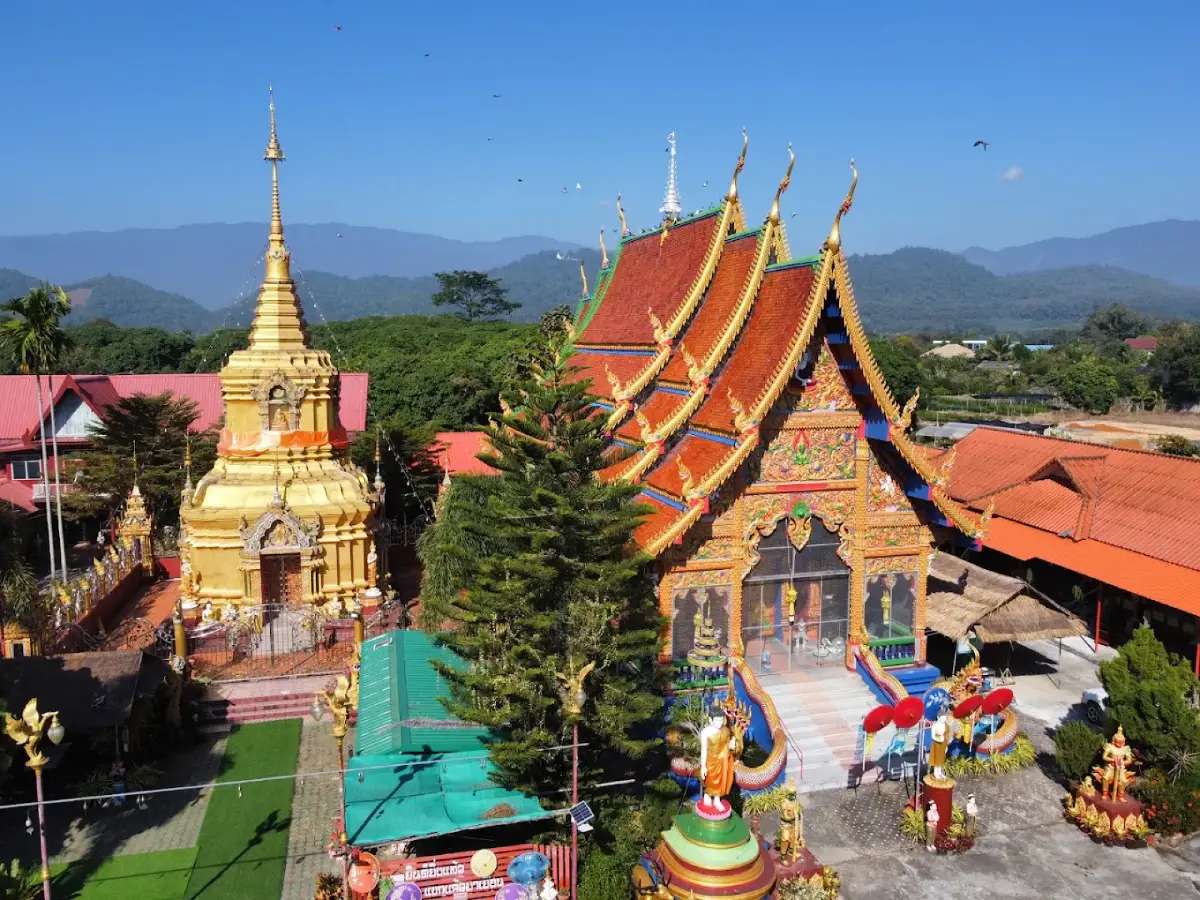
Wat Mae Sao is located in Mae Sao Subdistrict, Mae Ai District, Chiang Mai Province. It is a private Buddhist temple under the Mahanikaya order. The temple was officially permitted to be established in 1897 and received its royal Wisungkhamasima boundary in 1973. Wat Mae Sao is an important community temple in Mae Sao and a meaningful stop along the Fang–Mae Ai–Tha Ton route, combining local Buddhist history, village faith, distinctive temple architecture, a peaceful garden-like atmosphere, and a strong role in Buddhist learning for local residents and students.
Wat Mae Sao is suitable for travelers who want to make merit, pay respect to the Buddha, practice Dhamma, and experience a local temple in northern Chiang Mai. One of its most recognizable features is the large, colorful temple gate guarded by two imposing yaksha figures. The gateway makes the temple easy to notice from the road and gives visitors a strong first impression before entering the temple grounds. Inside, the compound is clean, green, and refreshing, with trees, flowers, and quiet corners suitable for merit-making and peaceful reflection.
The history of Wat Mae Sao dates back to 1897, giving it more than 120 years of religious significance in the local community. In northern Thai villages, a temple is not simply a religious building. It is a center of community life, a place for merit-making, Dhamma listening, Buddhist ceremonies, village traditions, and the passing on of faith across generations. Wat Mae Sao therefore represents the close relationship between temple, village, and local life in Mae Sao Subdistrict.
The royal Wisungkhamasima granted in 1973 is an important part of the temple’s religious status. A Wisungkhamasima boundary is a formally designated area used for important monastic acts, especially ordination. This recognition strengthened Wat Mae Sao’s role within the local Buddhist community and the Sangha system. The temple is therefore not only a place for casual visits and worship, but also a proper religious site supporting important Buddhist activities.
Mae Sao Subdistrict is a rural area of Mae Ai District, with villages, farmland, local roads, streams, and routes connected with Fang, Mae Ai, Tha Ton, and Chiang Rai. Wat Mae Sao stands within this wider landscape of community life and travel. Visitors can use the temple as a starting point for a local cultural route before continuing to Wat Phra That Doi Nam Khang, Wat Tha Ton, or other natural and cultural attractions in Mae Ai.
Wat Mae Sao is also locally known as Wat Mae Sao Luang. This local name reflects the temple’s importance in the memory and identity of the community. Temples with local names like this are often deeply tied to village life. Their meaning comes not only from architecture, but also from generations of merit-making, ordinations, ceremonies, Buddhist education, and shared community experiences.
The architecture of Wat Mae Sao is distinctive, especially its beautiful local viharn. The viharn is an important space for worship, listening to Dhamma, and joining religious activities on Buddhist holy days. Near the viharn entrance, visitors will see two more guardian figures, one red and one green, standing on both sides of the doorway. These guardian figures follow a common Thai Buddhist artistic idea, where powerful beings protect sacred spaces and mark the transition into a place of worship.
The large temple gate is one of Wat Mae Sao’s most memorable features. Its height, color, and guardian yaksha figures make it a strong visual landmark. The gate is more than an entrance. It functions as a symbol of the temple and of the community’s artistic expression. For travelers passing through Mae Sao, this gateway is one of the easiest ways to recognize the temple from the roadside.
Another important sacred structure is Chedi Sirichai Mongkhon Ditsayaworachot, built on 28 October 2011. This chedi is highly respected by local residents. Beneath it is a hall where Phra Sing, Phra Chao Fang, and several old Buddha images are enshrined. This makes the chedi area one of the most meaningful places for visitors to pay respect. It also gives Wat Mae Sao a deeper historical and spiritual character beyond its role as a community temple.
Phra Sing and Phra Chao Fang are especially meaningful in the religious culture of the Fang and Mae Ai area. Phra Sing is closely associated with Lanna Buddhist art and devotion, while Phra Chao Fang connects the temple with the broader memory of Buddhist faith in the Fang region. The presence of these images beneath the chedi gives Wat Mae Sao both devotional importance and cultural depth.
Wat Mae Sao has also been recognized as an outstanding educational park in Mae Ai District. This reflects the temple’s role beyond ritual worship. As an educational temple space, it provides a clean, shaded, and peaceful environment where people can learn, reflect, and practice Dhamma. The trees, flowers, and tidy grounds help make the temple suitable for both spiritual practice and community learning.
The Buddhist Sunday learning activities at Wat Mae Sao add another important dimension to the temple. These activities help local residents, children, and students learn about Dhamma, Buddhist etiquette, gratitude, compassion, and responsible community life. In this way, the temple is not only for adults or elderly devotees. It also supports younger generations and helps preserve Buddhist learning within the local community.
The atmosphere of Wat Mae Sao is calm and refreshing. The temple grounds are suitable for merit-making, Dhamma practice, meditation, and religious activities on important Buddhist days. Visitors can experience a peaceful village temple that is still actively used by the local community. The beauty of the temple is not only in its buildings, but also in the care, cleanliness, greenery, and quietness that shape the overall feeling of the place.
Wat Mae Sao plays an important role in local Buddhist traditions. The temple supports Buddhist holy days, Buddhist Lent, the end of Lent, Kathin, robe-offering ceremonies, village merit-making, Buddhist Sunday learning, and the annual tradition of bathing the temple’s relics. The relic-bathing tradition allows local residents to pay respect to the sacred relics enshrined in the chedi and helps preserve important local customs. This shows that Wat Mae Sao remains an active living temple rather than a passive sightseeing site.
In the context of Lanna community life, Wat Mae Sao clearly reflects the relationship between temple, village, and learning. The temple is a place where people gather on religious days, where children learn Buddhism, where adults make merit, and where the community helps maintain cleanliness, greenery, and beauty. This relationship is central to local Buddhist life in northern Thailand.
Key things to see at Wat Mae Sao include the large temple gate, the guardian yaksha figures, the local viharn, the main Buddha image inside the viharn, Chedi Sirichai Mongkhon Ditsayaworachot, the hall beneath the chedi, Phra Sing, Phra Chao Fang, old Buddha images, shaded garden areas, flowers, and quiet merit-making spaces. These features give the temple a mix of art, faith, learning, and peaceful local atmosphere.
Visitors should behave respectfully when visiting Wat Mae Sao. Modest clothing, soft speech, and awareness of monastic areas are important. Visitors should avoid entering private areas without permission and should not disturb people who are praying or taking part in religious activities. Photography should be done carefully, especially around the viharn and sacred Buddha images. A respectful visit allows travelers to appreciate the temple as a living sacred space rather than only a photo stop.
Wat Mae Sao is a good starting point for a temple route through Mae Sao Subdistrict. Nearby temples include Wat Phra That Doi Nam Khang, Wat Si Don Kaeo, Wat Si Bun Rueang, Wat Panja Kana Nusorn, Wat Si Wiang, and Wat Rattanawas. Each temple has its own character. Wat Phra That Doi Nam Khang is associated with meditation practice. Wat Si Don Kaeo has a two-storey ordination hall and murals showing local life. Wat Si Wiang is connected with community cultural learning. Wat Rattanawas is known for an ancient golden teak Buddha image.
Wat Mae Sao can also be connected with major attractions in Mae Ai and Tha Ton, such as Wat Tha Ton, Wat Phra That Sob Fang, Thanathon Orchard, Wiang Malika, and Doi Pu Muen. Wat Tha Ton is a well-known riverside temple near the Kok River. Thanathon Orchard is a popular agricultural attraction. Wiang Malika is connected with Mae Ai’s local history, while Doi Pu Muen is known for mountain scenery, coffee, tea, and highland community life. Including Wat Mae Sao in this route adds faith, local culture, and quiet community atmosphere to the journey.
Getting There is easiest by private car. Travelers can use the Fang–Mae Ai–Tha Ton route or the Mae Ai–Mae Chan road to reach Mae Sao Subdistrict. The temple is easy to notice because of its large colorful gateway. From Chiang Mai city, the route heads north through Mae Rim, Mae Taeng, Chiang Dao, Chai Prakan, and Fang before reaching Mae Ai. Because the distance is long, the trip is best planned as an overnight or multi-stop journey in the Fang, Mae Ai, and Tha Ton area.
Travelers starting from Fang or Mae Ai will reach Wat Mae Sao more conveniently. Mae Sao connects toward Tha Ton and the Kok River area. During the rainy season or in the evening, visitors should drive carefully on local roads, especially where agricultural vehicles, motorcycles, and village traffic may share the route. Preparing the route in advance will make the journey smoother.
Food and accommodation options are more concentrated around Tha Ton and Mae Ai than directly beside the temple. Riverside restaurants and resort restaurants near Tha Ton are practical stops after visiting the temple. For overnight stays, the Tha Ton area offers convenient access to the Kok River and onward routes toward Chiang Rai, Doi Mae Salong, Fang, and other northern destinations.
In summary, Wat Mae Sao is a Mahanikaya community temple in Mae Sao Subdistrict, Mae Ai District, Chiang Mai Province. Established in 1897 and granted royal Wisungkhamasima in 1973, it is known for its large temple gate, guardian yaksha figures, local viharn, Chedi Sirichai Mongkhon Ditsayaworachot, Phra Sing, Phra Chao Fang, old Buddha images, shaded grounds, educational park role, and Buddhist Sunday learning activities. For travelers interested in local Lanna temples, village faith, Buddhist learning, and quieter routes in northern Chiang Mai, Wat Mae Sao is a meaningful stop in Mae Ai.
| Name | Wat Mae Sao |
| Local Name | Wat Mae Sao Luang |
| Location | Mae Sao Subdistrict, Mae Ai District, Chiang Mai Province |
| Address | Mae Sao Subdistrict, Mae Ai District, Chiang Mai 50280, Thailand |
| Temple Type | Private Buddhist temple under the Mahanikaya order |
| History | Officially established as a temple in 1897 and granted royal Wisungkhamasima in 1973 |
| Temple Area | About 3 rai 90 square wah |
| Highlights | Large temple gate, guardian yaksha figures, local viharn, Chedi Sirichai Mongkhon Ditsayaworachot, Phra Sing, Phra Chao Fang, old Buddha images, educational park role, and Buddhist Sunday learning activities |
| Main Buildings / Areas | Temple gate, viharn, Chedi Sirichai Mongkhon Ditsayaworachot, hall beneath the chedi, garden areas, and merit-making spaces |
| Sacred Objects / Key Evidence | Main Buddha image in the viharn, Phra Sing, Phra Chao Fang, and several old Buddha images enshrined beneath Chedi Sirichai Mongkhon Ditsayaworachot |
| Distinctive Features | A peaceful community temple with local architecture, shaded grounds, Buddhist learning activities, and a strong role in Mae Sao community life |
| Travel Information | Best reached by private car via the Fang–Mae Ai–Tha Ton route or the Mae Ai–Mae Chan road into Mae Sao Subdistrict |
| Current Status | Open for temple visits, merit-making, and religious activities during the stated visiting hours |
| Open Days | Daily |
| Opening Hours | 08.00 – 17.00 |
| Related Traditions | Buddhist holy days, Buddhist Lent, the end of Lent, Kathin, robe-offering ceremonies, Buddhist Sunday learning activities, and the Wat Mae Sao relic-bathing tradition |
| Local Administrative Contact | Mae Sao Subdistrict Administrative Organization, Tel. 053-054100 |
| Nearby Tourist Attractions | 1. Wat Phra That Doi Nam Khang, about 7 km 2. Wat Si Don Kaeo, about 9 km 3. Wat Rattanawas, about 10 km 4. Wiang Malika, about 12 km 5. Wat Tha Ton, about 18 km 6. Thanathon Orchard, about 20 km 7. Doi Pu Muen, about 34 km |
| Nearby Restaurants | 1. Tha Ton River View, about 18 km, Tel. 053-459-289, 053-373-173-5, 093-256-7969 2. Tha Ton Chom Chan Cafe & Restaurant Homestay, about 18 km, Tel. 088-435-4467 3. Tha Ton Hill, about 16 km, Tel. 053-053-669 4. Khun Mai Baan Suan Resort, about 18 km, Tel. 053-053-551, 088-952-6196, 081-885-3564 5. Hom Phaen Din Vineyard Restaurant, about 24 km, Tel. 080-860-0368 |
| Nearby Accommodations | 1. Thaton River View Resort, about 18 km, Tel. 053-373-174 2. Thaton Chalet, about 18 km, Tel. 053-373-155 3. Apple House Resort, about 18 km, Tel. 053-373-144 4. Thaton Garden Resort, about 18 km, Tel. 053-373-154 5. Thammachat Garden Home Resort, about 18 km, Tel. 053-373-015 |
Frequently Asked Questions (FAQ)
Q: Where is Wat Mae Sao located?
A: Wat Mae Sao is located in Mae Sao Subdistrict, Mae Ai District, Chiang Mai Province.
Q: What are the opening hours of Wat Mae Sao?
A: Wat Mae Sao is open daily from 08.00 to 17.00.
Q: What is the history of Wat Mae Sao?
A: Wat Mae Sao is a Mahanikaya community temple officially established in 1897 and granted royal Wisungkhamasima in 1973.
Q: What makes Wat Mae Sao distinctive?
A: Its highlights include the large temple gate, guardian yaksha figures, local viharn, Chedi Sirichai Mongkhon Ditsayaworachot, Phra Sing, Phra Chao Fang, old Buddha images, shaded grounds, and Buddhist learning activities.
Q: Why is Chedi Sirichai Mongkhon Ditsayaworachot important?
A: It is an important chedi at Wat Mae Sao. Beneath it is a hall where Phra Sing, Phra Chao Fang, and several old Buddha images are enshrined and respected by local people.
Q: What kind of travelers is Wat Mae Sao suitable for?
A: It is suitable for travelers who want to make merit, practice Dhamma, see local temple architecture, and understand the role of a community temple in Mae Sao.
Q: What nearby attractions can be visited with Wat Mae Sao?
A: Nearby places include Wat Phra That Doi Nam Khang, Wat Si Don Kaeo, Wat Rattanawas, Wiang Malika, Wat Tha Ton, Thanathon Orchard, and Doi Pu Muen.
 Category: ●Places of Worship
 Group: ●Temple
Last Update : 2 MonthAgo
 Last Update : 2 MonthAgo
 Click to Access the Navigation Map GPS
Wat Mae Sao Map
Recommend

 Muang Chiang Mai(121)Chom Thong(47)Mae Chaem(25)Chiang Dao(33)Doi Saket(68)Mae Taeng(85)Mae Rim(69)Samoeng(29)Fang(71)Mae Ai(59)Phrao(70)San Pa Tong(103)San Kamphaeng(66)San Sai(73)Hang Dong(73)Hot(32)Doi Tao(22)Omkoi(11)Saraphi(74)Wiang Haeng(15)Chai Prakan(28)Mae Wang(32)Mae On(22)Doi Lo(33)Galyani Vadhana(1)


