
lovethailand home >North Travel Attractions >Chiang Mai Travel Attractions >Mae Ai >Mae Na Wang > Wat Phra That Saeng Rung
TL;DR: Wat Phra That Saeng Rung is located at Ban Mae Mueang Noi, Moo 14, Tambon Mae Na Wang, Mae Ai District, Chiang Mai Province.

Wat Phra That Saeng Rung
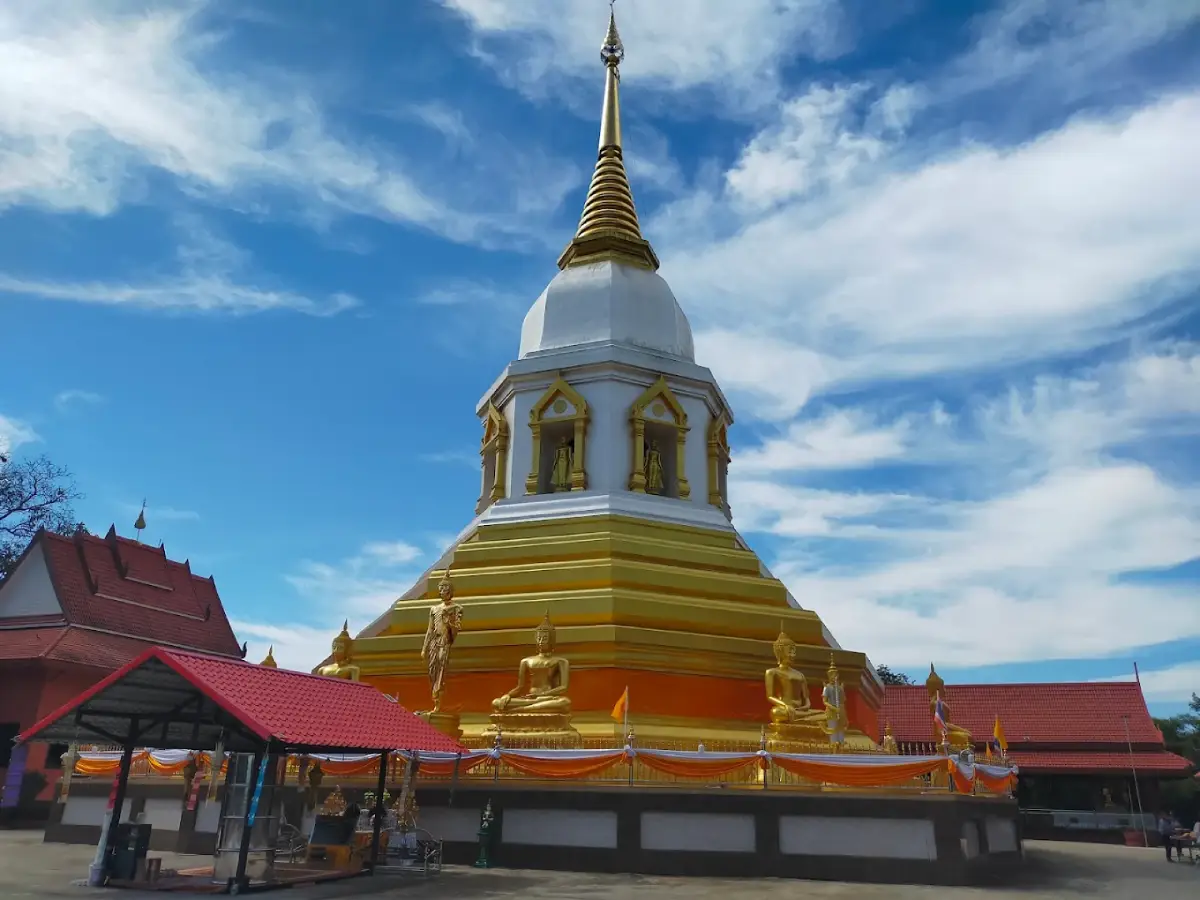
Operating day: Daily
Operating time: 08.00 - 17.00
Wat Phra That Saeng Rung, formerly known locally as Wat Pa Doi Kong Mu, is an old sacred relic temple in the Ban Mae Mueang Noi area, Moo 14, Tambon Mae Na Wang, Mae Ai District, Chiang Mai Province. The original relic stupa was found on a small forested hill in 1936 after the site had been abandoned for a long time. Only the lower base and scattered traces of the old stupa remained. In 2010, Phra Ajarn Sinchai Chairat began a major restoration of the site with support from the Sangha of Fang and Mae Ai districts, local officials, soldiers, police officers, merchants, lay devotees, and the wider Buddhist community.
Wat Phra That Saeng Rung is important as a sacred relic site of Tambon Mae Na Wang. It is not simply a village temple, but a place where local faith, abandoned sacred architecture, oral history, and northern Thai historical memory converge. The temple’s older name, the remains of the original relic stupa, fired bricks with partial inscriptions, and local narratives connect the site with the wider historical landscape of the Kok River basin, Fang, Chai Prakan, and the legendary world of Yonok Chiang Saen.
The former name “Wat Pa Doi Kong Mu” is associated with Tai Yai local usage and the temple’s hilltop setting. The later name “Wat Phra That Saeng Rung” emerged after the restoration work began in 2010. It is connected with local stories of colorful light and auspicious signs around the relic stupa. The name conveys brightness, blessing, and spiritual prosperity, making it suitable for a revived sacred site dedicated to Buddhist devotion.
The temple is located in the present-day Ban Mae Mueang Noi area, Moo 14. The site is also associated with an older settlement known as Ban Sam Lang, named after the time when only three households lived there. This area later became part of Ban Mae Mueang Noi. For this reason, Wat Phra That Saeng Rung is closely linked with the local community, serving as a place for worship, merit-making, and Buddhist cultural continuity.
The original stupa base measured about 8 by 8 meters, while the upper structure had collapsed. The modern restoration therefore began from an abandoned sacred base. The renewed stupa was built to cover and protect the old relic base. Its structure uses reinforced concrete inside and brick-and-plaster work outside, giving the new stupa greater strength while preserving the importance of the old sacred site beneath it.
The restored stupa was designed with a large base and a form that combines Chiang Saen, Sukhothai, and applied Lankan elements. It includes a square indented base and a bell-shaped upper form. The restoration plan also includes the enshrinement of Buddha images and Buddhist scriptures within the stupa. The exterior is connected with the idea of gilding the whole structure with gold-colored metal sheeting as an offering to the Buddha.
One of the most interesting details at the site is the fired bricks from the old stupa, some of which contain partial inscriptions in Khmer script. These traces connect the temple with local historical narratives involving ancient polities in the Kok River basin, including stories of Khom Dam, Mueang Umongkhasela, Phra Chao Phangkarat, Phra Chao Phrommaharat, and the Buddhist world of Yonok Chiang Saen. These narratives should be understood as local tradition and historical comparison rather than complete archaeological certainty.
Local tradition links the relic stupa with the spread of Buddhism through the northern region, including stories about Phra Buddhaghosacharn, Phra Chao Phangkarat, Phra Chao Phrommaharat, and the enshrinement of relics in important sacred places. These stories help visitors understand Wat Phra That Saeng Rung as part of a broader sacred landscape connected with Fang, Chai Prakan, Chiang Saen, and the Kok River basin.
The 2010 restoration was the turning point in the modern history of the temple. Phra Ajarn Sinchai Chairat led the renewed effort to restore the abandoned relic stupa and revive the site as a living Buddhist place. The restoration drew support from monks of both Dhammayut and Maha Nikaya traditions, as well as government officers, local communities, and lay supporters. The project was not only construction work, but also an act of collective faith intended to preserve a sacred Buddhist site for future generations.
The main sacred object of the temple is Phra That Saeng Rung itself. Visitors should begin by paying respect to the relic stupa, calming the mind, and making offerings respectfully. The stupa functions as a sacred representation of the Buddha and as a focus of faith for the local community. Wat Phra That Saeng Rung is therefore suitable for travelers who want to make merit, offer Sangha requisites, and learn about a revived sacred site in Mae Ai District.
The temple also functions as a merit-making site for local residents and visitors from outside the community. People can pay respect to the relic stupa, make offerings, support restoration work, and take part in Buddhist activities. Its value lies in the story of revival: an old, abandoned relic site returning to religious life through the faith and cooperation of monks and laypeople.
Within Tambon Mae Na Wang, Wat Phra That Saeng Rung is part of a network of important temples and sacred sites, including Wat Phra That Sop Fang, Wat Wang Hai, Wat Champa Khao, Wat Pa Doi Saeng Dham Yanasampanno, Wat Huai Muang, Wat Chai Mongkhon, Wat Sila At, and Wat Thammikawat. This network reflects the religious depth of Mae Na Wang, where village temples, forest temples, relic temples, and monastic sites are spread across local communities.
The temple can be combined with nearby attractions such as Wat Phra That Sop Fang, Mae Mueang Noi Waterfall, and Huai Chan Si Reservoir. Wat Phra That Sop Fang is another important sacred site in Ban Mae Mueang Noi and is located by the Kok River. The sandy riverside area near Wat Phra That Sop Fang is also a known local recreation point. Combining these places gives visitors both hilltop relic worship and riverside scenery in the same route.
Access to Wat Phra That Saeng Rung can be made from the Fang–Tha Ton road. One route turns at the kilometer 18 area, passing Ban San Khong in Tambon Malika toward Tambon Mae Na Wang. Another route comes from the Tha Ton side, turning near the kilometer 28 area and continuing on local roads toward Ban Mae Mueang Noi. The temple is best reached by private car, rental car, or local transport familiar with Mae Ai rural and hill roads.
Getting There from Chiang Mai city can be done by traveling north along Highway 107 through Mae Rim, Mae Taeng, Chiang Dao, Chai Prakan, Fang, and Mae Ai. From there, continue along the Fang–Tha Ton route into Tambon Mae Na Wang and Ban Mae Mueang Noi. From the Tha Ton area, the temple can be combined with Wat Tha Ton Royal Temple, Tha Ton Pier, Wat Phra That Sop Fang, and the Kok River travel route.
Important things to see at Wat Phra That Saeng Rung include the restored relic stupa, the old stupa base, the worship area, the hilltop atmosphere, the access route, and the surrounding Ban Mae Mueang Noi community setting. Visitors interested in local history should pay attention to the temple’s former name, the rediscovery in 1936, the 2010 restoration, and the narratives connecting the site with ancient northern polities.
The temple is suitable for visitors who want to pay respect to a relic stupa, make merit, offer Sangha requisites, and learn about an abandoned sacred site that was revived through faith. Visitors should dress modestly, speak quietly, avoid climbing on or touching the stupa without permission, and respect the temple as a living sacred site rather than only a viewpoint or photo stop.
Religious activities connected with the temple include Sangha offerings, merit-making for the restoration of the stupa, Kathin, forest robe offerings, Buddhist holy day observances, and an ordination project promoted by the temple for late 2025 to early 2026. These activities show that Wat Phra That Saeng Rung remains an active Buddhist site and a continuing center of faith.
Wat Phra That Saeng Rung is therefore a meaningful stop on a cultural, historical, and Buddhist route in Mae Ai District. Its story includes an ancient relic stupa, abandonment, rediscovery in 1936, restoration in 2010, the former name Wat Pa Doi Kong Mu, local traditions connected with ancient northern history, and its present role as a place for worship, merit-making, and the preservation of Buddhism in Tambon Mae Na Wang.
| Name | Wat Phra That Saeng Rung |
| Former / Local Name | Wat Pa Doi Kong Mu |
| Location | Ban Mae Mueang Noi, Moo 14, Tambon Mae Na Wang, Mae Ai District, Chiang Mai Province |
| Address | Moo 14, Tambon Mae Na Wang, Mae Ai District, Chiang Mai 50280, Thailand |
| Map Code | 3C3F+87P, Tambon Mae Na Wang, Mae Ai District, Chiang Mai 50280 |
| Place Type | Restored Buddhist Relic Temple / Sacred Relic Site In Tambon Mae Na Wang |
| History | The original relic stupa was found in an abandoned forested condition in 1936 and was significantly restored beginning in 2010 by Phra Ajarn Sinchai Chairat with support from monks and lay devotees |
| Community Context | Located in the Ban Mae Mueang Noi area, linked with the older Ban Sam Lang settlement and the wider religious landscape of Tambon Mae Na Wang |
| Name Origin | The former name Wat Pa Doi Kong Mu is associated with Tai Yai local usage, while the name Phra That Saeng Rung is linked with local stories of colorful auspicious light around the relic stupa |
| Important Sacred Site | Phra That Saeng Rung, restored over the original relic stupa base |
| Original Traces | Original stupa base measuring about 8 by 8 meters and fired bricks with partial Khmer-script inscriptions |
| Restored Stupa Features | Reinforced concrete core, brick-and-plaster exterior, built over the old stupa base, with applied forms inspired by Chiang Saen, Sukhothai, and Lankan Buddhist art |
| Highlights | An old abandoned relic site revived as a living Buddhist temple, with local narratives connected to Wat Pa Doi Kong Mu, ancient northern polities, and community faith |
| What To See | Phra That Saeng Rung, the original stupa base, worship area, hilltop atmosphere, Ban Mae Mueang Noi setting, and route links with Wat Phra That Sop Fang |
| Travel Information | From Chiang Mai, travel north on Highway 107 through Mae Rim, Mae Taeng, Chiang Dao, Chai Prakan, Fang, and Mae Ai, then continue via the Fang–Tha Ton route into Tambon Mae Na Wang and Ban Mae Mueang Noi. Another route comes from the Tha Ton side near the kilometer 28 junction. |
| Current Status | Open as a sacred Buddhist site for worship, merit-making, Sangha offerings, and continued stupa restoration-related activities |
| Related Religious Events | Sangha offerings, stupa restoration merit-making, Kathin, forest robe offerings, Buddhist holy day activities, and the temple’s ordination project |
| Local Coordination Contact | Mae Na Wang Subdistrict Administrative Organization, Tel. 0-5347-3010 |
| Nearby Tourist Attractions | 1. Wat Phra That Sop Fang, about 3 km 2. Wat Phra That Sop Fang Sandy River Area, about 4 km 3. Wat Wang Hai, about 5 km 4. Mae Mueang Noi Waterfall, about 8 km 5. Wat Pa Doi Saeng Dham Yanasampanno, about 18 km 6. Wat Tha Ton Royal Temple, about 20 km 7. Tha Ton Pier / Kok River Boat Route, about 20 km 8. Thanathon Orchard, about 22 km |
| Nearby Restaurants | 1. Khrua Khun Mae Moo Kratha, about 15 km, Tel. 053-459-191 2. Tha Ton River View, about 20 km, Tel. 053-459-289, 053-373-173-5, 093-256-7969 3. Tha Ton Hill, about 21 km, Tel. 053-053-669 4. Baan Suan Chom Chan, about 21 km, Tel. 088-435-4467 5. Khun Mai Baan Suan Resort, about 22 km, Tel. 053-053-551, 088-952-6196 6. Nam Som Thanathon, about 22 km, Tel. 083-734-9555 |
| Nearby Accommodations | 1. Tha Ton River View Resort, about 20 km, Tel. 053-373-173 2. Tha Ton Chalet, about 20 km, Tel. 053-373-155 3. Tha Ton Hill Resort, about 21 km, Tel. 053-053-669 4. Khun Mai Baan Suan Resort, about 22 km, Tel. 053-053-551, 088-952-6196 5. Nicha Homestay Thaton, about 24 km, Tel. 093-549-7419 |
Frequently Asked Questions (FAQ)
Q: Where Is Wat Phra That Saeng Rung Located?
A: Wat Phra That Saeng Rung is located in Ban Mae Mueang Noi, Moo 14, Tambon Mae Na Wang, Mae Ai District, Chiang Mai 50280, Thailand.
Q: What Was The Former Name Of Wat Phra That Saeng Rung?
A: The temple was formerly known locally as Wat Pa Doi Kong Mu, a name associated with Tai Yai local usage and its hilltop setting.
Q: When Was The Original Relic Stupa Found?
A: The original relic stupa was found on a small forested hill in 1936.
Q: When Did The Modern Restoration Begin?
A: The major modern restoration began in 2010 under Phra Ajarn Sinchai Chairat with support from monks and lay devotees.
Q: What Is Wat Phra That Saeng Rung Known For?
A: It is known for its restored relic stupa, original stupa base, fired bricks with partial Khmer-script inscriptions, and local historical narratives connected with ancient northern polities.
Q: Who Should Visit Wat Phra That Saeng Rung?
A: It is suitable for travelers who want to worship a relic stupa, make merit, offer Sangha requisites, and learn about a revived sacred site in Mae Ai District.
Q: How Can Visitors Travel To Wat Phra That Saeng Rung?
A: From Chiang Mai, travel north through Mae Rim, Mae Taeng, Chiang Dao, Chai Prakan, Fang, and Mae Ai, then continue along the Fang–Tha Ton route into Tambon Mae Na Wang and Ban Mae Mueang Noi. Another route comes from the Tha Ton side near the kilometer 28 junction.
Q: What Nearby Places Can Be Visited With Wat Phra That Saeng Rung?
A: Nearby route options include Wat Phra That Sop Fang, the sandy riverside area near Wat Phra That Sop Fang, Wat Wang Hai, Mae Mueang Noi Waterfall, Wat Tha Ton Royal Temple, Tha Ton Pier, and Thanathon Orchard.
 Category: ●Places of Worship
 Group: ●Temple
Last Update : 2 MonthAgo
 Last Update : 2 MonthAgo
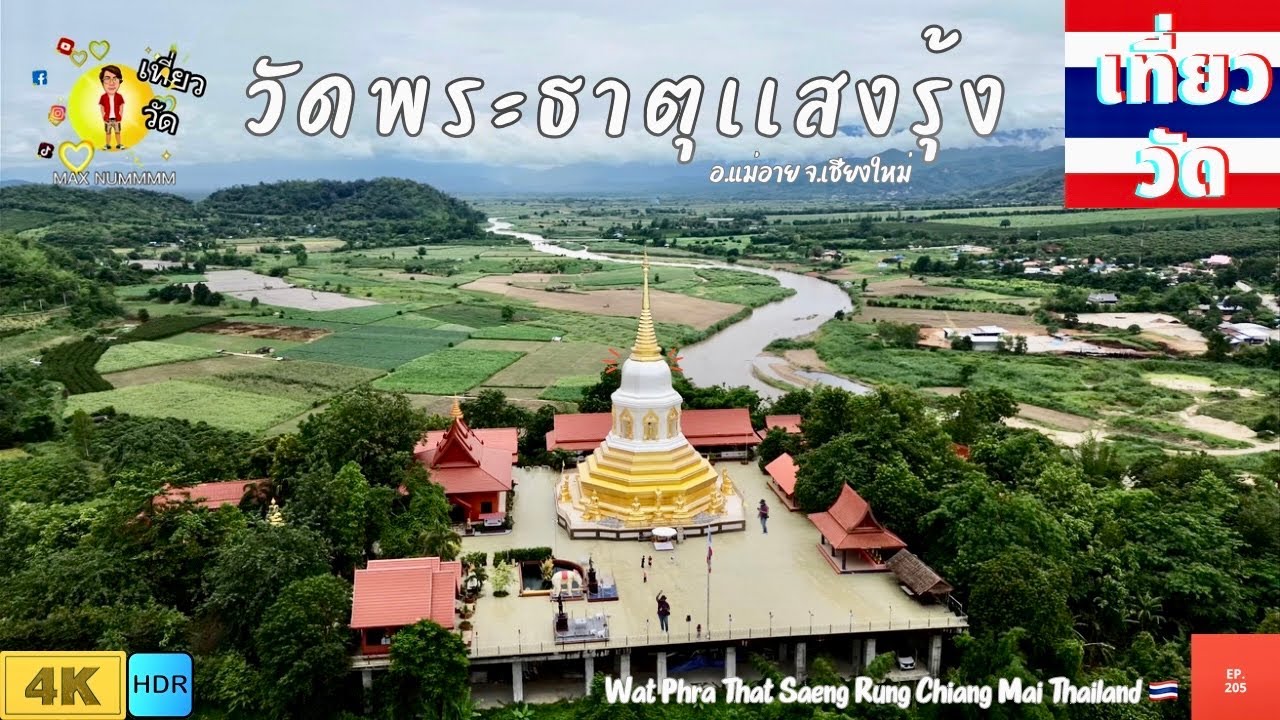
 Click to Access the Navigation Map GPS
Wat Phra That Saeng Rung Map
Recommend

 Muang Chiang Mai(121)Chom Thong(47)Mae Chaem(25)Chiang Dao(33)Doi Saket(68)Mae Taeng(85)Mae Rim(69)Samoeng(29)Fang(71)Mae Ai(59)Phrao(70)San Pa Tong(103)San Kamphaeng(66)San Sai(73)Hang Dong(73)Hot(32)Doi Tao(22)Omkoi(11)Saraphi(74)Wiang Haeng(15)Chai Prakan(28)Mae Wang(32)Mae On(22)Doi Lo(33)Galyani Vadhana(1)


