
lovethailand home >North Travel Attractions >Chiang Mai Travel Attractions >Mae Ai >Mae Na Wang > Wat Chai Mongkhon (Mae Na Wang)
TL;DR: Wat Chai Mongkhon (Mae Na Wang) is located at Ban Hang Tam, Moo 4, Tambon Mae Na Wang, Mae Ai District, Chiang Mai Province, open Daily, hours 08.00 – 17.00.

Wat Chai Mongkhon (Mae Na Wang)
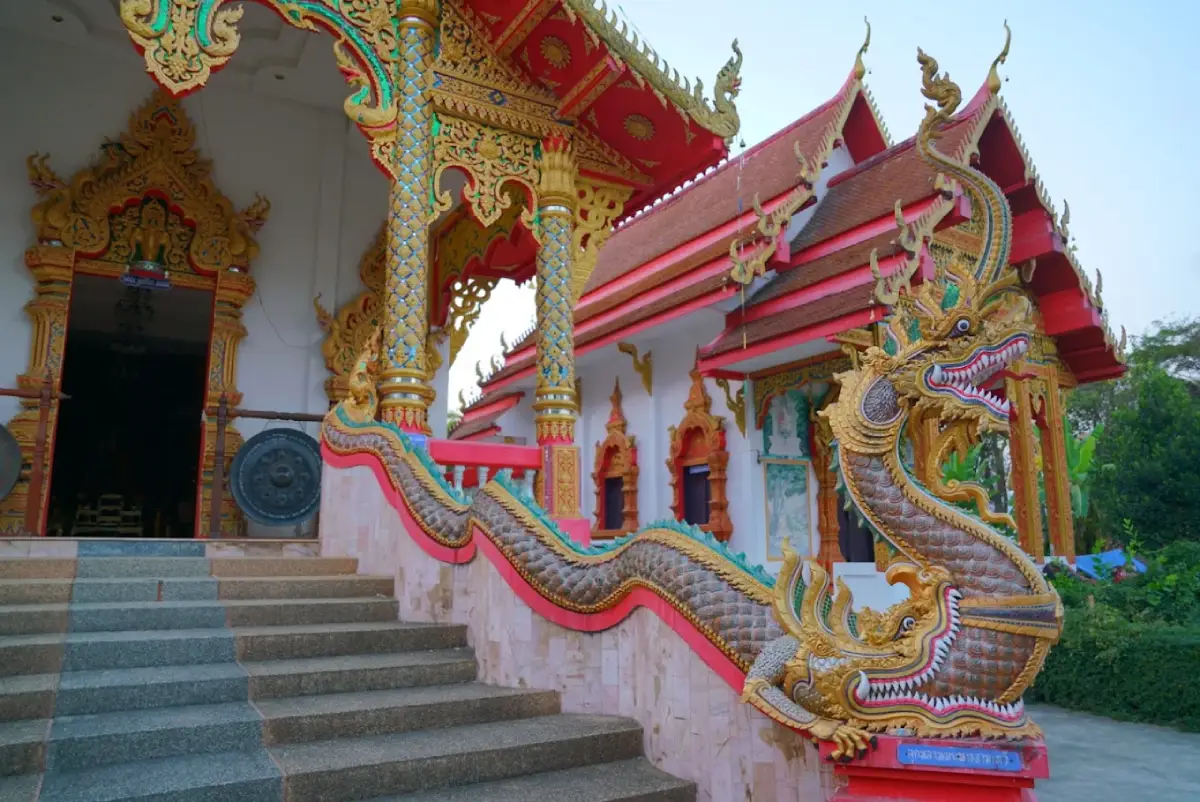
Open Days: Daily
Opening Hours: 08.00 – 17.00
Wat Chai Mongkhon (Mae Na Wang) is located at 359 Moo 4, Ban Hang Tam, Tambon Mae Na Wang, Mae Ai District, Chiang Mai Province. It is a local community temple under the Maha Nikaya order. The temple was established in 1923, received its Wisungkham Sima on 9 February 1973, and completed the boundary consecration in 1993. The current abbot is Phra Khru Chai Mangkhalarak Sirichanto. Wat Chai Mongkhon remains an important spiritual center for Ban Hang Tam and the Mae Na Wang community.
Ban Hang Tam is a village in Moo 4, Tambon Mae Na Wang, Mae Ai District. The village landscape is connected with rural roads, waterways, agricultural land, and local community life. Wat Chai Mongkhon should therefore be understood as a working village temple rather than a stand-alone tourist site. It is part of the everyday structure of the village, where home, temple, road, farmland, and water sources remain closely connected.
The temple was formerly known by villagers as Wat Hang Tam. The name came from a low-growing “hang” or “hai” tree in the temple area. Later, the temple became known as Wat Chai Mongkhon, a more auspicious name associated with victory, prosperity, and blessing. This name history preserves both local memory and the community’s wish for the temple to serve as a place of merit and auspiciousness.
The temple was founded through the cooperation of local residents. Nai Cha Khattiya, Nai Ai Khattiya, Nai Nor Kaew Kulana, and villagers helped establish the temple. This origin story shows that Wat Chai Mongkhon developed from community faith and collective effort. It was created as a central place for Buddhist worship, sermons, offerings, community ceremonies, and the continuation of Buddhism in Ban Hang Tam.
The temple land covers 6 rai, 1 ngan, and 60 square wah. The temple also has one monastic land plot covering 1 rai, 3 ngan, and 7 square wah. Its boundaries are connected with royal property land, public roads, and a public irrigation waterway. This setting shows how the temple is closely connected with village land use, public space, rural transport, and water systems in Tambon Mae Na Wang.
The temple’s Wisungkham Sima was granted on 9 February 1973, with a boundary area 20 meters wide and 40 meters long. The boundary consecration took place in 1993. This is an important religious milestone because the boundary area allows formal Sangha acts to be performed properly inside the ubosot. It also shows the temple’s development from a community temple into a formally established Buddhist site.
Important structures at Wat Chai Mongkhon include the ubosot, viharn, merit-making hall, monks’ guest residence, dining hall, temple courtyard, and community religious activity areas. The ubosot supports formal monastic ceremonies, while the viharn is used for worship and local Buddhist rituals. The merit-making hall, guest residence, and dining hall support monks, lay supporters, and temple events.
The temple’s important sacred objects include revered Buddha images, a Sing Sam Buddha image, a bronze Chiang Saen-style Buddha image, and a number of ancient objects preserved by the abbot or donated by villagers. These objects give the temple additional cultural and historical value. They also show how the temple functions as a local space for preserving faith-based heritage and community memory.
The Sing Sam Buddha image and the bronze Chiang Saen-style Buddha image are especially meaningful because Chiang Saen art is closely connected with Lanna and northern Thai Buddhist heritage. Bronze Buddha images reflect religious devotion, craftsmanship, and the Buddhist art traditions of the region. Visitors should pay respect calmly and avoid touching sacred objects without permission.
Phra Khru Chai Mangkhalarak Sirichanto serves as the abbot of Wat Chai Mongkhon and also holds a local Sangha administrative role. His responsibilities include leading religious activities, maintaining temple structures, coordinating with lay supporters, and supporting the continuity of Buddhist practice in the community. A village temple depends on this relationship between monks, lay supporters, elders, youth, and temple committees.
The line of former abbots shows the temple’s continuity through many generations. The list includes Phra Bun Ma Khantiko, Phra Aphi Wong Aphiwangso, Phra In Som Sumano, Phra Kham Khantiko, Phra Ya Sali Yannasilo, Phra Kham Pan Kittisaro, Phra Khru Si Mun Khemangkaro, Phra In Chan Kowito, Phra Duang Kaeo Thitiwanno, Phra Athikan Charoen Samajaro, and Phra Khru Chai Mangkhalarak Sirichanto. This succession reflects the long religious life of Wat Chai Mongkhon.
Wat Chai Mongkhon is listed in temple records with the temple code 350100401. It belongs to the Maha Nikaya order and is located in Moo 4, Tambon Mae Na Wang, Mae Ai District, Chiang Mai Province. This official registry information helps distinguish it from other temples named Wat Chai Mongkhon in other areas.
The temple has several important roles in the community. Religiously, it is used for worship, merit-making, sermons, Sangha offerings, and Buddhist ceremonies. Socially, it is a gathering place where villagers help organize merit-making events and care for the temple. Culturally, it helps maintain Lanna Buddhist traditions, especially the annual relic-water-pouring ceremony and other local Buddhist events.
The most distinctive annual tradition is the relic-water-pouring ceremony. It is held on the full moon day of the fourth lunar month in the Thai calendar, or the sixth northern lunar month, which coincides with Makha Bucha Day. This ceremony reflects community devotion to Buddhism and the temple’s sacred site. Villagers gather to make merit, offer respect, pour water in worship, and strengthen their shared faith.
Other religious activities connected with the temple include Buddhist holy day observances, merit-making, sermons, Kathin after Buddhist Lent, forest robe offerings, Salak Phat, Sangha offerings, and seasonal Buddhist events. These activities bring villagers, monks, families, elders, and lay supporters together. They also help maintain the social and spiritual fabric of Ban Hang Tam.
Tambon Mae Na Wang provides the broader context for understanding Wat Chai Mongkhon. The subdistrict includes Buddhist temples and Christian churches, with many temples distributed across local villages. Temples in the area include Wat Sila At, Wat Thammikawat, Wat Nong Bua Ngam, Wat Chai Mongkhon, Wat Rong Ha, Wat Huai Muang, Wat Doi Saeng Tham, Wat Den Chai, Wat Phra That Saeng Rung, Wat Phra That Sop Fang, Wat Wang Hai, and Wat Champa Khao. This network shows the continuing importance of religion in local life.
The economy of Tambon Mae Na Wang is strongly linked with agriculture. Important crops include rice, corn, lychee, chili, and mango. Wat Chai Mongkhon stands within this rural community context, where many people live with seasonal agricultural work. The temple offers a spiritual place where villagers return to make merit, ask for blessings, and maintain relationships between families, community, and faith.
Important things to see at Wat Chai Mongkhon include the ubosot, viharn, merit-making hall, dining hall, temple courtyard, revered Buddha images, the Sing Sam Buddha image, the bronze Chiang Saen-style Buddha image, and ancient objects preserved at the temple. Visitors should walk respectfully, avoid disturbing monks or villagers, and refrain from touching sacred objects unless permission is given.
The atmosphere of Wat Chai Mongkhon is suitable for travelers who want to make merit and learn about a long-standing community temple in Mae Ai District. The temple is important not because of large-scale tourist infrastructure, but because of its history, former name, sacred objects, annual tradition, and continuing role as the spiritual center of Ban Hang Tam.
Getting There can be done by road from Chiang Mai city. Travel north on Highway 107 through Mae Rim, Mae Taeng, Chiang Dao, Chai Prakan, Fang, and into Mae Ai District. Continue to Tambon Mae Na Wang and Ban Hang Tam, Moo 4. The temple is best reached by private car, rental car, or local transport familiar with rural roads in Mae Ai District.
A practical itinerary can begin at Wat Chai Mongkhon for merit-making and learning about Ban Hang Tam’s local temple. Continue to Wat Huai Muang, Wat Rong Ha Luang, Wat Phra That Sop Fang, the sandy riverside area near Wat Phra That Sop Fang, Wat Tha Ton Royal Temple, Tha Ton Pier, Thanathon Orchard, and Malika Hot Spring. This route combines community temples, sacred sites, the Kok River landscape, orchards, and relaxation spots in Mae Ai District.
Visitors should travel during the daytime, dress modestly, speak quietly, and respect the temple as an active religious place. During annual ceremonies such as the relic-water-pouring ceremony, Kathin, or Salak Phat, visitors should give priority to local residents and avoid interrupting ceremonies. Photography should be done respectfully and should not disturb monks or people making merit.
Wat Chai Mongkhon is therefore a valuable cultural and religious stop in Mae Ai District. Its establishment in 1923, former name Wat Hang Tam, Wisungkham Sima granted in 1973, ubosot, viharn, sacred Buddha images, preserved ancient objects, and annual relic-water-pouring ceremony make it a meaningful community temple for merit-making, cultural observation, and deeper travel in northern Chiang Mai.
| Name | Wat Chai Mongkhon (Mae Na Wang) |
| Former / Local Name | Wat Hang Tam |
| Location | Ban Hang Tam, Moo 4, Tambon Mae Na Wang, Mae Ai District, Chiang Mai Province |
| Address | 359 Moo 4, Ban Hang Tam, Tambon Mae Na Wang, Mae Ai District, Chiang Mai 50280, Thailand |
| Temple Type | Community Temple Under The Maha Nikaya Order |
| Temple Code | 350100401 |
| History | Established in 1923 as a community temple of Ban Hang Tam, Tambon Mae Na Wang, Mae Ai District |
| Founders | Nai Cha Khattiya, Nai Ai Khattiya, Nai Nor Kaew Kulana, and Ban Hang Tam villagers |
| Temple Area | 6 rai, 1 ngan, 60 square wah |
| Monastic Land | 1 plot, 1 rai, 3 ngan, 7 square wah |
| Temple Boundaries | North: Royal property land South: Public road West: Public irrigation waterway |
| Wisungkham Sima | Granted on 9 February 1973, 20 meters wide and 40 meters long; boundary consecration completed in 1993 |
| Name Origin | Formerly called Wat Hang Tam because of a low-growing hang or hai tree in the area; later renamed Wat Chai Mongkhon |
| Highlights | A long-standing village temple with an ubosot, viharn, merit-making hall, Sing Sam Buddha image, bronze Chiang Saen-style Buddha image, preserved ancient objects, and an annual relic-water-pouring ceremony |
| Main Structures / Areas | Ubosot, viharn, merit-making hall, monks’ guest residence, dining hall, temple courtyard, and community religious activity areas |
| Sacred Objects | Revered Buddha images, Sing Sam Buddha image, bronze Chiang Saen-style Buddha image, and ancient objects preserved at the temple |
| What To See | Sing Sam Buddha image, bronze Chiang Saen-style Buddha image, ubosot, viharn, merit-making hall, temple courtyard, and Ban Hang Tam village-temple atmosphere |
| Travel Information | From Chiang Mai, travel north on Highway 107 through Mae Rim, Mae Taeng, Chiang Dao, Chai Prakan, Fang, and Mae Ai, then continue to Tambon Mae Na Wang and Ban Hang Tam, Moo 4 |
| Current Status | Active community temple used for Buddhist worship, merit-making, the annual relic-water-pouring ceremony, and local religious activities |
| Open Days | Daily |
| Opening Hours | 08.00 – 17.00 |
| Abbot / Caretaker | Phra Khru Chai Mangkhalarak Sirichanto |
| Temple / Caretaker Phone | 053-473100 |
| Local Coordination Contact | Mae Na Wang Subdistrict Administrative Organization, Tel. 0-5347-3010 |
| Related Religious Events | Annual relic-water-pouring ceremony on the full moon of the fourth lunar month / sixth northern lunar month, Makha Bucha Day, Kathin, forest robe offerings, Salak Phat, Buddhist holy day observances, Sangha offerings, and sermons |
| Nearby Tourist Attractions | 1. Wat Huai Muang, about 2 km 2. Wat Rong Ha Luang, about 3 km 3. Wat Phra That Sop Fang, about 18 km 4. Wat Phra That Sop Fang Sandy River Area, about 19 km 5. Wat Tha Ton Royal Temple, about 20 km 6. Tha Ton Pier / Kok River Boat Route, about 20 km 7. Thanathon Orchard, about 22 km |
| Nearby Restaurants | 1. Khrua Khun Mae Moo Kratha, about 12 km, Tel. 053-459-191 2. Tha Ton River View, about 20 km, Tel. 053-459-289, 053-373-173-5, 093-256-7969 3. Tha Ton Hill, about 21 km, Tel. 053-053-669 4. Baan Suan Chom Chan, about 21 km, Tel. 088-435-4467 5. Khun Mai Baan Suan Resort, about 22 km, Tel. 053-053-551, 088-952-6196 6. Nam Som Thanathon, about 22 km, Tel. 083-734-9555 |
| Nearby Accommodations | 1. Tha Ton River View Resort, about 20 km, Tel. 053-373-173 2. Tha Ton Chalet, about 20 km, Tel. 053-373-155, 053-373-156 3. Tha Ton Hill Resort, about 21 km, Tel. 053-053-669 4. Khun Mai Baan Suan Resort, about 22 km, Tel. 053-053-551, 088-952-6196 5. Nicha Homestay Tha Ton, about 24 km, Tel. 093-549-7419 |
Frequently Asked Questions (FAQ)
Q: Where Is Wat Chai Mongkhon Located?
A: Wat Chai Mongkhon is located at 359 Moo 4, Ban Hang Tam, Tambon Mae Na Wang, Mae Ai District, Chiang Mai 50280, Thailand.
Q: When Was Wat Chai Mongkhon Established?
A: Wat Chai Mongkhon was established in 1923 and received its Wisungkham Sima on 9 February 1973.
Q: Why Was The Temple Formerly Called Wat Hang Tam?
A: Villagers called it Wat Hang Tam because of a low-growing hang or hai tree in the temple area. The temple was later renamed Wat Chai Mongkhon.
Q: Who Is The Abbot Of Wat Chai Mongkhon?
A: The abbot is Phra Khru Chai Mangkhalarak Sirichanto.
Q: What Are The Main Things To See At Wat Chai Mongkhon?
A: Main features include the ubosot, viharn, merit-making hall, Sing Sam Buddha image, bronze Chiang Saen-style Buddha image, and ancient objects preserved at the temple.
Q: What Important Tradition Is Connected With Wat Chai Mongkhon?
A: The temple’s important annual tradition is the relic-water-pouring ceremony, held on the full moon day of the fourth lunar month or the sixth northern lunar month, which coincides with Makha Bucha Day.
Q: When Can Visitors Visit Wat Chai Mongkhon?
A: The temple is open daily from 08.00 to 17.00.
Q: What Nearby Places Can Be Visited With Wat Chai Mongkhon?
A: Nearby route options include Wat Huai Muang, Wat Rong Ha Luang, Wat Phra That Sop Fang, the sandy riverside area near Wat Phra That Sop Fang, Wat Tha Ton Royal Temple, Tha Ton Pier, and Thanathon Orchard.
 Category: ●Places of Worship
 Group: ●Temple
Last Update : 4 DayAgo
 Last Update : 4 DayAgo
 Click to Access the Navigation Map GPS
Wat Chai Mongkhon (Mae Na Wang) Map
Recommend

 Muang Chiang Mai(121)Chom Thong(47)Mae Chaem(25)Chiang Dao(33)Doi Saket(68)Mae Taeng(85)Mae Rim(69)Samoeng(29)Fang(71)Mae Ai(59)Phrao(70)San Pa Tong(103)San Kamphaeng(66)San Sai(73)Hang Dong(74)Hot(32)Doi Tao(22)Omkoi(11)Saraphi(74)Wiang Haeng(15)Chai Prakan(28)Mae Wang(32)Mae On(22)Doi Lo(34)Galyani Vadhana(1)


