
lovethailand home >North Travel Attractions >Chiang Mai Travel Attractions >Mae Ai >Tha Ton > Wat Huai Sala
TL;DR: Wat Huai Sala is located at Ban Huai Sala, Tambon Tha Ton, Mae Ai District, Chiang Mai Province, open Contact The Temple Before Visiting, hours Daytime Visits Are Recommended.

Wat Huai Sala
Open Days: Contact The Temple Before Visiting
Opening Hours: Daytime Visits Are Recommended
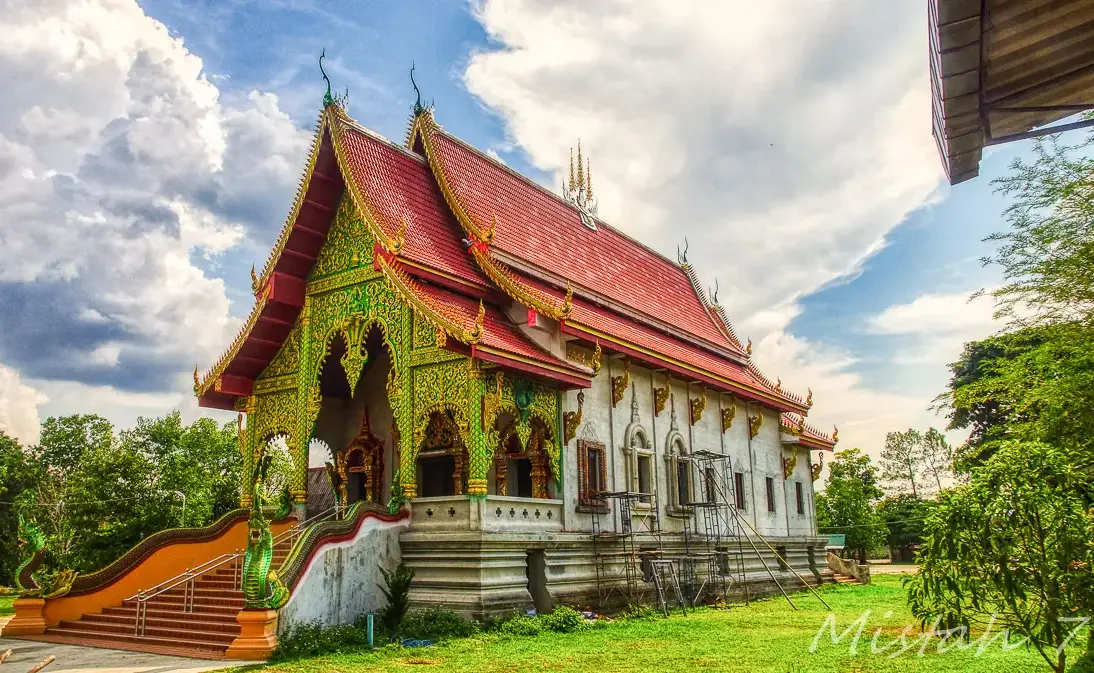
Wat Huai Sala is located in Tambon Tha Ton, Mae Ai District, Chiang Mai Province. It is a local community temple serving Ban Huai Sala and the surrounding area. Although it is not a major landmark temple like Wat Tha Ton Royal Temple, Wat Huai Sala is meaningful as a working village temple where local residents make merit, observe Buddhist holy days, join Kathin ceremonies, and maintain the religious life of the community.
Ban Huai Sala is part of Tambon Tha Ton, a northern borderland area shaped by mountains, the Kok River corridor, rural villages, agricultural life, and cultural diversity. Tha Ton is known for Buddhist temples, river routes, hill viewpoints, ethnic communities, orchards, and hot springs. In this setting, Wat Huai Sala represents the quiet village-temple side of Mae Ai District. It is a place where Buddhism remains closely connected with everyday community life.
The name Wat Huai Sala is directly connected with Ban Huai Sala. In northern Thai place names, “huai” often refers to a small stream or watercourse, while “sala” suggests a shelter, resting place, or shared public space. The temple name therefore reflects both local geography and the temple’s function as a spiritual and social center for the village.
Wat Huai Sala is listed as a community temple in Tambon Tha Ton, Mae Ai District, Chiang Mai Province. Recent Kathin information identifies Phra Maha Wirunsak Paphangkaro as the abbot and records five resident monks at the temple. This confirms that the temple remains active as a Buddhist site and continues to support monastic and community activities.
The role of the abbot in a village temple is important. He serves as a spiritual leader, caretaker of the temple compound, coordinator with lay supporters, and guardian of religious continuity. Wat Huai Sala continues to function through the relationship between monks, villagers, temple supporters, and devotees who help maintain the temple and support its ceremonies.
Wat Huai Sala is used for Buddhist holy day observances, alms-giving, sermons, Kathin after Buddhist Lent, forest robe offerings, and regular merit-making activities. These activities are religious, but they are also social. They bring elders, families, youth, monks, and lay supporters together, helping the community remain connected through shared acts of faith.
Within Tambon Tha Ton, Wat Huai Sala is part of a wider network of temples and cultural destinations. Nearby places include Wat Tha Ma Kaeng, Wat San Ton Du, Wat Hat Chomphu, Wat Phra That Sop Fang, Wat Tha Ton Royal Temple, and Tha Ton Pier. Each place shows a different side of the area. Wat Huai Sala represents the calm, local, community-based side of Buddhist life in Tha Ton.
The atmosphere of Wat Huai Sala is suitable for visitors who want to make merit quietly and understand the role of a local temple in northern Chiang Mai. It is not best understood as a large tourist attraction, but as a living religious site. Visitors can observe the temple courtyard, worship areas, religious activity spaces, and the surrounding village setting while respecting the everyday rhythm of the temple.
Ban Huai Sala also has cultural significance beyond the temple itself. The community is associated with local cultural activities such as the Ban Huai Sala swing festival. Such events help express the identity of the village and show that this part of Tha Ton remains active in both religious and cultural life. Together, Wat Huai Sala and Ban Huai Sala give travelers a deeper view of the community landscape of Mae Ai District.
Important things to appreciate at Wat Huai Sala include the quiet village-temple atmosphere, worship areas, temple courtyard, Buddhist activity spaces, and the surrounding community of Ban Huai Sala. The value of the temple lies in its role as a spiritual center rather than in large-scale tourist facilities. Visitors should take time to observe how the temple remains connected with local people.
Wat Huai Sala is suitable for travelers interested in local temples, community Buddhism, quiet merit-making, and cultural routes around Tha Ton and Mae Ai. It can be included in an itinerary with nearby temples, the Kok River route, Tha Ton village, orchards, hot springs, and riverside accommodation. This makes the temple a useful stop for travelers who want a more grounded view of northern Chiang Mai.
Visitors should follow proper temple etiquette. Dress modestly, speak quietly, avoid disturbing monks or local residents, and do not enter monastic or restricted areas without permission. Photography should be respectful and should not interfere with worship or ceremonies. The temple is an active religious place and should be treated with care.
Getting There can be done by road. From Chiang Mai city, travel north through Mae Rim, Mae Taeng, Chiang Dao, Fang, and Mae Ai before entering Tambon Tha Ton. Continue toward Ban Huai Sala in the Tha Ton area. The temple is best reached by private car, rental car, or local transport familiar with the route.
A practical itinerary can begin at Wat Huai Sala for merit-making in a quiet village atmosphere, then continue to Wat Tha Ma Kaeng, Wat San Ton Du, Wat Hat Chomphu, Wat Phra That Sop Fang, Wat Tha Ton Royal Temple, and Tha Ton Pier. Travelers with more time can add the Kok River boat route, Thanathon Orchard, Malika Hot Spring, and accommodation in the Tha Ton area.
Wat Huai Sala is therefore a meaningful stop for visitors who want to understand the quieter community-temple side of Mae Ai District. Its role as a local temple, its resident monks, its Kathin activities, and its connection with Ban Huai Sala make it a valuable place for merit-making and cultural observation in the Tha Ton travel route.
| Name | Wat Huai Sala |
| Location | Ban Huai Sala, Tambon Tha Ton, Mae Ai District, Chiang Mai Province |
| Address | Tambon Tha Ton, Mae Ai District, Chiang Mai 50280, Thailand |
| Coordinates | 20.07369, 99.46781 |
| Temple Type | Community Temple |
| History / Community Context | A local community temple of Ban Huai Sala in Tambon Tha Ton, serving as a spiritual center for Buddhist worship, merit-making, Kathin, and village religious activities |
| Name Origin | The temple name is connected with Ban Huai Sala, the village where the temple is located and its main community of lay supporters |
| Highlights | A quiet village temple in Tambon Tha Ton with five resident monks, Kathin activities, and a close relationship with Ban Huai Sala community life |
| Distinctive Features | A simple local temple suitable for merit-making, observing community Buddhism, and understanding village-temple life in Mae Ai District |
| Main Structures / Areas | Temple courtyard, worship areas, religious activity spaces, and community merit-making areas |
| What To See | Village-temple atmosphere, worship areas, temple courtyard, and the local community setting of Ban Huai Sala |
| Travel Information | Travel from Chiang Mai through Mae Rim, Mae Taeng, Chiang Dao, Fang, and Mae Ai to Tambon Tha Ton, then continue toward Ban Huai Sala. Best reached by private car, rental car, or local transport from Tha Ton |
| Current Status | Active community temple used for Buddhist worship, merit-making, Kathin, and local religious activities |
| Open Days | Contact the temple before visiting |
| Opening Hours | Daytime visits are recommended |
| Abbot / Caretaker | Phra Maha Wirunsak Paphangkaro |
| Resident Monks | 5 Monks |
| Related Religious Events | Kathin after Buddhist Lent, forest robe offerings, Buddhist holy day activities, alms-giving, sermons, and regular merit-making |
| Community Cultural Context | Ban Huai Sala is associated with local cultural activities such as the swing festival, reflecting the community identity of the Tha Ton area |
| Nearby Tourist Attractions | 1. Wat Tha Ma Kaeng, about 3 km 2. Wat San Ton Du, about 5 km 3. Wat Hat Chomphu, about 7 km 4. Wat Phra That Sop Fang, about 10 km 5. Wat Tha Ton Royal Temple, about 13 km 6. Tha Ton Pier / Kok River Boat Route, about 13 km |
| Nearby Restaurants | 1. Tha Ton River View, about 13 km, Tel. 053-459-289, 053-373-173-5, 093-256-7969 2. Tha Ton Hill, about 14 km, Tel. 053-053-669 3. Tha Ton Chom Chan, about 14 km, Tel. 088-435-4467 4. Khun Mai Baan Suan Resort, about 14 km, Tel. 053-053-551, 088-952-6196, 081-885-3564 5. Nam Som Thanathon, about 15 km, Tel. 083-734-9555 |
| Nearby Accommodations | 1. Tha Ton River View Resort, about 13 km, Tel. 053-373-173 2. Tha Ton Chalet, about 13 km, Tel. 053-373-155 3. Tha Ton Hill Resort, about 14 km, Tel. 053-053-669 4. Khun Mai Baan Suan Resort, about 14 km, Tel. 053-053-551, 088-952-6196, 081-885-3564 5. Nicha Homestay Tha Ton, about 18 km, Tel. 093-549-7419 |
Frequently Asked Questions (FAQ)
Q: Where Is Wat Huai Sala Located?
A: Wat Huai Sala is located in Tambon Tha Ton, Mae Ai District, Chiang Mai Province, Thailand.
Q: What Is Wat Huai Sala Known For?
A: It is known as a local community temple of Ban Huai Sala, serving Buddhist worship, merit-making, Kathin, and village religious activities.
Q: Who Is The Abbot Of Wat Huai Sala?
A: The abbot is Phra Maha Wirunsak Paphangkaro.
Q: How Many Resident Monks Are Listed At Wat Huai Sala?
A: Recent Kathin information lists five resident monks at the temple.
Q: Who Should Visit Wat Huai Sala?
A: It is suitable for travelers who want to make merit, visit a quiet local temple, and explore the cultural route around Tha Ton and Mae Ai.
Q: What Cultural Activity Is Associated With Ban Huai Sala?
A: Ban Huai Sala is associated with community cultural activities such as the swing festival, which reflects local identity in the Tha Ton area.
Q: How Can Visitors Travel To Wat Huai Sala?
A: From Chiang Mai city, travel through Mae Rim, Mae Taeng, Chiang Dao, Fang, and Mae Ai to Tambon Tha Ton, then continue toward Ban Huai Sala.
Q: What Nearby Places Can Be Visited With Wat Huai Sala?
A: Nearby places include Wat Tha Ma Kaeng, Wat San Ton Du, Wat Hat Chomphu, Wat Phra That Sop Fang, Wat Tha Ton Royal Temple, and Tha Ton Pier.
 Category: ●Places of Worship
 Group: ●Temple
Last Update : 2 MonthAgo
 Last Update : 2 MonthAgo
 Click to Access the Navigation Map GPS
Wat Huai Sala Map
Recommend

 Muang Chiang Mai(121)Chom Thong(47)Mae Chaem(25)Chiang Dao(33)Doi Saket(68)Mae Taeng(85)Mae Rim(69)Samoeng(29)Fang(71)Mae Ai(59)Phrao(70)San Pa Tong(103)San Kamphaeng(66)San Sai(73)Hang Dong(73)Hot(32)Doi Tao(22)Omkoi(11)Saraphi(74)Wiang Haeng(15)Chai Prakan(28)Mae Wang(32)Mae On(22)Doi Lo(33)Galyani Vadhana(1)


