
lovethailand home >North Travel Attractions >Chiang Mai Travel Attractions >Mae Ai >Tha Ton > Wat Phawana Nimit
TL;DR: Wat Phawana Nimit is located at Ban Rom Thai (Nam Yon), Moo 14, Tambon Tha Ton, Mae Ai District, Chiang Mai Province, open Daily, hours Daytime Visits Are Recommended.

Wat Phawana Nimit
Open Days: Daily
Opening Hours: Daytime Visits Are Recommended
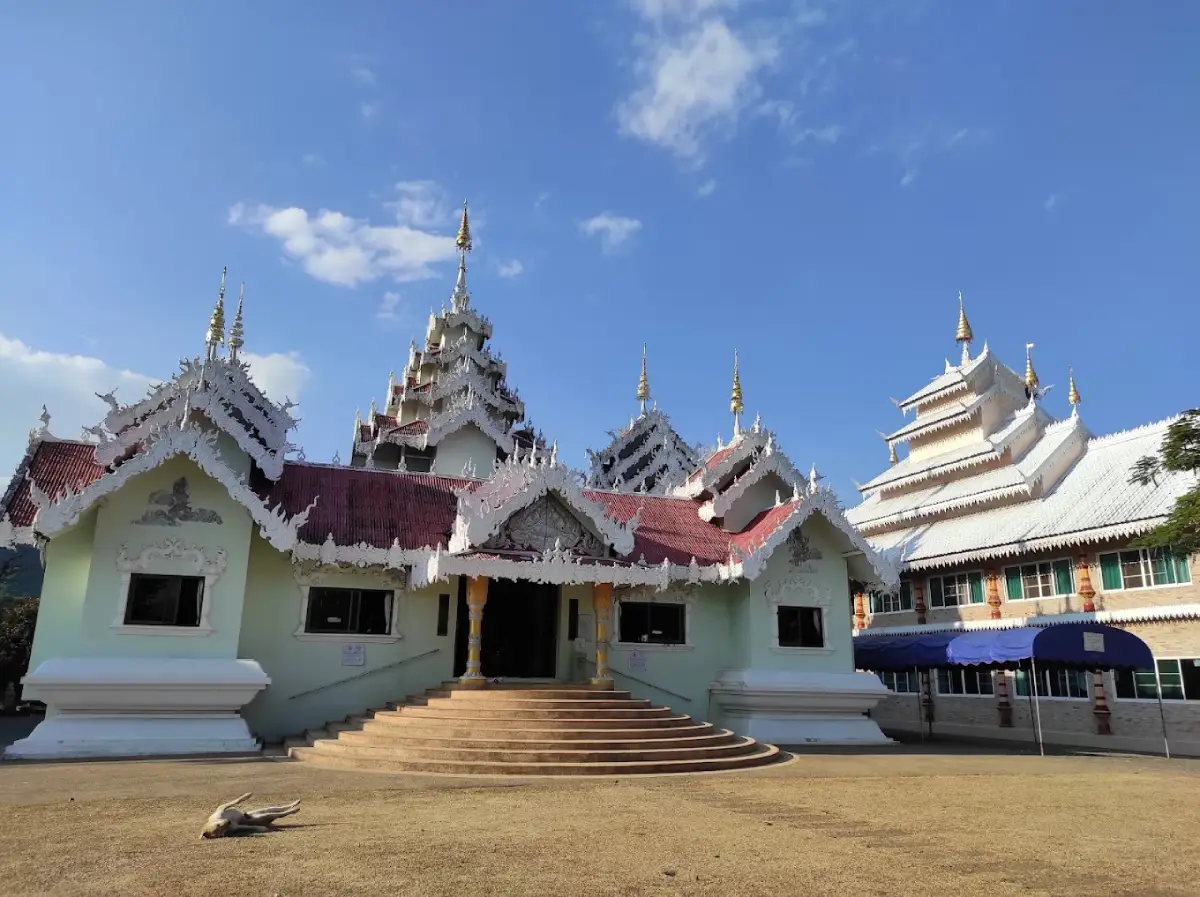
Wat Phawana Nimit, also locally known as Wat Nam Yon, is located in Moo 14, Ban Rom Thai or Nam Yon, Tambon Tha Ton, Mae Ai District, Chiang Mai Province. It is a community temple known for its distinctive Shan-style architecture, especially the ubosot with a five-tiered roof, columns shaped like long drums, an elegant entrance arch, and temple walls decorated with drum-shaped pillars. The temple is a meaningful place for visitors who want to make merit and see Tai Yai cultural art in the Tha Ton–Mae Ai area.
Ban Rom Thai or Nam Yon is a community in Tambon Tha Ton, Mae Ai District, where Lanna, Tai Yai, and northern borderland cultures meet. Wat Phawana Nimit is therefore more than a place for Buddhist worship. It is also a cultural landmark that preserves the identity of the local Tai Yai community through architecture, craftsmanship, and temple decoration.
The temple is commonly called Wat Nam Yon by local residents because it is closely connected with the Nam Yon community. The formal name Wat Phawana Nimit suggests a peaceful place for meditation and spiritual cultivation, while the local name reflects the temple’s direct connection with the village. Together, the two names show the temple’s religious role and its close relationship with local life.
The most important feature of Wat Phawana Nimit is its Shan-style ubosot with a five-tiered roof. The layered roof gives the building a tall, graceful, and sacred appearance. This roof form differs from many ordinary Lanna temples and reflects the aesthetics of Tai Yai Buddhist architecture. The building is especially interesting for visitors who want to compare Shan, Lanna, and northern Thai temple styles.
The temple’s columns are shaped like long drums, known in Thai as “klong kon yao.” This is the most distinctive design element of the temple. The long drum is associated with music, processions, merit-making, and cultural celebration. By using the drum form as an architectural element, the temple turns a cultural symbol into part of a sacred Buddhist structure.
The entrance arch and temple wall continue the same design language. The pillars along the temple wall are also shaped like drums, creating a unified visual identity from the entrance to the ubosot. This makes Wat Phawana Nimit a strong example of how local identity can be expressed through permanent religious architecture.
Within the wider context of Tambon Tha Ton, Wat Phawana Nimit is one of several temples that show the cultural diversity of Mae Ai District. Wat Tha Ton Royal Temple represents a large hill temple and major regional landmark. Wat Mai Mok Cham reflects Tai Yai culture and community museum traditions. Wat Huai Pu represents a quiet village temple. Wat Phawana Nimit stands out through its Shan-style ubosot and drum-shaped architectural details.
The temple’s role in Ban Rom Thai or Nam Yon includes both religion and culture. Local people use the temple for merit-making, Buddhist holy day observances, Kathin, forest robe offerings, and other Buddhist activities. At the same time, the temple preserves Tai Yai identity through its architectural form. It is therefore both a spiritual center and a visible cultural marker of the community.
The history of the temple should be understood together with the history of Tha Ton as a borderland community. Tha Ton connects the Kok River, mountain settlements, Shan communities, Lanna culture, and routes between Chiang Mai and Chiang Rai. In this setting, Shan-style temple architecture is not only decorative. It is an expression of community memory, migration, identity, and continuing Buddhist faith.
The ubosot of Wat Phawana Nimit is suitable for architectural observation. Visitors should notice the five-tiered roof, the rhythm of the roofline, the drum-shaped columns, the entrance arch, and the temple wall. These elements work together to create an unusually coherent temple design. The value of the temple lies not in its size but in the clarity and distinctiveness of its cultural expression.
The beauty of Wat Phawana Nimit comes from the intention to preserve Tai Yai artistic heritage. The long-drum columns show how a community symbol can be transformed into sacred architecture. For travelers interested in cultural identity, the temple offers a clear example of how Buddhist space and ethnic art can support one another.
Wat Phawana Nimit is suitable for travelers interested in local temples, Shan architecture, ethnic culture, and the Tha Ton–Mae Ai cultural route. Visitors who have already been to Wat Tha Ton or Wat Mai Mok Cham can add Wat Phawana Nimit to the itinerary to see another expression of Tai Yai temple art. Each temple in the area has its own character, and Wat Phawana Nimit is especially memorable for its drum-shaped design details.
Important things to see at the temple include the five-tiered ubosot roof, long-drum columns, entrance arch, temple wall, courtyard, worship area, and the local atmosphere of Ban Rom Thai or Nam Yon. Visitors should walk slowly, observe the roof form and columns carefully, and appreciate the way the temple uses architecture to tell the story of the community.
Visitors should observe proper temple etiquette. Dress modestly, speak quietly, remove shoes before entering sacred areas, avoid touching architectural elements unnecessarily, and do not disturb monks or local worshippers. Photography should be done respectfully and should not intrude into monastic or ceremonial spaces.
Religious activities associated with Wat Phawana Nimit include Buddhist holy day observances, alms-giving, Kathin after Buddhist Lent, forest robe offerings, and regular merit-making. During these events, the temple becomes a gathering place where villagers support Buddhism, meet relatives, and maintain the relationship between temple and community.
For cultural learning, Wat Phawana Nimit is valuable because it shows how Buddhism and ethnic identity can exist together in one place. The ubosot is a religious building, but its roof, columns, entrance arch, and wall tell a story about Tai Yai culture. Visitors can therefore understand the temple both as a place of worship and as a cultural document created through faith and craftsmanship.
Getting There can be done by road from Chiang Mai city via Mae Rim, Mae Taeng, Chiang Dao, Fang, and Mae Ai before entering Tambon Tha Ton. From Tha Ton, continue to Ban Rom Thai or Nam Yon, Moo 14. Travelers should use both names, Wat Phawana Nimit and Wat Nam Yon, together with Ban Rom Thai and Tambon Tha Ton when navigating.
A practical cultural itinerary can combine Wat Phawana Nimit with Wat Tha Ton Royal Temple, Tha Ton Boat Pier, Wat Mai Mok Cham, the Mok Cham Royal Project Development Center, Thanathon Orchard, and Malika Hot Spring. For a shorter cultural route, combine Wat Phawana Nimit, Wat Mai Mok Cham, and Wat Tha Ton to see the contrast between a Tai Yai village temple, a Shan cultural temple, and a major hilltop royal temple.
Wat Phawana Nimit is therefore worth including in a Tha Ton and Mae Ai travel route, especially for visitors interested in Shan architecture and borderland community culture. Its five-tiered ubosot roof, long-drum columns, entrance arch, temple wall, and commitment to preserving Tai Yai cultural art make it a quiet but highly distinctive destination.
| Name | Wat Phawana Nimit / Wat Nam Yon |
| Location | Ban Rom Thai (Nam Yon), Moo 14, Tambon Tha Ton, Mae Ai District, Chiang Mai Province |
| Address | Moo 14, Ban Rom Thai (Nam Yon), Tambon Tha Ton, Mae Ai District, Chiang Mai 50280, Thailand |
| Temple Type | Community Temple In Tambon Tha Ton, Mae Ai District, Chiang Mai Province |
| History / Community Context | A community temple of Ban Rom Thai or Nam Yon, known for Shan-style architecture and for preserving Tai Yai cultural art in Tambon Tha Ton |
| Name Origin | Local people call it Wat Nam Yon after the village area, while the formal name Wat Phawana Nimit suggests a peaceful place for meditation and merit-making |
| Highlights | Shan-style ubosot with a five-tiered roof, long-drum-shaped columns, elegant entrance arch, temple wall with drum-shaped pillars, and the local atmosphere of Ban Rom Thai |
| Distinctive Features | The temple uses the long-drum symbol of Tai Yai culture as a visible architectural theme in the ubosot columns, entrance, and temple wall |
| Main Structures / Areas | Five-tiered ubosot, entrance arch, temple wall, long-drum-shaped columns, courtyard, worship area, and community religious activity space |
| What To See | Layered ubosot roof, long-drum columns, entrance arch details, temple wall design, and the overall Shan architectural character of the temple |
| Travel Information | Travel from Chiang Mai via Mae Rim, Mae Taeng, Chiang Dao, Fang, and Mae Ai to Tambon Tha Ton, then continue to Ban Rom Thai or Nam Yon, Moo 14. Best reached by private car, rental car, or local transport from Tha Ton |
| Current Status | Active community temple and local Tai Yai cultural attraction of Tambon Tha Ton |
| Open Days | Daily |
| Opening Hours | Daytime Visits Are Recommended |
| Abbot / Caretaker | Phra Ang Phe Uthako |
| Main Contact / Coordination Number | 097-972-6466 |
| Related Religious Events | Buddhist holy day activities, alms-giving, Kathin after Buddhist Lent, forest robe offerings, and regular merit-making events |
| Nearby Tourist Attractions | 1. Wat Tha Ton Royal Temple, about 8 km 2. Tha Ton Boat Pier / Kok River Boat Route, about 8 km 3. Wat Mai Mok Cham / Wat Mok Cham, about 9 km 4. Mok Cham Royal Project Development Center, about 13 km 5. Thanathon Orchard, about 14 km 6. Malika Hot Spring, about 19 km |
| Nearby Restaurants | 1. Tha Ton River View, about 8 km, Tel. 053-459-289, 053-373-173-5, 093-256-7969 2. Tha Ton Hill, about 9 km, Tel. 053-053-669 3. Tha Ton Chom Chan Cafe & Restaurant Homestay, about 9 km, Tel. 088-435-4467 4. Khun Mai Baan Suan Resort, about 10 km, Tel. 053-053-551, 088-952-6196, 081-885-3564 5. Khrua Khun Mae Moo Kratha, about 17 km, Tel. 053-459-191 |
| Nearby Accommodations | 1. Tha Ton River View Resort, about 8 km, Tel. 063-014-3787 2. Tha Ton Chalet, about 8 km, Tel. 053-373-155, 053-373-156 3. Tha Ton Hill Resort, about 9 km, Tel. 053-053-669 4. Khun Mai Baan Suan Resort, about 10 km, Tel. 053-053-551, 088-952-6196, 081-885-3564 5. Nicha Homestay Tha Ton, about 14 km, Tel. 093-549-7419 |
Frequently Asked Questions (FAQ)
Q: Where Is Wat Phawana Nimit Located?
A: Wat Phawana Nimit, also known as Wat Nam Yon, is located in Moo 14, Ban Rom Thai or Nam Yon, Tambon Tha Ton, Mae Ai District, Chiang Mai Province.
Q: What Is Wat Phawana Nimit Known For?
A: It is known for its Shan-style ubosot with a five-tiered roof, long-drum-shaped columns, elegant entrance arch, and temple wall decorated with drum-shaped pillars.
Q: Why Is Wat Phawana Nimit Also Called Wat Nam Yon?
A: Local people call it Wat Nam Yon after Ban Rom Thai or Nam Yon, the community where the temple is located.
Q: Who Should Visit Wat Phawana Nimit?
A: It is suitable for travelers interested in Buddhist temples, Shan architecture, Tai Yai culture, ethnic craftsmanship, and the Tha Ton–Mae Ai cultural route.
Q: When Can Visitors Visit Wat Phawana Nimit?
A: The temple can be visited daily, and daytime visits are recommended.
Q: Who Is The Listed Caretaker Of Wat Phawana Nimit?
A: The caretaker listed in Chiang Mai provincial cultural information is Phra Ang Phe Uthako.
Q: What Should Visitors Pay Attention To At The Temple?
A: Visitors should look closely at the five-tiered ubosot roof, long-drum columns, entrance arch, temple wall, and the Shan architectural details throughout the compound.
Q: What Nearby Places Can Be Visited With Wat Phawana Nimit?
A: Nearby places include Wat Tha Ton Royal Temple, Tha Ton Boat Pier, Wat Mai Mok Cham, Mok Cham Royal Project Development Center, Thanathon Orchard, and Malika Hot Spring.
 Category: ●Places of Worship
 Group: ●Temple
Last Update : 5 HourAgo
 Last Update : 5 HourAgo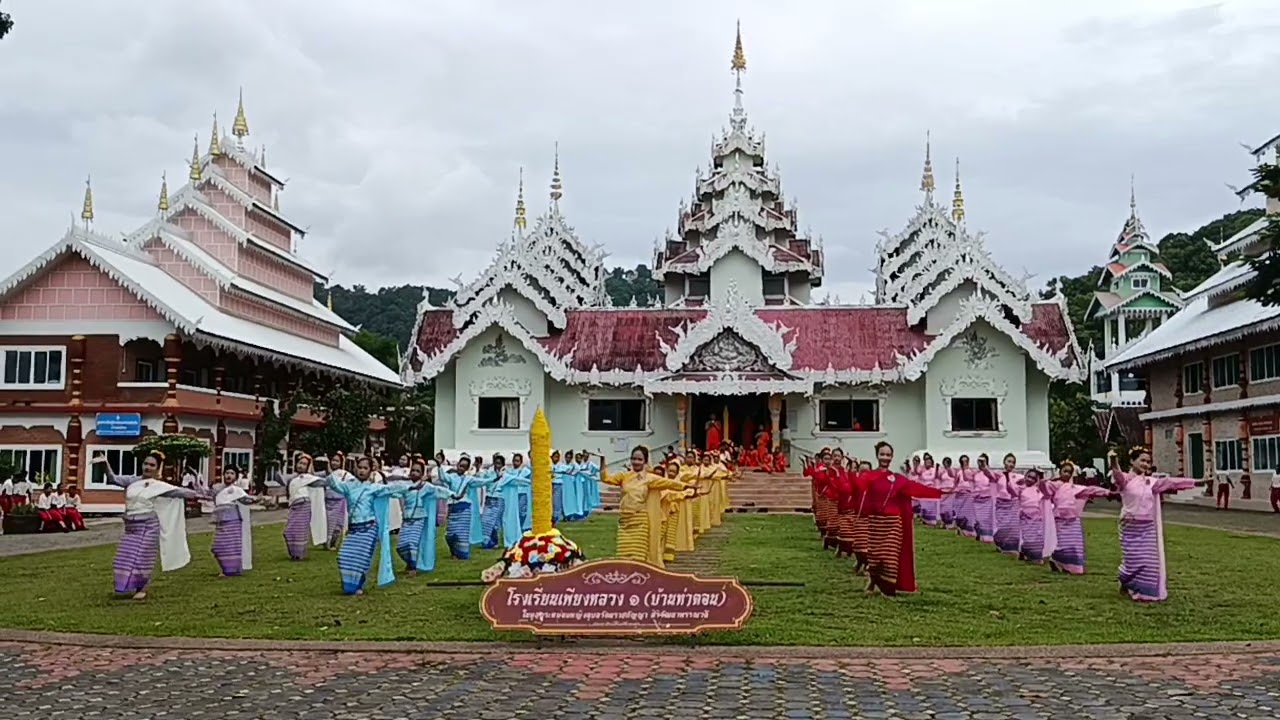
 Click to Access the Navigation Map GPS
Wat Phawana Nimit Map
Recommend

 Muang Chiang Mai(121)Chom Thong(47)Mae Chaem(25)Chiang Dao(33)Doi Saket(68)Mae Taeng(85)Mae Rim(69)Samoeng(29)Fang(71)Mae Ai(61)Phrao(70)San Pa Tong(105)San Kamphaeng(66)San Sai(73)Hang Dong(74)Hot(32)Doi Tao(22)Omkoi(11)Saraphi(74)Wiang Haeng(15)Chai Prakan(28)Mae Wang(32)Mae On(22)Doi Lo(34)Galyani Vadhana(1)


