
lovethailand home >North Travel Attractions >Chiang Mai Travel Attractions >Mae On >On Nuea > Wat Nong Hoi (On Nuea)
TL;DR: Wat Nong Hoi (On Nuea) is located at Ban Nong Hoi, Moo 2, On Nuea Subdistrict, Mae On District, Chiang Mai. is a long-established community temple at 82 Moo 2, Ban Nong Hoi, On Nuea Subdistrict, Mae On District, Chiang Mai Province. It is a public.

Wat Nong Hoi (On Nuea)
Operating day: Daily
Operating time: 08.00 - 17.00
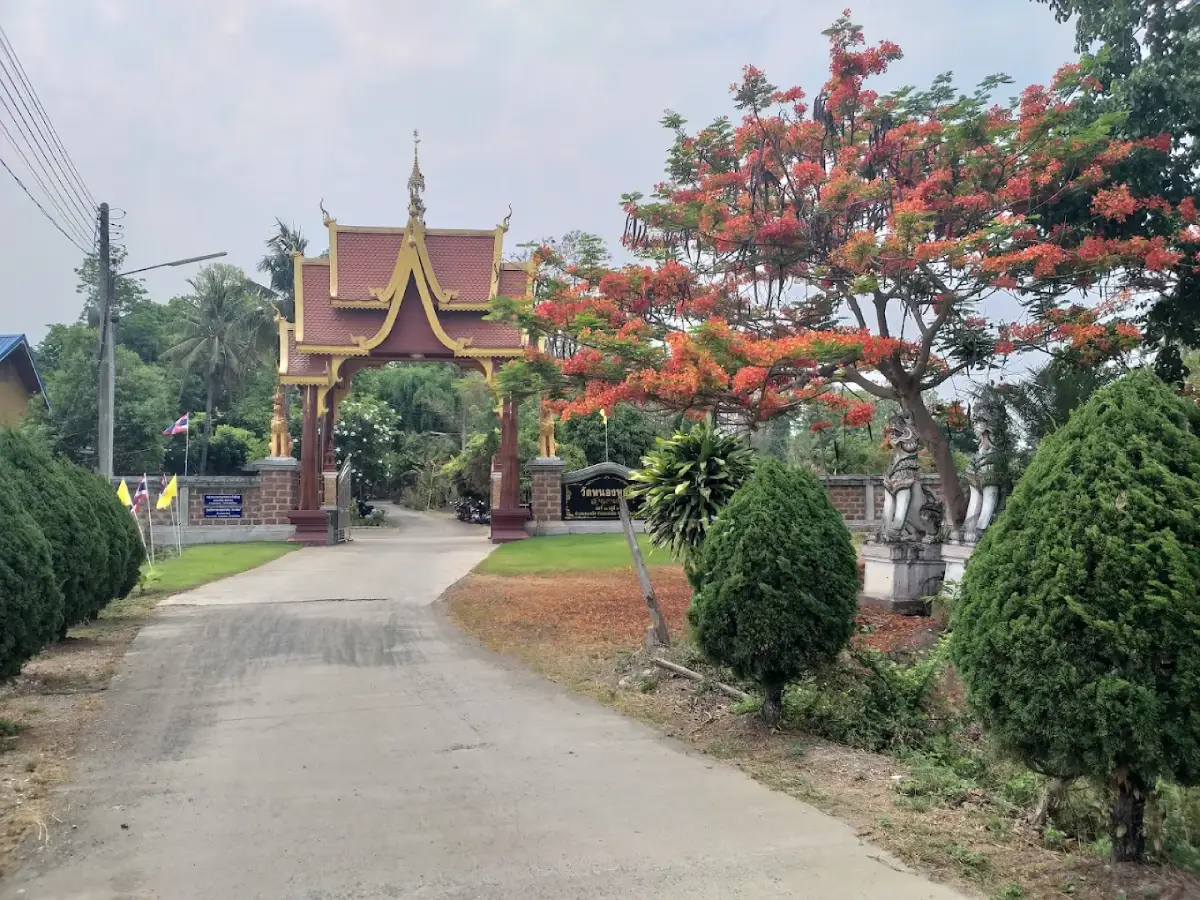
Wat Nong Hoi (On Nuea) is a long-established community temple at 82 Moo 2, Ban Nong Hoi, On Nuea Subdistrict, Mae On District, Chiang Mai Province. It is a public Buddhist temple under the Maha Nikaya order and was formally established in 1821. More than two centuries later, Wat Nong Hoi continues to function as a religious and communal center for Ban Nong Hoi. Its principal structures include an ordination hall, Buddha images in the Mara-Vijaya posture, a sermon and assembly hall, monks’ residences, supporting halls, a bell tower, kitchen facilities, and the temple entrance gateway. Phra Khru Pratheep Woratham continues to be identified as the abbot in recent temple activity records.
For travelers searching for Wat Nong Hoi in Mae On, the appeal of this temple is different from that of Chiang Mai’s major landmark temples. Wat Nong Hoi is not primarily a commercial tourist attraction. Its importance comes from its continuing role as a village temple where Buddhism, community life, seasonal merit-making, and local traditions remain closely connected. It is therefore particularly suitable for travelers interested in rural Chiang Mai, Lanna community culture, local temples, and places that retain an everyday religious function.
Wat Nong Hoi was established in 1821, during the early Rattanakosin period. By 2026, the temple has existed for approximately 205 years. Its location within Ban Nong Hoi, Moo 2 of On Nuea Subdistrict, is important to understanding its history. The temple developed as part of the village rather than as a separate monumental complex. This relationship between village and temple is characteristic of many northern Thai communities, where Buddhist temples traditionally served religious, educational, cultural, and communal functions at the same time.
An important milestone in the temple’s institutional history came on 16 June 2006, when Wat Nong Hoi received a royal grant of Wisungkhamasima. The designated sacred boundary measures 12 meters by 16 meters. In Thai Buddhism, a Wisungkhamasima marks the officially recognized monastic boundary within which formal Sangha ceremonies can be conducted. The ordination hall therefore has both architectural and canonical significance within the temple complex.
Wat Nong Hoi belongs to the Maha Nikaya Buddhist order and is registered under temple code 03502301002. Its address is 82 Moo 2, Ban Nong Hoi, On Nuea, Mae On, Chiang Mai 50130. The temple is surrounded by the rural landscape of Mae On, where villages, reservoirs, agricultural land, temples, and mountain scenery remain closely connected. This setting gives visitors a different perspective from the better-known urban temples of central Chiang Mai.
The ubosot, or ordination hall, is one of the temple’s most important religious buildings. It houses a principal Buddha image in the Mara-Vijaya posture, one of the most familiar iconographic forms in Thai Buddhism. The posture represents the Buddha’s victory over Mara immediately before enlightenment. The right hand reaches toward the earth while the left rests in meditation, symbolizing unwavering resolve, wisdom, and spiritual victory over obstacles.
A second principal Buddha image in the Mara-Vijaya posture is located in the temple’s main assembly hall. This image was created in 1993. The hall serves a broader community function than the ordination hall and can accommodate monks and laypeople during sermons, merit-making activities, and major Buddhist occasions. The presence of principal Buddha images in both spaces illustrates the dual function of the temple: formal monastic practice on one hand and community religious life on the other.
Other documented structures at Wat Nong Hoi include monks’ quarters, supporting halls, a multipurpose pavilion, a bell tower, a kitchen, and the entrance gateway. Together these buildings show that a village temple is more than a single sanctuary. Monks live within the grounds, ceremonies require common spaces, festivals need areas for preparing food, and bells traditionally help mark the rhythm of temple life.
Wat Nong Hoi also has a documented educational role. A Buddhist Sunday study center was established at the temple in 1991, while a local Buddhist training unit was appointed in 1998. These institutions reflect the temple’s role in teaching Buddhist principles and ethical values beyond formal ceremonies. In rural communities, such programs have historically helped connect children, young people, families, and monks through religious education.
The temple’s development was recognized through awards during the late 1990s. Wat Nong Hoi received a model temple development award in 1998 and another temple development award associated with the provincial Sangha in 1999. These distinctions reflect a period in which the temple was recognized for improvements in management, facilities, religious activities, or the overall quality of the temple environment.
The recorded succession of abbots includes Phra Athikan Tepin Panyathipo, Phra Athikan Si Wichayo, Phra Athikan Kaeo Kawito, Phra Athikan Tha Photiko, and Phra Khru Pratheep Woratham. Recent Kathin information from 2025 continued to identify Phra Khru Pratheep Woratham as abbot. At that time, four monks were recorded as residing at the temple during the Buddhist rains retreat.
Wat Nong Hoi remains active in annual Buddhist traditions. A Kathin ceremony was scheduled for 26 October 2025 at 09:30. Records from the event show merit-making donations, the formal Kathin offering, procession activities, and community participation. Kathin is one of the most important annual ceremonies following the rains retreat, when lay Buddhists collectively offer robes and other necessities to monks who have completed the three-month retreat.
The temple’s continuing role was also confirmed in 2026 when local authorities and community representatives organized a Buddhist Lent candle-offering activity in On Nuea Subdistrict. Wat Nong Hoi in Moo 2 was one of the temples visited during the ceremony. This recent activity confirms that the temple remains in active religious use and continues to form part of the living network of Buddhist temples in the On Nuea community.
For visitors interested in Lanna community life, Wat Nong Hoi is best understood not simply as a collection of buildings but as part of the social structure of Ban Nong Hoi. Northern Thai temples traditionally serve as places of worship, community meeting points, centers for merit-making, educational spaces, and venues where different generations participate in religious traditions together.
The atmosphere suits travelers who prefer quiet community temples to crowded landmark attractions. A visit can begin at the temple gateway before continuing to the ordination hall, the principal Buddha image, the main hall, the bell tower, and other parts of the compound. Spending time observing how the different spaces are arranged provides a better understanding of how a functioning rural temple is organized.
Visitors coming to pay respects should dress modestly, remove footwear where required, keep voices low in religious buildings, and avoid interrupting monks during prayers or religious duties. If a local merit-making ceremony is taking place, visitors should allow sufficient space for community participants and follow instructions from temple members.
Wat Nong Hoi works well as part of a half-day or full-day Mae On itinerary. Nearby places include Nong Hoi Reservoir, Chiang Mai Highlands Golf and Spa Resort, Wat Tham Muang On, Wat On Luai, and San Kamphaeng Hot Springs. Travelers with additional time can continue toward Huai Kaeo and Mae Kampong Village.
Nong Hoi Reservoir lies close to the temple and provides a useful stop for travelers who want to see more of the surrounding landscape. Combining the temple with the reservoir gives a clearer sense of how the village, agricultural areas, water resources, and nearby hills fit together geographically.
Wat Tham Muang On offers a contrasting religious experience. While Wat Nong Hoi is a lowland community temple, Wat Tham Muang On is associated with limestone terrain and cave features. Visiting both places on the same route allows travelers to experience two very different forms of Buddhist sacred space within Mae On District.
San Kamphaeng Hot Springs can be added later in the day for a natural and recreational component. Although commonly associated by name with San Kamphaeng, the well-known hot spring attraction lies within Mae On District. Combining a village temple, cave temple, reservoir, and hot springs creates a varied itinerary without requiring a return to central Chiang Mai between stops.
Travelers wishing to stay overnight can choose from small resorts, homestays, and accommodations in On Nuea, Ban Sa Ha Khon, and along the route toward the hot springs and Mae Kampong. Several properties are only a few kilometers from Wat Nong Hoi, making Mae On a practical base for travelers who prefer a slower rural itinerary.
Food options are concentrated around Ban Sa Ha Khon and the road leading toward San Kamphaeng Hot Springs. The area offers local Thai restaurants, coffee shops, cafés, and simple roadside dining. Planning meals along the same travel route is more practical than expecting a large concentration of restaurants immediately outside the temple.
Getting There is easiest by private car or rental vehicle. From central Chiang Mai, travel east through San Kamphaeng toward Mae On District, then continue to On Nuea Subdistrict and Ban Nong Hoi, Moo 2. When using navigation apps, search specifically for “Wat Nong Hoi, On Nuea, Mae On” because several temples elsewhere in Thailand share the same name.
A practical route begins at Wat Nong Hoi, continues to Nong Hoi Reservoir and Wat Tham Muang On, and then proceeds to San Kamphaeng Hot Springs. This minimizes unnecessary backtracking. Travelers planning to continue to Mae Kampong should allow additional time because the road continues into the higher terrain of Huai Kaeo Subdistrict.
Wat Nong Hoi is particularly suitable for travelers interested in local history, northern Thai temple culture, rural communities, merit-making, photography, and slow travel. It does not depend on large-scale tourism infrastructure for its appeal. Its value comes from the fact that it remains an active village temple with more than two centuries of history.
From its establishment in 1821 to its present role in 2026, Wat Nong Hoi has continued to connect Buddhism with local life. Its history includes Buddhist education, community training, temple development, Kathin ceremonies, Buddhist Lent activities, and the daily presence of monks and laypeople. For travelers exploring Mae On beyond its best-known attractions, Wat Nong Hoi offers a useful and authentic window into the religious and social life of rural Chiang Mai.
| Name | Wat Nong Hoi (On Nuea) |
| Type | Public Buddhist Temple, Maha Nikaya Order |
| Location | Ban Nong Hoi, Moo 2, On Nuea Subdistrict, Mae On District, Chiang Mai |
| Address | 82 Moo 2, On Nuea, Mae On, Chiang Mai 50130, Thailand |
| Temple Code | 03502301002 |
| History | Established in 1821; approximately 205 years old in 2026 |
| Wisungkhamasima | Granted on 16 June 2006; designated boundary 12 × 16 meters |
| Principal Buddha Images | Mara-Vijaya Buddha image in the ordination hall and another Mara-Vijaya image in the main hall, created in 1993 |
| Main Areas | Ordination hall, monks’ residences, supporting halls, multipurpose pavilion, main assembly hall, bell tower, kitchen, and entrance gateway |
| Buddhist Education | Buddhist Sunday study center established in 1991 and local Buddhist training unit appointed in 1998 |
| Abbot | Phra Khru Pratheep Woratham |
| Annual Traditions | Kathin, Buddhist Lent activities, candle offerings, and community merit-making ceremonies |
| Current Status | Active community temple; a Buddhist Lent candle-offering ceremony was held at the temple in 2026 |
| Main Contact Number | 090-298-5982 |
| Travel Information | Drive east from Chiang Mai through San Kamphaeng toward Mae On, then continue to On Nuea and Ban Nong Hoi. Search specifically for “Wat Nong Hoi, On Nuea, Mae On” in navigation apps. |
| Nearby Tourist Attractions | 1. Nong Hoi Reservoir, about 1 km 2. Chiang Mai Highlands Golf and Spa Resort, about 1–2 km 3. Wat On Luai, about 3 km 4. Wat Tham Muang On, about 3–4 km 5. San Kamphaeng Hot Springs, about 4 km 6. Tard Muey Waterfall, about 5 km |
| Nearby Restaurants | 1. U-Noka Coffee, about 3 km, Tel. 053-037-114 2. Mae On Steak Restaurant, about 3–4 km, Tel. 097-165-6593 3. Hom Doi Mae On, about 4 km, Tel. 098-626-7478 4. Lap Khom Mae On, about 5 km, Tel. 085-525-2692 5. Local restaurants around Ban Sa Ha Khon and the San Kamphaeng Hot Springs road, about 3–5 km |
| Nearby Accommodations | 1. Camp Ta Torn Yorn Meakampong Chiang Mai, about 2 km 2. Pine Village CNX, about 3 km 3. Sippa Hotspring Resort, about 3 km, Tel. 094-925-4628 4. Taryn Tara Mae Kampong, about 9 km 5. Woo Ma Ca Moo, about 11 km |
Frequently Asked Questions (FAQ)
Q: Where is Wat Nong Hoi in Mae On?
A: Wat Nong Hoi is located at 82 Moo 2, Ban Nong Hoi, On Nuea Subdistrict, Mae On District, Chiang Mai 50130.
Q: When was Wat Nong Hoi established?
A: Wat Nong Hoi was established in 1821 and has a history of more than 200 years.
Q: Who is the abbot of Wat Nong Hoi?
A: Phra Khru Pratheep Woratham is identified as the abbot in recent temple activity records.
Q: What can visitors see at Wat Nong Hoi?
A: Important features include the ordination hall, Mara-Vijaya Buddha images, main assembly hall, monks’ residences, supporting halls, bell tower, kitchen, and temple gateway.
Q: Is Wat Nong Hoi still an active temple?
A: Yes. The temple remains active and participated in community Buddhist Lent candle-offering activities in 2026.
Q: What Buddhist traditions are associated with Wat Nong Hoi?
A: Recent records include Kathin ceremonies and Buddhist Lent candle offerings, together with other community merit-making activities.
Q: What attractions can be combined with a visit to Wat Nong Hoi?
A: Nearby options include Nong Hoi Reservoir, Wat Tham Muang On, Chiang Mai Highlands Golf and Spa Resort, and San Kamphaeng Hot Springs.
Q: What type of traveler is Wat Nong Hoi best suited for?
A: It is especially suitable for travelers interested in local history, Lanna community culture, Buddhist temples, rural Chiang Mai, and slower cultural itineraries.
 Category: ●Places of Worship
 Group: ●Temple
Last Update : 1 MonthAgo
 Last Update : 1 MonthAgo
 Click to Access the Navigation Map GPS
Wat Nong Hoi (On Nuea) Map
Recommend

 Muang Chiang Mai(121)Chom Thong(47)Mae Chaem(25)Chiang Dao(33)Doi Saket(68)Mae Taeng(85)Mae Rim(69)Samoeng(29)Fang(71)Mae Ai(59)Phrao(70)San Pa Tong(103)San Kamphaeng(66)San Sai(73)Hang Dong(73)Hot(32)Doi Tao(22)Omkoi(11)Saraphi(74)Wiang Haeng(15)Chai Prakan(28)Mae Wang(32)Mae On(22)Doi Lo(33)Galyani Vadhana(1)


