
lovethailand home >North Travel Attractions >Chiang Mai Travel Attractions >Mae On >On Klang > Wat Ban Wak
TL;DR: Wat Ban Wak is located at Moo 4, Ban Wak, On Klang, Mae On District, Chiang Mai 50130, Thailand, open Daily, hours 08:00 – 17:00.

Wat Ban Wak
Open Days: Daily
Opening Hours: 08:00 – 17:00
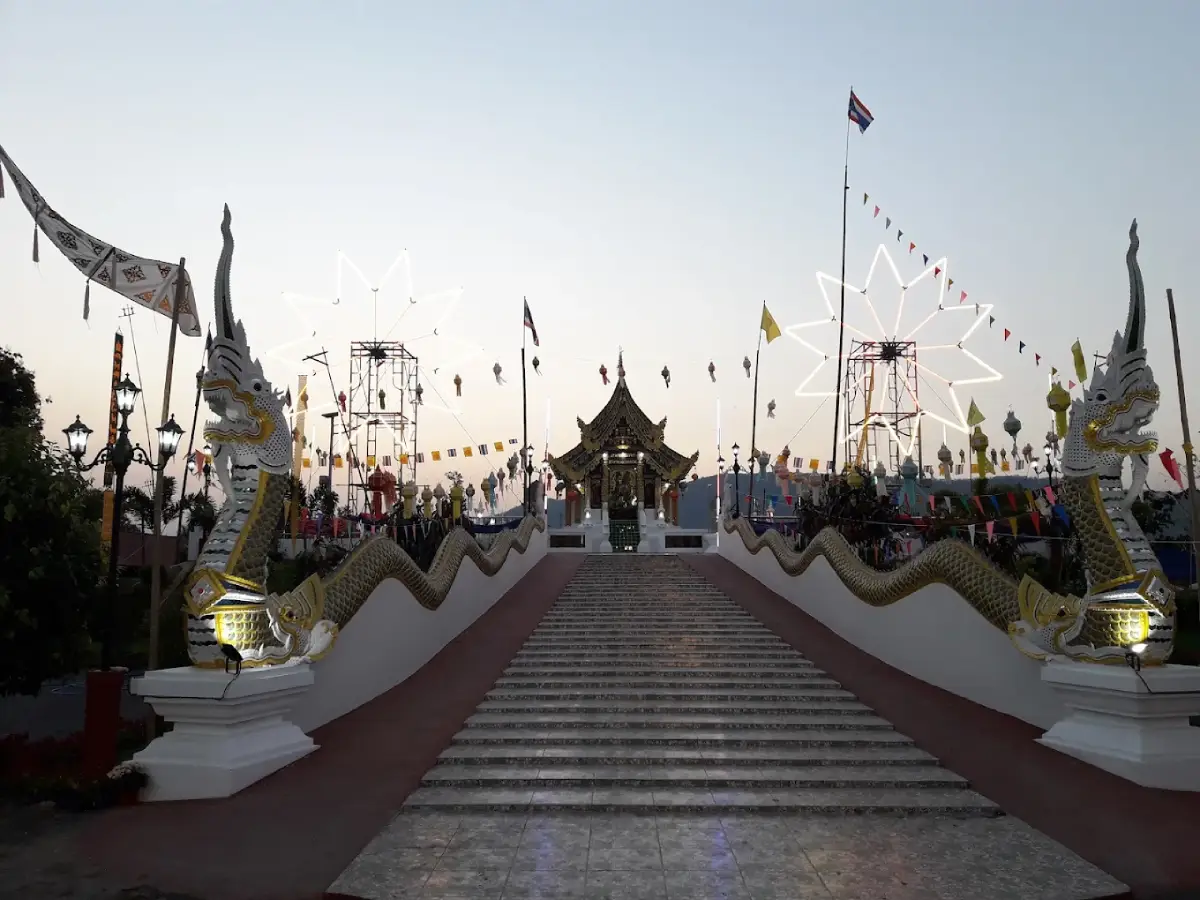
Wat Ban Wak is a historic community Buddhist temple in Moo 4, Ban Wak, On Klang Subdistrict, Mae On District, Chiang Mai 50130. It is a community monastery of the Mahanikaya order, registered under temple code 350230202. Phra Khru Pariyat Worakhom is the current abbot, and the 2025 Kathin record lists five monks in residence. The monastery remains active and continues to function as a center of Buddhist worship, annual traditions and community gatherings. Its importance extends far beyond the official establishment date of 1788, because local history preserves the story of an earlier monastery known as Wat Si Lom Mueang, or Wat Si Lom Muang, dating to 1568.
Wat Ban Wak is best understood together with the history of the village. Ban Wak developed as a rural agricultural community beside the Mae Wak River, surrounded by rice fields, farmland and forested hills. Traditional livelihoods included rice farming, corn cultivation, cattle and buffalo raising and the use of nearby natural resources. As the village developed, the monastery became a common space for merit-making, sermons, life-cycle ceremonies, community meetings and traditions that continue to connect residents across generations.
Community history traces part of the population of the wider Mueang On area to people who migrated from Panna Phu Lao in the Chiang Saen region. Some settled near the Mae Wak River, which flows through Ban Wak before joining the larger Mae On River. The combination of water, fertile fields and nearby forest made the area suitable for farming and permanent settlement. Residents practiced Buddhism alongside older beliefs connected with ancestors, a pattern characteristic of many traditional Lanna communities.
The temple story begins in 1568, when a religious site known as Wat Si Lom Mueang was established. The old name was associated with sacred bodhi trees surrounding the monastery area. This early name is an important part of local memory because it shows that Buddhist activity at the site predates the official Wat Ban Wak establishment date by more than two centuries.
In 1788, the monastery became known as Wat Ban Wak, taking the name of the village and the Mae Wak River flowing in front of the temple. Local history also records several fires that affected the old viharn before this transition. As a result, the buildings visible today should be understood as products of multiple periods of repair, rebuilding and continued community use rather than as structures preserved unchanged from the sixteenth century.
The year 1788 is therefore important in two ways: it marks the adoption of the Wat Ban Wak name and corresponds with the temple's establishment date in the present registry. By 2026, Wat Ban Wak has approximately 238 years of history under its current identity. If the earlier Wat Si Lom Mueang tradition is included, Buddhist activity associated with the site reaches back more than 450 years.
The monastery once served an even wider area than Ban Wak itself. Historical information about nearby Ban On Klang notes that residents originally traveled to Wat Ban Wak for Buddhist merit-making because it was the first major temple serving the surrounding communities. Only later were additional village temples established. This gives Wat Ban Wak significance not only as the temple of Moo 4 but as an early religious center within the wider On Klang area.
The administrative geography around the temple changed repeatedly. Ban Wak was once Moo 12 of On Nuea Subdistrict in San Kamphaeng District. Following later administrative changes it became Moo 4 of On Klang in the Mae On minor district, and after Mae On became a full district in 2007, the modern address became Moo 4, On Klang Subdistrict, Mae On District, Chiang Mai.
Daily life in old Ban Wak was very different from today. Roads were originally unpaved, there was no electricity and households depended on wells for water. A paved main road reached the village in 1961, electricity arrived in 1984 and a mountain-water supply system was introduced in 1989. These developments gradually transformed access to the monastery and the economic life of the village.
Education changed as well. Ban Wak School was established in 1977 and originally taught through Grade 4, but it closed in 1996 after student numbers fell. Many children then attended Ban Pao Sam Kha School. The demographic shift helps explain the importance of the temple today for an aging rural population.
A community survey recorded 267 residents in Ban Wak, including 122 men and 145 women, with people aged sixty and above forming the largest age group. For older residents, the temple remains a place to make merit, listen to sermons, meet neighbors and preserve traditions that depend heavily on local knowledge passed down through generations.
A major sacred feature is the old relic stupa. The stupa is not simply an architectural object; it remains part of active religious practice through the annual relic-bathing tradition during Lanna New Year. Its continuing ceremonial role makes it one of the clearest links between the historical temple and contemporary village life.
The temple grounds are shaded and peaceful, reflecting the character of a long-established village monastery. The green setting also resonates with the older Wat Si Lom Mueang tradition, which associated the site with bodhi trees surrounding the sacred area. Visitors will find a quieter experience than at major tourist temples in central Chiang Mai.
The temple hall plays an important role in Tang Tham Luang, or major communal Dhamma preaching. Residents from several neighboring villages gather at Wat Ban Wak to hear important Buddhist narratives, often including the Vessantara Jataka. These gatherings demonstrate that the temple continues to serve a broader social and religious network.
Ordinary Buddhist observance days remain central to temple life. Villagers make offerings and listen to teachings, while the post-harvest tradition known as Tan Khao Mai involves offering newly harvested rice and food to the monastery. The custom reflects the close historical relationship between Buddhist merit-making and the agricultural calendar.
Suep Chata, the northern Thai life-extension and blessing ceremony, is another tradition associated with the temple. It is performed to promote wellbeing, longevity and spiritual reassurance for individuals, families or the wider community, demonstrating how Buddhist ritual and Lanna customary practice remain intertwined.
Buddhist Lent and the end of Lent are important periods in the annual calendar. Residents bring offerings and attend sermons, while the conclusion of the rains retreat leads into the Kathin season. In 2025, Wat Ban Wak recorded five resident monks and scheduled its Kathin ceremony for 2 November at 09:00.
Tan Kuai Salak, a traditional Lanna form of non-specific almsgiving, also belongs to the cultural history of the village. Families prepared offerings according to their means and presented them at the monastery. Although the practice is less common than in the past, it remains part of local cultural memory.
Yee Peng Sib Song Peng and other merit-making traditions connect the living community with deceased relatives and ancestors. Families make offerings, listen to sermons and dedicate merit to those who have passed away. Such customs reflect the long coexistence of Buddhist doctrine and ancestor-oriented village culture.
The custom known locally as Tan Khan Khao also focuses on dedicating merit to deceased family members. Food and useful items are offered to monks on behalf of relatives who have died, keeping family memory closely connected with Buddhist practice.
During Pi Mai Mueang, the Lanna New Year, Wat Ban Wak becomes especially important. Residents honor elders, participate in community blessings and come to the monastery for the relic-bathing ceremony. This is one of the best periods for understanding the relationship between temple, family and village tradition.
Yee Peng, or the Lanna lantern and floating-basket festival, also reflects Ban Wak's relationship with water. The Mae Wak River flows through the village and provides a natural setting for floating krathongs. The river that gave the village and temple their present names therefore continues to have ceremonial as well as geographic importance.
Agriculture remains central to Ban Wak. Rice farming, corn cultivation and cattle raising have historically been important livelihoods. Dairy farming became particularly significant within the wider Mae On economy, while cattle also provide meat and manure used in agricultural systems.
Residents also work as agricultural laborers, general workers, shopkeepers and food vendors. Seasonal longan processing provides additional income, particularly for older villagers who participate in removing seeds and preparing fruit for drying.
Ban Wak is also part of Chiang Mai's community-forest network. Forest, agriculture and the river form the environmental foundation of village life, while the temple provides the cultural and spiritual center. Together these elements explain much of the community's long-term identity.
Unlike the higher mountain monasteries around Mae Kampong, Wat Ban Wak is relatively easy to reach. Its location in On Klang makes it a practical cultural stop when traveling through Mae On toward hot springs, caves, farms and higher mountain communities.
Getting There from Chiang Mai city is straightforward. Follow the Chiang Mai–San Kamphaeng route east toward Mae On, then continue into On Klang Subdistrict and Ban Wak, Moo 4. The distance from central Chiang Mai is generally around 35–40 kilometres depending on the starting point. Private car, rental car, motorcycle or hired driver can all be used.
The temple is located at approximately 18.75459, 99.25250 and an elevation of around 372 metres above sea level. Unlike the steeper Mae Kampong route, the approach to Ban Wak is largely in lower foothill terrain, making it suitable for families and older travelers.
Current place information indicates parking and restroom facilities at the temple, including accessible parking. These facilities make Wat Ban Wak suitable for short cultural stops as well as larger merit-making gatherings.
Visitors should dress respectfully, cover shoulders and knees, remove shoes where required and keep voices low. Wat Ban Wak remains a functioning monastery and community ceremonial space, so religious activities should always take priority over sightseeing and photography.
Morning is usually the most comfortable time to visit. Buddhist observance days are livelier, while Lanna New Year offers the relic-bathing tradition. The post-Lent period brings Kathin and larger community gatherings.
Travelers interested in history should view Wat Ban Wak as a layered cultural landscape rather than a single architectural monument. The earlier Wat Si Lom Mueang name, the bodhi-tree tradition, repeated viharn fires, the 1788 transition, the Mae Wak River and continuing village ceremonies all contribute to the site's significance.
The current abbot is Phra Khru Pariyat Worakhom. The 2025 Kathin information identifies him as abbot and records five monks in residence, confirming that Wat Ban Wak remains an active Sangha community rather than simply a historical temple.
Several attractions can be connected easily with a temple visit. Villa At On Organic Farm is located within Ban Wak itself, while Skugga Estate Vineyard lies only a short drive away and combines rural landscape with dining and vineyard activities.
Wat Phra That Doi Pha Tang provides another religious stop within On Klang. Travelers can then continue to Muang On Cave, a limestone cave complex containing stalactites, stalagmites and Buddhist worship areas.
San Kamphaeng Hot Springs is another convenient extension. The site offers geothermal pools, landscaped grounds and bathing facilities, making it easy to combine history, religion and relaxation within a single Mae On itinerary.
A half-day route can combine Wat Ban Wak, a meal in Ban Wak or On Klang, Skugga Estate Vineyard and Muang On Cave. A full-day itinerary can add the hot springs or Wat Phra That Doi Pha Tang without requiring the longer mountain drive to Mae Kampong.
Villa At On Organic Farm Cafe & Restaurant is among the closest dining options, located at 101 Moo 4, Ban Wak, telephone 083-046-6494. Sala Fa Faed Mae On City, telephone 053-818-152, is another nearby café stop.
Lap Khom Mae On serves northern Thai food and can be contacted at 085-525-2692 or 083-576-3409. Skugga Estate Vineyard Restaurant can be contacted at 081-146-2652, while Mae On Phochana, a long-established local restaurant, uses 095-720-2176 and 090-130-0210.
Accommodation near the temple ranges from farm stays to resorts. Solhem Farm is located in Ban Wak and can be contacted at 086-356-1454. Sheruta 108 is also in Moo 4, On Klang, telephone 080-262-3998.
The Oriental Village Chiangmai lies approximately two kilometres from the temple and can be contacted at 095-532-6174. Lake View Resort Mae On is also around two kilometres away, telephone 092-889-5622. Sabai Sabai Retreat is another On Klang option, telephone 094-729-6449.
Staying in On Klang is useful for travelers who want to explore Mae On in several directions. One day can focus on Wat Ban Wak, village history, the cave and hot springs, while a second day can continue toward Huai Kaeo, Mae Lai, Mae Kampong or Ban Pok.
Wat Ban Wak is particularly suitable for travelers interested in local temple history rather than monumental architecture. Its importance lies in the continuity between Wat Si Lom Mueang, the 1568 local tradition, the 1788 Wat Ban Wak identity, the Mae Wak River, the old stupa and the continuing cycle of village religious life.
For visitors interested in Lanna culture, Ban Wak preserves an unusually rich set of traditions: Tan Kuai Salak, Tan Khao Mai, Tang Tham Luang, Sib Song Peng, Tan Khan Khao, Suep Chata, Pi Mai Mueang, relic bathing, Yee Peng and Kathin. These customs connect Buddhism with farming seasons, family memory and community relationships.
The Mae Wak River adds another layer to the temple story. It gives the village and current temple their names, supports surrounding agriculture and remains connected with seasonal ceremonies such as Yee Peng. Geography and ritual therefore continue to reinforce one another.
Wat Ban Wak's significance comes from these overlapping roles. It is an old monastery, a village religious center, a place for sermons, a home for the relic stupa, a guardian of Lanna traditions and a historical marker of how Mae On communities changed over several centuries.
Allowing forty-five minutes to an hour provides enough time to worship, visit the stupa, walk through the quiet grounds and understand the connection with Ban Wak before continuing to farms, vineyards, restaurants, Muang On Cave or the hot springs.
Today, Wat Ban Wak continues the same fundamental role it has held for generations: providing a spiritual anchor, a place for merit-making and Buddhist teaching and a shared space for community tradition. Roads, electricity, water systems and economic life have changed around it, but the temple remains one of the clearest places to see the historical and cultural continuity of Ban Wak and Mae On.
| Name | Wat Ban Wak |
| Former Name | Wat Si Lom Mueang / Wat Si Lom Muang |
| Type | Community Buddhist Temple, Mahanikaya Order |
| Temple Code | 350230202 |
| Location | Moo 4, Ban Wak, On Klang, Mae On District, Chiang Mai 50130, Thailand |
| Coordinates | Approximately 18.75459, 99.25250 |
| Elevation | Approximately 372 metres above sea level |
| Open Days | Daily |
| Opening Hours | 08:00 – 17:00 |
| Early Religious History | 1568 according to the local history of Wat Si Lom Mueang |
| Wat Ban Wak Established | 1788 |
| Abbot | Phra Khru Pariyat Worakhom |
| Resident Monks | Five monks according to the 2025 Kathin record |
| Main Sacred Feature | Historic relic stupa and public worship areas |
| Main Community Space | Temple hall used for sermons, Tang Tham Luang and community Buddhist activities |
| Religious Traditions | Buddhist observance days, Lent, Kathin, Tan Khao Mai, Tan Kuai Salak, Tang Tham Luang, Sib Song Peng, Tan Khan Khao, Suep Chata, Lanna New Year, relic bathing and Yee Peng |
| Latest Documented Kathin | 2 November 2025 at 09:00 |
| Community Role | Center for worship, sermons, blessing ceremonies, meetings and community traditions in Ban Wak and surrounding villages |
| Traditional Livelihoods | Rice farming, corn cultivation, dairy cattle, cattle raising, agricultural labor, commerce and seasonal longan processing |
| Natural Resources | Mae Wak River, Mae On River, agricultural land and Ban Wak community forest |
| Facilities | Parking and restrooms |
| Getting There | Travel east from Chiang Mai through San Kamphaeng toward Mae On, then continue to On Klang and Ban Wak, Moo 4. Search for Wat Ban Wak, On Klang, Mae On, Chiang Mai. |
| Current Status | Active Buddhist monastery listed in the current temple register with an abbot and resident monks |
| Nearby Attractions | 1. Villa At On Organic Farm – about 1 km, Tel. 083-046-6494 2. Skugga Estate Vineyard – about 3 km, Tel. 081-146-2652 3. Wat Phra That Doi Pha Tang – about 7 km 4. San Kamphaeng Hot Springs – about 9 km 5. Muang On Cave – about 10 km |
| Nearby Restaurants And Cafés | 1. Villa At On Organic Farm Cafe & Restaurant – about 1 km, Tel. 083-046-6494 2. Sala Fa Faed Mae On City – about 3 km, Tel. 053-818-152 3. Lap Khom Mae On – about 3 km, Tel. 085-525-2692 / 083-576-3409 4. Skugga Estate Vineyard Restaurant – about 3 km, Tel. 081-146-2652 5. Mae On Phochana – about 6 km, Tel. 095-720-2176 / 090-130-0210 |
| Nearby Accommodations | 1. Solhem Farm – about 1 km, Tel. 086-356-1454 2. Sheruta 108 – about 1 km, Tel. 080-262-3998 3. The Oriental Village Chiangmai – about 2 km, Tel. 095-532-6174 4. Lake View Resort Mae On – about 2 km, Tel. 092-889-5622 5. Sabai Sabai Retreat – about 3 km, Tel. 094-729-6449 |
Frequently Asked Questions (FAQ)
Q: Where is Wat Ban Wak?
A: Wat Ban Wak is in Moo 4, Ban Wak, On Klang Subdistrict, Mae On District, Chiang Mai 50130. Its approximate coordinates are 18.75459, 99.25250.
Q: When was Wat Ban Wak established?
A: The current temple registry uses 1788 as the establishment year, while community history traces an earlier religious site called Wat Si Lom Mueang to 1568. The Wat Ban Wak name came into use in 1788.
Q: Who is the current abbot of Wat Ban Wak?
A: Phra Khru Pariyat Worakhom is the current abbot. The 2025 Kathin information also records five monks in residence.
Q: What is the main sacred feature at Wat Ban Wak?
A: The historic relic stupa is particularly important and is associated with the annual relic-bathing tradition during Lanna New Year.
Q: What traditional festivals are associated with Wat Ban Wak?
A: Important traditions include Kathin, Buddhist Lent, Tan Khao Mai, Tan Kuai Salak, Tang Tham Luang, Sib Song Peng, Tan Khan Khao, Suep Chata, Lanna New Year, relic bathing and Yee Peng.
Q: Where does the name Wat Ban Wak come from?
A: The name comes from Ban Wak and the Mae Wak River, which flows through the village and in front of the temple. The earlier monastery was known as Wat Si Lom Mueang.
Q: What are the opening hours of Wat Ban Wak?
A: Wat Ban Wak is open daily from 08:00 to 17:00. Specific festival and ceremony times follow each year's religious schedule.
Q: What can I visit after Wat Ban Wak?
A: Nearby options include Villa At On Organic Farm, Skugga Estate Vineyard, Wat Phra That Doi Pha Tang, San Kamphaeng Hot Springs and Muang On Cave.
 Category: ●Places of Worship
 Group: ●Temple
Last Update : 2 MonthAgo
 Last Update : 2 MonthAgo
 Click to Access the Navigation Map GPS

 Muang Chiang Mai(121)Chom Thong(47)Mae Chaem(25)Chiang Dao(33)Doi Saket(68)Mae Taeng(85)Mae Rim(69)Samoeng(29)Fang(71)Mae Ai(59)Phrao(70)San Pa Tong(103)San Kamphaeng(66)San Sai(73)Hang Dong(73)Hot(32)Doi Tao(22)Omkoi(11)Saraphi(74)Wiang Haeng(15)Chai Prakan(28)Mae Wang(32)Mae On(22)Doi Lo(33)Galyani Vadhana(1)


