
lovethailand home >North Travel Attractions >Chiang Mai Travel Attractions >Mae On >Huai Kaeo > Wat Huai Kaeo (Mae On)
TL;DR: Wat Huai Kaeo (Mae On) is located at Moo 5, Ban Huai Kaeo, Huai Kaeo, Mae On District, Chiang Mai 50130, Thailand. is a community Buddhist temple in Moo 5, Ban Huai Kaeo, Huai Kaeo Subdistrict, Mae On District, Chiang Mai 50130. The monastery belongs to.

Wat Huai Kaeo (Mae On)
Operating day: Daily
Operating time: 08.00 - 17.00
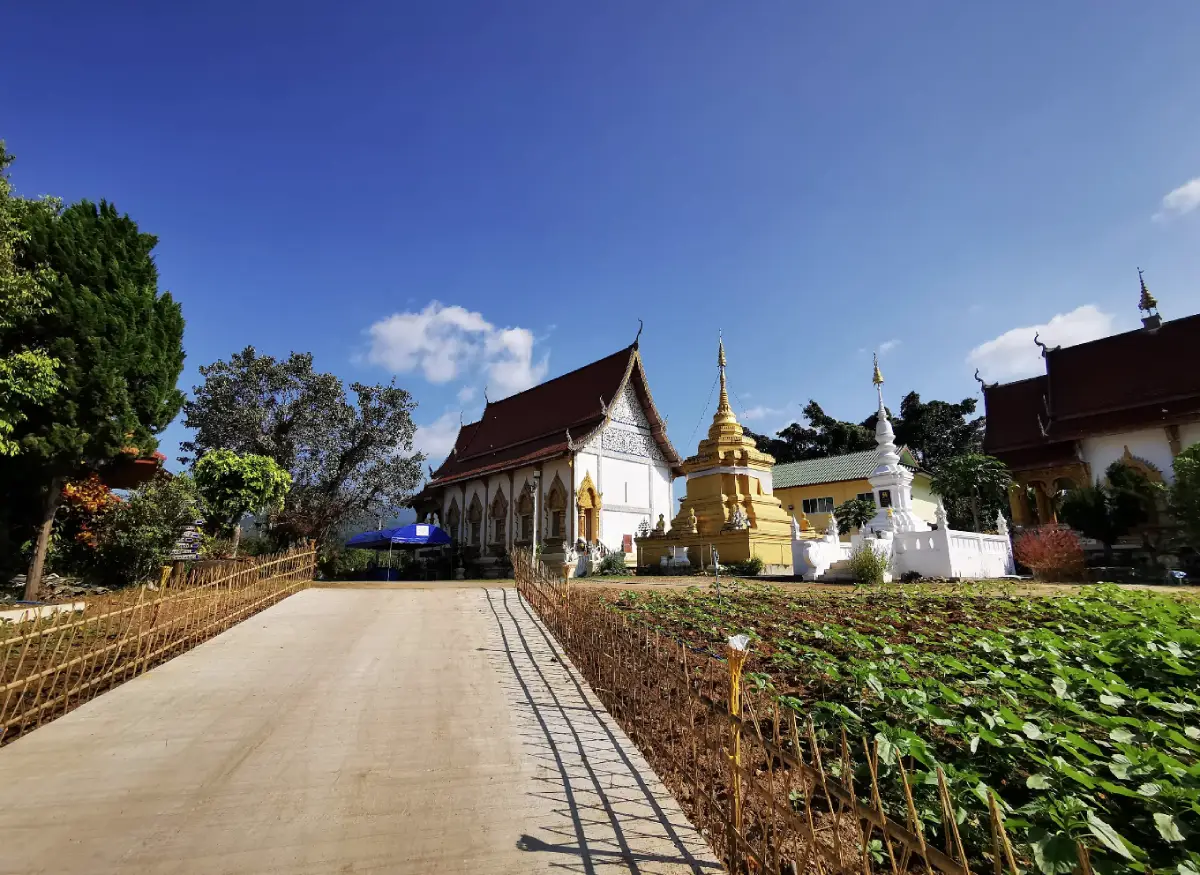
Wat Huai Kaeo (Mae On) is a community Buddhist temple in Moo 5, Ban Huai Kaeo, Huai Kaeo Subdistrict, Mae On District, Chiang Mai 50130. The monastery belongs to the Mahanikaya order and is registered under temple code 350230407. It was established in 1896 and received its royal Wisungkhamasima boundary in 1956. By 2026, Wat Huai Kaeo has served its community for approximately 130 years, making it one of the older village temples in Mae On. Phra Suthep Jantasaro serves as acting abbot. The temple remains listed in the current Buddhist temple register and continues to function as a religious center for Ban Huai Kaeo. Current place information lists telephone number 053-939-407, and general temple entry does not require an admission ticket.
The significance of Wat Huai Kaeo is inseparable from the history of Ban Huai Kaeo itself because the temple, village and subdistrict all share the same name and landscape. The community occupies rolling land, hills and mountain terrain surrounded by the Mae On forest reserve. Water originating in the eastern mountains has supported settlement and agriculture for generations. Local tradition explains that villagers named the settlement after a stream whose water was exceptionally clear, comparing its appearance to crystal or glass, hence the name Huai Kaeo.
Before the area developed into the predominantly northern Thai community seen today, Huai Kaeo was associated with Lua settlement. People from Doi Saket and Saraphi later migrated into the area in growing numbers. The settlement originally belonged administratively to On Nuea Subdistrict before population growth led to the establishment of Huai Kaeo as a separate subdistrict.
Historical accounts identify Nai Jai Suyaphrom as the first village headman connected with the early settlement. As Huai Kaeo expanded, the subdistrict eventually came to include several mountain communities, including Ban Pok, Ban Mae Lai, Ban Mae Kampong, Ban Mae Tao Din, Ban Huai Kaeo, Ban Pang Kong, Ban Pang Champi and Ban Tharnthong.
Ban Huai Kaeo, Moo 5, is therefore particularly important to local history because it shares the name of the subdistrict and is associated with the origin of the place name itself. Wat Huai Kaeo is more than a local shrine; it represents one of the long-standing cultural institutions of the community from which the wider subdistrict took its identity.
Wat Huai Kaeo was established in 1896, during the late reign of King Rama V. At that time, transportation through rural Chiang Mai still depended heavily on walking, animal transport and natural trails. Establishing a monastery within the village allowed residents to make merit, listen to Buddhist teachings, hold ordinations and family ceremonies, and celebrate Buddhist festivals without traveling long distances to another temple.
The granting of a Wisungkhamasima boundary in 1956 marked another important stage in the temple's development. A Wisungkhamasima is the officially granted boundary used for an ordination hall and formal Sangha acts. The royal grant came approximately sixty years after the temple's establishment, reflecting the monastery's gradual development into a more fully structured Buddhist institution.
From 1896 to the present, Wat Huai Kaeo has witnessed enormous change in Mae On. The area evolved from a forest-dependent agricultural society into a district connected by paved roads, schools and modern services, while upper Huai Kaeo developed internationally known tourism destinations such as Mae Kampong. Despite these changes, the temple continues to serve the same village as a Buddhist center.
A particularly important sign of the temple's relationship with community development is Wat Huai Kaeo School, also located in Moo 5. The school was founded in 1937 and today teaches students from kindergarten through lower secondary level. Its name preserves the historical association between Buddhist temples and rural education in northern Thailand.
The temple is accessible from the main Huai Kaeo route. Current place information gives the street address as 95 Huai Kaeo, Mae On District, Chiang Mai 50130. The entrance is recognizable by an ornate red-and-gold archway decorated in a northern Thai temple style, with Buddha images set into niches above the main arch.
The entrance arch immediately gives the monastery a distinctive visual identity. Deep red surfaces contrast with gilded ornamentation and a tiered upper structure, while the temple grounds beyond retain the atmosphere of a local religious compound rather than a heavily commercialized attraction.
Because Wat Huai Kaeo received a Wisungkhamasima grant, the monastery has an ordination boundary for formal Sangha ceremonies. The temple compound also includes the religious and residential facilities required for everyday Buddhist practice, community merit-making and monastic life.
Wat Huai Kaeo is best appreciated as a community temple rather than a monumental sightseeing complex. Visitors should pay attention to the entrance gate, ordination area, worship spaces and the quiet relationship between the monastery and the surrounding village.
Phra Suthep Jantasaro serves as acting abbot. In a village monastery, the monk responsible for the temple plays an important role in maintaining religious practice, monastic facilities and relationships with local residents.
Ban Huai Kaeo covers approximately 1,762 rai. Historical community information divides this into around 264 rai of agricultural land, 1,376 rai of forest and 122 rai of residential land. The figures help explain why forest and watershed landscapes remain visually dominant around the community.
The village borders Ban Mae Tao Din to the north, Ban Sahakon to the south, Ban Tharnthong to the east and Ban Pang Kong to the west. Its location places it between the lower Mae On communities and the higher mountain settlements of Huai Kaeo.
The surrounding terrain consists of rolling land, hills and mountains enclosed by the Mae On forest reserve. Water originating in the highlands supports agriculture throughout the area, while different elevations allow local communities to cultivate crops ranging from everyday food plants to miang tea and Arabica coffee.
Modern Huai Kaeo combines traditional agriculture with a growing visitor economy. Restaurants, cafés and accommodation have appeared along mountain roads, while Mae Lai, Mae Kampong and Ban Pok have developed nature-based and community tourism.
One notable destination within Moo 5 is PASSA Tea Plantation at Mae On. The property covers more than sixteen rai and grows Thai oolong tea while operating visitor facilities, a café and accommodation. It demonstrates how agriculture in Huai Kaeo has increasingly been combined with tourism.
Tea and coffee cultivation are closely linked to the local climate. Higher elevation, forest moisture and cooler conditions make parts of Huai Kaeo well suited to these crops. Traveling upward from Wat Huai Kaeo reveals a gradual shift from lower agricultural settlement to denser forest, tea, coffee and mountain villages.
Teen Tok Royal Project Development Center is another important stop. Founded in 1981, the center supported highland livelihoods through Arabica coffee, shiitake mushrooms and other cool-climate crops. A visit provides useful context for understanding how the economy of Huai Kaeo changed over recent decades.
From Teen Tok, travelers can continue to Pha Nam Lod, a forest and stream attraction with rock formations and a quieter atmosphere than central Mae Kampong. This makes it possible to begin the day with an old village temple and gradually move into agricultural and natural landscapes.
Travelers interested in temples can continue to Wat Mae Lai in Moo 2. Wat Mae Lai is known for decorating its ubosot, viharn and stupa with stones from the Mae Lai stream. Visiting Wat Huai Kaeo and Wat Mae Lai on the same route highlights two different expressions of village Buddhist culture within the same subdistrict.
The cultural route can then extend to Wat Khantha Phueksa, commonly called Wat Mae Kampong. That temple is known for its wooden viharn and stream-surrounded ordination hall. Together, the three monasteries demonstrate how religious architecture in Huai Kaeo developed in direct relationship with different mountain communities.
Mae Kampong Village is one of Mae On's best-known destinations and lies farther inside Huai Kaeo. Its homestays, food, cafés, handicrafts and mountain scenery create a very different atmosphere from quieter Ban Huai Kaeo.
Starting a Mae Kampong trip at Wat Huai Kaeo provides a useful historical sequence. Travelers begin in the older lower village and then move through tea plantations, Royal Project agriculture, forest and higher communities rather than driving directly to the best-known tourist stop.
A practical half-day route combines Wat Huai Kaeo, PASSA Tea Plantation and Teen Tok Royal Project Development Center. A full day can add Wat Mae Lai, Pha Nam Lod and Mae Kampong. Travelers staying overnight can extend the trip to Wat Khantha Phueksa, Mae Kampong Waterfall or Ban Pok.
The cool season is particularly comfortable for temple and mountain travel. The rainy season brings lush forest, full streams and humid scenery but also slippery roads. During the hotter months, visiting Wat Huai Kaeo early in the morning is more comfortable.
Morning is generally an excellent time to visit the temple. Temperatures are lower, the compound is quieter and soft light emphasizes the red-and-gold entrance arch. Visitors planning to make merit may bring appropriate offerings while following local temple customs.
Respectful clothing is expected. Shoulders and knees should be covered, shoes removed where required and voices kept low. Visitors should avoid entering monks' private residential areas without permission.
Photography is suitable in public parts of the temple provided that worship and ceremonies are not disturbed. The ornate gateway and mountain-community setting are particularly useful photographic subjects.
Families can use Wat Huai Kaeo as an educational stop. The story of the village connects Lua settlement, migration from Doi Saket and Saraphi, the crystal-clear stream that inspired the place name and the establishment of a temple in 1896.
Older travelers can generally explore the main temple without a mountain hike. Current place information indicates parking and toilet facilities, making the monastery a practical stop before continuing onto steeper roads.
Wat Huai Kaeo is also closely associated geographically with Wat Huai Kaeo School, which can be contacted at 053-036-601. Founded in 1937, the school remains an important educational institution in Moo 5.
Food and café options along the route include The COZY homey, approximately 2 kilometres from the temple; Tharnthong Lodges Restaurant, around 4 kilometres away, telephone 091-072-6049; and Khrua Mae Luang, approximately 8 kilometres away, telephone 089-701-0586.
PASSA Tea Plantation at Mae On, around 8 kilometres from the temple, can be contacted at 095-789-3228 and combines tea cultivation with café and visitor facilities. Overview 180 is approximately 9 kilometres away and can be contacted at 094-074-1866.
Nearby accommodation includes Cliffver, approximately 2 kilometres away, telephone 092-628-2393, and The Stream House at Mae Kampong, also around 2 kilometres away, telephone 080-605-5992.
Furusato Matcha Cafe & Ryokan lies around 4 kilometres from the temple. Tharnthong Lodges is also approximately 4 kilometres away and can be contacted at 091-072-6049. PASSA Tea Plantation also offers accommodation facilities at around 8 kilometres, telephone 095-789-3228.
Staying in lower Huai Kaeo provides a quieter alternative to central Mae Kampong. Travelers can visit Wat Huai Kaeo and the tea-growing area on the first day and continue to Mae Lai and Mae Kampong early the following morning.
Getting There from Chiang Mai city involves traveling through San Kamphaeng toward Mae On and continuing into Huai Kaeo Subdistrict and Moo 5 Ban Huai Kaeo. The total distance is generally around 40–50 kilometres depending on the starting point.
Navigation users should search specifically for “Wat Huai Kaeo Mae On” or the Thai name with Mae On included. Chiang Mai has several temples named Wat Huai Kaeo, including temples in Mae Wang and San Sai districts, so the district must be checked before departure.
The central village coordinate is approximately 18.840523, 99.280601, while current place information lists the temple at 95 Huai Kaeo. Travelers should use the dedicated Wat Huai Kaeo map pin when navigating to the temple entrance.
Roads become steeper and more winding farther into the mountain communities. Ordinary cars can make the journey, but brakes and tires should be in good condition. Extra caution is necessary during heavy rain and fog.
For cyclists and motorcyclists, the route offers attractive scenery but continuous elevation gain. Riders should prepare for mountain conditions and avoid unnecessary speed through residential areas.
Historically, Wat Huai Kaeo is significant because it predates the modern administrative structure of Mae On and Huai Kaeo. Its 130-year history places the temple among the institutions that accompanied permanent settlement in this part of eastern Chiang Mai.
The relationship with Wat Huai Kaeo School further emphasizes the temple's position in community development. Religious and educational institutions have occupied the same village for generations, creating a long-standing cultural center for Moo 5.
Wat Huai Kaeo is therefore particularly suitable for travelers interested in local history, rural Lanna Buddhism and slower cultural travel. A visit of approximately thirty minutes to one hour is sufficient for worship and exploring the main compound before continuing into the mountains.
The wider landscape adds important context. Of approximately 1,762 rai in Ban Huai Kaeo, historical community records identify around 1,376 rai as forest, demonstrating how closely the settlement has developed within a watershed environment.
Driving from Wat Huai Kaeo toward Mae Kampong reveals a visible geographic transition from lower village agriculture into denser forest, tea and coffee cultivation, flowing streams and settlements tucked into mountain valleys.
A temple-focused itinerary can combine Wat Huai Kaeo, Wat Mae Lai and Wat Khantha Phueksa. Wat Huai Kaeo contributes historical depth, Wat Mae Lai presents distinctive river-stone architecture, and Wat Khantha Phueksa is known for its wooden viharn and water-surrounded ordination hall.
Today, Wat Huai Kaeo is more than a convenient temple stop on the road toward Mae Kampong. It is a century-old monastery linked to the origin of the Huai Kaeo community, the village school, a royal Wisungkhamasima boundary and a mountain landscape that continues to support local agriculture and tourism.
Allowing time for the temple before continuing into upper Huai Kaeo gives a more complete understanding of Mae On. From an old Buddhist monastery, travelers can move naturally into tea plantations, Royal Project agriculture, forest, stream communities and Mae Kampong, creating an itinerary that connects religion, history, agriculture and nature within one subdistrict.
| Name | Wat Huai Kaeo (Mae On) |
| Type | Community Buddhist Temple, Mahanikaya Order |
| Temple Code | 350230407 |
| Location | Moo 5, Ban Huai Kaeo, Huai Kaeo, Mae On District, Chiang Mai 50130, Thailand |
| Current Place Address | 95 Huai Kaeo, Mae On District, Chiang Mai 50130, Thailand |
| Established | 1896 |
| Temple Age | Approximately 130 years in 2026 |
| Wisungkhamasima | Granted in 1956 |
| Acting Abbot | Phra Suthep Jantasaro |
| Telephone | 053-939-407 |
| Admission | No general admission fee; voluntary donations are welcome |
| Main Character | Historic village temple with a red-and-gold entrance arch and more than a century of community Buddhist activity |
| Ubosot | The monastery received its official Wisungkhamasima boundary in 1956 for formal Sangha ceremonies |
| Community Role | Religious and cultural center of Ban Huai Kaeo, Moo 5 |
| Related School | Wat Huai Kaeo School, founded in 1937, kindergarten through lower secondary, Tel. 053-036-601 |
| Ban Huai Kaeo Area | Approximately 1,762 rai, including about 264 rai of farmland, 1,376 rai of forest and 122 rai of residential land |
| Landscape | Rolling land, hills and mountain terrain surrounded by Mae On forest and watershed areas |
| Getting There | Travel from Chiang Mai through San Kamphaeng and Mae On into Huai Kaeo Subdistrict and Moo 5. Search specifically for Wat Huai Kaeo Mae On. |
| Facilities | Parking and toilets |
| Current Status | Active temple listed in the current Buddhist temple register |
| Nearby Attractions | 1. PASSA Tea Plantation at Mae On – about 8 km, Tel. 095-789-3228 2. Wat Mae Lai – about 8 km 3. Teen Tok Royal Project Development Center – about 9 km 4. Pha Nam Lod – about 9 km 5. Mae Kampong Village – about 13 km |
| Nearby Restaurants And Cafés | 1. The COZY homey – about 2 km 2. Tharnthong Lodges Restaurant – about 4 km, Tel. 091-072-6049 3. Khrua Mae Luang – about 8 km, Tel. 089-701-0586 4. PASSA Tea Plantation Cafe – about 8 km, Tel. 095-789-3228 5. Overview 180 – about 9 km, Tel. 094-074-1866 |
| Nearby Accommodations | 1. Cliffver – about 2 km, Tel. 092-628-2393 2. The Stream House at Mae Kampong – about 2 km, Tel. 080-605-5992 3. Furusato Matcha Cafe & Ryokan – about 4 km 4. Tharnthong Lodges – about 4 km, Tel. 091-072-6049 5. PASSA Tea Plantation at Mae On – about 8 km, Tel. 095-789-3228 |
Frequently Asked Questions (FAQ)
Q: Where is Wat Huai Kaeo in Mae On?
A: Wat Huai Kaeo is in Moo 5, Ban Huai Kaeo, Huai Kaeo Subdistrict, Mae On District, Chiang Mai 50130. Its temple registration code is 350230407.
Q: When was Wat Huai Kaeo established?
A: Wat Huai Kaeo was established in 1896. By 2026, the monastery has served the community for approximately 130 years.
Q: When did Wat Huai Kaeo receive its Wisungkhamasima?
A: The temple received its royal Wisungkhamasima boundary in 1956 for its ordination area and formal monastic ceremonies.
Q: Who is responsible for Wat Huai Kaeo?
A: Phra Suthep Jantasaro serves as acting abbot of Wat Huai Kaeo.
Q: Is there an admission fee for Wat Huai Kaeo?
A: There is no general admission fee. Visitors may enter for worship and make voluntary donations.
Q: Where does the name Huai Kaeo come from?
A: The village was named after a mountain stream whose water was described by residents as exceptionally clear, like crystal or glass. The name was later used for the entire subdistrict.
Q: How do I get to Wat Huai Kaeo?
A: Travel from Chiang Mai through San Kamphaeng into Mae On and continue to Huai Kaeo Subdistrict and Moo 5. Include Mae On in the navigation search because Chiang Mai has several temples named Wat Huai Kaeo.
Q: What can I visit after Wat Huai Kaeo?
A: Nearby options include PASSA Tea Plantation, Wat Mae Lai, Teen Tok Royal Project Development Center, Pha Nam Lod, Wat Khantha Phueksa and Mae Kampong Village.
 Category: ●Places of Worship
 Group: ●Temple
Last Update : 2 MonthAgo
 Last Update : 2 MonthAgo
 Click to Access the Navigation Map GPS
Wat Huai Kaeo (Mae On) Map
Recommend

 Muang Chiang Mai(121)Chom Thong(47)Mae Chaem(25)Chiang Dao(33)Doi Saket(68)Mae Taeng(85)Mae Rim(69)Samoeng(29)Fang(71)Mae Ai(59)Phrao(70)San Pa Tong(103)San Kamphaeng(66)San Sai(73)Hang Dong(73)Hot(32)Doi Tao(22)Omkoi(11)Saraphi(74)Wiang Haeng(15)Chai Prakan(28)Mae Wang(32)Mae On(22)Doi Lo(33)Galyani Vadhana(1)


