
lovethailand home >North Travel Attractions >Chiang Mai Travel Attractions >Mae Wang >Ban Kat > Wat Ban Mai Pang Toem
TL;DR: Wat Ban Mai Pang Toem is located at Moo 1, Ban Mai Pang Toem, Ban Kat Subdistrict, Mae Wang District, Chiang Mai 50360, Thailand.
Wat Ban Mai Pang Toem
Operating day: Daily
Operating time: 08.00 - 17.00
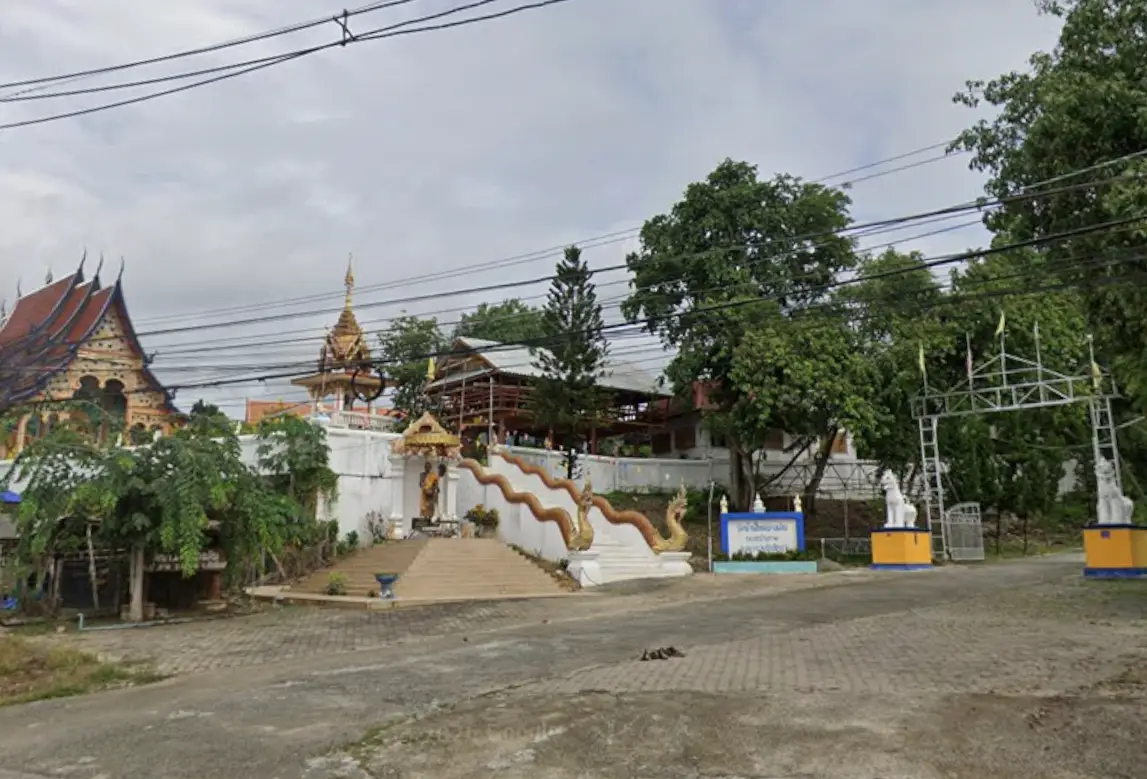
Wat Ban Mai Pang Toem is a community Buddhist temple in Moo 1, Ban Mai Pang Toem, Ban Kat Subdistrict, Mae Wang District, Chiang Mai Province. It is a public non-royal temple under the Mahanikaya order. Its history is closely tied to the growth of Ban Mai Pang Toem, the relocation of families from flood-prone Ban Pang Khi Lek, and the difficulty villagers once faced when traveling to their original temple during the rainy season. The community first established a religious center at the old Lao Yang ordination-hall site in 1972, relocated the temple to its present hill-side location near the village in 1975, received formal permission in the temple-establishment process on 30 January 1994, and saw Wat Ban Mai Pang Toem formally declared a Buddhist temple on 21 July 1998.
Wat Ban Mai Pang Toem remains listed in current Buddhist temple directories under registration code 350220102 and belongs to the Mahanikaya monastic order. It appears among the temples of Ban Kat Subdistrict together with Wat Chamlong, Wat Pa Daet, Wat Sirichai Nimit, Wat Sopharam, and Wat Amparam. A visit recorded in 2025 also documents the temple courtyard, ordination hall, bell tower, monks’ residences, and decorative sculptures representing the 12 zodiac animals, confirming the continued physical presence and community use of the temple.
The story of the temple begins with the history of Ban Mai Pang Toem itself. In its early period, the village consisted of only about 14 families. Most residents depended on rice farming, field cultivation, and orchards for their livelihoods. Settlement patterns were closely related to agricultural land, access to water, and routes connecting the village with neighboring communities.
The village later grew as families from Ban Pang Khi Lek began relocating to Ban Mai Pang Toem. Ban Pang Khi Lek was situated in a low-lying area that regularly experienced flooding, creating repeated problems for homes, farmland, and transportation. Many families therefore moved to the more suitable Ban Mai Pang Toem area, where some already owned or worked agricultural land.
The relocation took place gradually rather than as one single movement. Families established homes near their fields and gardens, and Ban Mai Pang Toem slowly developed into a more stable community. As the population increased, so did the need for a Buddhist center close to the village, since temples traditionally function not only as places of worship but also as communal gathering spaces and centers for important ceremonies.
Before Wat Ban Mai Pang Toem was created, residents were devotees of Wat Don Kaeo in Thung Pi Subdistrict, Mae Wang District. They regularly traveled there to make merit and participate in Buddhist activities. Wat Don Kaeo therefore played a central role in the eventual foundation of the new temple, providing advice, monastic support, and religious leadership during its earliest period.
As Ban Mai Pang Toem grew, however, the journey to Wat Don Kaeo became increasingly inconvenient. The problem was particularly serious during Buddhist Lent and the rainy season, when flooding affected local routes and there was no bridge at an important crossing. Making merit, attending sermons, and participating in temple activities could therefore become difficult for villagers.
This practical challenge led the community to consider building a temple of its own. Villagers consulted Phra Khru Chan Kaeo Khemarangsi, also known by the ecclesiastical title Phra Khru Rattana Suphacharn, then abbot of Wat Don Kaeo. Pho Luang Thanu Charoenthai, the village headman at the time, became one of the principal community leaders responsible for coordinating the project.
Phra Khru Chan Kaeo supported the idea because a temple near the village would make Buddhist practice more accessible throughout the year. In 1972, Pho Luang Thanu Charoenthai received permission to use the area known as the Lao Yang ordination-hall site as the first location of the new religious community.
The Lao Yang site already possessed an older religious history. It had formerly been an abandoned temple area, and the ordination hall had been restored in 1921 under the leadership of Khruba Khantha, a former abbot of Wat Don Kaeo. Local history associates the restoration with the full moon of the sixth northern lunar month, corresponding approximately to March. Wat Ban Mai Pang Toem therefore began on a site that already carried Buddhist memory within the landscape.
Phra Khru Chan Kaeo sent Phra Kon Kaeo Aphassaro to serve as the leading monk at the new site. He was accompanied by three novices: Sa-at Po Bun, Kham Kaeo Mahawan, and Sanan Phuttharaksa. Their arrival established a regular monastic presence and allowed villagers to make merit, listen to Buddhist teachings, and support monks much closer to home.
The Lao Yang site, however, had significant practical limitations. It was still some distance from the village, access remained inconvenient, and there was no electricity. These difficulties affected temple development, evening activities, and the everyday support of the resident monks. Villagers therefore began considering a location closer to their homes.
In 1975, Pho Luang Thanu Charoenthai and the Ban Mai Pang Toem community agreed to relocate the temple to a hill near the village. The move was a major turning point because it brought the temple physically into the everyday environment of the community and made it easier for families to participate in religious life.
The relocation was made possible through land donations from several local families. The recorded donors were Nan Chan Chandaeng, Tha Kantha, Nan Mueang and Pan Tangam, Ai Chandaeng, Mu and Put Madi, and Phrom and Ta Ngaophong. Their contributions demonstrate that the temple was built through collective sacrifice rather than by a single patron.
The principal community leaders in the temple’s establishment were Pho Luang Thanu Charoenthai and Pho Luang Un Inthachak. The historical sequence is clear: the community began using the Lao Yang religious site in 1972 and relocated to the current location in 1975. From that point onward, additional monastic buildings and facilities were developed as Ban Mai Pang Toem became more firmly established.
As the village and temple became more stable, Pho Luang Un Inthachak, the second village headman associated with this phase of development, initiated the formal process of requesting recognition from the Department of Religious Affairs under the Ministry of Education. Permission within the temple-establishment process was granted on 30 January 1994.
Officials from the religious authorities and the Sangha subsequently inspected the site and considered the unity of the community and the temple’s function as the spiritual center of Ban Mai Pang Toem. The institution was formally declared a Buddhist temple under the name Wat Ban Mai Pang Toem on 21 July 1998. Local historical records identify Chumpol Silpa-archa, then serving in the Ministry of Education, as the signatory connected with the declaration.
The long development period from 1972 to 1998 is one of the most important aspects of Wat Ban Mai Pang Toem’s history. The temple first existed because villagers needed it; formal recognition came only after years of community use, land donation, construction, and religious activity. Its institutional history therefore mirrors the growth of the village itself.
Ban Mai Pang Toem is now Moo 1 of Ban Kat Subdistrict and lies within the full administrative area of the Ban Kat Subdistrict Administrative Organization. The wider landscape includes agricultural land, forest and hill areas, and the Mae Wang river system. This geographical setting reflects the village’s historical dependence on farming and explains why land, water, and seasonal flooding play such important roles in its history.
Water is a recurring theme in the development of both village and temple. Flooding encouraged families to leave Ban Pang Khi Lek, while high water later made the journey to Wat Don Kaeo difficult. The establishment of Wat Ban Mai Pang Toem can therefore be understood partly as a community response to environmental conditions as well as a religious project.
The present temple has a spacious and open courtyard. Recorded structures include an ordination hall, bell tower, and monks’ residences, together with community-use areas. These elements reflect the gradual transformation from the original Lao Yang religious site into a functioning village monastery with facilities for both the monastic community and local residents.
The ordination hall is one of the temple’s most prominent structures, while the bell tower performs the traditional role of signaling religious activities and monastic routines. The monks’ residences support the resident Sangha, and the large courtyard provides space for merit-making ceremonies and community festivals.
The grounds are also decorated with sculptures representing the 12 zodiac animals. The zodiac system remains familiar in northern Thai culture and is often associated with birth years, merit-making, and local Buddhist beliefs. The sculptures therefore add a distinctive visual element to the temple environment.
One of the most important annual traditions is the Lanna New Year, or Pi Mai Mueang, observed from 13 to 15 April. Activities include bringing sand into the temple, merit-making, listening to sermons, bathing Buddha images, and the respectful rod nam dam hua ceremony for elders. This reflects the religious and family-centered dimension of Songkran in northern Thailand.
Bringing sand to the temple is a long-standing Lanna tradition. The sand may be used to form symbolic sand stupas or support the maintenance of temple grounds. Bathing Buddha images is an expression of respect and renewal, while listening to sermons preserves the Buddhist character of the festival.
During Buddhist Lent, Wat Ban Mai Pang Toem becomes a center for more intensive religious practice. Villagers make merit, offer alms, listen to sermons, join candlelight processions, observe the Eight Precepts, stay at the temple for practice, and make personal resolutions to reduce harmful behavior and cultivate wholesome actions.
The Salakaphat tradition is another major community merit-making occasion. Residents offer rice, prepare Salakaphat trees and gifts, and present Sangha donations to monks. In Lanna communities, Salakaphat is often associated with family merit, remembrance of deceased relatives, and the strengthening of relationships among households.
In years when a full Salakaphat ceremony is not held, residents may make conventional Sangha offerings instead. This flexibility shows that the central purpose of the tradition is generosity and support for the monastic community rather than strict adherence to one ceremonial form.
At the end of Buddhist Lent, villagers return to the temple for merit-making, alms offerings, sermons, and Tak Bat Devo. The festival marks the end of the three-month rains retreat and opens another important season of Buddhist ceremonies within the local religious calendar.
Yi Peng, usually celebrated around early November, is another major event. Activities include listening to sermons, community festivities, lighting lamps in honor of the Buddhas, krathong competitions, and floating krathongs. At a village temple such as Wat Ban Mai Pang Toem, Yi Peng retains a direct link with Buddhist devotion rather than existing only as a tourism festival.
The lighting of lamps during Yi Peng symbolizes Buddhist worship and the illumination of wisdom. Homes and temples across Lanna communities traditionally use lanterns and lamps during this period, creating a religious atmosphere that connects visual beauty with merit-making.
A particularly distinctive local observance is the full moon of the fourth northern lunar month, usually around January. Activities include building a warming fire as an offering to the Buddha, offering newly harvested rice, and preparing madhupayasa rice pudding. The festival demonstrates the close relationship between Buddhism, the agricultural calendar, and seasonal life in northern Thailand.
The fire offering is associated with the cold season, while the presentation of new rice brings the first fruits of the harvest into a Buddhist context. Madhupayasa also carries associations with the Buddha’s life and refined food offerings. The tradition therefore combines religion, agriculture, climate, and communal participation.
The Ban Kat Subdistrict Administrative Organization has also supported a local project involving the ceremonial bathing of Khruba Chao Siwichai at Wat Ban Mai Pang Toem. The project aimed to encourage young people and residents to recognize the importance of religion and preserve local cultural traditions, reinforcing the temple’s continuing role in community heritage.
The temple’s role cannot be separated from the agricultural history of Ban Mai Pang Toem. The settlement grew from a small group of farming families, and the temple provided a common spiritual center for people whose homes and fields were spread across the area. It became the setting for Buddhist holy days, family ceremonies, funerals, community gatherings, and annual festivals.
Wat Ban Mai Pang Toem has also been connected with Buddhist education. Historical examination records include novice monks from the temple, demonstrating its role in supporting the study of Buddhist doctrine and the development of young members of the monastic community.
For travelers interested in local history, Wat Ban Mai Pang Toem is particularly valuable because the history of the village can be read through the development of the temple. The story moves from a settlement of only 14 families to flood-related migration, difficult journeys to Wat Don Kaeo, the revival of an older religious site, relocation closer to the village, community land donations, and finally formal recognition.
The temple is therefore a strong example of a religious institution created through community necessity. It did not begin as a large externally funded project. It emerged from the practical and spiritual needs of local families, whose collective labor and donations allowed the temple to develop gradually.
Today the temple offers a quiet village atmosphere rather than a highly commercialized tourism experience. The open courtyard allows visitors to observe the ordination hall, bell tower, monks’ residences, and surrounding religious environment at a relaxed pace. Understanding the 1975 relocation adds particular meaning to the current location because the site represents a deliberate decision by villagers to bring the temple closer to their homes.
Important features to observe include the ordination hall, bell tower, courtyard, monks’ residences, and 12 zodiac sculptures. During ordinary periods the temple is peaceful, while the atmosphere becomes more active during Pi Mai Mueang, Buddhist Lent, Salakaphat, the end of Buddhist Lent, Yi Peng, and the fourth northern lunar month festival.
The temple is historically connected with Wat Don Kaeo, making the two sites particularly meaningful when visited together. Wat Don Kaeo was the original temple of devotion for residents of Ban Mai Pang Toem and played an important role in supporting the creation of the new monastery.
Other temples in Ban Kat Subdistrict include Wat Sopharam, Wat Pa Daet, Wat Sirichai Nimit, Wat Chamlong, and Wat Amparam. Together they provide a useful route for travelers interested in community temples and the diverse cultural histories of Mae Wang.
Raibumrungphol is located close to the temple and provides accommodation, food, café facilities, and recreation in a natural setting. Ban Kat Market is another useful stop for experiencing local food and everyday commerce, while Pong Cho Reservoir and Huai Manao Reservoir can be included in a wider Mae Wang itinerary.
Getting There from Chiang Mai city, take Highway 108 south through Hang Dong toward San Pa Tong. Continue onto Highway 1013, the San Pa Tong–Mae Wang–Mae Win route, and head toward Ban Mai Pang Toem. The temple is located along the Highway 1013 corridor and lies on the approach toward Raibumrungphol. A private car or rental vehicle is the most convenient option for combining the temple with other Mae Wang attractions.
Visitors should dress modestly and respect the temple as an active Buddhist community monastery. The interior of the ordination hall may not be open at all times, but the temple grounds, exterior architecture, bell tower, and courtyard can still be appreciated. During community ceremonies, religious activities should be given priority.
Overall, Wat Ban Mai Pang Toem is valuable because it tells a complete story of community formation. From a village of approximately 14 families, through flood-driven migration from Ban Pang Khi Lek, difficult access to the original temple, the use of the old Lao Yang religious site, relocation closer to the village, and collective land donations, the temple represents the cooperative foundations of rural Lanna society.
Its formal declaration as a temple in 1998 did not mark the true beginning of Wat Ban Mai Pang Toem; it officially recognized a religious institution that villagers had already built, supported, and used for more than two decades. Today the temple remains a center for Pi Mai Mueang, Buddhist Lent, Salakaphat, the end of Buddhist Lent, Yi Peng, and the fourth northern lunar month tradition, while continuing to preserve the history and identity of Ban Mai Pang Toem.
| Name | Wat Ban Mai Pang Toem |
| Location | Moo 1, Ban Mai Pang Toem, Ban Kat Subdistrict, Mae Wang District, Chiang Mai 50360, Thailand |
| Latitude | 18.617795 |
| Longitude | 98.769664 |
| Temple Registration Code | 350220102 |
| Temple Type | Public non-royal Buddhist temple, Mahanikaya order |
| Initial Temple Site | The community began using the Lao Yang ordination-hall site in 1972 |
| Relocated to Present Site | 1975 |
| Permission in Temple-Establishment Process | 30 January 1994 |
| Formally Declared a Temple | 21 July 1998 |
| Community Leaders | Pho Luang Thanu Charoenthai and Pho Luang Un Inthachak |
| Early Monastic Community | Phra Kon Kaeo Aphassaro, Novice Sa-at Po Bun, Novice Kham Kaeo Mahawan, and Novice Sanan Phuttharaksa |
| Important Structures | Ordination hall, courtyard, bell tower, monks’ residences, and decorative 12-zodiac sculptures |
| Admission Fee | Free admission |
| Major Traditions | Pi Mai Mueang, Buddhist Lent, Salakaphat, end of Buddhist Lent, Yi Peng, and the full-moon festival of the fourth northern lunar month |
| Fourth Northern Lunar Month Tradition | Held on the full moon, usually around January, with a warming-fire offering to the Buddha, new-rice offerings, and preparation of madhupayasa |
| Community Role | Spiritual center of Ban Mai Pang Toem and a venue for Buddhist merit-making, Lanna traditions, and religious learning |
| Getting There | Travel from Chiang Mai via Highway 108 through Hang Dong and San Pa Tong, then take Highway 1013 toward Mae Wang and Ban Mai Pang Toem |
| Current Status | Active temple listed in current Buddhist temple directories for Ban Kat Subdistrict, Mae Wang District |
| Nearby Attractions and Temples | 1. Raibumrungphol, about 1 km, Tel. 066-065-8118 2. Wat Don Kaeo, about 1 km 3. Wat Sopharam, about 3 km 4. Ban Kat Market, about 6 km 5. Pong Cho Reservoir, about 10 km |
| Nearby Restaurants and Cafes | 1. Raibumrungphol Cafe and Restaurant, about 1 km, Tel. 066-065-8118 2. Isan Food Kalasin People, about 6 km, Tel. 097-030-5407 3. King Fried Mussels near Big C Ban Kat, about 6 km, Tel. 066-119-1189 4. Lamoon Cha Ban Kat, about 6 km, Tel. 098-892-5464 5. Blessing Camp Cafe, about 7 km, Tel. 098-270-6515 |
| Nearby Accommodation | 1. Raibumrungphol, about 1 km, Tel. 066-065-8118 2. Khum Khun Wang Resort, about 6 km, Tel. 081-111-1432 3. Namrae Maewang Phairin Resort, about 9 km, Tel. 052-001-410 4. Chombua MaeWang, about 10 km, Tel. 081-903-2172 5. Hidden Garden Retreat - Chiang Mai, about 11 km, Tel. 080-932-9216 |
Frequently Asked Questions (FAQ)
Q: Where is Wat Ban Mai Pang Toem located?
A: Wat Ban Mai Pang Toem is located in Moo 1, Ban Mai Pang Toem, Ban Kat Subdistrict, Mae Wang District, Chiang Mai 50360, Thailand.
Q: When was Wat Ban Mai Pang Toem established?
A: The community began establishing the temple at the Lao Yang ordination-hall site in 1972, relocated it to the present site in 1975, and the institution was formally declared Wat Ban Mai Pang Toem on 21 July 1998.
Q: Why did the villagers build Wat Ban Mai Pang Toem?
A: Residents originally worshipped at Wat Don Kaeo, but flooding and the lack of a convenient bridge made travel difficult during the rainy season. As the population of Ban Mai Pang Toem increased, the community decided to establish a temple closer to the village.
Q: Who played important roles in establishing the temple?
A: Pho Luang Thanu Charoenthai and Pho Luang Un Inthachak were important community leaders, with support from Phra Khru Chan Kaeo Khemarangsi, also known as Phra Khru Rattana Suphacharn, of Wat Don Kaeo.
Q: What traditions are celebrated at Wat Ban Mai Pang Toem?
A: Major traditions include Pi Mai Mueang, Buddhist Lent, Salakaphat, the end of Buddhist Lent, Yi Peng, and the full-moon observance of the fourth northern lunar month.
Q: What can visitors see at Wat Ban Mai Pang Toem?
A: Important visible features include the ordination hall, spacious courtyard, bell tower, monks’ residences, and decorative sculptures representing the 12 zodiac animals.
Q: Is there an admission fee for Wat Ban Mai Pang Toem?
A: No. The temple has free admission and remains an active community Buddhist site.
Q: What places can be visited together with Wat Ban Mai Pang Toem?
A: Nearby options include Wat Don Kaeo, Wat Sopharam, Raibumrungphol, Ban Kat Market, and Pong Cho Reservoir, with additional nature attractions available throughout Mae Wang District.
 Category: ●Places of Worship
 Group: ●Temple
Last Update : 2 DayAgo
 Last Update : 2 DayAgo
 Click to Access the Navigation Map GPS
Wat Ban Mai Pang Toem Map
Recommend

 Muang Chiang Mai(121)Chom Thong(47)Mae Chaem(25)Chiang Dao(33)Doi Saket(68)Mae Taeng(85)Mae Rim(69)Samoeng(29)Fang(71)Mae Ai(59)Phrao(70)San Pa Tong(103)San Kamphaeng(66)San Sai(73)Hang Dong(73)Hot(32)Doi Tao(22)Omkoi(11)Saraphi(74)Wiang Haeng(15)Chai Prakan(28)Mae Wang(32)Mae On(22)Doi Lo(33)Galyani Vadhana(1)


