
lovethailand home >North Travel Attractions >Chiang Mai Travel Attractions >Mae Wang >Thung Ruang Thong > Wat Saraphi
TL;DR: Wat Saraphi is located at Ban Saraphi, Moo 5, Thung Ruang Thong Subdistrict, Mae Wang District, Chiang Mai 50360, Thailand. is a historic community temple in Ban Saraphi, Moo 5, Thung Ruang Thong Subdistrict, Mae Wang District, Chiang Mai Province. It is a.

Wat Saraphi
Operating day: Daily
Operating time: 08.00 - 17.00
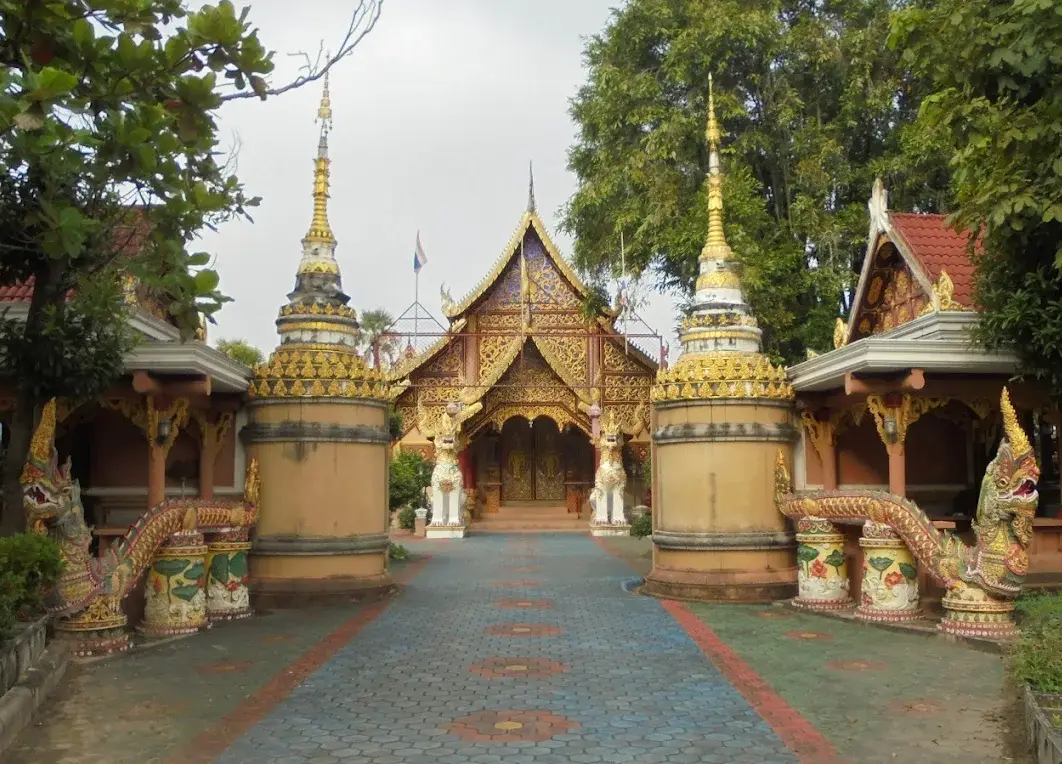
Wat Saraphi is a historic community temple in Ban Saraphi, Moo 5, Thung Ruang Thong Subdistrict, Mae Wang District, Chiang Mai Province. It is a non-royal Buddhist temple under the Mahanikaya order. Its official temple registration dates its establishment to 1707, while a local temple history drawing on Volume 9 of Thailand’s national temple records traces the foundation of the religious site to around 1677. Wat Saraphi received its royal consecrated boundary in 1930, making it one of the long-established Buddhist institutions of the Mae Wang area.
Wat Saraphi remains listed among the active Buddhist temples of Thung Ruang Thong together with Wat Chan Kasem, Wat Don Pin, Wat Maha Wan, Wat Sri Chum, and Wat Saen Khantha. Its continued appearance in current temple directories, together with recent official records linking Phra Khru Worakit Phithan Chakkawaro to Wat Saraphi, shows that the temple continues to function as part of the Buddhist life of the local community rather than surviving only as a historic site.
The history of Wat Saraphi is best understood through two separate dates. A local historical account referring to Volume 9 of the national history of Thai temples places the foundation of the temple at around 1677. The formal temple register, however, gives 1707 as the official year of establishment. Such differences are not unusual among old rural temples in northern Thailand, where a local religious site may have existed for years before receiving formal recognition within later administrative systems.
Using the official establishment date of 1707, Wat Saraphi has more than three centuries of registered history. If the earlier date of around 1677 is taken into account, the roots of the temple extend even further back. This is particularly significant because the temple predates the modern administrative district of Mae Wang by centuries. Mae Wang was created as a minor district in 1990 from areas previously administered as part of San Pa Tong and became a full district in 1995.
Wat Saraphi therefore represents a much older layer of local history than the current district boundaries. Administrative names and local government structures have changed over time, but the temple has continued to serve the community of Ban Saraphi as a place of worship, merit-making, Buddhist ceremonies, and collective village activities.
The temple is classified as a public non-royal temple under the Mahanikaya monastic order. Thailand’s official temple register identifies it as Wat Saraphi in Ban Saraphi, Moo 5, Thung Ruang Thong, Mae Wang District, Chiang Mai, with 1707 as the year of establishment and 1930 as the year in which it received its royal consecrated boundary.
The royal consecrated boundary, known in Thai as wisungkhamsima, is important in Buddhist monastic law because it defines the sacred area where formal acts of the Sangha can be performed, especially ordination ceremonies. The granting of the boundary in 1930 marked an important institutional stage in the development of Wat Saraphi and confirmed its role as a fully functioning Buddhist temple.
The name “Saraphi” is closely connected with the saraphi tree. Local temple history identifies the tree as a sacred or auspicious tree associated with the temple and explains it as the origin of the temple’s name. Saraphi is a fragrant flowering tree long known in Thai culture, and the use of plants as place names is common throughout northern Thailand, where local landscapes, trees, waterways, and agricultural features often become part of the identity of a settlement.
Ban Saraphi lies within Thung Ruang Thong Subdistrict, one of the rural areas of Mae Wang District. The geography of Mae Wang gradually changes from agricultural lowlands toward mountain landscapes in the west around Mae Win. The Mae Wang River is one of the district’s major natural features, while irrigation and agricultural land have long shaped village settlement patterns across the lower areas.
Wat Saraphi forms part of a dense network of village temples in Thung Ruang Thong. Wat Chan Kasem, Wat Maha Wan, Wat Sri Chum, Wat Don Pin, and Wat Saen Khantha are all associated with communities within the same subdistrict. This pattern reflects a characteristic feature of rural Lanna society, where each village or cluster of settlements traditionally maintained a nearby temple as its spiritual and social center.
One of the most important sacred structures associated with Wat Saraphi is its chedi. The chedi has particular significance because it is the focus of an annual chedi bathing ceremony held on the eighth waning day of the ninth northern lunar month. This annual ritual demonstrates that the chedi is not merely an architectural feature but remains a living center of communal devotion.
Chedi bathing ceremonies are deeply rooted in northern Thai Buddhist culture. They combine respect for sacred Buddhist monuments with ideas of purification, merit-making, and community participation. At Wat Saraphi, the use of the northern lunar calendar also preserves an important element of Lanna timekeeping and links present-day religious practice with older local traditions.
Another major annual tradition is the Salakaphat merit-making ceremony, held on the ninth waning day of the twelfth northern lunar month. Salakaphat involves the offering of food, everyday necessities, and other items to monks through an allocated or lottery-based system. In northern communities, the ceremony is also a major social occasion as families prepare offerings together and gather at the temple.
Songkran activities at Wat Saraphi take place during 13–16 April, corresponding to the traditional northern Thai New Year period. In Lanna culture, Songkran is more than a water festival. It traditionally includes merit-making, bathing Buddha images, paying respect to elders, cleaning sacred and domestic spaces, and renewing relationships between families and communities. The temple is therefore an important setting for maintaining the religious dimension of the New Year celebration.
Wat Saraphi also observes activities associated with Buddhist Lent, the end of Buddhist Lent, and major Buddhist holy days. These annual cycles help maintain the relationship between the monastic community and lay residents. During the rains retreat, monks remain in residence while villagers continue to support the temple through merit-making and religious activities. The end of the retreat leads into the Kathin season and other communal Buddhist observances.
Yi Peng is another important annual tradition associated with the temple. It falls on the full moon of the second northern lunar month, corresponding to the twelfth month in the central Thai calendar. Yi Peng is one of the best-known expressions of Lanna identity and is associated with merit-making, lamps, lanterns, and Buddhist devotion. At village temples such as Wat Saraphi, the festival retains a direct connection with local religious life rather than functioning only as a tourism event.
The current religious figure most closely associated with Wat Saraphi is Phra Khru Worakit Phithan Chakkawaro. Historical temple records state that he has served as abbot since 1977. A Chiang Mai official administrative missionary list published in 2025 continues to identify Phra Khru Worakit Phithan Chakkawaro with Wat Saraphi in Thung Ruang Thong and records his position as Deputy Ecclesiastical District Chief of Mae Wang.
The long sequence of abbots recorded for Wat Saraphi provides another important perspective on the continuity of the temple. Khruba Ariya Ariyawongso served from 1823 to 1867, Khruba Sitthi Sitthiwongso from 1867 to 1887, Khruba Khanthiya Khandhiyo from 1887 to 1900, Khruba Nuan Dhammavuddhi from 1900 to 1927, and Khruba Kham Mun Khandhawongso from 1927 to 1959.
The later sequence includes Phra Khamma Dhammavuddho as acting abbot from 1959 to 1962, Phra Si Niam Vaddhano as acting abbot from 1962 to 1968, and Phra Athikan Thongnet Ajaro from 1968 to 1977, followed by Phra Khru Worakit Phithan. The continuity of this leadership illustrates how the temple has been maintained through successive generations of monks and village supporters.
The title “Khruba,” found among several of the former abbots, is particularly meaningful in the northern Thai cultural context. It is commonly associated with respected senior monks and reflects the close relationship between monastic authority and local devotion in Lanna communities. The succession of such religious leaders helps explain how Wat Saraphi has remained an important spiritual institution over a long period.
Wat Saraphi is also connected with the cultural heritage of Ban Saraphi beyond formal Buddhist ceremonies. Thailand’s cultural information database records traditional carved wooden “ham yon” in Moo 5, Ban Saraphi, and identifies Wat Saraphi and Phra Khru Worakit Phithan as reference points for access to the local cultural information. Ham yon are carved wooden panels traditionally placed above bedroom doors in Lanna houses and are associated with both decorative craftsmanship and beliefs concerning protection and domestic sacred space.
This connection illustrates how a village temple can serve not only as a religious institution but also as a point of continuity for local knowledge. Buddhist traditions, domestic beliefs, craftsmanship, and community memory are often intertwined in Lanna villages, and Wat Saraphi forms part of this broader cultural landscape.
For travelers, Wat Saraphi offers a different experience from the major tourist temples in central Chiang Mai. Its interest lies in the age of the temple, its relationship with Ban Saraphi, its annual religious calendar, and its role within everyday village life. Visitors interested in local history can approach the site through its establishment dates, consecrated boundary, abbatial succession, and community traditions rather than expecting a large commercial tourism complex.
Wat Saraphi can also form part of a temple route through Thung Ruang Thong. Nearby community temples include Wat Maha Wan, Wat Sri Chum, Wat Chan Kasem, Wat Don Pin, and Wat Saen Khantha. Visiting several of these temples together reveals how Buddhist institutions are distributed among individual villages and provides a clearer understanding of settlement patterns in rural Chiang Mai.
The area around Ban Saraphi also connects conveniently with cultural and historic attractions farther south and east. Ganesha Himal Museum in Yang Kram is located nearby, while the wider area includes Phra That Wat Ton Kok, Phra That Wat Tha Kan, and Chedi Wiang Tha Kan. These sites can be combined with Wat Saraphi for travelers interested in religion, historic settlements, and cultural landscapes in southern Chiang Mai Province.
Travelers who want to combine culture with nature can continue deeper into Mae Wang District toward the Mae Wang River and the mountainous areas around Mae Win or visit Pha Chor in Mae Wang National Park. Pha Chor is known for its dramatic eroded earth cliffs and pillars formed through long-term geological processes. Combining rural temples with natural attractions provides a broader view of Mae Wang than focusing on adventure activities alone.
Food and café options are available around Thung Ruang Thong. Camp Beach Seafood Ban Suan and Kao Phak Hueat Coffee & Bar are approximately 1.2 km from the Ban Saraphi area. Pa Waew Braised Chicken Noodles is also about 1.2 km away, Baan Kao Coffee is around 2.3 km away, and PizzaYou is approximately 3.3 km away.
Several accommodation options are available within the Mae Wang area. Hidden Garden Retreat - Chiang Mai is approximately 1.8 km from the Ban Saraphi area, Safe House Farmstay about 3.1 km, Mae Wang Resort about 5 km, Chombua MaeWang around 5.9 km, and Raibumrungphol approximately 7.9 km. These options make it possible to stay locally and continue exploring Mae Wang without returning to Chiang Mai city on the same day.
Getting There from Chiang Mai city is most convenient by private car or rental vehicle. Travel south through Hang Dong and San Pa Tong toward Mae Wang. The San Pa Tong–Mae Wang–Mae Win road is one of the principal routes through the district. Continue into Thung Ruang Thong Subdistrict and then to Ban Saraphi, Moo 5. A private vehicle is especially useful for travelers planning to combine Wat Saraphi with other temples, restaurants, accommodations, and natural attractions in Mae Wang.
Visitors should dress modestly and respect the temple as an active community religious site. Particular care should be taken during annual ceremonies such as the chedi bathing festival, Salakaphat, Songkran, Buddhist Lent, the end of Buddhist Lent, and Yi Peng, when the temple becomes an important gathering place for residents of Ban Saraphi.
Overall, Wat Saraphi is valuable because of the continuity of its history and community role. Its roots reach back to around 1677, its official establishment dates to 1707, and its royal consecrated boundary was granted in 1930. Its long succession of abbots, continuing Lanna traditions, relationship with Ban Saraphi, and the leadership of Phra Khru Worakit Phithan Chakkawaro make it one of the historically important community temples of Thung Ruang Thong and Mae Wang.
| Name | Wat Saraphi |
| Location | Ban Saraphi, Moo 5, Thung Ruang Thong Subdistrict, Mae Wang District, Chiang Mai 50360, Thailand |
| Temple Type | Public non-royal Buddhist temple under the Mahanikaya order |
| History | Local temple history traces its foundation to around 1677, while the official temple register gives 1707 as the formal establishment year |
| Royal Consecrated Boundary | Granted in 1930 |
| Name Origin | Associated with the saraphi tree, traditionally regarded as an auspicious tree of the temple |
| Abbot | Phra Khru Worakit Phithan Chakkawaro, recorded as abbot since 1977; a 2025 official Chiang Mai list also identifies him at Wat Saraphi as Deputy Ecclesiastical District Chief of Mae Wang |
| Important Sacred Area | The chedi, which is the focus of the annual chedi bathing ceremony, and the consecrated boundary used for formal Sangha ceremonies |
| Annual Traditions | Chedi bathing on the 8th waning day of the 9th northern lunar month Salakaphat on the 9th waning day of the 12th northern lunar month Songkran, 13–16 April Buddhist Lent, end of Buddhist Lent, and major Buddhist holy days Yi Peng on the full moon of the 2nd northern lunar month |
| Community Role | Spiritual center of Ban Saraphi, venue for Buddhist ceremonies and Lanna traditions, and a reference point for local cultural knowledge |
| Travel Information | From Chiang Mai, travel south through Hang Dong and San Pa Tong toward Mae Wang, then continue into Thung Ruang Thong Subdistrict and Ban Saraphi, Moo 5 |
| Current Status | Listed in current temple directories for Thung Ruang Thong, with Phra Khru Worakit Phithan Chakkawaro identified at the temple in an official 2025 Chiang Mai record |
| Nearby Tourist Attractions | 1. Ganesha Himal Museum, about 1.3 km 2. Phra That Wat Ton Kok, about 4 km 3. Phra That Wat Tha Kan, about 4.5 km 4. Chedi Wiang Tha Kan, about 4.5 km 5. Phra That Chaloem Phra Kiat, about 5 km |
| Nearby Restaurants | 1. Camp Beach Seafood Ban Suan, about 1.2 km, Tel. 063-917-7256 2. Kao Phak Hueat Coffee & Bar, about 1.2 km, Tel. 063-687-3998 3. Pa Waew Braised Chicken Noodles, about 1.2 km, Tel. 063-518-5468 4. Baan Kao Coffee, about 2.3 km, Tel. 097-967-9882 5. PizzaYou, about 3.3 km, Tel. 085-831-6982 |
| Nearby Accommodations | 1. Hidden Garden Retreat - Chiang Mai, about 1.8 km, Tel. 080-932-9216 2. Safe House Farmstay, about 3.1 km, Tel. 081-671-6041 3. Mae Wang Resort, about 5 km 4. Chombua MaeWang, about 5.9 km, Tel. 081-903-2172 5. Raibumrungphol, about 7.9 km, Tel. 066-065-8118 |
Frequently Asked Questions (FAQ)
Q: Where is Wat Saraphi in Mae Wang located?
A: Wat Saraphi is located in Ban Saraphi, Moo 5, Thung Ruang Thong Subdistrict, Mae Wang District, Chiang Mai 50360, Thailand.
Q: When was Wat Saraphi established?
A: Local temple history traces its foundation to around 1677, while Thailand’s official temple register gives 1707 as the formal year of establishment.
Q: When did Wat Saraphi receive its royal consecrated boundary?
A: Wat Saraphi received its royal consecrated boundary in 1930.
Q: Who is the abbot of Wat Saraphi?
A: Phra Khru Worakit Phithan Chakkawaro is recorded as the abbot of Wat Saraphi. Temple history records his abbacy from 1977, while an official 2025 Chiang Mai document identifies him at Wat Saraphi as Deputy Ecclesiastical District Chief of Mae Wang.
Q: What annual traditions are held at Wat Saraphi?
A: Major traditions include the annual chedi bathing ceremony, Salakaphat merit-making, Songkran celebrations, Buddhist Lent and the end of Buddhist Lent, major Buddhist holy days, and Yi Peng.
Q: Where does the name Wat Saraphi come from?
A: The temple name is associated with the saraphi tree, traditionally regarded as an auspicious tree connected with the temple.
Q: What places can travelers combine with a visit to Wat Saraphi?
A: Travelers can combine Wat Saraphi with other community temples in Thung Ruang Thong, Ganesha Himal Museum, the historic Wiang Tha Kan area, and natural attractions elsewhere in Mae Wang District.
 Category: ●Places of Worship
 Group: ●Temple
Last Update : 2 MonthAgo
 Last Update : 2 MonthAgo
 Click to Access the Navigation Map GPS

 Muang Chiang Mai(121)Chom Thong(47)Mae Chaem(25)Chiang Dao(33)Doi Saket(68)Mae Taeng(85)Mae Rim(69)Samoeng(29)Fang(71)Mae Ai(59)Phrao(70)San Pa Tong(103)San Kamphaeng(66)San Sai(73)Hang Dong(73)Hot(32)Doi Tao(22)Omkoi(11)Saraphi(74)Wiang Haeng(15)Chai Prakan(28)Mae Wang(32)Mae On(22)Doi Lo(33)Galyani Vadhana(1)


