
lovethailand home >North Travel Attractions >Chiang Mai Travel Attractions >Mae Wang >Thung Pi > Wat Phan Ton
TL;DR: Wat Phan Ton is located at 215 Moo 3, Ban Phan Ton, Thung Pi Subdistrict, Mae Wang District, Chiang Mai 50360, open Daily, hours 08.00 – 17.00.

Wat Phan Ton
Open Days: Daily
Opening Hours: 08.00 – 17.00
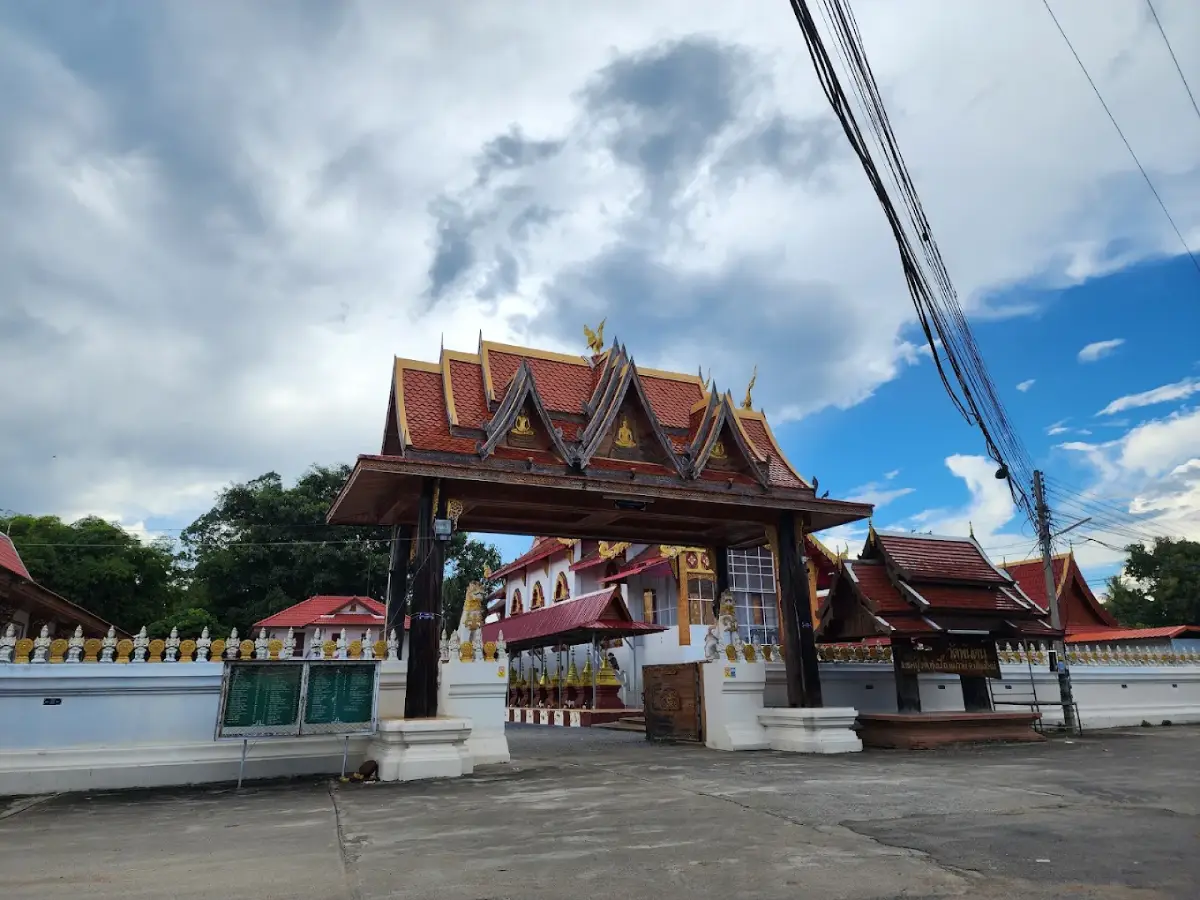
Wat Phan Ton is located at 215 Moo 3, Ban Phan Ton, Thung Pi Subdistrict, Mae Wang District, Chiang Mai Province 50360. It is a Buddhist temple under the Mahanikaya order and was officially permitted to be established in 1762. This makes Wat Phan Ton one of the historically significant community temples in Thung Pi and Mae Wang. For travelers, the temple offers a calm and meaningful glimpse into rural Lanna Buddhist life, village faith, and the long relationship between temples and local communities in southern Chiang Mai.
Wat Phan Ton is best appreciated as a village temple rather than a large tourist temple. Its importance comes from its age, its connection with Ban Phan Ton, and its role as a spiritual center for the local community. Visitors who come here will not find a commercialized attraction, but a living religious space where merit-making, Buddhist ceremonies, and village traditions continue to shape community life.
The year 1762 is the key historical point of Wat Phan Ton. The temple’s establishment predates the modern administrative structure of Mae Wang District, making it an important cultural marker of early settlement and Buddhist continuity in the area. The temple’s name is directly connected with Ban Phan Ton, the village where it stands, so the identity of the temple and the identity of the village remain closely linked.
In the past, the area now known as Mae Wang was connected with older administrative structures around San Pa Tong before Mae Wang became a separate district. Wat Phan Ton therefore helps explain the development of local communities in this part of Chiang Mai. It began as a village temple within an older local landscape and continues today as a Buddhist temple in Thung Pi Subdistrict, Mae Wang District.
The temple land covers about 5 rai, 1 ngan, and 39 square wah. The northern boundary reaches a road, the southern boundary reaches a public irrigation canal, the eastern boundary reaches open land, and the western boundary reaches private land. This setting reflects the way rural Lanna temples are integrated into community landscapes, close to roads, water channels, agricultural areas, and village homes.
Important structures within Wat Phan Ton include a viharn, Ho Phra Trai Sarani, two monks’ residences, a sala bat, and a kitchen. These structures show the temple’s functions in daily religious and community life. The viharn is used for worship and ceremonies. The monks’ residences support monastic life. The sala bat and kitchen help serve communal merit-making events, especially when villagers gather to prepare food and support Buddhist activities together.
Important sacred objects at Wat Phan Ton include a Buddha image cast with thong phet, Phra Maha Kaccayana, a standing Buddha image, Phra Long, and smaller Buddha images. These objects are meaningful to the temple community because they represent accumulated faith and long-term care by villagers across generations. Visitors should pay respect quietly and treat the sacred objects with care.
The temple’s known line of abbots includes Phra Athikan Khru Ba Rin, Phra Athikan Khru Ba Kantha, Phra Athikan Kong Kaeo, Phra Athikan Duang Kaeo Manawut, Phra Athikan Kaeo Prakaro, Phra Athikan Bun Khemacharo, Phra Khru Insom Chutipanyo, Phra Athikan Amorn Intapanyo, and Phra Thiam Thawaro. These names reflect the continuity of monastic leadership and the role of monks in maintaining the temple as a religious center for Ban Phan Ton.
Thung Pi Subdistrict contains several community temples, including Wat Don Kaeo, Wat Tha Chang, Wat Bun Yuen, Wat Phan Ton, Wat Chom Chaeng, and Wat Ma Kap Tong Luang. This network of temples reflects the Lanna village pattern in which each local community maintains its own Buddhist center. Wat Phan Ton is therefore part of a wider religious landscape that helps define the identity of Thung Pi and Mae Wang.
Ban Phan Ton is Moo 3 of Thung Pi Subdistrict. The surrounding area includes village roads, agricultural land, community waterways, and other rural features typical of Mae Wang. Visiting Wat Phan Ton gives travelers a clearer view of how temples, villages, water systems, and farming life are connected in rural Chiang Mai.
The community role of Wat Phan Ton is broad. It is used for Buddhist holy days, merit-making, ceremonies, seasonal activities, and community gatherings. In a village setting, a temple is not only a place of worship but also a center of social connection. Villagers support the temple, join merit-making activities, and use the temple as a shared space during important times of the year.
Local traditions associated with Wat Phan Ton follow the Buddhist calendar and Lanna customs. These include Buddhist holy days, Songkran merit-making, Buddhist Lent, the end of Buddhist Lent, Kathin, and Pha Pa offerings. These traditions keep the temple active and strengthen the relationship between faith, family, and community.
The atmosphere of Wat Phan Ton is peaceful and modest. It is suitable for paying respect to the Buddha, making merit, and observing a local temple environment. Visitors should not expect the scale or crowds of famous temples in Chiang Mai city. Instead, the temple offers a slower and more intimate experience rooted in village life.
Travelers interested in Lanna culture will find Wat Phan Ton meaningful because it shows a side of Chiang Mai that is often missed. Chiang Mai is known for major temples in the old city, but rural community temples like Wat Phan Ton reveal how Buddhism remains part of everyday life outside the city center. This makes the temple valuable for cultural travelers, slow travelers, and visitors who want to understand Mae Wang more deeply.
Visitors should dress modestly, speak quietly, keep the temple clean, and avoid disturbing monks or local residents. If a ceremony or merit-making event is taking place, visitors should keep a respectful distance and avoid taking close-up photos of people without permission. Wat Phan Ton is an active community temple, so respectful behavior is essential.
Wat Phan Ton can be included in a local temple route in Thung Pi Subdistrict. Nearby temples include Wat Don Kaeo, Wat Tha Chang, Wat Bun Yuen, Wat Chom Chaeng, and Wat Ma Kap Tong Luang. This route is suitable for travelers who want to explore community temples, local history, and the Buddhist geography of Mae Wang.
Getting There is easiest by private car. From Chiang Mai city, take the Chiang Mai–Hot road through Hang Dong and San Pa Tong, then continue toward Mae Wang and Thung Pi Subdistrict. The destination is Moo 3, Ban Phan Ton. Travelers should specify Wat Phan Ton, Thung Pi Subdistrict, Mae Wang District, Chiang Mai Province, to avoid confusion with places of similar names.
The route from Chiang Mai city to Mae Wang is suitable for a day trip. Travelers can visit Wat Phan Ton in the morning, continue to nearby temples in Thung Pi, and then move on to restaurants, bamboo rafting areas, elephant-related attractions, or Pha Chor in Mae Wang National Park. This type of itinerary combines Buddhist culture, village life, local food, and natural attractions in one day.
For cultural travelers, Wat Phan Ton helps connect the temple, the village, and the landscape. The temple sits near roads and a public irrigation canal, with temple land and monastic property supporting its long-term presence. This makes the temple not only a religious building but also a community institution with land, structures, sacred objects, monks, and villagers working together to preserve it.
In summary, Wat Phan Ton is a historically important community temple in Ban Phan Ton, Thung Pi Subdistrict, Mae Wang District, Chiang Mai. Established in 1762, it has served the local community for generations. Its key values are its long history, its village setting, its sacred objects, and its role in Lanna Buddhist community life. It is a worthwhile stop for travelers who want to understand Mae Wang through both culture and faith.
| Name | Wat Phan Ton |
| Location | 215 Moo 3, Ban Phan Ton, Thung Pi Subdistrict, Mae Wang District, Chiang Mai 50360 |
| Place Type | Buddhist temple / religious site under the Mahanikaya order |
| History | Officially permitted to be established in 1762; a historic community temple of Ban Phan Ton, Thung Pi Subdistrict, Mae Wang District |
| Temple Land | About 5 rai, 1 ngan, and 39 square wah, with four monastic land plots totaling about 4 rai, 2 ngan, and 30 square wah |
| Main Structures | Viharn, Ho Phra Trai Sarani, two monks’ residences, sala bat, and kitchen |
| Sacred Objects | Buddha image cast with thong phet, Phra Maha Kaccayana, standing Buddha image, Phra Long, and small Buddha images |
| Highlights | A historic village temple suitable for merit-making, respectful temple visits, and learning about Lanna community life in Mae Wang |
| Distinctive Features | Peaceful rural atmosphere, long history since 1762, and close connection with Ban Phan Ton |
| Community Role | A spiritual center for Buddhist ceremonies, merit-making, and local community activities |
| Local Traditions | Buddhist holy days, Songkran, Buddhist Lent, Ok Phansa, Kathin, and Pha Pa merit-making within the local Buddhist calendar |
| Travel Information | From Chiang Mai city, take the Chiang Mai–Hot road through Hang Dong and San Pa Tong, then continue toward Mae Wang and Thung Pi Subdistrict, ending at Moo 3, Ban Phan Ton |
| Current Status | Open as an active community temple and listed in current temple and place databases |
| Open Days | Daily |
| Opening Hours | 08.00 – 17.00 |
| Main Contact Number | 053-363-666 |
| Nearby Tourist Attractions | 1. Wat Don Kaeo, Thung Pi Subdistrict, about 3 km 2. Wat Tha Chang, Thung Pi Subdistrict, about 4 km 3. Wat Bun Yuen, Thung Pi Subdistrict, about 5 km 4. Wat Chom Chaeng, Thung Pi Subdistrict, about 5 km 5. Wat Ma Kap Tong Luang, Thung Pi Subdistrict, about 6 km 6. Mae Wang Bamboo Rafting Area, about 18 km 7. Pha Chor, Mae Wang National Park, about 22 km |
| Nearby Restaurants | 1. Isan Food Khon Kalasin, about 7 km, Tel. 097-030-5407 2. Five Star PTT Mae Wang, about 8 km, Tel. 088-762-8346 3. Pa Tae Mae Wang Restaurant, about 18 km, Tel. 090-434-5918, 081-028-0224 4. Sap Sopha Restaurant, about 18 km, Tel. 089-854-8478 5. The Kerchor River Cafe, about 22 km, Tel. 061-334-4789, 093-135-7705 |
| Nearby Accommodations | 1. Mae Wang Apartment, about 8 km, Tel. 065-487-8580, 084-617-7573 2. Chan Chai Bed&Restaurant, about 10 km, Tel. 097-462-3923 3. Khum Khun Wang Resort, about 13 km, Tel. 053-928075 4. Sainamwang Lodge, about 25 km, Tel. 080-491-6899 5. Maewin Resort, about 27 km, Tel. 089-982-0716 |
Frequently Asked Questions (FAQ)
Q: Where is Wat Phan Ton located?
A: Wat Phan Ton is located at 215 Moo 3, Ban Phan Ton, Thung Pi Subdistrict, Mae Wang District, Chiang Mai Province 50360.
Q: What is the history of Wat Phan Ton?
A: Wat Phan Ton was officially permitted to be established in 1762, making it a historic community temple of Ban Phan Ton and Thung Pi Subdistrict.
Q: What are the opening hours of Wat Phan Ton?
A: Wat Phan Ton is open daily from 08.00 to 17.00.
Q: What important structures are found at Wat Phan Ton?
A: Important structures include the viharn, Ho Phra Trai Sarani, two monks’ residences, sala bat, and kitchen.
Q: What sacred objects are kept at Wat Phan Ton?
A: Sacred objects include a Buddha image cast with thong phet, Phra Maha Kaccayana, a standing Buddha image, Phra Long, and smaller Buddha images.
Q: Who should visit Wat Phan Ton?
A: It is suitable for travelers who want to make merit, visit a quiet Lanna community temple, and learn about local history in Mae Wang.
Q: What nearby places can be visited with Wat Phan Ton?
A: Nearby options include Wat Don Kaeo, Wat Tha Chang, Wat Bun Yuen, Wat Chom Chaeng, Wat Ma Kap Tong Luang, Mae Wang bamboo rafting area, and Pha Chor in Mae Wang National Park.
Q: What should visitors wear when visiting Wat Phan Ton?
A: Visitors should dress modestly, speak quietly, keep the temple clean, and respect monks, worshippers, and local religious activities.
 Category: ●Places of Worship
 Group: ●Temple
Last Update : 2 MonthAgo
 Last Update : 2 MonthAgo
 Click to Access the Navigation Map GPS

 Muang Chiang Mai(121)Chom Thong(47)Mae Chaem(25)Chiang Dao(33)Doi Saket(68)Mae Taeng(85)Mae Rim(69)Samoeng(29)Fang(71)Mae Ai(59)Phrao(70)San Pa Tong(103)San Kamphaeng(66)San Sai(73)Hang Dong(73)Hot(32)Doi Tao(22)Omkoi(11)Saraphi(74)Wiang Haeng(15)Chai Prakan(28)Mae Wang(32)Mae On(22)Doi Lo(33)Galyani Vadhana(1)


