
lovethailand home >North Travel Attractions >Chiang Mai Travel Attractions >Mae Wang >Don Pao > Wat Huai Kaew
TL;DR: Wat Huai Kaew is located at Moo 10, Ban Huai Kaew, Don Pao Subdistrict, Mae Wang District, Chiang Mai 50360. Highlights include Quiet Lanna community temple suitable for worship, merit-making, reflection, and understanding village temple life in Don Pao.

Wat Huai Kaew
Operating day: Daily
Operating time: 08.00 - 17.00
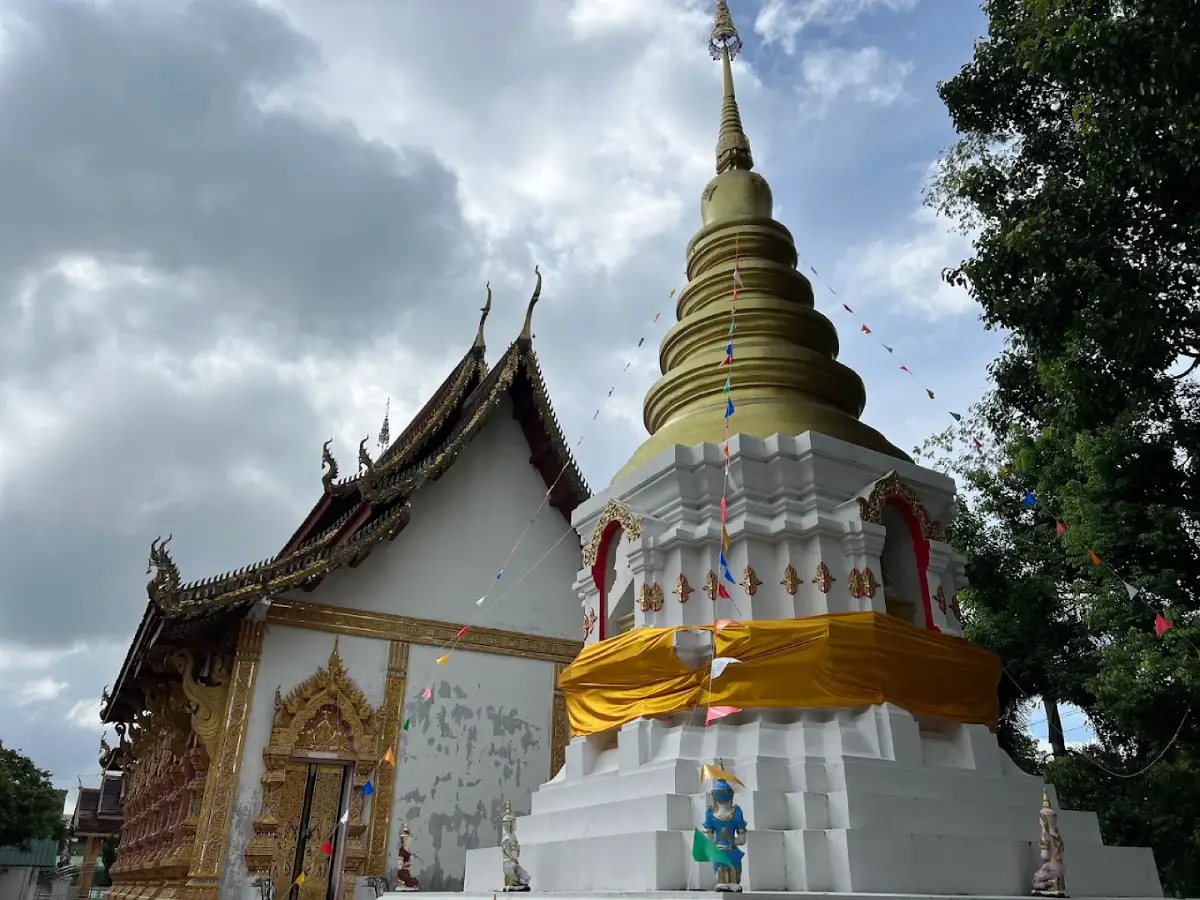
Wat Huai Kaew is located in Moo 10, Ban Huai Kaew, Don Pao Subdistrict, Mae Wang District, Chiang Mai Province 50360. It is a local Buddhist temple under the Mahanikaya order, with temple code 350220508, and was officially permitted as a temple in 1934. The temple serves Ban Huai Kaew as a village religious center for merit-making, dhamma listening, Buddhist ceremonies, Kathin, robe offerings, and Lanna merit-making traditions. Its location in Don Pao connects it with rural village life, agricultural land, local temple routes, and the wider cultural landscape of Mae Wang.
The importance of Wat Huai Kaew lies in its role as the village temple of Ban Huai Kaew, Moo 10. This village is one of the communities of Don Pao Subdistrict and lies fully within the Don Pao Subdistrict Administrative Organization area. When viewed together with Wat Don Pao, Wat Chai Mongkhon, Wat Doi Sapphanyu, Wat Thung Sila, Wat Rangsi Suttharam, Wat San Pu Loei, Wat Luang Khun Win, Wat Mai Mueang Sawan, and Wat Rim Khan, Wat Huai Kaew becomes part of a strong Buddhist temple network across Don Pao.
By 2026, more than 90 years had passed since the temple was officially permitted in 1934. Over this period, Wat Huai Kaew has supported religious and community life across generations. It has served as a place for Buddhist holy days, family merit-making, memorial ceremonies, Kathin, robe offerings, and annual village traditions.
The name Huai Kaew reflects both landscape and auspicious meaning. Huai refers to a stream, watercourse, or water-related local landscape, while Kaew suggests value, clarity, beauty, and sacredness. As a temple name, Wat Huai Kaew expresses the relationship between water, village identity, and Buddhist faith.
Ban Huai Kaew is Moo 10 of Don Pao Subdistrict. The general landscape of Don Pao is mostly flat, while some areas include hills and mountainous terrain, especially around Moo 6, Moo 7, Moo 9, and Moo 10. Wat Huai Kaew therefore sits within a community context shaped by village life, agriculture, local roads, water sources, and access toward Mae Wang’s hill and nature routes.
The temple’s location inside Ban Huai Kaew gives it practical importance. It provides a nearby religious space for villagers so they do not need to travel to another village for ordinary merit-making and ceremonies. In a Lanna rural community, this kind of village temple is essential because it supports religious life, social cooperation, and local identity.
Wat Huai Kaew is a community temple supported by local faith. Unlike a tourist attraction built mainly for visitors, a village temple is woven into daily life. People come to worship, make merit, observe precepts, attend family ceremonies, support monks, and join annual traditions. The temple is therefore a place where Buddhist practice and everyday village life meet.
Don Pao Subdistrict contains several temples with different roles. Wat Don Pao preserves an older connection with Wat San Khayom and Khru Ba Thamthin. Wat Rangsi Suttharam reflects Ban Lao Pa Fang’s local faith. Wat Doi Sapphanyu is a hilltop temple with education and nature roles. Wat Luang Khun Win is a forest temple known for Lanna art. Wat Huai Kaew serves the village of Ban Huai Kaew and completes the temple network of Moo 10.
Wat Huai Kaew can be included in a route through the inner parts of Don Pao and Mae Wang. It connects with nearby village temples, the road toward Wat Luang Khun Win, Mae Wang bamboo rafting, Mae Wang Elephant Camp, Huai Manao Reservoir, and Ban Kat Market. This makes it suitable for travelers who want to understand Mae Wang through community temples as well as nature-based attractions.
The temple’s main appeal is its quiet community character. It is not a large commercial tourist attraction, but a local religious site still used by villagers. Visitors can pay respect, walk modestly around the temple grounds, and observe the relationship between the temple and Ban Huai Kaew. This kind of visit reveals the everyday Buddhist life of rural northern Thailand.
Public information about individual buildings at Wat Huai Kaew, such as the viharn, ubosot, stupa, principal Buddha image, bell tower, or sermon hall, is limited. The temple’s current registry status confirms its place as a Mahanikaya community temple in Don Pao. Visitors should therefore appreciate it primarily as a working village temple and a spiritual space for Ban Huai Kaew.
The value of a village temple like Wat Huai Kaew is not measured only by the size of its buildings. Its deeper value appears through continuous use by local people. On Buddhist holy days, elders and families can come to make merit and listen to dhamma. During larger events, villagers help prepare the grounds, cook food, welcome guests, and support the temple according to their ability. This is the heart of Lanna community temple life.
Wat Huai Kaew’s role in Ban Huai Kaew can be understood on several levels. It is a spiritual center, a place for Buddhist ceremonies, a gathering space for annual merit-making, and a cultural anchor for the village. Temple events are not only religious rituals; they also strengthen cooperation and relationships among families in the community.
Traditions connected with Wat Huai Kaew’s local context include Buddhist Lent, the end of Buddhist Lent, Kathin, robe offerings, Buddhist holy days, dhamma listening, Mahachat sermons, memorial merit-making, and Lanna annual traditions. During Buddhist Lent, villagers support monks with candles, offerings, precept observance, and merit-making. After the end of Buddhist Lent, Kathin and robe-offering events help maintain the temple and gather local faith.
Kathin and robe offerings are important because they combine religious giving with community work. Villagers offer robes and requisites, but they also prepare food, decorate the temple, arrange offerings, welcome guests, and manage practical tasks. These events allow elders, adults, youth, and children to learn their roles in maintaining the temple.
Mahachat sermons, associated with the Vessantara Jataka, are part of the wider culture of northern Thai temple life. They teach generosity, sacrifice, and merit-making through storytelling and dhamma listening. Even when the annual format varies, dhamma listening remains an important way for village temples to pass Buddhist values to younger generations.
Mae Wang traditions such as Poi Sang Long, Poi Luen Sip Et, and the wooden support ceremony help explain the cultural setting around Wat Huai Kaew. Poi Sang Long relates to novice ordination and family merit-making. Poi Luen Sip Et reflects local festival timing, while the wooden support ceremony expresses the idea of supporting Buddhism. These traditions show how temples in Mae Wang help preserve Lanna identity.
Wat Huai Kaew is suitable for travelers interested in Lanna community temples, Don Pao temple routes, and slow cultural travel. Visitors who are looking only for major monuments may spend a short time here, but those interested in real village life will find value in the temple’s role as the religious anchor of Ban Huai Kaew.
Visitors should begin by paying respect in the temple’s worship area, then walk quietly around the grounds. A visit to Wat Huai Kaew should emphasize respect and calm rather than photography alone. If ceremonies or community activities are taking place, visitors should keep distance and avoid disruption. Photos of people should be taken only with permission.
Nearby temple routes can connect Wat Huai Kaew with Wat Mai Mueang Sawan, Wat Rim Khan, Wat San Pu Loei, Wat Luang Khun Win, Wat Don Pao, Wat Rangsi Suttharam, Wat Thung Sila, Wat Doi Sapphanyu, and Wat Chai Mongkhon. This route allows visitors to see different kinds of temples: village temples, older community temples, hilltop learning temples, and forest monasteries.
Wat Mai Mueang Sawan and Wat Rim Khan help represent the inner Don Pao temple landscape. Wat San Pu Loei connects with the route toward Wat Luang Khun Win. Wat Doi Sapphanyu offers a hilltop and education-based temple experience. Wat Don Pao and Wat Rangsi Suttharam preserve deeper historical links in the subdistrict. Together, these temples give a fuller view of Don Pao and Mae Wang.
Travelers who want to combine temples with nature can continue to Mae Wang bamboo rafting, Mae Wang Elephant Camp, Huai Manao Reservoir, Mae Wang Waterfall, and Mae Wang National Park. Mae Wang is attractive because temples, markets, villages, agriculture, waterfalls, rafting, elephant experiences, and mountains can be connected within one journey.
Ban Kat Market is a useful stop for food and local life. Visitors can begin with Wat Huai Kaew in the morning, continue to Ban Kat or Don Pao restaurants, and then visit rafting routes, elephant camps, reservoirs, or forest temples in the afternoon. This creates a balanced Mae Wang day trip with temples, food, community, and nature.
Local food around Don Pao and Mae Wang adds depth to the journey. The area has noodle shops, cafés, local food stalls, drink shops, and restaurants for travelers. Stopping for food after visiting the temple connects the trip with the daily life and local economy of the community.
The best time to visit Wat Huai Kaew is in the morning or late afternoon, when the weather is more comfortable. The cool season is especially pleasant for traveling in Mae Wang. During the rainy season, fields and mountains become greener, but visitors should drive carefully, especially when continuing toward Wat Luang Khun Win, Wat Doi Sapphanyu, reservoirs, waterfalls, or hill roads.
Getting There from Chiang Mai city can be done by following Highway 108 through Hang Dong and San Pa Tong, then turning onto Highway 1013 toward Mae Wang. Continue into Don Pao Subdistrict and Ban Huai Kaew, Moo 10. A private car or rental car is the most convenient option because visitors can combine Wat Huai Kaew with Wat Mai Mueang Sawan, Wat Rim Khan, Wat San Pu Loei, Wat Luang Khun Win, Wat Doi Sapphanyu, Ban Kat Market, Mae Wang bamboo rafting, and Mae Wang Elephant Camp in one route.
Travelers without a private vehicle can take public transport from Chiang Mai city to Mae Wang and continue locally to Don Pao and Ban Huai Kaew. This requires more planning because community temples and some nearby attractions are not always located directly at main public transport stops. A private vehicle is recommended for a flexible day trip.
Visitors should dress modestly, keep quiet in worship areas and temple grounds, and avoid disturbing monks or villagers during ceremonies. If taking photos of people or temple activities, ask permission first. Wat Huai Kaew is an active community temple, so respectful conduct is part of the visit.
For food and accommodation, visitors can use restaurants, cafés, homestays, resorts, and guesthouses around Don Pao, Ban Kat, Mae Wang, Mae Win, and nearby areas. Staying overnight in Mae Wang or Mae Win allows more time to visit Wat Huai Kaew, Wat Luang Khun Win, Wat Doi Sapphanyu, local markets, reservoirs, bamboo rafting routes, and elephant attractions without rushing back to Chiang Mai city.
In summary, Wat Huai Kaew is a Mahanikaya community temple in Moo 10, Ban Huai Kaew, Don Pao Subdistrict, Mae Wang District, Chiang Mai Province. Officially permitted as a temple in 1934, it serves as the spiritual center of Ban Huai Kaew and supports merit-making, dhamma listening, Kathin, robe offerings, and Lanna Buddhist traditions. Its value lies in its quiet village role and its position on a Mae Wang route that can connect community temples, Wat Luang Khun Win, Wat Doi Sapphanyu, Ban Kat Market, elephant camps, bamboo rafting, restaurants, and nearby accommodation.
| Name | Wat Huai Kaew |
| Temple Type | Community Buddhist Temple, Mahanikaya Order |
| Location | Moo 10, Ban Huai Kaew, Don Pao Subdistrict, Mae Wang District, Chiang Mai 50360 |
| Temple Code | 350220508 |
| Establishment | Officially permitted as a temple in 1934 |
| Community Context | Located in Ban Huai Kaew, Moo 10, a village fully within Don Pao Subdistrict Administrative Organization, connected with village life, agriculture, hilly terrain, and Mae Wang temple routes |
| Importance | Village temple of Ban Huai Kaew, supporting worship, dhamma listening, Buddhist ceremonies, and community merit-making |
| Highlights | Quiet Lanna community temple suitable for worship, merit-making, reflection, and understanding village temple life in Don Pao |
| Community Role | Spiritual center for local residents, supporting Buddhist holy days, Kathin, robe offerings, family merit-making, and village Buddhist activities |
| Local Traditions | Buddhist Lent, end of Buddhist Lent, Kathin, robe offerings, dhamma listening, Mahachat sermons, Poi Sang Long, Poi Luen Sip Et, wooden support ceremony, and Lanna merit-making traditions |
| Current Status | Active temple in the current temple registry of Don Pao, Mae Wang, Chiang Mai |
| Travel Information | From Chiang Mai city, follow Highway 108 through Hang Dong and San Pa Tong, then turn onto Highway 1013 toward Mae Wang. Continue into Don Pao Subdistrict and Ban Huai Kaew, Moo 10. Private car or rental car is the most convenient option. |
| Nearby Tourist Attractions | 1. Wat Mai Mueang Sawan, About 3 km 2. Wat Rim Khan, About 4 km 3. Wat San Pu Loei, About 4 km 4. Mae Wang Bamboo Rafting, About 7 km 5. Mae Wang Elephant Camp, About 8 km 6. Wat Luang Khun Win, About 24 km 7. Ban Kat Market, About 12 km 8. Wat Don Pao, About 13 km 9. Huai Manao Reservoir, About 15 km 10. Wat Doi Sapphanyu, About 16 km |
| Nearby Restaurants | 1. Tiew Ruea Hoi Kha Chom Thung Mae Wang, About 7 km, Tel. 088-599-5289 2. Café Amazon DD2251 PTT Mae Wang, About 9 km, Tel. 096-379-6021 3. Milk Tea, About 12 km, Tel. 062-029-9905, 052-010-193 4. Mangkon Thong Boat Noodles Mae Wang Branch, About 12 km, Tel. 061-995-4008 5. Catz.B Burger Mae Wang Branch, About 13 km, Tel. 081-119-6174 6. Wanwan Coffee Huen Baan Ya Cafe', About 13 km, Tel. 093-259-4059 7. Khrua Duean Phen @ Huai Manao Reservoir, About 15 km, Tel. 095-336-3093 |
| Nearby Accommodations | 1. Ban Bon Doi Homestay & Espresso Bar, About 14 km, Tel. 089-558-3241 2. Chombua MaeWang, About 18 km, Tel. 081-903-2172 3. Namrae Maewang Phairin Resort, About 18 km, Tel. 052-001-410 4. Pok Resort MaeWang, About 19 km 5. Plern Malee Resort, About 18 km, Tel. 062-859-5954 6. Homestays In Mae Win And Mae Wang, About 18 km |
Frequently Asked Questions (FAQ)
Q: Where is Wat Huai Kaew located?
A: Wat Huai Kaew is located in Moo 10, Ban Huai Kaew, Don Pao Subdistrict, Mae Wang District, Chiang Mai Province 50360.
Q: What type of temple is Wat Huai Kaew?
A: Wat Huai Kaew is a community Buddhist temple under the Mahanikaya order and is listed in the current temple registry of Don Pao, Mae Wang, Chiang Mai.
Q: When was Wat Huai Kaew officially established?
A: Wat Huai Kaew was officially permitted as a temple in 1934.
Q: Why is Wat Huai Kaew important to Ban Huai Kaew?
A: It is the spiritual center of Ban Huai Kaew, supporting worship, dhamma listening, ceremonies, Kathin, robe offerings, and Lanna Buddhist merit-making.
Q: What kind of travelers should visit Wat Huai Kaew?
A: The temple is suitable for travelers interested in Lanna community temples, Don Pao temple routes, and slow Mae Wang travel connecting temples, villages, markets, and nature.
Q: How can travelers get to Wat Huai Kaew from Chiang Mai city?
A: Follow Highway 108 through Hang Dong and San Pa Tong, then turn onto Highway 1013 toward Mae Wang and continue to Don Pao Subdistrict and Ban Huai Kaew. A private car or rental car is the most convenient option.
Q: What nearby places can travelers visit after Wat Huai Kaew?
A: Nearby places include Wat Mai Mueang Sawan, Wat Rim Khan, Wat San Pu Loei, Wat Luang Khun Win, Wat Doi Sapphanyu, Ban Kat Market, Mae Wang Elephant Camp, and Mae Wang bamboo rafting.
Q: What is the main highlight of Wat Huai Kaew?
A: Its highlight is its role as a quiet Lanna village temple that reflects the Buddhist community life of Ban Huai Kaew in Don Pao.
 Category: ●Places of Worship
 Group: ●Temple
Last Update : 3 DayAgo
 Last Update : 3 DayAgo
 Click to Access the Navigation Map GPS
 Muang Chiang Mai(121)Chom Thong(47)Mae Chaem(25)Chiang Dao(33)Doi Saket(68)Mae Taeng(85)Mae Rim(69)Samoeng(29)Fang(71)Mae Ai(59)Phrao(70)San Pa Tong(103)San Kamphaeng(66)San Sai(73)Hang Dong(73)Hot(32)Doi Tao(22)Omkoi(11)Saraphi(74)Wiang Haeng(15)Chai Prakan(28)Mae Wang(32)Mae On(22)Doi Lo(33)Galyani Vadhana(1)


