
lovethailand home >North Travel Attractions >Chiang Mai Travel Attractions >Mae Wang >Don Pao > Wat Luang Khun Win
TL;DR: Wat Luang Khun Win, open Daily, hours 08.00 – 17.00. Highlights include Remote forest temple with Lanna architecture, detailed wood carving, two wooden ubosot halls, carved Buddha images, old stupa, naga.

Wat Luang Khun Win
Open Days: Daily
Opening Hours: 08.00 – 17.00
Wat Luang Khun Win is located in the Khun Win headwater forest area, Moo 16, Ban Khun Win, Mae Win Subdistrict, Mae Wang District, Chiang Mai Province. In the ecclesiastical registry, the temple is listed under Don Pao Subdistrict, Moo 9, Ban San Pu Loei, Mae Wang District, Chiang Mai. It is a Mahanikaya community temple with the character of a remote forest monastery. Surrounded by mountain forest, cool air, and the natural landscape of the Mae Win watershed, the temple is known for its old Lanna architecture, wooden ubosot halls, carved wooden Buddha images, ancient stupa, naga stairways, and quiet atmosphere suitable for meditation and religious study.
Wat Luang Khun Win has a multi-layered history. It includes local legend, palm-leaf historical references, architectural evidence, periods of abandonment, and modern restoration. The temple was formerly abandoned and was raised from abandoned-temple status to a temple with resident monks in 2002. This revival transformed a once-quiet forest religious site into a living monastery where monks reside, devotees make merit, practitioners meditate, and travelers come to study Lanna Buddhist art in a forest setting.
The temple’s location makes it very different from ordinary village temples. It is set deep in the mountain forest, away from main roads and large communities. The access road includes steep, winding, and partly rough sections, so travel requires careful planning. Yet this remoteness is also the temple’s defining appeal. Visitors who reach the temple experience shade, cool air, natural sound, and a sense of stillness rarely found in city temples.
The name Luang Khun Win is closely tied to the mountain and watershed landscape. In northern Thai usage, khun can refer to an upland or headwater area, while Win connects with Khun Win and Mae Win, an important stream system in the district. The name therefore reflects geography, water, forest, and sacred space together.
Local accounts say that Wat Luang Khun Win rose and declined through many periods. Legends speak of the Buddha’s footprint, sacred relics, and Phra That Mon Pia. A palm-leaf record mentions Chao Muen Kham Sao, the younger brother of Khun Luang Wilangkha, ruler of Chiang Mai, who restored the temple under the abbacy of Khru Ba Panyawongsa around 1217 CE, corresponding to 1760 BE. The temple later declined after the Burmese capture of Chiang Mai in 1259 CE, corresponding to 1802 BE, and eventually became abandoned.
This historical layer shows that Wat Luang Khun Win is not a modern travel attraction created for tourism. Its story reaches deep into the religious landscape of Lanna. Although the original founder and first construction date are not firmly recorded, the temple’s legends, palm-leaf references, stupa form, and architectural traces give it strong historical significance within Mae Wang and the Mae Win forest area.
A major modern restoration began in 1954, when Khru Ba Un Ruean Suphattho from Wat Ban Kuan, Makham Luang Subdistrict, San Pa Tong District, restored the temple. After the restoration, Khru Ba Aphichai Khao Pi was invited to preside over a celebration in 1958. This marked an important revival of the abandoned forest temple through the faith of monks, teachers, local villagers, and devotees.
Later, Khru Ba Un Ruean became seriously ill in 1969 and passed away in 1984 at Wat Ban Kuan. In 1982, Chao Chuen Sirorot invited Luang Pu Nen Chan Un Ruean from Wat Umong Nen Chan to spend the rains retreat at the temple. In 1989, Phra Achan Somboon Ratanayano from Wat Khao Laem, Phetchabun Province, stayed at the temple for 8 years before handing care of the temple to Phra Achan Charan Takkhayano of Wat Sangkhathan, Nonthaburi Province, who continued the modern stewardship of Wat Luang Khun Win.
Phra Achan Charan Takkhayano is central to the modern identity of Wat Luang Khun Win. When he took responsibility for the temple, the place remained remote, difficult to access, and limited in infrastructure. Restoration of huts, halls, worship areas, and monastic facilities depended on monks, villagers, and lay supporters. Caring for the temple meant more than maintaining buildings; it meant preserving a historic forest monastery as a place of practice.
The temple’s architecture is one of its strongest highlights. The stupa and viharn reflect Lanna forms from the early 21st Buddhist century. The main stupa has a small bell-shaped body on a recessed lotus base, comparable in style to stupas at Wat Chomphu, Wat Chettha, and Wat Pha Khao in Chiang Mai city. The viharn and ubosot structures are raised brick-based buildings with wooden posts, timber roof structures, and terracotta roof tiles, showing the fusion of local materials and Buddhist form.
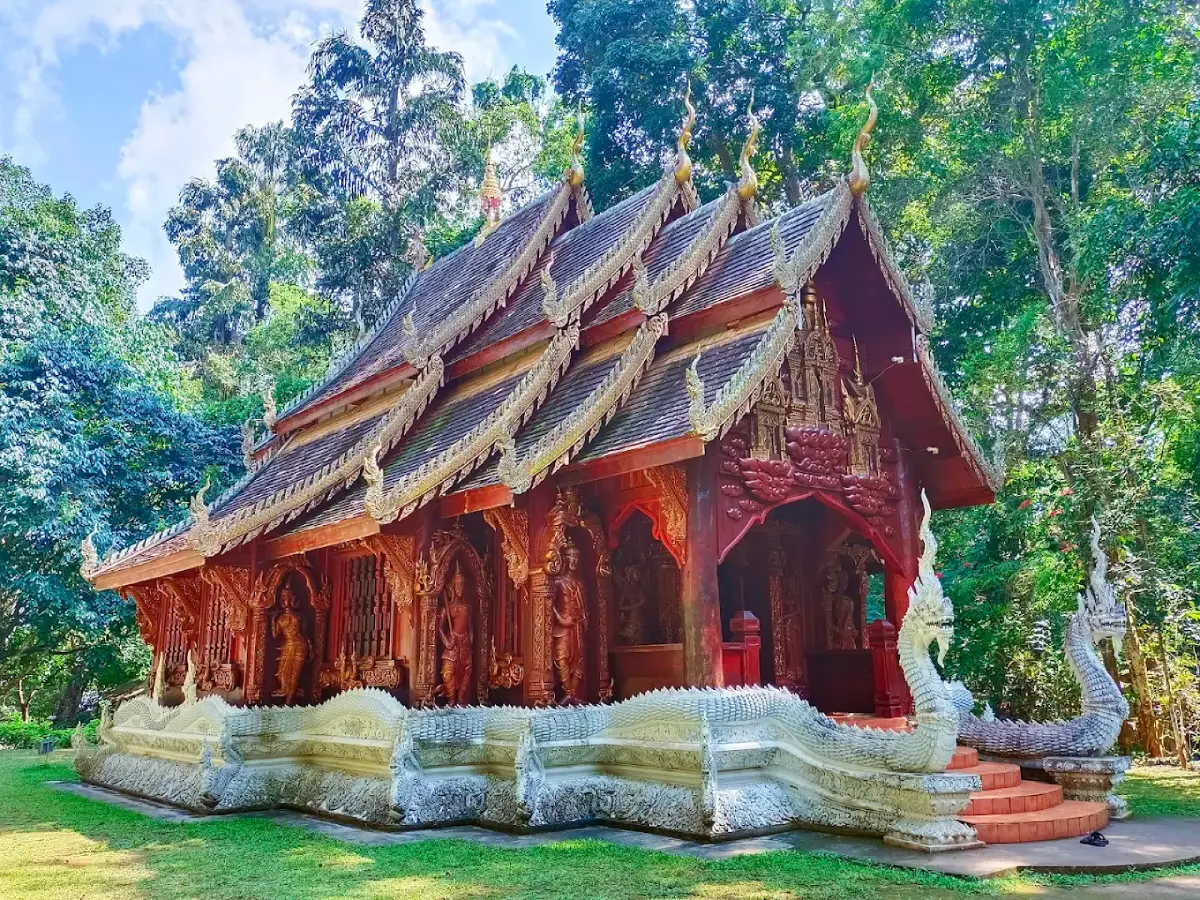
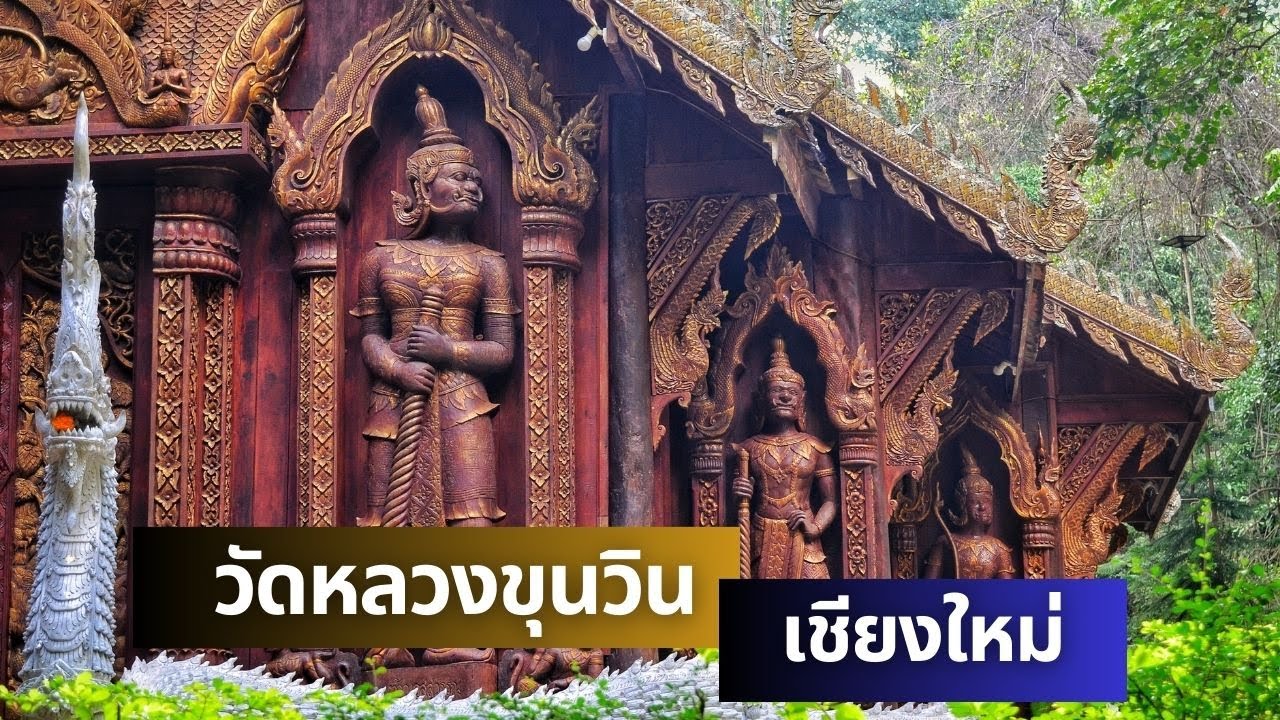
Architectural details throughout the temple reveal fine Lanna craftsmanship. Gables, carved arches, decorative brackets, roof elements, naga forms, and other wooden components are carved, pierced, lacquered, gilded, and decorated with glass. The temple’s boundary wall and arched gateways around the Buddhist sacred zone are especially significant, with proportions comparable to Wat Lai Hin in Ko Kha District, Lampang Province. This makes Wat Luang Khun Win an important place for studying Lanna architectural layout and ornamentation.
The most memorable features for visitors are the two wooden ubosot halls: the standing Buddha ubosot and the reclining Buddha ubosot. The standing Buddha ubosot enshrines a carved wooden Buddha image in the walking-meditation posture, while the reclining Buddha ubosot enshrines a carved wooden reclining Buddha in the parinibbana posture. The woodwork in both halls is highly detailed, with carved scenes, deities, yaksha figures, naga motifs, and devotional decorative elements.
The wooden Buddha images are both religious and artistic highlights. The standing Buddha expresses movement, mindfulness, and serene presence, while the reclining Buddha suggests contemplation of the Buddha’s final passing and the nature of impermanence. Large carved wooden Buddha images require skill, time, and devotional concentration. Their presence gives Wat Luang Khun Win a rare artistic character among forest temples in Chiang Mai.
The naga stairways are another distinctive feature. They guide visitors into the sacred zone and connect the lower grounds with the temple’s main worship areas. In Lanna temple symbolism, naga forms protect Buddhism, mark the transition into sacred space, and create a visual path of reverence. At Wat Luang Khun Win, the naga elements are especially memorable because they unfold along the forested terrain.
The stupa remains a major worship point, connected with the memory of sacred relics and Phra That Mon Pia. Its position in a remote old temple gives it strong spiritual presence. Although the temple passed through abandoned periods, the stupa continued to anchor the religious meaning of the site and helped preserve continuity between the past and the present.
Wat Luang Khun Win also includes a wooden scripture hall, salabat-style hall, viharn, monastic spaces, and other structures associated with a Lanna forest monastery. Some buildings carry the marks of long use and gradual restoration. Their value lies not in newness, but in the combination of age, wood, craftsmanship, devotion, and forest atmosphere.
The temple is highly suitable for visitors interested in Lanna history, Buddhist architecture, carved woodwork, forest temples, and meditation. Visitors should not rush only to take photographs. They should take time to observe the layout, stupa, wall, gateways, ubosot halls, wooden Buddha images, and naga stairways. Each element reflects the temple’s long journey through prosperity, abandonment, and revival.
The atmosphere is calm, cool, and distinctly forest-like. The temple is set above ordinary village level and surrounded by trees. Natural sound and silence support meditation and contemplation. Visitors should come with a respectful mindset, because this is not an entertainment attraction. It remains a religious site with monks, practitioners, and devotees.
The temple’s remoteness also shapes its way of life. Access, water, electricity, food, repair work, and temple maintenance all require effort. The temple has long been associated with limited infrastructure and solar-powered electricity in some areas. This helps visitors understand the discipline and simplicity of a forest temple where daily life is closely linked with mountains and forest.
Traditions and activities connected with Wat Luang Khun Win include Buddhist Lent, the end of Buddhist Lent, Kathin, robe offerings, Songkran, Loi Krathong, merit-making, precept observance, chanting, and meditation. During important festivals, villagers and devotees from surrounding communities come together to make offerings, observe precepts, and join Buddhist activities. These gatherings are simple, faith-based, and rooted in community life.
Buddhist Lent is especially meaningful in a forest monastery. Monks remain in residence and focus on practice, while devotees support the temple with candles, food, basic requisites, and offerings. After the end of Buddhist Lent, Kathin and robe-offering ceremonies help maintain the temple and sustain monastic life in this remote setting.
Songkran and Loi Krathong also connect the temple with local seasonal rhythm. Songkran brings merit-making and renewal in the Northern Thai New Year, while Loi Krathong recalls water, gratitude, and letting go. In the context of the Mae Win watershed and mountain forest, these traditions strongly connect dhamma, nature, and community.
Wat Luang Khun Win serves more than Ban Khun Win or Ban San Pu Loei. It draws faith from Mae Wang, San Pa Tong, Chiang Mai, and other provinces. It is a place for merit-making, Lanna art study, meditation, and understanding a deeper side of Mae Wang beyond elephant camps, rafting, and waterfalls.
Travel routes can be planned in several ways. A temple-focused route can connect Wat Luang Khun Win with Wat San Pu Loei, Wat Huai Kaew, Wat Rim Khan, Wat Mai Mueang Sawan, Wat Don Pao, Wat Doi Sapphanyu, Wat Rangsi Suttharam, and Wat Thung Sila. A nature-focused route can continue to Mae Wang bamboo rafting, Mae Wang Elephant Camp, Mae Wang Waterfall, Huai Manao Reservoir, and Mae Wang National Park.
Wat San Pu Loei is the village temple in the same ecclesiastical Moo as Wat Luang Khun Win. Wat Doi Sapphanyu adds an educational and hilltop dimension. Wat Don Pao preserves an old connection with Wat San Khayom and Khru Ba Thamthin. Wat Rangsi Suttharam reflects Ban Lao Pa Fang’s village faith. Combining these temples gives travelers a fuller view of Don Pao’s temple network, from village temples to hilltop and forest monasteries.
Visitors should plan the journey carefully. The final approach to Wat Luang Khun Win includes steep, winding, and sometimes rough sections. Pickup trucks, high-clearance vehicles, four-wheel-drive vehicles, or local transport with an experienced driver are recommended. During the rainy season, the road may become more difficult. Travelers who are not confident with mountain driving should use local transfer services from the lower village area.
The best time to visit is from morning to early afternoon, because the mountain road is better avoided after dark and the temple has several areas to see. The cool season is the most comfortable period. The rainy season makes the forest greener, but the road becomes more challenging. A visit should be planned without rushing, allowing enough time for worship, walking, photography, and safe return travel.
Getting There from Chiang Mai city can be done by following Highway 108 through Hang Dong and San Pa Tong, then continuing toward Mae Wang and the route to Ban Khun Win or Ban Huai Yuak. The final approach to the temple is a mountain route suitable for appropriate vehicles and experienced drivers. Small city cars are not recommended for several sections, especially in the rainy season. Travelers can combine the temple with Wat San Pu Loei, Wat Doi Sapphanyu, Ban Kat Market, Mae Wang bamboo rafting, or Mae Wang Elephant Camp, depending on road conditions and available time.
Proper conduct is important. Visitors should dress modestly, keep quiet in the sacred zone, viharn, ubosot halls, monks’ areas, and meditation spaces. Anyone wishing to photograph monks, novices, or interiors should ask permission first. Do not climb on wooden structures or touch carved elements unnecessarily, because many parts are religious objects and woodwork that should be preserved. Comfortable shoes, drinking water, and a flexible schedule are recommended.
For food and accommodation, visitors can use restaurants, cafés, homestays, resorts, and guesthouses in Mae Wang, Mae Win, Ban Kat, and Don Pao. Staying overnight in Mae Wang or Mae Win allows a safer and more relaxed visit to Wat Luang Khun Win, with time to continue to bamboo rafting, elephant camps, Mae Wang Waterfall, Wat Doi Sapphanyu, Wat Don Pao, local restaurants, and nature-based accommodation.
In summary, Wat Luang Khun Win is a Mahanikaya forest temple in the Khun Win headwater forest of Mae Wang, Chiang Mai, and is listed in the ecclesiastical registry of Don Pao, Moo 9, Ban San Pu Loei. Formerly abandoned and raised to active temple status in 2002, it carries a long history through legend, palm-leaf memory, Lanna architecture, wooden ubosot halls, carved Buddha images, an old stupa, boundary walls, gateways, naga stairways, and a quiet forest setting. It is suitable for visitors who want to make merit, study Lanna art, practice meditation, and experience a deeper cultural side of Mae Wang beyond ordinary nature tourism.
| Name | Wat Luang Khun Win |
| Name Found In Some Sources | Wat Phra That Luang Khun Win |
| Temple Type | Community Buddhist Temple, Mahanikaya Order / Forest Temple In The Mountains |
| Geographic Location | Khun Win headwater forest area, Moo 16, Ban Khun Win, Mae Win Subdistrict, Mae Wang District, Chiang Mai |
| Ecclesiastical Registry | Moo 9, Ban San Pu Loei, Don Pao Subdistrict, Mae Wang District, Chiang Mai |
| Temple Code | 350220507 |
| Important Status | Former abandoned temple raised to active temple status with resident monks in 2002 |
| Modern Caretaker | Phra Achan Charan Takkhayano of Wat Sangkhathan, Nonthaburi Province |
| Historical Background | Palm-leaf records mention Chao Muen Kham Sao, younger brother of Khun Luang Wilangkha, restoring the temple under Khru Ba Panyawongsa around 1760 BE. After the Burmese capture of Chiang Mai in 1802 BE, the temple became abandoned. |
| Modern Restoration | In 1954, Khru Ba Un Ruean Suphattho restored the temple, with a celebration involving Khru Ba Aphichai Khao Pi in 1958. In 1989, Phra Achan Somboon Ratanayano stayed for 8 years before handing care to Phra Achan Charan Takkhayano. |
| Architectural Period | The layout and main stupa form suggest early 21st Buddhist century Lanna architecture, around 500 years old |
| Main Structures | Stupa, viharn, standing Buddha ubosot, reclining Buddha ubosot, scripture hall, wooden ho trai, salabat hall, boundary wall, arched gateway, and naga stairways |
| Sacred Objects / Worship Points | Stupa associated with sacred relic memory, carved wooden standing Buddha, carved wooden reclining Buddha, and other wooden Buddha images |
| Highlights | Remote forest temple with Lanna architecture, detailed wood carving, two wooden ubosot halls, carved Buddha images, old stupa, naga stairways, and a strong meditation atmosphere |
| Community And Devotional Role | Spiritual center on the Khun Win route, place for merit-making, meditation, Lanna art study, and forest-temple practice |
| Key Traditions And Activities | Buddhist Lent, end of Buddhist Lent, Kathin, robe offerings, Songkran, Loi Krathong, merit-making, precept observance, chanting, and meditation |
| Current Status | Active temple in the current temple registry of Don Pao, Mae Wang, Chiang Mai |
| Open Days | Daily |
| Opening Hours | 08.00 – 17.00 |
| Travel Information | From Chiang Mai city, follow Highway 108 through Hang Dong and San Pa Tong toward Mae Wang, then continue to the Ban Khun Win or Ban Huai Yuak route. The final approach is a mountain road best handled by a pickup, high-clearance vehicle, four-wheel-drive vehicle, or local driver familiar with the route. |
| Nearby Tourist Attractions | 1. Ban Huai Yuak, About 10 km 2. Wat San Pu Loei, About 24 km 3. Wat Huai Kaew, About 25 km 4. Wat Rim Khan, About 26 km 5. Mae Wang Bamboo Rafting, About 27 km 6. Mae Wang Elephant Camp, About 28 km 7. Wat Doi Sapphanyu, About 36 km 8. Huai Manao Reservoir, About 38 km 9. Ban Kat Market, About 39 km |
| Nearby Restaurants | 1. Local Restaurants On Mae Win And Ban Khun Win Route, About 10 km 2. Tiew Ruea Hoi Kha Chom Thung Mae Wang, About 27 km, Tel. 088-599-5289 3. Café Amazon DD2251 PTT Mae Wang, About 35 km, Tel. 096-379-6021 4. Milk Tea, About 39 km, Tel. 062-029-9905, 052-010-193 5. Catz.B Burger Mae Wang Branch, About 40 km, Tel. 081-119-6174 6. Wanwan Coffee Huen Baan Ya Cafe', About 40 km, Tel. 093-259-4059 7. Khrua Duean Phen @ Huai Manao Reservoir, About 38 km, Tel. 095-336-3093 |
| Nearby Accommodations | 1. Plern Malee Resort, About 23 km, Tel. 062-859-5954 2. Homestays In Mae Win And Mae Wang, About 25 km 3. Chombua MaeWang, About 35 km, Tel. 081-903-2172 4. Ban Bon Doi Homestay & Espresso Bar, About 36 km, Tel. 089-558-3241 5. Namrae Maewang Phairin Resort, About 38 km, Tel. 052-001-410 6. Pok Resort MaeWang, About 39 km |
Frequently Asked Questions (FAQ)
Q: Where is Wat Luang Khun Win located?
A: Wat Luang Khun Win is located in the Khun Win headwater forest area, Moo 16, Ban Khun Win, Mae Win Subdistrict, Mae Wang District, Chiang Mai, and is listed in the ecclesiastical registry under Don Pao Subdistrict, Moo 9, Ban San Pu Loei.
Q: What type of temple is Wat Luang Khun Win?
A: It is a Mahanikaya community Buddhist temple with the character of a remote forest monastery and resident monks.
Q: What is the historical importance of Wat Luang Khun Win?
A: It is an old temple that rose and declined over many periods. Palm-leaf records mention restoration by Chao Muen Kham Sao around 1760 BE. The temple later became abandoned and was raised to active temple status with resident monks in 2002.
Q: What are the main highlights of Wat Luang Khun Win?
A: Highlights include Lanna forest architecture, the standing Buddha ubosot, reclining Buddha ubosot, carved wooden Buddha images, old stupa, boundary wall, arched gateways, naga stairways, and a peaceful meditation atmosphere.
Q: Who is the modern caretaker of Wat Luang Khun Win?
A: Phra Achan Charan Takkhayano of Wat Sangkhathan, Nonthaburi Province, has cared for the temple in the modern period after receiving responsibility from Phra Achan Somboon Ratanayano.
Q: What kind of vehicle should visitors use to reach Wat Luang Khun Win?
A: The final approach is steep and mountainous, so visitors should use a pickup, high-clearance vehicle, four-wheel-drive vehicle, or local transport with a driver familiar with the route, especially during the rainy season.
Q: What kind of travelers should visit Wat Luang Khun Win?
A: The temple is suitable for travelers interested in merit-making, Lanna art, forest temples, meditation, wooden architecture, and a deeper cultural experience of Mae Wang.
Q: What nearby places can travelers visit after Wat Luang Khun Win?
A: Nearby places include Wat San Pu Loei, Wat Doi Sapphanyu, Wat Don Pao, Huai Manao Reservoir, Ban Kat Market, Mae Wang Elephant Camp, Mae Wang bamboo rafting, and other natural attractions in Mae Wang.
 Category: ●Places of Worship
 Group: ●Temple
Last Update : 2 MonthAgo
 Last Update : 2 MonthAgo
 Click to Access the Navigation Map GPS
Wat Luang Khun Win Map
Recommend

 Muang Chiang Mai(121)Chom Thong(47)Mae Chaem(25)Chiang Dao(33)Doi Saket(68)Mae Taeng(85)Mae Rim(69)Samoeng(29)Fang(71)Mae Ai(59)Phrao(70)San Pa Tong(103)San Kamphaeng(66)San Sai(73)Hang Dong(73)Hot(32)Doi Tao(22)Omkoi(11)Saraphi(74)Wiang Haeng(15)Chai Prakan(28)Mae Wang(32)Mae On(22)Doi Lo(33)Galyani Vadhana(1)


