
lovethailand home >North Travel Attractions >Chiang Mai Travel Attractions >Mae Wang >Don Pao > Wat Rangsi Suttharam
TL;DR: Wat Rangsi Suttharam is located at No. 64, Moo 2, Ban Lao Pa Fang, Don Pao Subdistrict, Mae Wang District, Chiang Mai 50360.
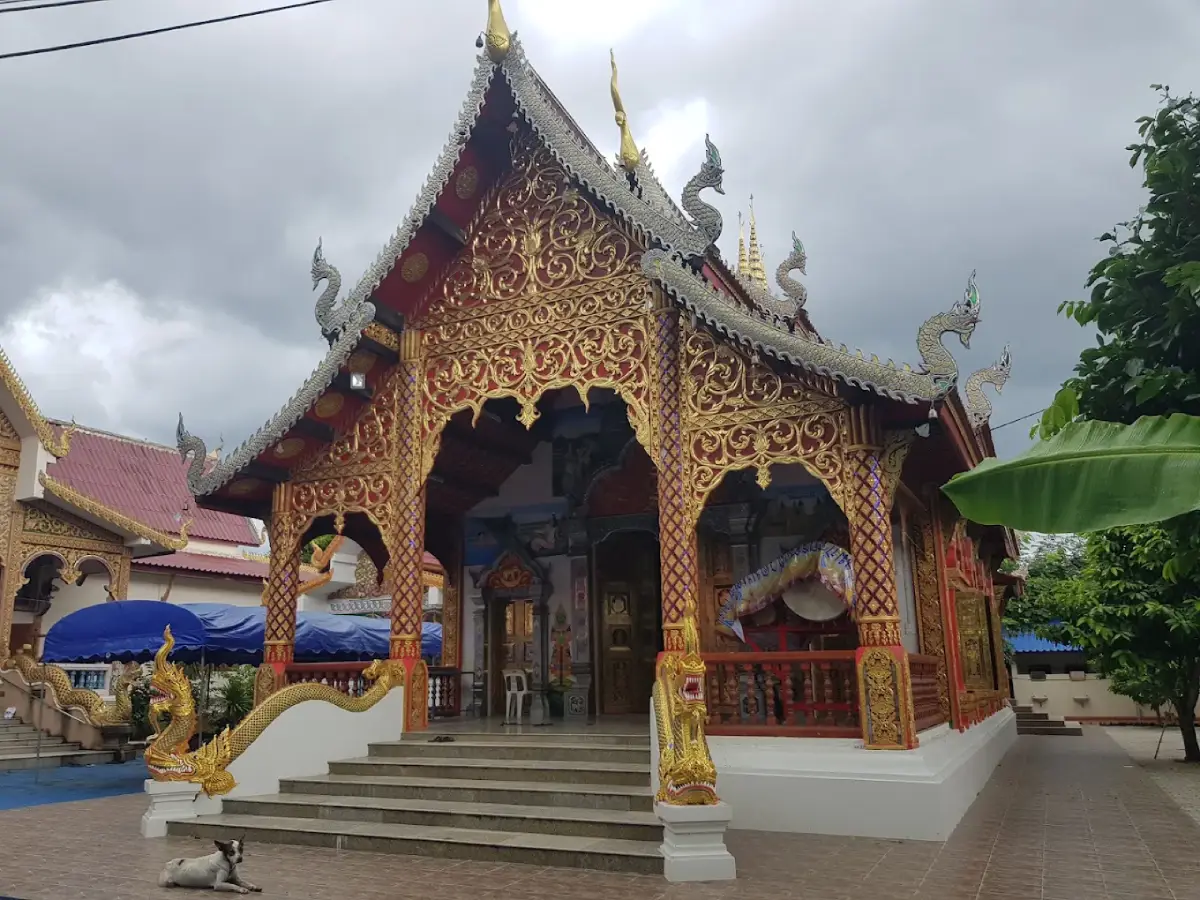
Wat Rangsi Suttharam
Operating day: Daily
Operating time: 08.00 - 17.00
Wat Rangsi Suttharam is located at No. 64, Moo 2, Ban Lao Pa Fang, Don Pao Subdistrict, Mae Wang District, Chiang Mai Province 50360. It is a local Buddhist temple under the Mahanikaya order. The temple was formerly known as Wat Lao Pa Fang, reflecting its location in Ban Lao Pa Fang, an old village in Don Pao. Wat Rangsi Suttharam was built in 1914 at a time when the village had no temple of its own and local people had to travel to Wat San Khayom for merit-making. The temple therefore emerged directly from community need and has since become the spiritual center of Ban Lao Pa Fang.
The importance of Wat Rangsi Suttharam lies in its connection with Wat San Khayom and the local monastic network of Don Pao. More than 100 years have passed since the temple was built in 1914. Over that long period, the temple has become part of the shared memory of the community through Buddhist holy days, Songkran water-pouring rites, Kathin, robe offerings, family merit-making, and annual village activities.
Ban Lao Pa Fang is located in Don Pao Subdistrict, Mae Wang District. Historically, this area was part of Ban Kat Subdistrict under San Pa Tong District before Mae Wang was established as a minor district in 1990 and officially opened as Mae Wang District on 8 September 1995. This administrative change places Wat Rangsi Suttharam within the modern context of Mae Wang while preserving its older connection with the former Ban Kat and San Pa Tong landscape.
Don Pao Subdistrict has a dense community and religious history. Important temples in the area include Wat Don Pao, Wat Chai Mongkhon, Wat Doi Sapphanyu, Wat Thung Sila, Wat Rangsi Suttharam, Wat San Pu Loei, Wat Huai Kaew, Wat Mai Mueang Sawan, Wat Rim Khan, and Wat Luang Khun Win. These temples form a Buddhist network in which each village has its own religious center while remaining part of the wider cultural landscape of Mae Wang.
The temple’s former name, Wat Lao Pa Fang, reflects its original village identity. The present name, Wat Rangsi Suttharam, carries a more explicitly Buddhist meaning. Rangsi suggests radiance or light, while Suttharam suggests a pure and peaceful monastery. The temple’s names therefore combine local identity with Buddhist symbolism.
Before Wat Rangsi Suttharam was built, villagers from Ban Lao Pa Fang, Ban Don Pao, and Ban San Pong regularly made merit at Wat San Khayom, an important temple in the northern monastic area. Wat San Khayom was associated with Phra Thamthin, a respected monk whose passing led many of his disciples and local devotees to establish temples in their own communities. This movement allowed each village to have a nearer and more practical religious center.
Wat Rangsi Suttharam was created as part of this process. Phra Buntha Mahawan, also known as Khru Ba Mahawan, and Phra Metha Sumetho led the construction of the temple after separating from Wat San Khayom. The temple was completed in 1914, giving Ban Lao Pa Fang its own place for worship, merit-making, and community ceremonies.
This origin is typical of many Lanna community temples. The temple was not created for tourism or display, but from the practical and spiritual needs of villagers. A local temple made it easier for people to make merit, listen to dhamma, hold family ceremonies, and gather for annual traditions. Wat Rangsi Suttharam therefore has meaning beyond its buildings; it represents the faith and self-organization of Ban Lao Pa Fang.
The temple land covers 5 rai, 3 ngan, and 19 square wa under title deed No. 15611. In 2000, the temple received an additional 2 rai, 1 ngan, and 65 square wa under title deed No. 9980. This land supports worship areas, ceremony spaces, monastic residences, community events, and annual traditions.
The main structures of Wat Rangsi Suttharam include a viharn, sermon hall, merit-making pavilion, monks’ residences, and kitchen. The viharn is used for worship, precept observance, dhamma listening, and major ceremonies. The sermon hall supports religious teaching and community gatherings. The merit-making pavilion supports family ceremonies and memorial merit-making. The monks’ residences support monastic life, while the kitchen allows villagers to prepare food during temple events.
The viharn is the heart of the temple. In a Lanna village temple, the viharn is where villagers return again and again for Buddhist holy days, sermons, festivals, and family ceremonies. It is not only a worship building but a space where Buddhist faith, local memory, and community life meet.
The sermon hall and merit-making pavilion are important for community life. They support memorial ceremonies, dhamma events, meetings, and annual preparations. Together with the kitchen, these buildings allow the temple to function as a working community center where villagers cooperate through food, labor, offerings, and shared responsibilities.
The kitchen reflects the lay community’s active role. During temple events, villagers help cook, prepare offerings, welcome guests, and clean up after the ceremony. This shared labor is part of northern Thai merit-making culture and strengthens relationships between families, elders, youth, monks, and lay supporters.
Wat Rangsi Suttharam has also played an educational role. It has hosted a Sunday Buddhist study center since 1983 and a preschool-age child training center since 1979. This makes the temple more than a place for adult merit-making; it has also supported children, youth, families, and moral education in Ban Lao Pa Fang.
The Sunday Buddhist study center is especially meaningful in a Lanna community. It helps children learn dhamma, manners, precepts, respect for elders, and participation in Buddhist ceremonies. Learning in a temple setting gives young people a sense of cultural continuity and helps preserve the relationship between village, temple, and family.
The known line of abbots includes Phra Athikan Pan Ariyo from 1917 to 1939, Phra Niu from 1939 to 1940, Phra Athikan Kham Pan Panyalangkaro from 1941 to 1958, Phra Athikan Ai Intachakko from 1958 to 1968, and Phra Athikan Chai Sujitto from 1968 onward. Contemporary public information also identifies Phra Khru Sutthiyanarangsi, known as Khru Ba Chai Sujitto, in connection with Wat Rangsi Suttharam.
The role of the temple’s resident monk or abbot is central to community life. He cares for religious duties, temple facilities, ceremonies, village invitations, and the relationship between monks and lay supporters. A village temple remains active because monks and local devotees continue to support each other through both ritual and everyday cooperation.
Wat Rangsi Suttharam serves Ban Lao Pa Fang as a spiritual center and community space. Villagers use the temple for worship, dhamma listening, family merit-making, annual traditions, and important life ceremonies. During temple events, each family can contribute according to its ability, whether through offerings, food, labor, or participation.
The temple’s most distinctive annual tradition is the Songkran water-pouring rite held on the waxing eighth day of the sixth lunar month. This ceremony has been practiced every year and reflects the close relationship between Wat Rangsi Suttharam and the local festival calendar. During Northern Thai New Year, villagers visit the temple to make merit, bathe Buddha images, ask blessings, and renew community ties.
The water-pouring rite is more than a symbolic act. It expresses reverence for the Triple Gem, purification, gratitude, and the renewal of community life. The annual performance of this rite shows that Wat Rangsi Suttharam remains a living cultural and religious center for Ban Lao Pa Fang.
Other traditions connected with the temple’s local context include Buddhist Lent, the end of Buddhist Lent, Kathin, robe offerings, Mahachat sermons, family merit-making, Poi Sang Long, Poi Luen Sip Et, and the wooden support ceremony found in the Mae Wang cultural setting. These traditions keep the temple active throughout the year and connect Buddhist practice with Lanna village life.
Kathin and robe-offering events strengthen the relationship between the temple and villagers. They require cooperation in preparing the grounds, cooking food, welcoming guests, arranging offerings, and supporting the ceremony. These activities allow people of different generations to work together and maintain the social fabric of the village.
Mahachat sermons, connected with the Vessantara Jataka, are part of the broader culture of northern Thai temple life. They teach generosity, sacrifice, and merit-making through storytelling and dhamma listening. Even when annual details vary, dhamma listening remains one of the important ways temples transmit Buddhist values in rural communities.
Wat Rangsi Suttharam is suitable for travelers interested in Lanna village temples, the history of communities that developed from Wat San Khayom, the temple route of Don Pao, and local Songkran traditions. Its appeal is not large-scale tourism, but its depth of history, village faith, and continuing role in Ban Lao Pa Fang.
Visitors should begin by paying respect in the viharn, then walk quietly around the sermon hall, merit-making pavilion, monks’ residences, kitchen, and temple grounds. Since the temple remains an active community space, visitors should be respectful, especially when ceremonies or village activities are taking place.
A visit to Wat Rangsi Suttharam should be understood together with Ban Lao Pa Fang. The temple was created because the village needed its own religious center. Travelers can combine the temple with Ban Kat Market, local restaurants, and nearby temples to experience Mae Wang through religion, food, community, and everyday rural life.
Nearby temples that can be combined with Wat Rangsi Suttharam include Wat Don Pao, Wat Chai Mongkhon, Wat Thung Sila, Wat San Pu Loei, Wat Huai Kaew, Wat Mai Mueang Sawan, Wat Rim Khan, Wat Doi Sapphanyu, and Wat Luang Khun Win. Wat Don Pao is connected with the former Wat San Khayom and Khru Ba Thamthin. Wat Chai Mongkhon is an old community temple in Don Pao. Wat Thung Sila is a quiet village temple, while Wat Luang Khun Win is a well-known forest temple in the Mae Wang mountains.
Travelers who want to combine religious sites with nature can continue from Wat Rangsi Suttharam to Ban Kat Market, Huai Manao Reservoir, Mae Wang Elephant Camp, Mae Wang bamboo rafting, Mae Wang Waterfall, and Mae Wang National Park. Mae Wang offers temples, markets, villages, agriculture, elephant experiences, bamboo rafting, waterfalls, and mountain routes, making it suitable for a full cultural and nature itinerary.
Ban Kat Market is an important stop on the Mae Wang route. It offers local food, vegetables, fruit, ingredients, and everyday market life. Visitors can begin with Wat Rangsi Suttharam in the morning, continue to Ban Kat Market or nearby restaurants, and then visit natural attractions in the afternoon.
Local food around Don Pao and Mae Wang adds value to the visit. Restaurants and cafés near Ban Kat and Don Pao include noodle shops, coffee shops, local food stalls, drinks, and traveler-friendly restaurants. Eating locally helps connect a temple visit with the daily life and economy of the surrounding community.
The best time to visit Wat Rangsi Suttharam is in the morning or late afternoon, when the weather is more comfortable. The cool season is especially pleasant in Mae Wang. During the rainy season, fields and surrounding hills are greener, but visitors should drive carefully when continuing to reservoirs, waterfalls, hill roads, or forest temples.
Getting There from Chiang Mai city can be done by following Highway 108 through Hang Dong and San Pa Tong, then turning onto Highway 1013 toward Mae Wang and Don Pao. A private car or rental car is the most convenient option because travelers can combine Wat Rangsi Suttharam with Wat Don Pao, Wat Chai Mongkhon, Wat Thung Sila, Ban Kat Market, Huai Manao Reservoir, and Mae Wang’s nature attractions in one route.
Travelers without a private vehicle can take public transport from Chiang Mai city to Mae Wang and continue locally to Don Pao and Ban Lao Pa Fang. This requires more planning because community temples and some attractions are not always located directly at main public transport stops. A private vehicle is recommended for a flexible day trip.
Visitors should dress modestly, keep quiet in the viharn, sermon hall, merit-making pavilion, monks’ residences, and any area used by monks or villagers. Anyone wishing to photograph people or ceremonies should ask permission first. Wat Rangsi Suttharam is an active community temple, so respectful conduct is part of the visit.
For food and accommodation, travelers can use restaurants, cafés, homestays, resorts, and guesthouses in Don Pao, Ban Kat, Mae Wang, and nearby areas. Staying overnight in Mae Wang allows more time to explore Wat Rangsi Suttharam, Wat Don Pao, Wat Doi Sapphanyu, Wat Luang Khun Win, local markets, reservoirs, bamboo rafting routes, elephant camps, and nearby mountain scenery.
In summary, Wat Rangsi Suttharam is a long-established Mahanikaya community temple at No. 64, Moo 2, Ban Lao Pa Fang, Don Pao Subdistrict, Mae Wang District, Chiang Mai Province. Built in 1914, it was formerly known as Wat Lao Pa Fang and emerged because the village needed its own temple instead of traveling to Wat San Khayom for merit-making. With its viharn, sermon hall, merit-making pavilion, monks’ residences, kitchen, Sunday Buddhist study center, preschool-age child training center, and annual Songkran water-pouring rite on the waxing eighth day of the sixth lunar month, the temple is suitable for travelers who want to make merit, understand Lanna village temple history, and connect Mae Wang’s temples, markets, restaurants, natural attractions, and accommodations in one route.
| Name | Wat Rangsi Suttharam |
| Former Name | Wat Lao Pa Fang |
| Temple Type | Community Buddhist Temple, Mahanikaya Order |
| Location | No. 64, Moo 2, Ban Lao Pa Fang, Don Pao Subdistrict, Mae Wang District, Chiang Mai 50360 |
| Temple Code | 350220505 |
| Establishment | Built in 1914 |
| Current Monk / Abbot Listed In Contemporary Sources | Phra Khru Sutthiyanarangsi, also known as Khru Ba Chai Sujitto |
| Contact Number | 082-896-5005 |
| Temple Land Area | 5 rai, 3 ngan, 19 square wa under title deed No. 15611, with an additional 2 rai, 1 ngan, 65 square wa under title deed No. 9980 received in 2000 |
| Main Structures | Viharn, sermon hall, merit-making pavilion, monks’ residences, and kitchen |
| History | Ban Lao Pa Fang originally had no village temple, so villagers went to Wat San Khayom for merit-making. After Phra Thamthin passed away, disciples and local devotees established temples in their own villages. Phra Buntha Mahawan and Phra Metha Sumetho led the construction of Wat Rangsi Suttharam in 1914. |
| Known Abbots In Historical Records | Phra Athikan Pan Ariyo, Phra Niu, Phra Athikan Kham Pan Panyalangkaro, Phra Athikan Ai Intachakko, and Phra Athikan Chai Sujitto |
| Educational Role | Sunday Buddhist study center opened in 1983; preschool-age child training center opened in 1979 |
| Community Role | Spiritual center of Ban Lao Pa Fang, supporting worship, dhamma listening, family merit-making, Kathin, robe offerings, and village Buddhist traditions |
| Main Temple Tradition | Songkran water-pouring rite on the waxing eighth day of the sixth lunar month, held annually |
| Local Traditions | Buddhist Lent, end of Buddhist Lent, Kathin, robe offerings, Mahachat sermons, Poi Sang Long, Poi Luen Sip Et, wooden support ceremony, and Lanna merit-making traditions |
| Current Status | Active temple in the current temple registry of Don Pao, Mae Wang, Chiang Mai |
| Travel Information | From Chiang Mai city, follow Highway 108 through Hang Dong and San Pa Tong, then turn onto Highway 1013 toward Mae Wang and Don Pao. Private car or rental car is the most convenient option. |
| Nearby Tourist Attractions | 1. Wat Don Pao, About 2 km 2. Wat Chai Mongkhon, About 3 km 3. Ban Kat Market, About 4 km 4. Wat Thung Sila, About 5 km 5. Huai Manao Reservoir, About 10 km 6. Wat Doi Sapphanyu, About 11 km 7. Mae Wang Elephant Camp, About 14 km 8. Mae Wang Bamboo Rafting, About 15 km 9. Wat Luang Khun Win, About 32 km |
| Nearby Restaurants | 1. Milk Tea, About 4 km, Tel. 062-029-9905, 052-010-193 2. Mangkon Thong Boat Noodles Mae Wang Branch, About 4 km 3. Catz.B Burger Mae Wang Branch, About 5 km, Tel. 081-119-6174 4. Wanwan Coffee Huen Baan Ya Cafe', About 5 km, Tel. 093-259-4059 5. Café Amazon DD2251 PTT Mae Wang, About 5 km 6. Tiew Ruea Hoi Kha Chom Thung Mae Wang, About 5 km, Tel. 088-599-5289 |
| Nearby Accommodations | 1. Ban Bon Doi Homestay & Espresso Bar, About 6 km, Tel. 089-558-3241 2. Chombua MaeWang, About 11 km 3. Namrae Maewang Phairin Resort, About 13 km, Tel. 052-001-410 4. Pok Resort MaeWang, About 13 km 5. Plern Malee Resort, About 19 km, Tel. 062-859-5954 6. Homestays In Mae Win And Mae Wang, About 18 km |
Frequently Asked Questions (FAQ)
Q: Where is Wat Rangsi Suttharam located?
A: Wat Rangsi Suttharam is located at No. 64, Moo 2, Ban Lao Pa Fang, Don Pao Subdistrict, Mae Wang District, Chiang Mai Province 50360.
Q: What was the former name of Wat Rangsi Suttharam?
A: The temple was formerly known as Wat Lao Pa Fang because it is located in Ban Lao Pa Fang.
Q: When was Wat Rangsi Suttharam built?
A: Wat Rangsi Suttharam was built in 1914, led by Phra Buntha Mahawan and Phra Metha Sumetho.
Q: How is Wat Rangsi Suttharam connected with Wat San Khayom?
A: Villagers from Ban Lao Pa Fang, Ban Don Pao, and Ban San Pong formerly made merit at Wat San Khayom. After Phra Thamthin passed away, disciples and local devotees established temples in their own villages, including Wat Rangsi Suttharam.
Q: What main structures are found at Wat Rangsi Suttharam?
A: Main structures include a viharn, sermon hall, merit-making pavilion, monks’ residences, and kitchen.
Q: What is the main annual tradition of Wat Rangsi Suttharam?
A: The main annual tradition is the Songkran water-pouring rite held on the waxing eighth day of the sixth lunar month.
Q: What is Wat Rangsi Suttharam’s educational role?
A: The temple has hosted a Sunday Buddhist study center since 1983 and a preschool-age child training center since 1979.
Q: What nearby places can travelers visit after Wat Rangsi Suttharam?
A: Nearby places include Wat Don Pao, Wat Chai Mongkhon, Ban Kat Market, Wat Thung Sila, Huai Manao Reservoir, Wat Doi Sapphanyu, Mae Wang Elephant Camp, Mae Wang bamboo rafting, and Wat Luang Khun Win.
 Category: ●Places of Worship
 Group: ●Temple
Last Update : 4 DayAgo
 Last Update : 4 DayAgo
 Click to Access the Navigation Map GPS
Wat Rangsi Suttharam Map
Recommend

 Muang Chiang Mai(121)Chom Thong(47)Mae Chaem(25)Chiang Dao(33)Doi Saket(68)Mae Taeng(85)Mae Rim(69)Samoeng(29)Fang(71)Mae Ai(59)Phrao(70)San Pa Tong(103)San Kamphaeng(66)San Sai(73)Hang Dong(73)Hot(32)Doi Tao(22)Omkoi(11)Saraphi(74)Wiang Haeng(15)Chai Prakan(28)Mae Wang(32)Mae On(22)Doi Lo(33)Galyani Vadhana(1)


