
lovethailand home >North Travel Attractions >Chiang Mai Travel Attractions >Mae Wang >Don Pao > Wat Don Pao
TL;DR: Wat Don Pao is located at No. 173, Moo 4, Ban Don Pao, Don Pao Subdistrict, Mae Wang District, Chiang Mai 50360. is located at No. 173, Moo 4, Ban Don Pao, Don Pao Subdistrict, Mae Wang District, Chiang Mai Province 50360. It is a local Buddhist temple.

Wat Don Pao
Operating day: Daily
Operating time: 08.00 - 17.00
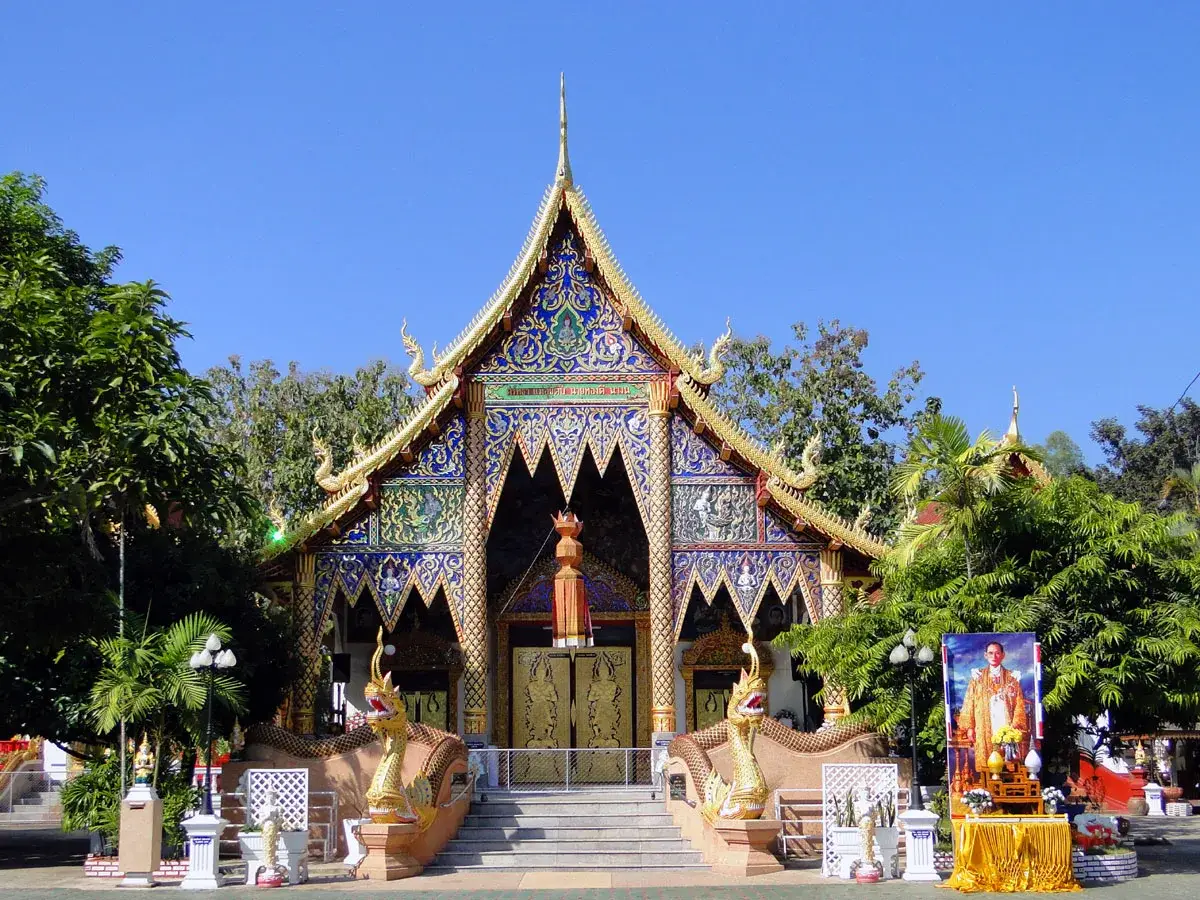
Wat Don Pao is located at No. 173, Moo 4, Ban Don Pao, Don Pao Subdistrict, Mae Wang District, Chiang Mai Province 50360. It is a local Buddhist temple under the Mahanikaya order, officially established in 1914 and granted Wisungkhamsima on 29 September 1998. The current abbot is Phra Khru Sumet Thammawong Tissawangso. Wat Don Pao is one of the most important community temples in Don Pao because of its connection with the former Wat San Khayom, Khru Ba Thamthin Thammathinno, the religious history of northern Thailand, and the development of temple communities in Mae Wang.
The significance of Wat Don Pao begins with its long history. By 2026, more than 110 years had passed since the temple was officially established in 1914. Over this long period, the temple became part of local memory through Buddhist holy days, Kathin, robe offerings, dhamma listening, family merit-making, Lanna traditions, and community events across generations. It is both a religious site and a public space for Ban Don Pao.
The temple land covers 3 rai under Nor Sor 3 title No. 50. The northern boundary measures about 60 wa and borders a road, the southern boundary measures about 56 wa and borders a road, the western boundary measures about 77 wa, and the eastern boundary measures about 71 wa and borders an irrigation-road area. The temple also has two plots of monastic land: one plot of 10 rai under Nor Sor 3 title No. 40 and another plot of 5 rai and 49 square wa. This land base supports the temple’s religious, educational, and community roles.
The main structures of Wat Don Pao include a viharn, sermon hall, monks’ residences, scripture hall, dining hall, ubosot, bell tower, kitchen, and restrooms. These structures allow the temple to support worship, dhamma listening, monastic life, scripture preservation, formal monastic acts, food preparation, and large community merit-making events. The temple therefore functions as a complete village temple rather than a small worship point.
A key highlight is the viharn, which contains mural paintings depicting the Vessantara Jataka and the life of the Buddha. These murals are valuable as both art and dhamma teaching. The Vessantara Jataka communicates generosity, sacrifice, and the perfection of giving, while scenes from the Buddha’s life help visitors understand the spiritual path from birth and awakening to teaching and passing away. The murals make the viharn an important learning space for villagers and travelers.
The ubosot is significant because Wat Don Pao has received Wisungkhamsima, allowing important formal monastic acts to be performed within the consecrated boundary. The bell tower represents the rhythm of temple life, calling the community to Buddhist activities. The scripture hall reflects the importance of preserving Buddhist teachings, while the sermon hall and community spaces allow the temple to host dhamma events, ceremonies, and village gatherings.
Wat Don Pao is also connected with education and community development. Within the temple and monastic land area are Wat Don Pao School, also known as Kong Rat Nuson School, a public library of Mae Wang District, a pavilion dedicated to His Majesty King Bhumibol Adulyadej, a weaving house, and a royal pavilion dedicated to Her Majesty Queen Sirikit. These elements show that the temple’s role extends beyond worship into education, reading, local craft, and community service.
The school connected with the temple reflects the historical role of Thai temples as learning centers. In many villages, temples were among the earliest places where children learned letters, ethics, discipline, and Buddhist values. The presence of a district library and weaving house further shows how Wat Don Pao connects religious life with knowledge and local wisdom.
The temple’s earlier history begins with Wat San Khayom, a forest temple led by Khru Ba Thamthin Thammathinno. He was the first and only abbot of Wat San Khayom and was respected as a meditation monk with deep knowledge of vipassana practice. His reputation spread across the old Phayap region, and he was respected by Chao Inthawichayanon, the seventh ruler of Chiang Mai, and by Princess Dara Rasmi.
Khru Ba Thamthin’s importance gives Wat Don Pao a deeper historical dimension. Wat San Khayom was not merely a remote forest temple; it was a center of meditation and religious respect connected with the wider Buddhist administration of northern Thailand. The temple’s later development into Wat Don Pao therefore preserves a meaningful link between forest practice, monastic leadership, and community Buddhism.
After Khru Ba Thamthin passed away, Khru Ba Metha Sumetho, one of his disciples, worked with local devotees to relocate the temple. The old temple was far from the village, making merit-making difficult, and local travel conditions were unsafe during that period. The temple was therefore moved to its present location and renamed Wat Don Pao, reflecting the community’s need for a temple closer to daily village life.
The name Don Pao is connected with the local landscape, where pao trees were believed to have grown in abundance around the present site. The change from Wat San Khayom to Wat Don Pao reflects more than a name change. It marks the shift from a forest temple setting to a village-centered temple that could better serve the community.
The development of Wat Don Pao is also connected with other temples in Don Pao Subdistrict. Khru Ba Bun Ba and another disciple went on to establish Wat Rangsi Suttharam, while Phor Nan Kham Suk, then a monk, established Wat Chai Mongkhon. This shows that Wat Don Pao served as an important religious root for the growth of several temples in the area.
Wat Don Pao has had a line of abbots, including Phra Athikan Metha Sumetho, Phra Athikan Khuna Khunawattho, Phra Athikan Bun Techi, Phra Khru Kongkham Katapunyo, Phra Khru Khosit Kalyanawat, and Phra Khru Sumet Thammawong Tissawangso. This succession reflects the temple’s continuity from its relocation period to its modern role as a community temple. The current abbot also serves in a senior ecclesiastical role at the subdistrict level, adding to the temple’s local importance.
The abbot’s role at Wat Don Pao is important because the temple includes religious buildings, educational facilities, community spaces, and historical heritage. The abbot must care for monastic life, temple property, ceremonies, village invitations, and the relationship between the temple, school, library, weaving activities, and local residents.
Wat Don Pao is recognized as a model moral community in Mae Wang. This reflects the temple’s role in promoting ethics, cooperation, public participation, and community development. The temple supports annual merit-making, education, public activities, and local wisdom such as weaving. It is therefore a living community center, not only a place for formal ritual.
Don Pao Subdistrict has a strong community history. Ban Don Pao was already a densely populated settlement when Mae Wang was still part of San Pa Tong District. Later, people expanded their farmland and surrounding villages such as Ban Rim Khan, Ban Mai Sawan, Ban Huai Niam, Ban Huai Kaew, and Ban San Pu Loei developed. When Mae Wang became a district, the name Don Pao was used for the subdistrict, making Wat Don Pao central to the identity of the area.
Wat Don Pao is suitable for travelers interested in Lanna community temples, northern Thai monastic history, mural paintings, the Vessantara Jataka, the Buddha’s life story, and Mae Wang cultural routes. Its appeal does not come from large-scale tourism, but from historical depth, community continuity, religious art, and its connection with Khru Ba Thamthin.
Visitors should begin by paying respect in the viharn and taking time to observe the murals of the Vessantara Jataka and the Buddha’s life. After that, they can walk respectfully around the ubosot, sermon hall, scripture hall, bell tower, monks’ residences, and community spaces. Because the temple remains active and is connected with a school and public facilities, visitors should behave respectfully and avoid disturbing local activities.
Traditions connected with Wat Don Pao include Buddhist Lent, the end of Buddhist Lent, Kathin, robe offerings, dhamma listening, Mahachat sermons, family merit-making, and Lanna traditions such as Poi Sang Long, Poi Luen Sip Et, and the wooden support ceremony. These activities keep the temple active throughout the year and bring villagers together through merit-making and cooperation.
During Buddhist Lent, monks remain in residence and villagers offer candles, make merit, observe precepts, and support the Sangha. After the end of Buddhist Lent, Kathin and robe-offering ceremonies help maintain the temple. Villagers often help prepare food, offerings, and the temple grounds, turning these events into acts of both faith and community cooperation.
Wat Don Pao can be the starting point for a temple route in Don Pao Subdistrict. Nearby temples include Wat Chai Mongkhon, Wat Thung Sila, Wat Rangsi Suttharam, Wat San Pu Loei, Wat Mai Mueang Sawan, Wat Huai Kaew, and Wat Luang Khun Win. This route helps visitors see how local temples in Mae Wang form a connected religious and cultural network.
For a route that combines temples and nature, visitors can continue to Ban Kat Market, Huai Manao Reservoir, Mae Wang Elephant Camp, Mae Wang bamboo rafting, Mae Wang Waterfall, and Mae Wang National Park. This makes a trip to Wat Don Pao part of a wider Mae Wang experience that includes community history, local food, water scenery, forest, and mountain routes.
Ban Kat Market and Don Pao community life add another layer to the visit. The area has local food, everyday markets, cafés, and small restaurants that reflect the living culture of Mae Wang. A good itinerary can begin with Wat Don Pao in the morning, continue to the market or nearby restaurants, and then explore natural attractions in the afternoon.
The best time to visit is in the morning or late afternoon, when the weather is more comfortable for walking around the temple. The cool season is especially pleasant in Mae Wang, while the rainy season brings green fields and mountain scenery. During rainy periods, visitors should drive carefully, especially when continuing to reservoirs, waterfalls, or mountain routes.
Getting There from Chiang Mai city can be done by following Highway 108 through Hang Dong and San Pa Tong, then turning onto Highway 1013 toward Mae Wang and Don Pao. A private car or rental car is the most convenient option because travelers can combine Wat Don Pao with Wat Chai Mongkhon, Ban Kat Market, Huai Manao Reservoir, Mae Wang Elephant Camp, Mae Wang bamboo rafting, and Wat Luang Khun Win in one route.
Travelers without a private vehicle can take public transport from Chiang Mai city to Mae Wang and continue locally to Don Pao. This requires more planning because community temples and some attractions are not always located directly at main public transport stops. A private vehicle is recommended for a flexible day trip.
Visitors should dress modestly, keep quiet inside the viharn, ubosot, sermon hall, and monastic areas, and avoid disturbing monks, students, or villagers during activities. If taking photos of people or important interiors, ask permission first. Wat Don Pao is an active temple with school and community functions, so respectful conduct is essential.
For food and accommodation, travelers can use restaurants, cafés, homestays, resorts, and guesthouses in Don Pao, Ban Kat, Mae Wang, and nearby areas. Staying overnight in Mae Wang allows more time to explore community temples, local markets, natural attractions, bamboo rafting, elephant activities, and mountain scenery without rushing back to Chiang Mai city.
In summary, Wat Don Pao is a long-established Mahanikaya community temple at No. 173, Moo 4, Ban Don Pao, Don Pao Subdistrict, Mae Wang District, Chiang Mai Province. Officially established in 1914 and granted Wisungkhamsima on 29 September 1998, the temple developed from the former Wat San Khayom and is connected with Khru Ba Thamthin Thammathinno, the former Sangharaja of the Phayap region. With its viharn murals of the Vessantara Jataka and the Buddha’s life, ubosot, sermon hall, scripture hall, bell tower, school, library, weaving house, and community spaces, Wat Don Pao is suitable for travelers who want to make merit, understand Lanna village temple life, and connect a Mae Wang route with temples, markets, nature, food, and accommodation.
| Name | Wat Don Pao |
| Former Name | Wat San Khayom |
| Temple Type | Community Buddhist Temple, Mahanikaya Order |
| Location | No. 173, Moo 4, Ban Don Pao, Don Pao Subdistrict, Mae Wang District, Chiang Mai 50360 |
| Temple Code | 350220502 |
| Establishment | Officially established in 1914 |
| Wisungkhamsima | Granted on 29 September 1998 |
| Abbot | Phra Khru Sumet Thammawong Tissawangso |
| Contact Number | 098-774-4547 |
| Temple Land Area | 3 rai, Nor Sor 3 title No. 50 |
| Boundaries | North about 60 wa borders a road, south about 56 wa borders a road, west about 77 wa, and east about 71 wa borders an irrigation-road area |
| Monastic Land | 2 plots: one 10-rai plot under Nor Sor 3 title No. 40 and one plot of 5 rai and 49 square wa |
| Main Structures | Viharn, sermon hall, monks’ residences, scripture hall, dining hall, ubosot, bell tower, kitchen, and restrooms |
| Viharn Highlight | Murals depicting the Vessantara Jataka and the life of the Buddha |
| Important Community Facilities | Wat Don Pao School, Mae Wang District library, royal pavilion dedicated to King Bhumibol Adulyadej, weaving house, and royal pavilion dedicated to Queen Sirikit |
| Important Monks | Khru Ba Thamthin Thammathinno, Khru Ba Metha Sumetho, and Phra Khru Sumet Thammawong Tissawangso |
| History | Originally Wat San Khayom in the forest. Khru Ba Metha Sumetho and local devotees later moved the temple to the present location because the original site was far from the village and difficult for merit-making. |
| Educational And Community Role | Connected with primary education, a district library, weaving activities, and community public spaces |
| Community Role | Spiritual center of Ban Don Pao, supporting worship, merit-making, dhamma listening, Kathin, robe offerings, Mahachat sermons, and village Buddhist activities |
| Local Traditions | Buddhist Lent, end of Buddhist Lent, Kathin, robe offerings, Mahachat sermons, Poi Sang Long, Poi Luen Sip Et, wooden support ceremony, and Lanna merit-making traditions |
| Current Status | Active temple in the current temple registry of Don Pao, Mae Wang, Chiang Mai, and recognized as a model moral temple community in Chiang Mai religious and cultural information |
| Travel Information | From Chiang Mai city, follow Highway 108 through Hang Dong and San Pa Tong, then turn onto Highway 1013 toward Mae Wang and Don Pao. Private car or rental car is the most convenient option. |
| Nearby Tourist Attractions | 1. Wat Chai Mongkhon, About 1 km 2. Ban Kat Market, About 2 km 3. Wat Thung Sila, About 3 km 4. Wat Rangsi Suttharam, About 4 km 5. Huai Manao Reservoir, About 8 km 6. Mae Wang Elephant Camp, About 12 km 7. Mae Wang Bamboo Rafting, About 13 km 8. Wat Luang Khun Win, About 30 km |
| Nearby Restaurants | 1. Milk Tea, About 2 km, Tel. 062-029-9905, 052-010-193 2. Mangkon Thong Boat Noodles Mae Wang Branch, About 2 km, Tel. 061-995-4008 3. Catz.B Burger Mae Wang Branch, About 3 km, Tel. 081-119-6174 4. Wanwan Coffee Huen Baan Ya Cafe', About 3 km, Tel. 093-259-4059 5. Café Amazon DD2251 PTT Mae Wang, About 3 km, Tel. 096-379-6021 6. Som Tam Ramchan, About 3 km, Tel. 095-517-0978 |
| Nearby Accommodations | 1. Ban Bon Doi Homestay & Espresso Bar, About 5 km, Tel. 089-558-3241 2. Chombua MaeWang, About 10 km, Tel. 081-903-2172 3. Namrae Maewang Phairin Resort, About 12 km, Tel. 052-001-410 4. Pok Resort MaeWang, About 12 km 5. Plern Malee Resort, About 18 km 6. Maewang Jinxiang Gold Elephant Park, About 18 km |
Frequently Asked Questions (FAQ)
Q: Where is Wat Don Pao located?
A: Wat Don Pao is located at No. 173, Moo 4, Ban Don Pao, Don Pao Subdistrict, Mae Wang District, Chiang Mai Province 50360.
Q: What was the former name of Wat Don Pao?
A: Wat Don Pao was formerly known as Wat San Khayom, a forest temple before it was moved to the present location and renamed Wat Don Pao.
Q: When was Wat Don Pao officially established?
A: Wat Don Pao was officially established in 1914 and received Wisungkhamsima on 29 September 1998.
Q: Who is the abbot of Wat Don Pao?
A: The abbot is Phra Khru Sumet Thammawong Tissawangso.
Q: How is Khru Ba Thamthin Thammathinno connected with Wat Don Pao?
A: Khru Ba Thamthin Thammathinno was the first and only abbot of the former Wat San Khayom, the historical root of today’s Wat Don Pao.
Q: What is the main highlight of Wat Don Pao?
A: The main highlight is the viharn with murals depicting the Vessantara Jataka and the life of the Buddha, along with the temple’s deep connection to Khru Ba Thamthin and Don Pao’s temple network.
Q: What is Wat Don Pao’s role in the community?
A: It is a spiritual center, merit-making site, learning space, and community area connected with a school, district library, weaving house, and public activities.
Q: What nearby places can travelers visit after Wat Don Pao?
A: Nearby places include Wat Chai Mongkhon, Ban Kat Market, Wat Thung Sila, Wat Rangsi Suttharam, Huai Manao Reservoir, Mae Wang Elephant Camp, Mae Wang bamboo rafting, and Wat Luang Khun Win.
 Category: ●Places of Worship
 Group: ●Temple
Last Update : 1 MonthAgo
 Last Update : 1 MonthAgo
 Click to Access the Navigation Map GPS

 Muang Chiang Mai(121)Chom Thong(47)Mae Chaem(25)Chiang Dao(33)Doi Saket(68)Mae Taeng(85)Mae Rim(69)Samoeng(29)Fang(71)Mae Ai(59)Phrao(70)San Pa Tong(103)San Kamphaeng(66)San Sai(73)Hang Dong(73)Hot(32)Doi Tao(22)Omkoi(11)Saraphi(74)Wiang Haeng(15)Chai Prakan(28)Mae Wang(32)Mae On(22)Doi Lo(33)Galyani Vadhana(1)


