
lovethailand home >North Travel Attractions >Chiang Mai Travel Attractions >Mae Rim >Sa Luang > Wat Pa Huai Som Suk
TL;DR: Wat Pa Huai Som Suk is located at Ban Huai Som Suk, Saluang Subdistrict, Mae Rim District, Chiang Mai Province, open Daily, hours Morning To Late Afternoon.

Wat Pa Huai Som Suk
Open Days: Daily
Opening Hours: Morning To Late Afternoon
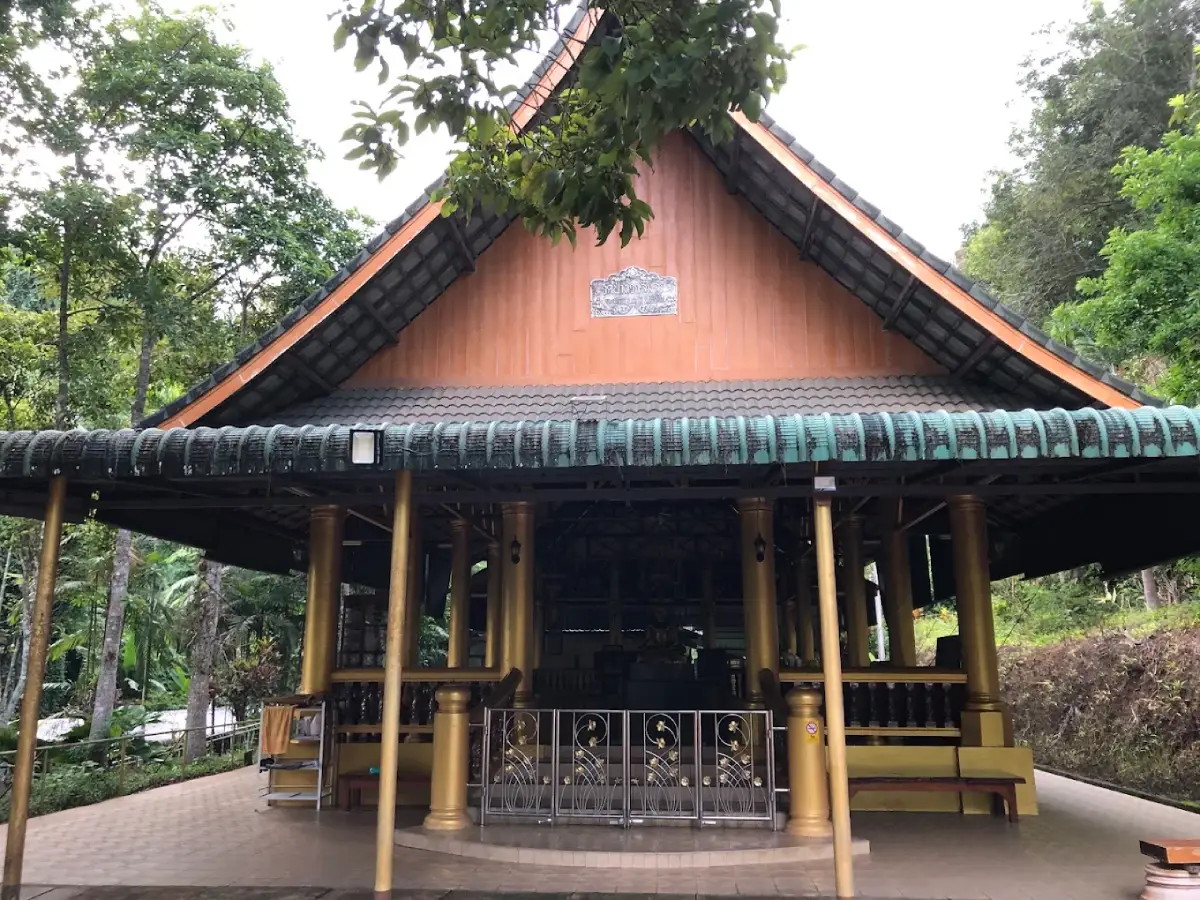
Wat Pa Huai Som Suk is located in the Ban Huai Som Suk area of Saluang Subdistrict, Mae Rim District, Chiang Mai Province, postal code 50330. This site has a distinctive identity because it is connected with an abandoned temple, an old forest landscape, a village founded after the timber-concession period, and the meditation route used by forest monks traveling toward Wat Phra Phutthabat Si Roi. It should therefore be understood not simply as a sightseeing stop, but as a place where nature, local history, Buddhist memory, and forest meditation come together.
The current status of Wat Pa Huai Som Suk requires careful presentation. The Chiang Mai Provincial Office of Buddhism referred to the site as “Wat Pa Huai Som Suk (abandoned)” and recorded an official field visit on 30 August 2023 to process a request for restoration and elevation of the abandoned temple into a temple with resident monks. For this reason, this article presents Wat Pa Huai Som Suk as a sacred site, a former abandoned temple, and a meditation-related place, rather than as a fully developed tourist temple with complete visitor facilities.
The significance of Wat Pa Huai Som Suk begins with Ban Huai Som Suk itself. The village is in Saluang Subdistrict, Mae Rim District, about 30 kilometers from Mae Rim town, on the route toward Wat Phra Phutthabat Si Roi. The area was formerly part of a timber concession operated by Thai Phatthana Company, where teak was the dominant timber. After the concession ended, the area became degraded forest. Early settlers who had worked in the area saw that the foothill plains were suitable for farming, so they cleared and leveled land for rice fields, upland crops, and houses. The village began to take shape from 1961 onward.
This settlement background gives Wat Pa Huai Som Suk a meaning that goes beyond the temple boundary. The temple is connected with a landscape that changed from timber concession land to degraded forest, then to cultivated land and a village community. For the people of Ban Huai Som Suk, the area around the temple is part of a shared memory of settlement, forest, agriculture, faith, and community life.
The name “Huai Som Suk” has several origin stories. One tradition says that when the Buddha arrived in this area, oranges and forest fruits ripened at the right time and were offered to him, giving the place the name Huai Som Suk. Another explanation connects the name with three streams that meet in the village area: Huai Pong, Huai Mae Lo, and Huai Hia. The original phrase “Huai Sam Sop” may have gradually changed into Huai Som Suk. A third story links the name with a local plant called som suk, a medium-sized shrub with bright whitish undersides of leaves that grows along streams.
Wat Pa Huai Som Suk was originally an abandoned temple. After early villagers settled and expanded agricultural areas, they discovered traces of an old temple north of the village. These included ancient objects and remains suggesting that a temple had existed there before. Later, forest monks and meditation monks traveling toward Wat Phra Phutthabat Si Roi often stopped to pitch their umbrellas and meditate at the old abandoned temple site. Through this practice, the place gradually regained religious meaning.
The connection with Thai forest monks is central to the identity of Wat Pa Huai Som Suk. Local and forest-tradition sources describe the area as a forest meditation site in the lineage of Phra Ajahn Mun Bhuridatto. The site lies not far before Wat Phra Phutthabat Si Roi, and stories mention Luang Pu Mun, Luang Pu Waen, Luang Pu Teu, and other meditation monks who stopped in the area on their way to pay respect at the sacred footprint site. These associations give Wat Pa Huai Som Suk a deeper spiritual dimension.
Wat Pa Huai Som Suk is therefore best approached as a forest meditation site. Its value lies in stillness, simplicity, and historical memory, not in large-scale architecture or tourist facilities. Visitors should enter the area respectfully, speak quietly, dress properly, and avoid disturbing monks, practitioners, or local residents. This is especially important because the site carries the character of a former abandoned temple and a place of practice.
The atmosphere of Wat Pa Huai Som Suk is shaped by mountains, forest, streams, and the village of Ban Huai Som Suk. The village lies along the route to Wat Phra Phutthabat Si Roi and near natural attractions such as Sai Mok Waterfall, which local sources identify as a recommended attraction in Saluang Subdistrict. This setting reinforces the forest-temple character of the place and gives visitors a quieter view of Mae Rim beyond cafés and mainstream sightseeing.
Publicly available information confirms that the old temple site contained traces of a former religious place. Later accounts also mention a meditation hall, lay accommodation, monastic shelters, bathrooms, and walking-meditation paths built in simple forest-temple style to support teachers and practitioners. These details show that the site was shaped primarily for practice and retreat rather than for sightseeing architecture.
The most important things to observe at Wat Pa Huai Som Suk are the forest-temple atmosphere, the meditation spaces, the memory of the abandoned temple, and the link with the route to Wat Phra Phutthabat Si Roi. Public sources do not provide enough verified detail about a formal ubosot, chedi, relic shrine, principal Buddha image, or named major structures. The temple should therefore be appreciated as a Dhamma site and former abandoned temple under restoration, rather than as a large landmark temple.
Religious activities at Wat Pa Huai Som Suk should be understood through its forest-temple and village context. Activities may relate to Buddhist holy days, merit-making, Kathin, robe-offering ceremonies, meditation practice, and restoration or support work for the temple site. No official annual festival calendar for general tourists is publicly confirmed. Visitors who wish to join specific activities should check with local residents or temple-related contacts in the area before traveling.
The community role of Wat Pa Huai Som Suk can be understood in three ways. Spiritually, it gives villagers and pilgrims a place for worship, merit-making, and reflection. Historically, it preserves the memory of an old abandoned temple in Ban Huai Som Suk. Practically, it has served as a meditation stop for forest monks traveling toward Wat Phra Phutthabat Si Roi. These roles make the site valuable beyond its appearance on a map.
A travel route from Wat Pa Huai Som Suk can be planned around Saluang’s cultural and natural landscape. Visitors can combine the site with Ban Huai Som Suk, Sai Mok Waterfall, Wat Pa Saluang, Wat Saluang, Wat Phra Phutthabat Si Roi, Khun Luang Wilangkha Stupa, and the Mae Rim-Samoeng route. Because distances in Saluang can be significant and some roads pass through rural or mountain areas, travelers should plan time carefully.
Wat Pa Huai Som Suk is suitable for visitors who want quiet worship, people interested in forest meditation, travelers following the route to Wat Phra Phutthabat Si Roi, those interested in abandoned temple history, and visitors who want to understand the Saluang area beyond standard Mae Rim tourism. Its strength lies in its calm setting, its abandoned-temple story, its link with forest monks, and its connection with the Ban Huai Som Suk community.
Visitors should dress respectfully, keep their voices low, avoid music or noisy activity, and not enter monastic or restricted areas without permission. Photography should be done with care, especially around monks, practitioners, and sacred spaces. Visitors should not leave waste in the temple area or along nearby natural routes. A good visit to a forest temple means reducing disturbance and preserving the quiet character of the place.
Getting There is most convenient by private car. From Chiang Mai city, travel toward Mae Rim District, then continue to Saluang Subdistrict and Ban Huai Som Suk. The route connects with the road toward Wat Phra Phutthabat Si Roi and mountain areas of Saluang. Morning and late afternoon are the best times for a quiet visit and more comfortable weather, especially if continuing to Sai Mok Waterfall or other destinations in the Mae Rim-Samoeng area.
In summary, Wat Pa Huai Som Suk is an important sacred site in Ban Huai Som Suk, Saluang Subdistrict, Mae Rim District, Chiang Mai Province. It is connected with an abandoned temple, old religious traces, a village founded after the timber-concession period, and forest monks traveling toward Wat Phra Phutthabat Si Roi. Although its current status should not be treated like a fully developed tourist temple, its cultural and spiritual value is clear as a forest meditation site, a community memory space, and a quiet Dhamma place in the Saluang landscape.
| Name | Wat Pa Huai Som Suk |
| Location | Ban Huai Som Suk, Saluang Subdistrict, Mae Rim District, Chiang Mai Province |
| Address | Rural Road 3010, Saluang Subdistrict, Mae Rim District, Chiang Mai 50330, Thailand |
| Area Context | Ban Huai Som Suk, Moo 7, Saluang Subdistrict, about 30 km from Mae Rim town, on the route toward Wat Phra Phutthabat Si Roi |
| Site Status | Former abandoned temple and sacred site with a government process recorded for restoration and elevation into a temple with resident monks |
| Highlights | Forest temple site linked with abandoned-temple remains, local settlement after the timber-concession period, and forest monks traveling toward Wat Phra Phutthabat Si Roi |
| History | Ban Huai Som Suk began developing from 1961 after local settlers cleared former degraded concession forest for farming; the old temple site later became a meditation stop for forest monks |
| Name Origin | Linked with traditions about ripened oranges and forest fruits, the meeting of three streams formerly called Huai Sam Sop, and a local plant called som suk |
| Important Areas | Former abandoned temple area, meditation spaces, meditation hall, lay accommodation, monastic shelters, bathrooms, and walking-meditation paths |
| Distinctive Features | Quiet forest-temple atmosphere connected with meditation practice and the route to Wat Phra Phutthabat Si Roi |
| Community Role | A sacred memory site of Ban Huai Som Suk, a former abandoned temple area, and a meditation-related place in Saluang Subdistrict |
| Open Days | Daily |
| Opening Hours | Morning To Late Afternoon |
| Current Status | Listed in travel, local, map, and Chiang Mai Provincial Office of Buddhism sources under the name Wat Pa Huai Som Suk |
| Travel Information | Travel by private car from Chiang Mai city toward Mae Rim District, then continue to Saluang Subdistrict and Ban Huai Som Suk on the route toward Wat Phra Phutthabat Si Roi |
| Nearby Tourist Attractions | 1. Ban Huai Som Suk, about 1 km 2. Sai Mok Waterfall, about 3 km 3. Wat Pa Saluang, about 10 km 4. Wat Saluang, about 11 km 5. Wat Phra Phutthabat Si Roi, about 12 km 6. Khun Luang Wilangkha Stupa, about 16 km 7. Queen Sirikit Botanic Garden, about 28 km |
| Nearby Restaurants | 1. Petchburirama, about 13 km, Tel. 090-840-0030 2. Coffee Saijai, about 15 km, Tel. 081-163-4822 3. Kieng Namrim, about 18 km, Tel. 085-929-1746 4. Banchong Cups Cakes Cookies, about 19 km, Tel. 063-791-6165 5. Baan Suan Mae Rim, about 24 km, Tel. 053-297-421, 088-266-5549 6. Rabieng Na Maerim, about 27 km, Tel. 080-802-6633 |
| Nearby Accommodations | 1. Secret Window Chiangmai, about 13 km, Tel. 095-747-9580 2. MJ Homestay & Camping, about 14 km 3. Mon Chom Dao @ Saluang, about 16 km, Tel. 065-553-9690 4. Forest Falls Garden, about 20 km, Tel. 064-609-4618 5. The Meadow Resort & Glamping, about 21 km, Tel. 081-931-2583 6. BaanNakanoHomestay, about 22 km |
Frequently Asked Questions (FAQ)
Q: Where is Wat Pa Huai Som Suk located?
A: Wat Pa Huai Som Suk is located in the Ban Huai Som Suk area of Saluang Subdistrict, Mae Rim District, Chiang Mai Province 50330.
Q: Is Wat Pa Huai Som Suk a fully active tourist temple?
A: Wat Pa Huai Som Suk is connected with a former abandoned temple. The Chiang Mai Provincial Office of Buddhism recorded a process to restore and elevate the abandoned temple into a temple with resident monks, so visitors should treat it as a quiet sacred site rather than a fully developed tourist temple.
Q: What is the main highlight of Wat Pa Huai Som Suk?
A: Its main highlight is its forest-temple atmosphere, abandoned-temple history, ancient traces, and association with forest monks traveling toward Wat Phra Phutthabat Si Roi.
Q: What is the history of Ban Huai Som Suk?
A: Ban Huai Som Suk developed after the end of the timber-concession period, when settlers cleared former degraded forest for farming and began forming the village from 1961 onward.
Q: What does the name Huai Som Suk mean?
A: The name is linked with several traditions, including ripened oranges and forest fruits in a Buddhist legend, the meeting of three streams originally called Huai Sam Sop, and a local plant called som suk.
Q: What type of visitor is Wat Pa Huai Som Suk suitable for?
A: It is suitable for visitors who want a quiet forest-temple experience, an interest in meditation routes, abandoned temple history, and travel toward Wat Phra Phutthabat Si Roi.
Q: What nearby places can be visited with Wat Pa Huai Som Suk?
A: Nearby places include Ban Huai Som Suk, Sai Mok Waterfall, Wat Pa Saluang, Wat Saluang, Wat Phra Phutthabat Si Roi, Khun Luang Wilangkha Stupa, and the Mae Rim-Samoeng route.
 Category: ●Places of Worship
 Group: ●Temple
Last Update : 2 MonthAgo
 Last Update : 2 MonthAgo
 Click to Access the Navigation Map GPS
Wat Pa Huai Som Suk Map
Recommend

 Muang Chiang Mai(121)Chom Thong(47)Mae Chaem(25)Chiang Dao(33)Doi Saket(68)Mae Taeng(85)Mae Rim(69)Samoeng(29)Fang(71)Mae Ai(59)Phrao(70)San Pa Tong(103)San Kamphaeng(66)San Sai(73)Hang Dong(73)Hot(32)Doi Tao(22)Omkoi(11)Saraphi(74)Wiang Haeng(15)Chai Prakan(28)Mae Wang(32)Mae On(22)Doi Lo(33)Galyani Vadhana(1)


