
lovethailand home >North Travel Attractions >Chiang Mai Travel Attractions >Mae Rim >Huai Sai > Wat Walukaram (Huai Sai)
TL;DR: Wat Walukaram (Huai Sai) is located at Moo 3, Huai Sai Subdistrict, Mae Rim District, Chiang Mai Province, open Daily, hours 08.00 – 17.00.

Wat Walukaram (Huai Sai)
Open Days: Daily
Opening Hours: 08.00 – 17.00
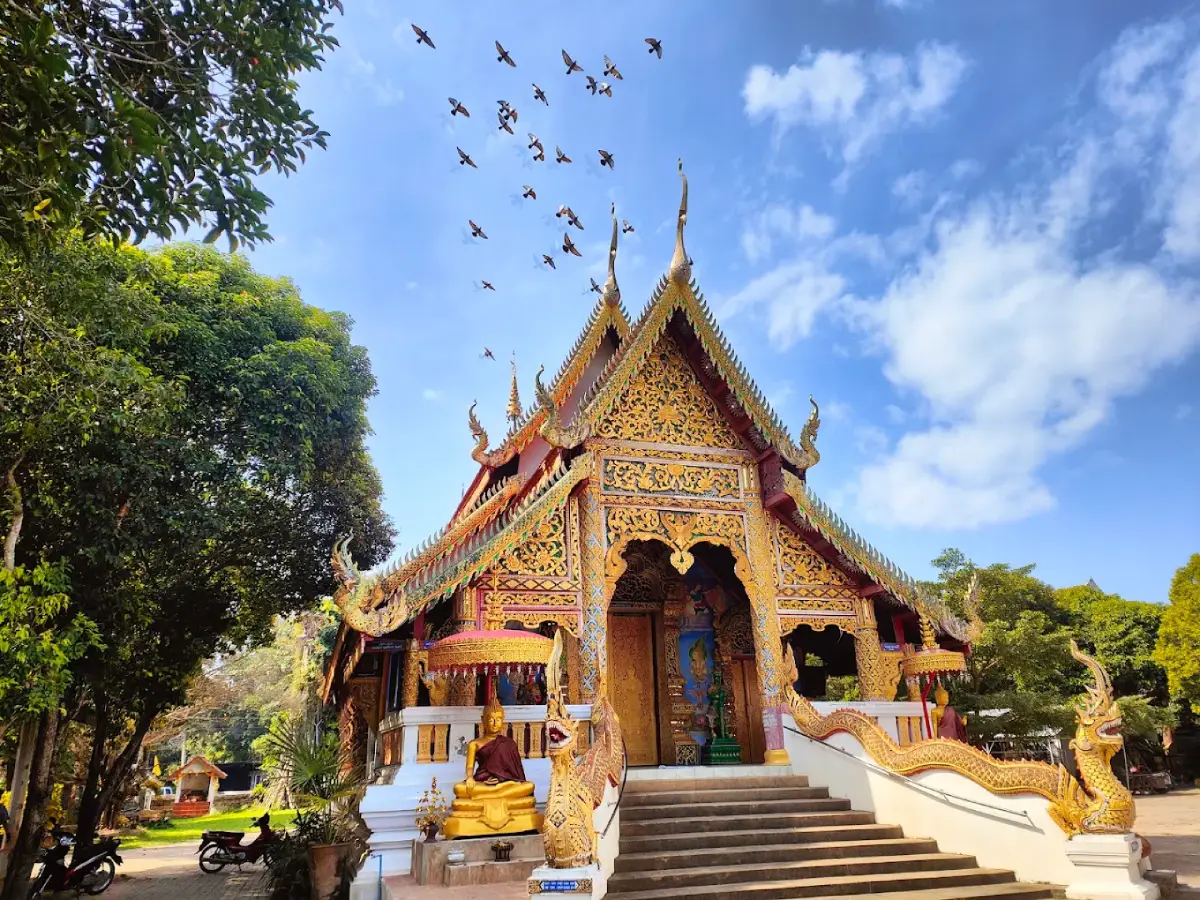
Wat Walukaram (Huai Sai) is located at No. 159, Moo 3, Huai Sai Subdistrict, Mae Rim District, Chiang Mai Province. It is a local Buddhist temple under the Mahanikaya order with a history closely tied to Ban Huai Sai, the old stream beside the temple, the Mae Rim River, and the Lanna tradition of carrying sand into the temple during Songkran. The temple was established in 1913 and was granted Wisungkhamsima on 7 February 1918. Local villagers originally called it Wat Huai Sai, a name that came from the stream south of the temple where rainwater once carried soil, mud, and fine white sand down from the eastern hills toward the Mae Rim River.
Wat Walukaram is more than a small village temple in Huai Sai. It is a spiritual and cultural center that reflects the relationship between a temple, a farming community, local waterways, and Lanna Buddhist customs. The temple land covers 3 rai and 84 square wah under Nor Sor 3 land documentation. Its northern boundary adjoins private farmland, the southern boundary meets a public road, the eastern boundary meets private farmland, and the western boundary meets the Mae Rim River. This setting shows how closely the temple is connected with local agriculture, water systems, and everyday village life.
The old name Wat Huai Sai carries a deeper meaning than a simple place name. In the rainy season, water from the mountains to the east used to flow down the stream, carrying soil, mud, and white sand. When the water receded, fine white sand remained along the stream bed. Villagers collected this sand for household construction and other practical uses. During Songkran, known locally as the Lanna New Year, villagers would carry sand back into the temple and build sand pagodas. This tradition expressed the belief that people may have unintentionally carried sand out of the temple during the year, so returning sand to the temple became a symbolic act of merit-making and spiritual renewal.
Later, when roads were built into the village and the old stream area was modified into a reservoir, the natural flow of sand was no longer the same as in the past. The physical landscape changed, but the memory of the stream, the white sand, and the annual sand-carrying tradition remained central to the temple’s identity. This gives Wat Walukaram a distinctive cultural depth. Its history is rooted not only in Buddhist records, but also in local ecology, water movement, village labor, and shared community memory.
The granting of Wisungkhamsima on 7 February 1918 is an important milestone in the temple’s history. In Thai Buddhism, a Wisungkhamsima marks the formal monastic boundary used for key Sangha ceremonies. This status allowed the temple to support important religious functions, including ordination-related rites and other monastic acts that require a recognized sacred boundary. The early granting of this boundary shows that Wat Walukaram had already become an important Buddhist institution for the Huai Sai community in the early 20th century.
Important structures and sacred objects at Wat Walukaram include the ubosot, monks’ residences, an alms bowl pavilion, and Buddha images. The ubosot is the main sacred building for monastic ceremonies. The monks’ residences support daily monastic life, while the alms bowl pavilion relates to merit-making and offerings from local residents. The Buddha images form the devotional center of the temple, where visitors and villagers pay respect, chant, make merit, and reflect quietly. These elements represent the character of a functional Lanna village temple that continues to serve its community.
The atmosphere of Wat Walukaram is calm, modest, and local. It is not a large commercial tourist site, but a temple for travelers who want to understand the quieter cultural side of Mae Rim. The temple’s value lies in its long history since 1913, its relationship with Ban Huai Sai, and its connection with the Lanna custom of carrying sand into the temple during Songkran. A visit here is suitable for those interested in village Buddhism, local traditions, and cultural routes beyond the usual tourist stops of Mae Rim.
The sand-carrying tradition is the cultural heart of Wat Walukaram. During the Lanna New Year, villagers bring sand into the temple and build sand pagodas. This act is not merely decorative. It represents making merit together, respecting the temple grounds, and symbolically returning what may have been taken away from the temple throughout the year. Even though the original stream no longer carries sand in the same way, the story still explains the spiritual logic behind the old name Wat Huai Sai and the temple’s relationship with its community.
Wat Walukaram also plays an important role as a community center in Huai Sai Subdistrict. Village temples like this are places for Buddhist observances, merit-making, Songkran activities, Kathin, robe-offering ceremonies, seasonal religious events, and community gatherings. The temple helps maintain the connection between local residents and Buddhism across generations. Its role is quiet but essential, preserving both faith and cultural memory within the village.
The name Walukaram is closely associated with sand. When viewed together with the former name Wat Huai Sai and the local tradition of returning sand to the temple, the name reflects the temple’s landscape and cultural background. This makes Wat Walukaram a meaningful stop for travelers interested in how temple names, geography, and local customs can preserve the identity of a community over time.
Wat Walukaram can be included in a broader Mae Rim cultural route. Visitors can begin with a quiet visit to the temple, then continue to nearby temples and attractions such as Wat Mae An, Wat Tamnak Tham Nimit, Wat Sawang Phet, Wat Phra Phutthabat Si Roi, Mae Sa Waterfall, and Queen Sirikit Botanic Garden. This route is suitable for travelers who want a mix of local temples, village culture, nature, restaurants, cafés, and accommodations around Mae Rim.
Visitors should dress respectfully, speak quietly, and remember that Wat Walukaram is an active religious site for the local community. Photography should be done with care, especially around monks, worshippers, and sacred objects. During festivals or merit-making days, visitors should give priority to the religious atmosphere and local customs rather than treating the temple only as a sightseeing stop.
Getting There is most convenient by private car. From Chiang Mai city, travel toward Mae Rim District, then continue into Huai Sai Subdistrict and Ban Huai Sai. The temple is suitable for a short cultural visit, a half-day route, or a day trip combined with other attractions in Mae Rim. Morning and late afternoon are good times to visit for a quieter atmosphere and more comfortable weather.
| Name | Wat Walukaram (Huai Sai) |
| Former Name | Wat Huai Sai |
| Location | Moo 3, Huai Sai Subdistrict, Mae Rim District, Chiang Mai Province |
| Address | No. 159, Moo 3, Huai Sai Subdistrict, Mae Rim District, Chiang Mai 50180, Thailand |
| Buddhist Order | Mahanikaya |
| Highlights | Historic village temple connected with a former stream, white sand deposits, the Mae Rim River, and the Lanna tradition of carrying sand into the temple during Songkran |
| History | Founded in 1913 and granted Wisungkhamsima on 7 February 1918 |
| Name Origin | The former name Wat Huai Sai came from the stream south of the temple where fine white sand once accumulated after the rainy season |
| Temple Land Area | 3 rai and 84 square wah under Nor Sor 3 land documentation |
| Boundaries | North: private farmland; South: public road; East: private farmland; West: Mae Rim River |
| Distinctive Features | Quiet Lanna community temple with a local history shaped by sand, waterways, and Songkran merit-making customs |
| Main Areas / Zones | Ubosot, monks’ residences, alms bowl pavilion, and Buddha image area |
| Sacred Objects | Buddha images inside the temple |
| Important Tradition | Carrying sand into the temple and building sand pagodas during Songkran or the Lanna New Year |
| Community Role | Spiritual center of Ban Huai Sai, supporting merit-making, Buddhist observances, local traditions, and community gatherings |
| Current Status | Listed in current temple, map, and business information sources for Huai Sai Subdistrict, Mae Rim District, Chiang Mai Province |
| Open Days | Daily |
| Opening Hours | 08.00 – 17.00 |
| Main Contact Number | 053-301-177 |
| Travel Information | Travel by private car from Chiang Mai city toward Mae Rim District, then continue into Huai Sai Subdistrict and Ban Huai Sai |
| Nearby Tourist Attractions | 1. Wat Mae An, about 3 km 2. Wat Tamnak Tham Nimit, about 3 km 3. Wat Sawang Phet, about 4 km 4. Wat Phra Phutthabat Si Roi, about 16 km 5. Mae Sa Waterfall, about 15 km 6. Queen Sirikit Botanic Garden, about 21 km |
| Nearby Restaurants | 1. Som Tam Zaeb Huai Sai, about 2 km, Tel. 062-854-7681 2. Lab Lung Sen, about 4 km, Tel. 065-592-2158 3. Da Fu Mala Ban Oi Mae Rim, about 4 km, Tel. 063-259-8663 4. Rab-a-bit.cnx, about 5 km, Tel. 081-902-2929 5. NANEE : maerim lake view, about 6 km, Tel. 099-385-5544 6. Baan Landai Mae Rim, about 10 km, Tel. 064-469-2929 |
| Nearby Accommodations | 1. Natura Maerim Resort, about 1 km, Tel. 064-046-9919 2. Country Retreat, about 3 km, Tel. 094-740-1590 3. BaanNakanoHomestay, about 1 km 4. The Meadow Resort & Glamping, about 5 km, Tel. 081-931-2583 5. Mae Wad House, about 6 km, Tel. 083-004-4398 6. Maerim Lanna Resort, about 7 km, Tel. 099-371-8626 |
Frequently Asked Questions (FAQ)
Q: Where is Wat Walukaram (Huai Sai) located?
A: Wat Walukaram (Huai Sai) is located at No. 159, Moo 3, Huai Sai Subdistrict, Mae Rim District, Chiang Mai Province.
Q: What was the former name of Wat Walukaram?
A: The temple was formerly called Wat Huai Sai because of the stream south of the temple where fine white sand once accumulated after the rainy season.
Q: When was Wat Walukaram established?
A: Wat Walukaram was established in 1913 and was granted Wisungkhamsima on 7 February 1918.
Q: What important tradition is associated with Wat Walukaram?
A: The temple is associated with the Lanna tradition of carrying sand into the temple and building sand pagodas during Songkran or the Lanna New Year.
Q: What important structures are found inside Wat Walukaram?
A: Important areas include the ubosot, monks’ residences, alms bowl pavilion, and Buddha image area.
Q: What kind of travelers is Wat Walukaram suitable for?
A: It is suitable for travelers interested in quiet temple visits, merit-making, Lanna traditions, local history, and community-based cultural travel in Mae Rim.
Q: What nearby places can be visited with Wat Walukaram?
A: Nearby places include Wat Mae An, Wat Tamnak Tham Nimit, Wat Sawang Phet, Wat Phra Phutthabat Si Roi, Mae Sa Waterfall, and Queen Sirikit Botanic Garden.
 Category: ●Places of Worship
 Group: ●Temple
Last Update : 2 MonthAgo
 Last Update : 2 MonthAgo
 Click to Access the Navigation Map GPS
Wat Walukaram (Huai Sai) Map
Recommend

 Muang Chiang Mai(121)Chom Thong(47)Mae Chaem(25)Chiang Dao(33)Doi Saket(68)Mae Taeng(85)Mae Rim(69)Samoeng(29)Fang(71)Mae Ai(59)Phrao(70)San Pa Tong(103)San Kamphaeng(66)San Sai(73)Hang Dong(73)Hot(32)Doi Tao(22)Omkoi(11)Saraphi(74)Wiang Haeng(15)Chai Prakan(28)Mae Wang(32)Mae On(22)Doi Lo(33)Galyani Vadhana(1)


