
lovethailand home >North Travel Attractions >Chiang Mai Travel Attractions >Mae Rim >San Pong > Wat San Pong
TL;DR: Wat San Pong is located at Ban San Pong, Moo 3, San Pong Subdistrict, Mae Rim District, Chiang Mai Province, open Daily, hours 08.00 – 17.00.

Wat San Pong
Open Days: Daily
Opening Hours: 08.00 – 17.00
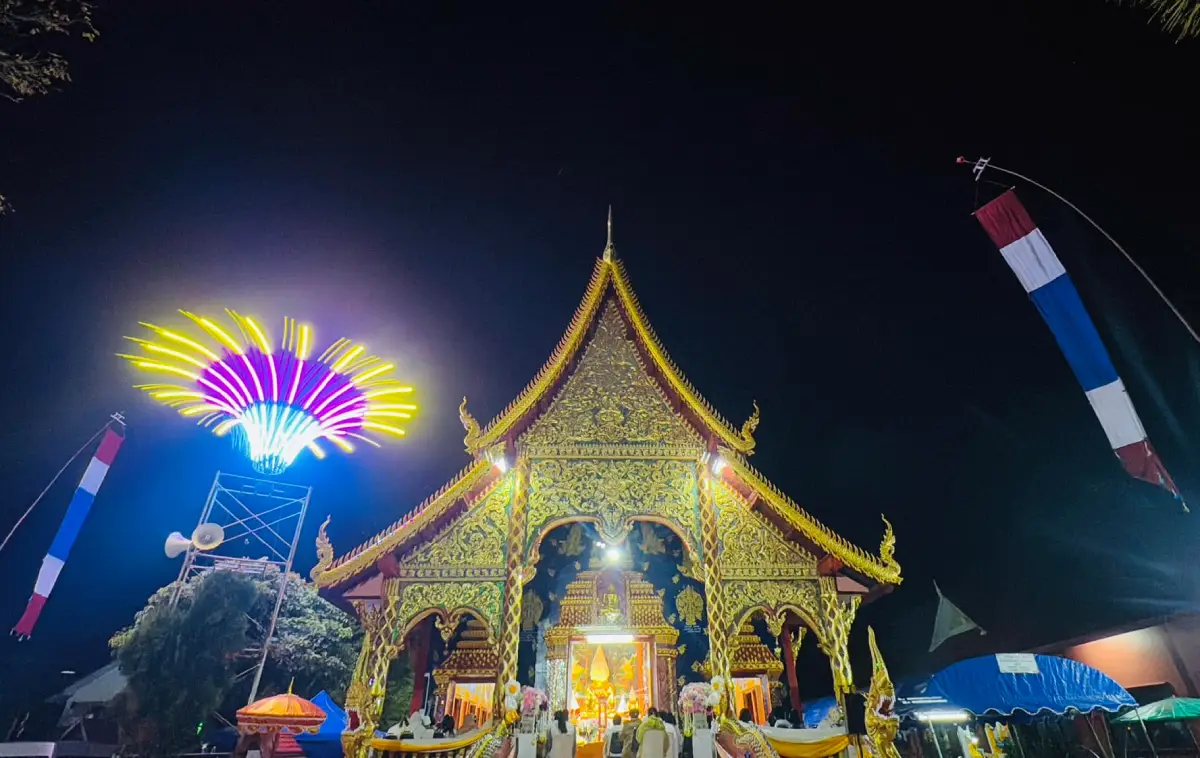
Wat San Pong, also known as Wat San Pong (San Pong), is a Maha Nikaya Buddhist temple located in Ban San Pong, Moo 3, San Pong Subdistrict, Mae Rim District, Chiang Mai Province 50180. It is one of the most historically important community temples in San Pong because its history is closely connected with the founding of Ban San Pong itself. Local history records that the village and temple were established around 1682 by early settlers from Pa Sang Hueang, now associated with Pa Sang Ngam in Pa Sang District, Lamphun Province.
Wat San Pong is significant not only as a place of worship, but also as a key to understanding the name and formation of the local community. The name San Pong refers to a raised ridge of land with mineral-rich soil known as din pong or aromatic mineral earth. In the past, cattle, buffaloes, and other animals were drawn to this soil and came to lick or eat it in the area north of the temple. The landscape memory behind the name later became the identity of the village, the subdistrict, and the temple itself.
The founding story of Ban San Pong mentions Pu Leng and Pu Phaen, together with a group of five people, who traveled from Pa Sang Hueang in Lamphun along the Ping River in search of lowland suitable for settlement and cultivation. When they reached the area now known as San Pong, they found a fertile lowland and cleared the forest to establish a village. A temple was built in the middle of the original settlement. That first temple site later became abandoned because the old village area was repeatedly flooded by Huai Luang during the rainy season.
The relocation of the temple to the north, where the present Wat San Pong stands, is an important part of local history. The villagers did not simply move their houses; they moved their spiritual center with them. In a Lanna village, a temple is the heart of the community. When the original location became unsuitable because of repeated flooding, the community moved the temple and the village settlement to a safer location. This is why the present village developed along its current alignment with Wat San Pong as a central religious and social space.
Ban San Pong was once a large village and an important center of San Pong Subdistrict. Over time, local administration was divided into additional villages, including Ban Mo in Moo 6 and Ban Mai Chom Taeng in Moo 11. This makes Wat San Pong important at the subdistrict level, because it is connected with the older community center from which nearby settlements later developed.
Historical temple records state that Wat San Pong is located in Ban San Pong, Moo 3, San Pong Subdistrict, Mae Rim District, Chiang Mai Province. The temple land covers 5 rai, 1 ngan and 24 square wah, and the temple also has four plots of monastic land totaling 7 rai, 1 ngan and 26 square wah. This land base reflects the temple’s established role as a community institution with sufficient space for religious buildings, ceremonies, and village activities.
Wat San Pong was granted Wisungkhamsima on January 31, 1950. The sacred boundary measures 40 meters wide and 80 meters long. Wisungkhamsima is important because it defines a formal boundary for Sangha acts, especially those connected with the ubosot and monastic ceremonies. This status gives the temple a complete ritual role within the Buddhist monastic system, not merely a local devotional function.
The temple buildings recorded at Wat San Pong include an ubosot, monks’ residences, viharn, multipurpose hall, funerary merit-making hall, dining hall, and a Tripitaka hall decorated with carved kanok motifs, lacquer, and gilding. These structures show the broad role of the temple. It supports monastic practice, lay worship, community meetings, funerary merit-making, religious learning, and the preservation of Buddhist texts and sacred objects.
Sacred objects recorded at the temple include Buddha images in Singha Three, Singha One, and Singha Two styles, a Buddha image in the reflection posture, a Maravijaya Buddha image, two disciple images, and a teakwood chest. These objects are meaningful for visitors interested in Lanna Buddhist art. The Singha-style Buddha images are especially connected with northern Thai artistic heritage, while the Maravijaya and reflection postures carry important Buddhist meanings.
The Maravijaya posture represents the Buddha’s victory over Mara before enlightenment and symbolizes firmness of mind, victory over defilements, and commitment to Dhamma. The reflection posture suggests contemplation and deep awareness. Together with the Singha-style Buddha images, these sacred objects make Wat San Pong valuable not only as a village temple but also as a place where Lanna devotional art and local Buddhist memory remain present.
The Tripitaka hall is another important feature. A hall used for Buddhist scriptures reflects the temple’s role in preserving Dhamma and religious learning. The carved kanok motifs, lacquer, and gilding also show the devotional craftsmanship associated with Lanna Buddhist art. Visitors should therefore see Wat San Pong as a temple with both community value and cultural value.
Historical records list several former abbots, including Khruba Kaew, Phra Khru Suphatthakhun Suphattho, Phra Athikan Bunlong Thinunko, Phra Khru Palat Thawon Panyawachiro, Phra Duangta Thawaro, and Phra Chanthip Kittipanyo. Recent 2025 Kathin information names Phra Khru Bunsong Aphiwatthado as the current abbot and records five monks in residence. This confirms that the temple remains active in contemporary Buddhist life.
Wat San Pong also had an educational role in the past. The temple hosted a Phra Pariyattidhamma school for Dhamma studies between 1933 and 1968, and the temple also had a village reading space. This reflects a common function of rural Thai and Lanna temples: they were not only ritual spaces but also learning centers before modern education was fully accessible.
Recent temple activity includes Kathin information for 2025, with the Kathin ceremony scheduled for October 26, 2025 at 14.00. Kathin is an important annual Buddhist event after the end of Buddhist Lent. Lay supporters offer robes and donations to monks to support the temple. The continued presence of Kathin activity and resident monks confirms that Wat San Pong remains an active community temple.
The religious traditions of Wat San Pong follow the Buddhist and Lanna community calendar. These include Buddhist holy day merit-making, Buddhist Lent, the end of Lent, Kathin, robe-offering events, funerary merit-making, and village merit-making occasions. These activities keep the relationship between monks and local residents alive and help maintain the temple as a spiritual center of Ban San Pong.
The role of Wat San Pong can be understood in several layers. First, it is a Buddhist place for worship, sermons, merit-making, and ceremonies. Second, it is a historical anchor connected with the founding and relocation of Ban San Pong. Third, it is a social space where villagers gather. Fourth, it is a cultural memory space preserving the story of mineral soil, the Ping River, Huai Luang, the early settlers, and Lanna community life.
The main appeal of Wat San Pong for visitors is its close connection between local history and Buddhist space. The temple is not only a place to view buildings. It is a living map of community memory: the mineral soil that gave the village its name, the journey of Pu Leng and Pu Phaen, the old village temple that became abandoned, the relocation caused by flooding, and the growth of San Pong as a community center.
The atmosphere of Wat San Pong is calm and local. It is suitable for worship, merit-making, quiet walking, and learning about Mae Rim’s community history. Visitors should approach the temple respectfully, especially because it is an active village temple rather than a commercial tourist attraction.
Getting There from Chiang Mai city is convenient by private car, rental car, or hired vehicle. Take Highway 107, the Chiang Mai–Fang Road, toward Mae Rim District, then continue into San Pong Subdistrict and Ban San Pong, Moo 3. The temple is located within a community area and can be combined easily with nearby temples and Mae Rim attractions.
Wat San Pong is open daily from 08.00 to 17.00. The morning is suitable for worship and merit-making, while late afternoon is comfortable for a quiet walk around the temple. Visitors should avoid disturbing monks or local residents during ceremonies and should ask permission before taking close photographs of people or ritual activities.
Wat San Pong can be included in a San Pong cultural route together with Wat Sa Chatthan, Wat Si Chomphu, Wat Nantharam, Wat Pho Nimit, Wat Kumpha Pradit, Wat Mani Pradit, and Wat Phra That Chom Taeng. Visitors can also continue toward Wat Pa Dara Phirom, Daraphirom Palace Museum, Tiger Kingdom Mae Rim, Queen Sirikit Botanic Garden, and restaurants around Mae Rim.
Visitors should follow standard Lanna temple etiquette. Modest dress is required, shoulders and knees should be covered, shoes should be removed before entering sacred buildings, loud behavior should be avoided, and sacred objects should not be touched without permission. A community temple is a living religious space, so respect for local users of the temple is essential.
Overall, Wat San Pong is a meaningful old temple of Mae Rim. Its value lies in its founding history around 1682, the story of Pu Leng and Pu Phaen, the meaning of the name San Pong, the relocation from the old flood-prone site, the granting of Wisungkhamsima in 1950, its recorded religious buildings and sacred objects, and its continuing role as a center of worship, learning, merit-making, and community memory.
| Name | Wat San Pong, Also Known As Wat San Pong (San Pong) |
| Location | Ban San Pong, Moo 3, San Pong Subdistrict, Mae Rim District, Chiang Mai Province |
| Address | Moo 3, San Pong, Mae Rim, Chiang Mai 50180, Thailand |
| Temple Area | 5 Rai, 1 Ngan, 24 Square Wah; Additional Monastic Land Of 4 Plots Totaling 7 Rai, 1 Ngan, 26 Square Wah |
| Highlights | Historic Community Temple Connected With The Founding Of Ban San Pong, Mineral Soil Landscape, Huai Luang Flooding, Temple Relocation, And Lanna Village Memory |
| History | Established Around 1682 According To Local History; Granted Wisungkhamsima On January 31, 1950 |
| Name Origin | San Pong Refers To A Raised Ridge Of Land With Mineral-Rich Soil That Animals Came To Lick Or Eat In The Past |
| Early Settlers | Pu Leng And Pu Phaen, Together With A Group Of Five People From Pa Sang Hueang Or Present-Day Pa Sang Ngam, Pa Sang District, Lamphun Province |
| Distinctive Features | A Lanna Community Temple Reflecting Village Buddhism, Merit-Making, Historical Relocation, Former Dhamma Education, And The Founding Memory Of San Pong |
| Important Structures And Areas | Ubosot, Monks’ Residences, Viharn, Multipurpose Hall, Funerary Merit-Making Hall, Dining Hall, And A Tripitaka Hall Decorated With Carved Kanok Motifs, Lacquer, And Gilding |
| Sacred Objects | Singha Three Buddha Image, Singha One Buddha Image, Singha Two Buddha Image, Reflection-Posture Buddha Image, Maravijaya Buddha Image, Two Disciple Images, And A Teakwood Chest |
| Current Abbot / Caretaker | Phra Khru Bunsong Aphiwatthado |
| Resident Monks | 5 Monks |
| Wisungkhamsima | Granted On January 31, 1950; Boundary 40 Meters Wide And 80 Meters Long |
| Educational Role | Hosted A Phra Pariyattidhamma School For Dhamma Studies From 1933 To 1968 And Had A Village Reading Space |
| Community Role | Spiritual Center Of Ban San Pong, Venue For Worship, Kathin, Robe-Offering Events, Funerary Merit-Making, Dhamma Learning, And Community Memory |
| Travel Information | From Chiang Mai City, Take Highway 107 Or The Chiang Mai–Fang Road Toward Mae Rim, Then Continue To Ban San Pong, Moo 3, San Pong Subdistrict. Private Car, Rental Car, Or Hired Vehicle Is Recommended. |
| Current Status | Active Community Buddhist Temple For Worship, Merit-Making, Sermons, Buddhist Ceremonies, And Ban San Pong Community Activities |
| Open Days | Daily |
| Opening Hours | 08.00 – 17.00 |
| Latest Kathin Activity Found | 2025 Kathin Ceremony On October 26, 2025 At 14.00 |
| Related Traditions / Temple Events | Buddhist Holy Day Merit-Making, Buddhist Lent, The End Of Lent, Kathin, Robe-Offering Events, Funerary Merit-Making, And Ban San Pong Community Merit-Making Occasions |
| Nearby Tourist Attractions | 1. Wat Sa Chatthan, About 3 Km 2. Wat Si Chomphu Or Wat Pa Tio, About 3 Km 3. Wat Nantharam, About 3 Km 4. Wat Pho Nimit, About 3 Km 5. Wat Kumpha Pradit, About 4 Km 6. Wat Phra That Chom Taeng, About 5 Km 7. Wat Pa Dara Phirom, About 7 Km, Tel. 053-862-890 8. Daraphirom Palace Museum, About 7 Km, Tel. 053-299-175 |
| Nearby Restaurants | 1. Baan Suan Mae Rim, About 1 Km, Tel. 053-297-421, 088-266-5549 2. Nattnicha Mae Rim, About 2 Km 3. Hope Cafe Pa Tio Mae Rim, About 2 Km, Tel. 082-225-8942 4. Tong O Mae Rim, About 3 Km, Tel. 095-452-6949 5. Mala Mae Rim, About 5 Km, Tel. 082-832-2406, 081-185-8902 6. Rabieng Na Mae Rim, About 11 Km, Tel. 053-861-511 Ext. 3 Ext. 118 |
| Nearby Accommodations | 1. Mae Rim Lodge Resort, About 5 Km, Tel. 053-376-105 2. Mon Chang Nature Home, About 6 Km, Tel. 094-287-4956 3. Mae Rim Grace, About 8 Km, Tel. 066-095-7267 4. Four Seasons Resort Chiang Mai, About 9 Km, Tel. 053-298-181 5. Raya Heritage, About 14 Km, Tel. 053-111-670 To 73 |
Frequently Asked Questions (FAQ)
Q: Where Is Wat San Pong Located?
A: Wat San Pong is located in Ban San Pong, Moo 3, San Pong Subdistrict, Mae Rim District, Chiang Mai Province 50180, Thailand.
Q: Why Is Wat San Pong Historically Important?
A: Wat San Pong is connected with the founding of Ban San Pong around 1682, the story of Pu Leng and Pu Phaen, and the relocation of the temple from an older flood-prone site to the present location.
Q: What Is The Origin Of The Name San Pong?
A: The name comes from raised land with mineral-rich soil, known locally as din pong, where cattle, buffaloes, and other animals came to lick or eat the soil in the past.
Q: What Important Structures Are Found At Wat San Pong?
A: The temple has an ubosot, monks’ residences, viharn, multipurpose hall, funerary merit-making hall, dining hall, and a Tripitaka hall decorated with carved kanok motifs, lacquer, and gilding.
Q: Who Is The Current Abbot Of Wat San Pong?
A: The current abbot named in the 2025 Kathin information is Phra Khru Bunsong Aphiwatthado.
Q: What Are The Opening Days And Hours Of Wat San Pong?
A: Wat San Pong is open daily from 08.00 to 17.00.
Q: What Nearby Places Can Be Visited With Wat San Pong?
A: Nearby places include Wat Sa Chatthan, Wat Si Chomphu, Wat Nantharam, Wat Pho Nimit, Wat Kumpha Pradit, Wat Phra That Chom Taeng, Wat Pa Dara Phirom, and Daraphirom Palace Museum.
 Category: ●Places of Worship
 Group: ●Temple
Last Update : 2 MonthAgo
 Last Update : 2 MonthAgo
 Click to Access the Navigation Map GPS

 Muang Chiang Mai(121)Chom Thong(47)Mae Chaem(25)Chiang Dao(33)Doi Saket(68)Mae Taeng(85)Mae Rim(69)Samoeng(29)Fang(71)Mae Ai(59)Phrao(70)San Pa Tong(103)San Kamphaeng(66)San Sai(73)Hang Dong(73)Hot(32)Doi Tao(22)Omkoi(11)Saraphi(74)Wiang Haeng(15)Chai Prakan(28)Mae Wang(32)Mae On(22)Doi Lo(33)Galyani Vadhana(1)


