
lovethailand home >North Travel Attractions >Chiang Mai Travel Attractions >Mae Rim >Mae Sa > Wat Sri Boon Rueang (Mae Sa)
TL;DR: Wat Sri Boon Rueang (Mae Sa) is located at Ban Sri Boon Rueang, Moo 1, Mae Sa Subdistrict, Mae Rim District, Chiang Mai Province 50180, open Daily, hours 08.00 – 17.00.
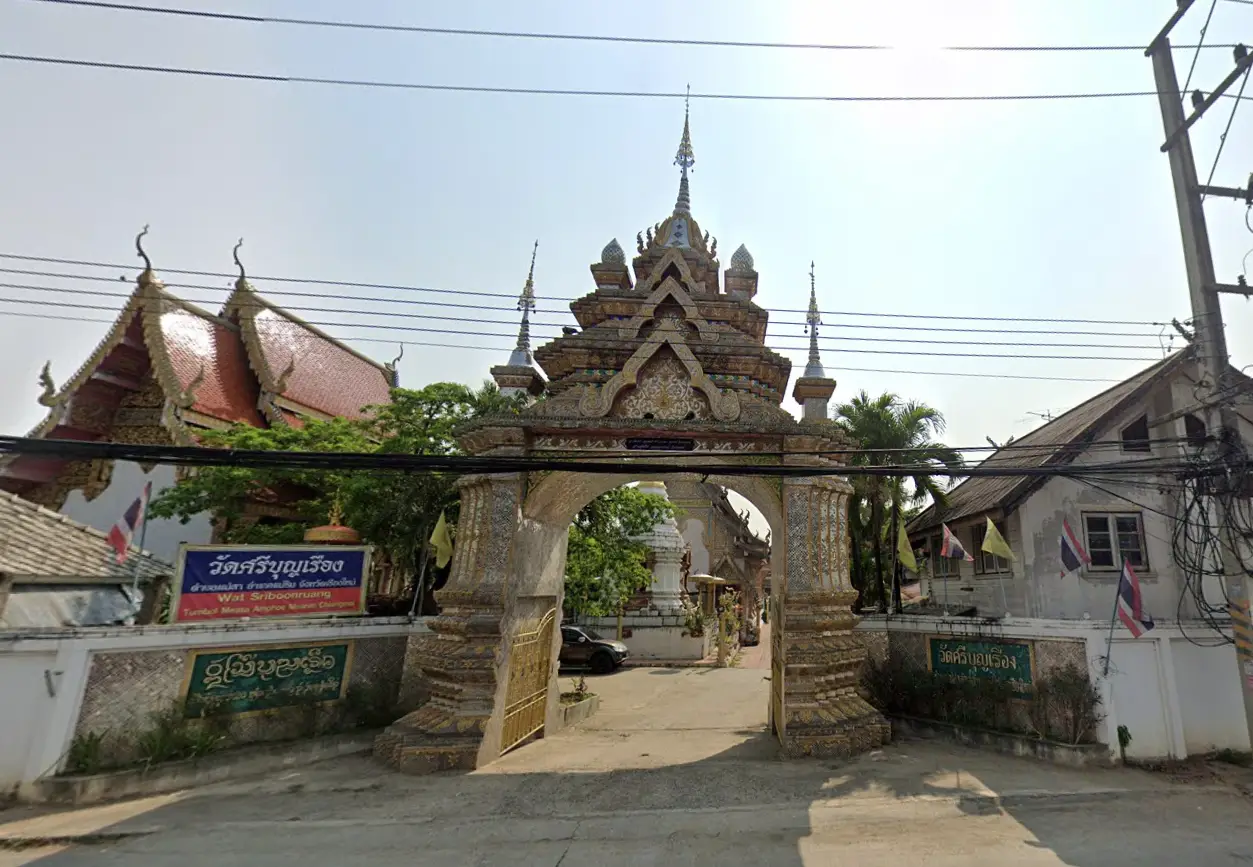
Wat Sri Boon Rueang (Mae Sa)
Open Days: Daily
Opening Hours: 08.00 – 17.00
Wat Sri Boon Rueang (Mae Sa) is located at No. 42, Moo 1, Ban Sri Boon Rueang, Chotana Road, Mae Sa Subdistrict, Mae Rim District, Chiang Mai Province 50180. It is a community Buddhist temple under the Mahanikaya monastic order. The temple covers 3 rai and 15 square wah, was officially granted temple status in 1852, and received its royal Wisungkhamasima boundary in 1996. Led by Phra Khru Siri Aphakon Aphakaro, Wat Sri Boon Rueang is an important spiritual center for Ban Sri Boon Rueang and one of the historic local temples of Mae Sa Subdistrict.
Wat Sri Boon Rueang (Mae Sa) is suitable for travelers who want to understand Mae Rim beyond waterfalls, cafés, resorts, and mountain scenery. The temple represents the community history of Ban Sri Boon Rueang, a village located along the Chiang Mai–Fang route. It serves as a place for merit-making, Buddhist ceremonies, sermons, community gatherings, and local cultural continuity.
Ban Sri Boon Rueang is Moo 1 of Mae Sa Subdistrict in Mae Rim District. It lies near Chotana Road, also known as Highway 107, the main route from Chiang Mai city toward Mae Rim and northern Chiang Mai. The community has both old village houses and newer residential areas, reflecting the transformation of Mae Rim from an agricultural area into a semi-urban district. Wat Sri Boon Rueang remains a spiritual and cultural anchor within this changing landscape.
The old community name is remembered as Khuang Pao, a name connected with an area once covered by many pao trees. The settlement gradually developed from a resting place for merchants traveling from Fang into a small village community. Later, when the temple was built by Thao Boon Rueang, the temple and the community became closely associated with the name Sri Boon Rueang, honoring the person who played a key role in establishing the temple.
The official history of Wat Sri Boon Rueang begins in 1852, when the temple was established by Thao Boon Rueang. In a Lanna village context, building a temple meant more than creating a religious structure. A temple became the center of community life, Buddhist practice, ceremonies, merit-making, and shared identity. Wat Sri Boon Rueang therefore became the heart of Ban Sri Boon Rueang and has continued to preserve local faith across generations.
Wat Sri Boon Rueang received its royal Wisungkhamasima boundary in 1996. In Thai Buddhist tradition, the Wisungkhamasima boundary defines the sacred area for formal monastic acts, especially ceremonies connected with the ordination hall and the Sangha. This milestone reflects the temple’s continuing development as a recognized Buddhist institution within Mae Sa Subdistrict.
The temple covers 3 rai and 15 square wah. Important structures include a sermon hall, monks’ residences, a Lanna-style viharn, and a multipurpose hall. The temple’s important sacred object is a chedi. These structures support both monastic life and community activities, allowing the temple to function as a place for worship, sermons, merit-making, meetings, and annual Buddhist events.
The sermon hall is used for Dhamma talks, merit-making, and community gatherings. The monks’ residences support the daily life of the monastic community. The Lanna-style viharn reflects northern Thai temple architecture and provides a devotional space for worshippers. The multipurpose hall helps the temple host ceremonies, community meetings, and practical village activities. Together, these elements show the practical and spiritual role of Wat Sri Boon Rueang in the community.
The chedi at Wat Sri Boon Rueang is the temple’s key sacred object. In northern Thai village temples, a chedi is not only an architectural feature but also a focus of devotion, merit-making, and community memory. Visitors can pay respect to the Buddha, make merit, offer Sangha donations, and spend quiet time in the temple grounds.
The main attraction of Wat Sri Boon Rueang is not large-scale monumentality. Its value lies in the connection between the temple, the village name, and the history of Ban Sri Boon Rueang. The temple tells the story of a community that grew from Khuang Pao into a settled village, from an agricultural area into a semi-urban neighborhood, and from a local route community into part of modern Mae Rim.
Phra Khru Siri Aphakon Aphakaro serves as the abbot of Wat Sri Boon Rueang. Known former abbots include Phra Athikan Peng Phothiko, Phra Athikan Chan Chanthiyanano, Phra Athikan Konkaew, Phra Bunma, Phra Athikan Chan, Phra Bunpan, Phra Solot, Phra Phromma, Phra Bunthong, and Phra Khru Siri Aphakon. This line of monastic leadership reflects the temple’s continuity across generations.
Wat Sri Boon Rueang plays an important role in Ban Sri Boon Rueang community life. Local residents use the temple for merit-making, sermons, meetings, and shared events. In the past, many villagers worked in agriculture. As Mae Rim developed, many residents shifted toward wage work, trade, and service businesses along the main road. Through these changes, the temple has remained a place that preserves cultural memory and local identity.
The community includes both long-time Lanna residents and newcomers who have moved into the area as Mae Rim expanded. This makes Wat Sri Boon Rueang an important meeting point for different groups of residents. Through Buddhist holy days, Kathin, forest robe offerings, and community activities, the temple continues to support social connection and shared cultural practice.
In 2024, Wat Sri Boon Rueang had 6 resident monks during the Buddhist Lent season and participated in the Nationwide Kathin Samakkhi 10,000 Temples project. Its Kathin ceremony was scheduled for November 3, 2024 at 14.00. Kathin is an important merit-making ceremony after the end of Buddhist Lent, bringing villagers and supporters together to offer robes and support the monastic community.
The temple has also been used for community-level activities in Mae Sa Subdistrict, including Dhamma-related programs during the Buddhist Lent season and public activities organized in the village. This shows that Wat Sri Boon Rueang is not limited to ritual functions. It also supports learning, cooperation, public benefit, and community development.
Visitors should appreciate the Lanna-style viharn, the sermon hall, the chedi, and the atmosphere of a living community temple beside the Chotana Road corridor. The temple is not a large commercial tourist attraction. It is a local religious place where village history, faith, and daily life remain connected.
Wat Sri Boon Rueang is suitable for cultural travelers, temple visitors, and those who want to add depth to a Mae Rim itinerary. It can be combined with nearby temples such as Wat Tha Khrai, Wat Don Chai, Wat Mae Sa Luang, and Wat Pa Daraphirom, as well as cultural and natural attractions in the Mae Rim area.
Getting There is convenient from Chiang Mai city by taking Chotana Road or Highway 107 north toward Mae Rim District, then entering Ban Sri Boon Rueang in Mae Sa Subdistrict. Private car, rental car, or local transport is recommended. Travelers using public transportation toward Mae Rim can continue by local vehicle to the temple.
A useful route can begin at Wat Sri Boon Rueang, continue to Wat Tha Khrai, Wat Mae Sa Luang, Wat Don Chai, Wat Pa Daraphirom, and Darabhiromya Royal Mansion Museum, then extend to Mae Rim Orchid and Butterfly Farm, Mae Sa Waterfall, or Queen Sirikit Botanic Garden. This route combines local temples, community history, Lanna culture, food, nature, and nearby accommodation options in one Mae Rim itinerary.
For travelers interested in local history, Wat Sri Boon Rueang is worth visiting slowly. The temple helps explain the development of Ban Sri Boon Rueang from Khuang Pao, the role of Thao Boon Rueang in establishing the temple, and the way a village temple continues to hold meaning as Mae Rim becomes more urban and tourism-driven.
In summary, Wat Sri Boon Rueang (Mae Sa) is a Mahanikaya community temple in Ban Sri Boon Rueang, Mae Sa Subdistrict, Mae Rim District, Chiang Mai Province. It covers 3 rai and 15 square wah, was officially established in 1852, and received its royal Wisungkhamasima boundary in 1996. The temple includes a sermon hall, monks’ residences, a Lanna-style viharn, a multipurpose hall, and a chedi. It is suitable for merit-making, learning about Ban Sri Boon Rueang, and adding cultural depth to a Mae Rim travel route.
| Name | Wat Sri Boon Rueang (Mae Sa) |
| Location | Ban Sri Boon Rueang, Moo 1, Mae Sa Subdistrict, Mae Rim District, Chiang Mai Province 50180 |
| Address | No. 42, Moo 1, Ban Sri Boon Rueang, Chotana Road, Mae Sa Subdistrict, Mae Rim District, Chiang Mai Province 50180, Thailand |
| Temple Type | Community Buddhist temple under the Mahanikaya monastic order |
| Open Days | Daily |
| Opening Hours | 08.00 – 17.00 |
| Ban Sri Boon Rueang Community Coordinates | 18.90668615, 98.95131871 |
| Temple Land | 3 Rai And 15 Square Wah |
| History | Officially granted temple status in 1852 and received its royal Wisungkhamasima boundary in 1996 |
| Founder | Thao Boon Rueang |
| Name Origin | Linked with the former Khuang Pao community and Thao Boon Rueang, the temple founder and an important figure in the village history |
| Important Structures | Sermon hall, monks’ residences, Lanna-style viharn, and multipurpose hall |
| Sacred Object | Chedi |
| Highlights | Historic temple of Ban Sri Boon Rueang with a Lanna-style viharn, chedi, and strong role as the spiritual center of Moo 1, Mae Sa Subdistrict |
| Community Role | A place for merit-making, sermons, meetings, Buddhist ceremonies, and community activities of Ban Sri Boon Rueang |
| Related Traditions | Kathin, forest robe offerings, Buddhist holy days, and community activities held at the temple |
| Kathin Activity In 2024 | Nationwide Kathin Samakkhi 10,000 Temples project, November 3, 2024 at 14.00, with 6 resident monks |
| Abbot | Phra Khru Siri Aphakon Aphakaro |
| Main Contact Number | 053-297-229 |
| Travel Information | Travel from Chiang Mai city along Chotana Road or Highway 107 toward Mae Rim District, then enter Ban Sri Boon Rueang in Mae Sa Subdistrict. Private car, rental car, or local transport is recommended. |
| Nearby Tourist Attractions | 1. Darabhiromya Royal Mansion Museum, about 2 km 2. Wat Pa Daraphirom, about 3 km 3. Wat Tha Khrai, about 3 km 4. Wat Don Chai, about 4 km 5. Mae Rim Orchid And Butterfly Farm, about 5 km |
| Nearby Restaurants | 1. Baan Landai Fine Thai Cuisine Mae Rim, about 2 km, Tel. 064-469-2929 2. Per La Mer Cafe, about 7 km, Tel. 064-269-9795 3. Akha Ama Living Factory, about 8 km, Tel. 088-267-8014 4. Huen Lung Suea Mae Rim, about 8 km 5. Pongyang Angdoi Restaurant, about 15 km, Tel. 085-618-8885 |
| Nearby Accommodations | 1. Mae Rim Whale Park Resort, about 2 km, Tel. 053-299-409 2. The Grand Morocc Hotel, about 3 km, Tel. 053-299-835 3. Mae Rim Lagoon Hotel, about 4 km, Tel. 053-297-288 4. Four Seasons Resort Chiang Mai, about 6 km, Tel. 053-298-181 5. Pongyang Angdoi Resort, about 15 km |
Frequently Asked Questions (FAQ)
Q: Where Is Wat Sri Boon Rueang (Mae Sa) Located?
A: Wat Sri Boon Rueang (Mae Sa) is located at No. 42, Moo 1, Ban Sri Boon Rueang, Chotana Road, Mae Sa Subdistrict, Mae Rim District, Chiang Mai Province 50180, Thailand.
Q: What Are The Open Days And Opening Hours Of Wat Sri Boon Rueang (Mae Sa)?
A: The temple is open daily from 08.00 to 17.00.
Q: When Was Wat Sri Boon Rueang (Mae Sa) Officially Established?
A: Wat Sri Boon Rueang (Mae Sa) was officially granted temple status in 1852.
Q: When Did Wat Sri Boon Rueang (Mae Sa) Receive Its Royal Wisungkhamasima Boundary?
A: Wat Sri Boon Rueang (Mae Sa) received its royal Wisungkhamasima boundary in 1996.
Q: Who Is The Abbot Of Wat Sri Boon Rueang (Mae Sa)?
A: The abbot of Wat Sri Boon Rueang (Mae Sa) is Phra Khru Siri Aphakon Aphakaro.
Q: What Is The Main Highlight Of Wat Sri Boon Rueang (Mae Sa)?
A: The main highlight is its role as the historic community temple of Ban Sri Boon Rueang, with a Lanna-style viharn, chedi, and strong connection to the village’s history.
Q: What Important Structures Are Found At Wat Sri Boon Rueang (Mae Sa)?
A: Important structures include the sermon hall, monks’ residences, Lanna-style viharn, and multipurpose hall.
Q: What Nearby Attractions Can Be Visited With Wat Sri Boon Rueang (Mae Sa)?
A: Nearby attractions include Darabhiromya Royal Mansion Museum, Wat Pa Daraphirom, Wat Tha Khrai, Wat Don Chai, and Mae Rim Orchid and Butterfly Farm.
 Category: ●Places of Worship
 Group: ●Temple
Last Update : 12 HourAgo
 Last Update : 12 HourAgo
 Click to Access the Navigation Map GPS
Wat Sri Boon Rueang (Mae Sa) Map
Recommend

 Muang Chiang Mai(121)Chom Thong(47)Mae Chaem(25)Chiang Dao(33)Doi Saket(68)Mae Taeng(85)Mae Rim(69)Samoeng(29)Fang(71)Mae Ai(62)Phrao(70)San Pa Tong(105)San Kamphaeng(66)San Sai(73)Hang Dong(74)Hot(32)Doi Tao(22)Omkoi(11)Saraphi(74)Wiang Haeng(15)Chai Prakan(28)Mae Wang(32)Mae On(22)Doi Lo(34)Galyani Vadhana(1)


