
lovethailand home >North Travel Attractions >Chiang Mai Travel Attractions >Mae Rim >Mae Raem > Wat Ban Hong
TL;DR: Wat Ban Hong is located at Moo 2, Ban Hong Nai, Mae Raem Subdistrict, Mae Rim District, Chiang Mai Province, open Daily, hours 08.00 – 17.00.
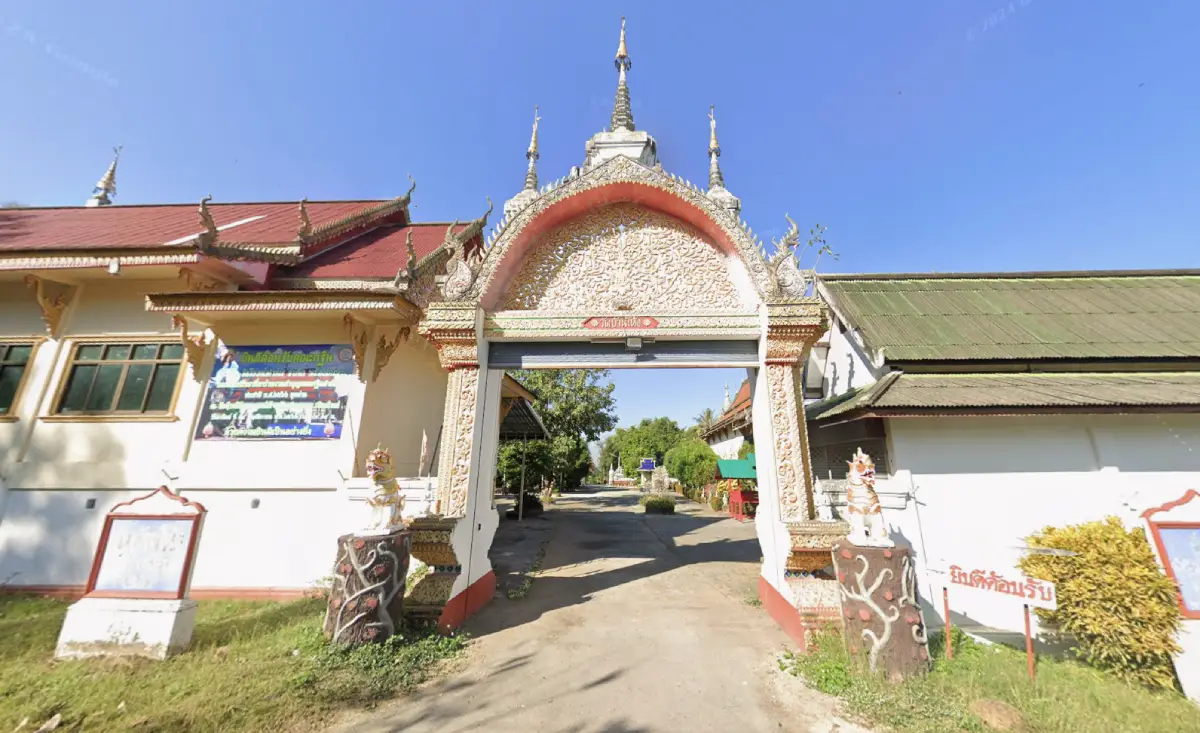
Wat Ban Hong
Open Days: Daily
Opening Hours: 08.00 – 17.00
Wat Ban Hong is located in Moo 2, Ban Hong Nai, Mae Raem Subdistrict, Mae Rim District, Chiang Mai Province 50180. It is a non-royal Buddhist temple under the Maha Nikaya order. The temple was officially permitted to be established in 1903 and serves as an important community temple for Ban Hong Nai. Wat Ban Hong is located in Mae Raem, an area that connects local communities, the Mae Rim–Samoeng travel route, the Mae Sa watershed, and several well-known natural and cultural attractions of Mae Rim.
Wat Ban Hong is not the same temple as Wat Hiranyanikom, also known locally as the temple of Ban Hong Nok. Wat Ban Hong is associated with Moo 2, Ban Hong Nai, while Wat Hiranyanikom is associated with Moo 10, Ban Hong Nok. Both temples are located in Mae Raem Subdistrict, Mae Rim District, Chiang Mai Province, but they are separate temples in different villages. This distinction is important for travelers and readers who want accurate local information.
Ban Hong Nai is Moo 2 of Mae Raem Subdistrict. It is a relatively small local community within one of Mae Rim’s most active travel areas. Mae Raem includes village communities, agricultural areas, forested watersheds, highland routes, and major tourist attractions such as Mae Sa Waterfall, Queen Sirikit Botanic Garden, Mae Sa Elephant Camp, Mon Jam, and the Mae Rim–Samoeng route. Wat Ban Hong stands within this mixed landscape of local life, Buddhism, nature, and tourism.
The temple’s official establishment in 1903 gives Wat Ban Hong more than a century of history. In earlier times, local temples were essential for communities because travel between villages and other religious centers was not as convenient as it is today. A village temple gave residents a nearby place to make merit, listen to dhamma teachings, observe Buddhist holy days, and gather for important family and community ceremonies.
As a non-royal Maha Nikaya temple, Wat Ban Hong reflects the faith and support of local residents. Community temples in northern Thailand often grow through the participation of villagers, lay supporters, and resident monks. The temple functions not only as a place of worship but also as a community space where families, elders, young people, and supporters maintain Buddhist traditions together.
Wat Ban Hong remains closely connected with the Buddhist calendar of Ban Hong Nai. Important activities include Buddhist holy days, Visakha Bucha, Buddhist Lent, the end of Buddhist Lent, Kathin, Pha Pa, almsgiving, and seasonal merit-making events. These ceremonies allow local people to gather at the temple, support the monks, and preserve the relationship between the temple and the village.
Recent temple activity information records 5 resident monks and identifies Phra Athikan Charan Panyawatthano as the abbot. This shows that Wat Ban Hong remains an active Buddhist community temple. Kathin after the rains retreat is one of the important annual events for the temple, bringing villagers and supporters together to support the monastic community and maintain the temple.
Mae Raem Subdistrict has a diverse natural and cultural setting. Its landscape includes montane forest, mixed deciduous forest, dry dipterocarp forest, pine plantations, lychee orchards, and vegetable-growing areas in some villages. The subdistrict is also part of the Mae Sa watershed and is known as a major tourism area of Mae Rim. Wat Ban Hong is therefore located in a subdistrict where traditional community life, agriculture, nature, and tourism are closely connected.
Mae Raem also has rich local knowledge and cultural diversity, including basketry, chemical-free farming, Hmong embroidery, Karen weaving, and local northern food traditions. Wat Ban Hong belongs to this broader local context. Although Ban Hong Nai is a small village, it is part of a larger Mae Raem cultural landscape where northern Thai communities and highland ethnic groups shape the identity of the area.
The main value of Wat Ban Hong lies in its long-standing community role. It is not a large commercial tourist attraction. Its importance comes from its age, its relationship with Ban Hong Nai, and its role as a living Buddhist center used by local residents. Visitors who stop here can see a quieter side of Mae Rim beyond waterfalls, resorts, cafés, and adventure attractions.
The important areas of Wat Ban Hong include religious activity spaces, the temple courtyard, merit-making areas, and spaces used for Buddhist community activities. These areas support daily merit-making, temple ceremonies, and gatherings during Buddhist festivals. The atmosphere is that of a local village temple: simple, calm, and connected with the life of the community.
The history of Wat Ban Hong is connected with the settlement pattern of Ban Hong Nai. In Mae Raem Subdistrict, Ban Hong Nai is Moo 2, while Ban Hong Nok is Moo 10. Wat Ban Hong is connected with Ban Hong Nai, while Wat Hiranyanikom is connected with Ban Hong Nok. This pattern reflects the way northern Thai communities often developed with separate village identities, each maintaining its own temple and local religious life.
Wat Ban Hong is suitable for travelers who want a peaceful Buddhist stop in the Mae Rim area. It can be visited before continuing to nearby attractions such as Siam Insect Zoo, Tiger Kingdom Mae Rim, Mae Sa Elephant Camp, Mae Sa Waterfall, Wat Pa Dara Phirom, Dara Pirom Palace Museum, Queen Sirikit Botanic Garden, and Mon Jam. This makes the temple useful as a cultural stop within a broader Mae Rim itinerary.
For travelers interested in community temples rather than large tourist temples, Wat Ban Hong offers a grounded local experience. Its value lies in being a real village temple that has supported Ban Hong Nai for generations. A visit here adds a Buddhist and community dimension to a route that may otherwise focus mainly on scenery, food, resorts, and family attractions.
Kathin and Pha Pa are important merit-making events for Wat Ban Hong. Kathin takes place after Buddhist Lent and is a major occasion for lay supporters to help maintain the temple and support the monastic community. Pha Pa is another merit-making tradition that allows villagers and supporters to contribute to temple needs. These events help preserve the relationship between the temple and Ban Hong Nai.
The location of Wat Ban Hong in Mae Raem makes it convenient for connected travel. Nearby areas include restaurants, accommodations, nature attractions, family attractions, and cultural sites. Travelers with private cars can plan a half-day or full-day route that begins with the temple and continues to Mae Rim’s natural and cultural destinations.
Getting There is easiest by private car, rental car, or hired local transport. From Chiang Mai city, take Chotana Road into Mae Rim District, then continue into Mae Raem Subdistrict and Ban Hong Nai, Moo 2. Private transport is convenient because the temple can be connected easily with Mae Sa Waterfall, Queen Sirikit Botanic Garden, and other attractions in Mae Rim.
When using a navigation app, search for Wat Ban Hong in Mae Raem Subdistrict, Mae Rim District, Chiang Mai, and check that the location corresponds with Moo 2, Ban Hong Nai. This helps avoid confusion with Wat Hiranyanikom in Ban Hong Nok, Moo 10, or with other temples named Wat Ban Hong in different districts of Chiang Mai.
Nearby travel routes can be arranged in several ways. A nature-focused route can connect Wat Ban Hong with Mae Sa Waterfall and Queen Sirikit Botanic Garden. A cultural route can connect the temple with Wat Pa Dara Phirom and Dara Pirom Palace Museum. A family route can include Siam Insect Zoo, Tiger Kingdom Mae Rim, and local restaurants in the Mae Rim area.
Overall, Wat Ban Hong is a non-royal Maha Nikaya community temple of Ban Hong Nai, Moo 2, Mae Raem Subdistrict, Mae Rim District, Chiang Mai. Established in 1903, it remains a spiritual center for the village and a quiet Buddhist stop within the Mae Rim travel area. Its value comes from its long history, its relationship with Ban Hong Nai, and its location within a district known for nature, culture, and community life.
| Name | Wat Ban Hong |
| Related Community | Ban Hong Nai, Moo 2, Mae Raem Subdistrict |
| Location | Moo 2, Ban Hong Nai, Mae Raem Subdistrict, Mae Rim District, Chiang Mai Province |
| Address | Moo 2, Mae Raem Subdistrict, Mae Rim District, Chiang Mai 50180, Thailand |
| Temple Type | Non-Royal Buddhist Temple Under The Maha Nikaya Order |
| Year Established | Officially permitted as a temple in 1903 |
| Abbot / Caretaker | Phra Athikan Charan Panyawatthano |
| Resident Monks | 5 monks |
| Highlights | Historic community temple of Ban Hong Nai, over a century old, located in Mae Raem Subdistrict and connected with the Mae Rim travel area |
| Main Areas / Zones | Religious activity areas, temple courtyard, merit-making areas, and Buddhist community activity spaces of Ban Hong Nai |
| Community Role | Spiritual center of Ban Hong Nai, used for merit-making, dhamma listening, Kathin, Pha Pa, Buddhist holy days, and community Buddhist activities |
| Tradition / Buddhist Events | Buddhist holy days, Visakha Bucha, Buddhist Lent, the end of Buddhist Lent, Kathin, Pha Pa, almsgiving, and seasonal merit-making activities |
| Open Days | Daily |
| Opening Hours | 08.00 – 17.00 |
| Current Status | Open as a community temple in Mae Raem Subdistrict, Mae Rim District, Chiang Mai Province |
| Travel Information | From Chiang Mai city, take Chotana Road into Mae Rim District, then continue into Mae Raem Subdistrict and Ban Hong Nai, Moo 2. Private car, rental car, or hired local transport is recommended. |
| Nearby Tourist Attractions | 1. Siam Insect Zoo, about 2 km 2. Tiger Kingdom Mae Rim, about 4 km 3. Mae Sa Elephant Camp, about 5 km, Tel. 053-206-247, 053-206-248 4. Mae Sa Waterfall, about 6 km 5. Wat Pa Dara Phirom Phra Aram Luang, about 7 km 6. Dara Pirom Palace Museum, about 7 km 7. Queen Sirikit Botanic Garden, about 11 km 8. Mon Jam, about 22 km |
| Nearby Restaurants | 1. 108-1009 Fusion Food, about 2 km, Tel. 099-336-8414 2. Baan Landai Mae Rim, about 5 km, Tel. 064-469-2929 3. Khao Soi Lanna Mae Rim, about 6 km, Tel. 095-343-2936 4. Pongyang Angdoi, about 11 km, Tel. 085-618-8885 5. Tune In Garden, about 12 km, Tel. 053-879-251, 087-185-2951 |
| Nearby Accommodations | 1. U Maerim, about 4 km, Tel. 085-736-7398 2. Pak Raem, about 6 km, Tel. 094-696-1456 3. Sukantara Cascade Resort & Spa, about 7 km 4. Mae Sa Valley Garden Resort & Craft Village, about 9 km 5. Four Seasons Resort Chiang Mai, about 9 km 6. Safe House 168, about 10 km |
Frequently Asked Questions (FAQ)
Q: Where is Wat Ban Hong located?
A: Wat Ban Hong is located in Moo 2, Ban Hong Nai, Mae Raem Subdistrict, Mae Rim District, Chiang Mai 50180, Thailand.
Q: Is Wat Ban Hong the same temple as Wat Hiranyanikom?
A: No. Wat Ban Hong is in Moo 2, Ban Hong Nai, while Wat Hiranyanikom is in Moo 10, Ban Hong Nok, Mae Raem Subdistrict, Mae Rim District, Chiang Mai.
Q: What type of temple is Wat Ban Hong?
A: Wat Ban Hong is a non-royal Buddhist temple under the Maha Nikaya order.
Q: When was Wat Ban Hong established?
A: Wat Ban Hong was officially permitted to be established as a temple in 1903.
Q: Who is the abbot of Wat Ban Hong?
A: The abbot of Wat Ban Hong is Phra Athikan Charan Panyawatthano.
Q: Why is Wat Ban Hong important?
A: Wat Ban Hong is the spiritual center of Ban Hong Nai and supports local Buddhist activities such as merit-making, dhamma listening, Kathin, Pha Pa, and Buddhist holy day observances.
Q: How do travelers get to Wat Ban Hong?
A: From Chiang Mai city, take Chotana Road into Mae Rim District, then continue into Mae Raem Subdistrict and Ban Hong Nai, Moo 2. A private car or rental car is the most convenient option.
Q: What nearby places can be visited with Wat Ban Hong?
A: Nearby places include Siam Insect Zoo, Tiger Kingdom Mae Rim, Mae Sa Elephant Camp, Mae Sa Waterfall, Wat Pa Dara Phirom, Dara Pirom Palace Museum, Queen Sirikit Botanic Garden, and Mon Jam.
 Category: ●Places of Worship
 Group: ●Temple
Last Update : 3 DayAgo
 Last Update : 3 DayAgo
 Click to Access the Navigation Map GPS
 Muang Chiang Mai(121)Chom Thong(47)Mae Chaem(25)Chiang Dao(33)Doi Saket(68)Mae Taeng(85)Mae Rim(69)Samoeng(29)Fang(71)Mae Ai(61)Phrao(70)San Pa Tong(105)San Kamphaeng(66)San Sai(73)Hang Dong(74)Hot(32)Doi Tao(22)Omkoi(11)Saraphi(74)Wiang Haeng(15)Chai Prakan(28)Mae Wang(32)Mae On(22)Doi Lo(34)Galyani Vadhana(1)


