
lovethailand home >North Travel Attractions >Chiang Mai Travel Attractions >Mae Taeng >Mae Taeng > Wat Pa Na Boon
TL;DR: Wat Pa Na Boon is located at Ban Tin That, Village No. 5, Mae Taeng Subdistrict, Mae Taeng District, Chiang Mai Province, open Daily, hours 06.00 – 18.00.

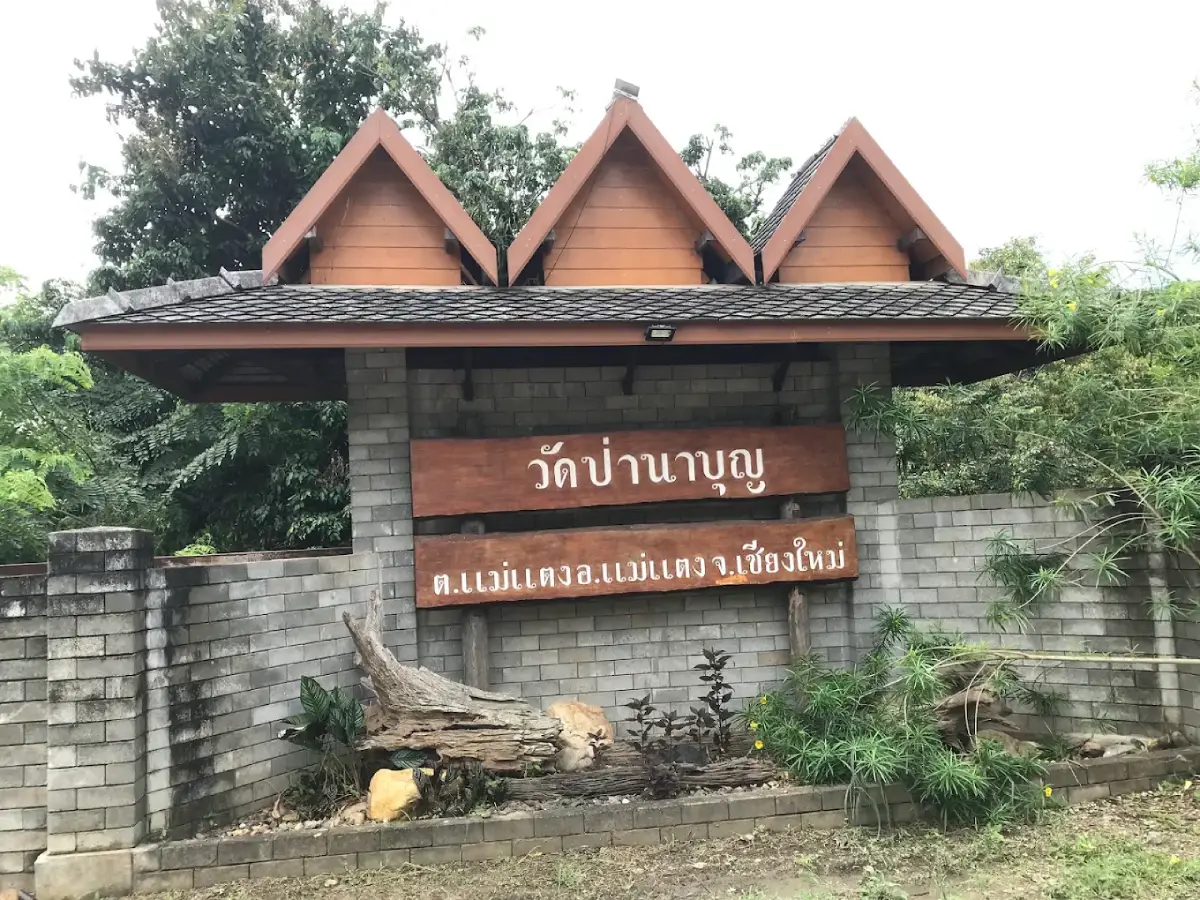
Wat Pa Na Boon
Open Days: Daily
Opening Hours: 06.00 – 18.00
Wat Pa Na Boon is located at 76 Moo 5, Ban Tin That, Mae Taeng Subdistrict, Mae Taeng District, Chiang Mai Province. It is a private Buddhist temple under the Dhammayut order and an important forest temple in Mae Taeng. The temple is known for its peaceful atmosphere, forest-monastery character, orderly grounds, and close connection with Phra Ratchawachirakijkosol, widely known as Luang Pu Guang Kosalo, a respected former abbot and disciple of Luang Por Prasit Punnamakaro of Wat Pa Mu Mai.
Wat Pa Na Boon is suitable for worship, merit-making, Dhamma listening, and quiet reflection. It is not designed as a crowded tourist attraction. Its value lies in the calm atmosphere of a forest temple, the simplicity of its layout, and its connection with respected meditation teachers in Mae Taeng. Visitors will experience a different side of Chiang Mai, where the focus is on restraint, faith, and Buddhist practice rather than sightseeing alone.
The name “Wat Pa Na Boon” carries a clear Buddhist meaning. “Pa” refers to a forest temple atmosphere, while “Na Boon” can be understood as a field of merit. The name suggests a place where people cultivate goodness through generosity, morality, Dhamma listening, and meditation. This meaning fits the temple’s identity as a peaceful place for spiritual development.
The temple is situated in Ban Tin That, Village No. 5 of Mae Taeng Subdistrict. This area is part of a wider forest-temple landscape in Mae Taeng, especially because nearby Wat Pa Mu Mai is associated with Luang Por Prasit Punnamakaro. Wat Pa Na Boon therefore belongs to a meaningful local network of Dhammayut forest temples, Buddhist communities, natural attractions, and travel routes connecting Mae Taeng with Mae Ngat Dam, Wat Den, and other meditation temples.
The history of Wat Pa Na Boon is closely linked with Luang Por Prasit Punnamakaro. He gave permission for this place to be established as a temple in 2008 and assigned Luang Pu Guang Kosalo as its abbot. Luang Por Prasit was a highly respected forest meditation teacher of Wat Pa Mu Mai, so the foundation of Wat Pa Na Boon should be understood as part of the continuation of forest-practice faith in Mae Taeng.
Luang Pu Guang Kosalo, whose lay name was Kriangkrai, was born on 25 October 1937 in Suan Dok Subdistrict, Mueang District, Lampang Province. He was ordained on 1 July 1965 at Wat Pa Samran Niwas in Lampang. He later studied and practiced under several respected forest meditation teachers and became closely connected with Luang Por Prasit Punnamakaro before residing at and developing Wat Pa Na Boon in Mae Taeng.
Luang Pu Guang was respected as a meditation monk of the Dhammayut tradition. In 2022, His Majesty the King graciously assigned a Privy Councillor to present the ecclesiastical title certificate, ceremonial fan, and monk’s robes to Phra Ratchawachirakijkosol at Wat Pa Na Boon. This event reflects both the status of Luang Pu Guang and the significance of Wat Pa Na Boon within the Dhammayut Buddhist community.
Luang Pu Guang passed away on 6 May 2024 from old age, at the age of 86 and with 59 rains retreats. The royal cremation ceremony was held at a temporary crematorium at Wat Pa Na Boon on 8–9 June 2024. Later, on 6 April 2026, a foundation-stone ceremony was held at the temple for a chedi honoring Phra Ratchawachirakijkosol. These events show that Wat Pa Na Boon remains an active center of faith for his disciples and followers.
Wat Pa Na Boon covers about 50 rai. Its layout follows the character of a forest temple, with monastic residences and facilities for monks, novices, and lay practitioners. Important structures include Viharn Phra Phuttha Metta, Kuti Punnamakaro Nusorn, the dining hall, Kosalo Upatham Library, a replica viharn of Luang Por Sian, and residences for monks and novices.
Viharn Phra Phuttha Metta is an important worship area for visitors and devotees. Its name evokes compassion, peace, and goodwill toward all beings, which matches the inner spirit of forest temple practice. Visitors should use the area respectfully, pay homage quietly, and avoid disturbing monks, practitioners, or other worshippers.
Kuti Punnamakaro Nusorn reflects gratitude toward Luang Por Prasit Punnamakaro, the respected teacher connected with the foundation of Wat Pa Na Boon. The name of the kuti is not merely an architectural label. It preserves the memory of the teacher whose kindness supported the establishment of the temple and links Wat Pa Na Boon with Wat Pa Mu Mai.
Kosalo Upatham Library reflects the temple’s emphasis on Dhamma study and the preservation of teachings. In a forest temple, a library supports monks, novices, and laypeople who wish to study Buddhist texts, the lives of teachers, and the practical path of meditation. It adds an educational dimension to the temple’s role as a field of merit.
The dining hall is another important area in forest monastery life. It supports almsgiving, communal meals according to monastic discipline, and merit-making activities involving lay supporters. Offering food to monks is not only an act of generosity. It also sustains the relationship between the Sangha and the local community, allowing monks to continue their religious practice.
The replica viharn of Luang Por Sian adds another layer of faith and remembrance within the temple. Structures of this kind help visitors understand that Wat Pa Na Boon is not only a place for ritual activity, but also a place of gratitude toward teachers and spiritual lineages.
Wat Pa Na Boon serves devotees and the surrounding community through merit-making, Dhamma listening, meditation, and remembrance of Luang Pu Guang Kosalo. Followers from different areas visit the temple to pay respect, offer food, join ceremonies, and take part in temple activities. The temple’s official communication channel also helps devotees receive accurate information and reduces confusion related to unauthorized claims or activities that do not match the teachers’ conduct.
Important religious activities at Wat Pa Na Boon include Buddhist observance days, major Buddhist holy days, Kathin, robe-offering ceremonies, food offerings, chanting, Dhamma listening, and memorial merit-making for teachers. After the passing of Luang Pu Guang, the temple has continued to serve as a center of faith for disciples, especially in activities connected with remembrance and the chedi honoring him.
The main highlight of Wat Pa Na Boon is its combination of forest-temple peace, connection with Luang Por Prasit Punnamakaro, and legacy of Luang Pu Guang Kosalo. Visitors should pay respect at Viharn Phra Phuttha Metta, walk quietly through the temple grounds, remember Luang Pu Guang, and reflect on the meaning of the temple as a field of merit created through faith and practice.
Wat Pa Na Boon is suitable for travelers interested in forest temples, Dhammayut Buddhism, Thai meditation teachers, and a quiet route through Mae Taeng. Visitors should dress modestly, keep their voices low, avoid entering monks’ residential areas without permission, avoid inappropriate photography, and help preserve the peaceful atmosphere for practitioners and worshippers.
A meaningful route can combine Wat Pa Na Boon with Wat Pa Mu Mai, which is closely associated with Luang Por Prasit Punnamakaro. Travelers can then continue to Wat Aranyawiwake, Wat Pa Achan Tue, Mae Ngat Somboon Chon Dam, or Wat Den Sali Sri Muang Kaen. This route is suitable for visitors who want to experience forest temples, teacher lineages, and the natural landscape of Mae Taeng in one trip.
Wat Pa Mu Mai is especially meaningful because of its connection with Luang Por Prasit, who supported the establishment of Wat Pa Na Boon. Visiting both temples helps travelers understand the roots of forest-practice faith in Mae Taeng. Wat Aranyawiwake and Wat Pa Achan Tue add further context through their relationship with Thai forest meditation teachers and Dhammayut practice.
Travelers who want a route that combines temples and nature can continue to Mae Ngat Somboon Chon Dam or Wat Den Sali Sri Muang Kaen. Mae Ngat Dam offers a relaxing natural setting, while Wat Den is known for large Lanna-inspired architecture. Together, these destinations make a balanced Mae Taeng itinerary that includes meditation temples, community temples, nature, and local food.
Getting There from Chiang Mai city is convenient by following Highway 107, the Chiang Mai–Chiang Dao route, toward Mae Taeng District. Continue into Mae Taeng Subdistrict and Ban Tin That. The temple is located at 76 Moo 5. A private car, rental car, or hired local transport is recommended because it allows easy access to nearby temples, restaurants, accommodations, and attractions in Mae Taeng.
The best time to visit is in the morning or late afternoon, when the weather is more comfortable and the temple atmosphere is calm. Visitors who plan to visit only Wat Pa Na Boon should allow at least one hour. Those who want to continue to Wat Pa Mu Mai, Wat Aranyawiwake, Wat Pa Achan Tue, or Mae Ngat Dam should plan for a half-day or full-day route.
Wat Pa Na Boon should be visited with calmness and respect. Its value lies in its Dhammayut forest-temple identity, its connection with Luang Por Prasit and Luang Pu Guang, its peaceful grounds, and its role in continuing merit-making, Dhamma listening, and meditation practice in Mae Taeng. A visit here reveals a quieter, deeper, and more contemplative side of Chiang Mai.
| Name | Wat Pa Na Boon |
| Location | Ban Tin That, Village No. 5, Mae Taeng Subdistrict, Mae Taeng District, Chiang Mai Province |
| Address | 76 Moo 5, Ban Tin That, Mae Taeng Subdistrict, Mae Taeng District, Chiang Mai Province 50150, Thailand |
| Highlights | A peaceful Dhammayut forest temple connected with Luang Por Prasit Punnamakaro and Luang Pu Guang Kosalo, suitable for worship, merit-making, Dhamma listening, and meditation |
| History | Luang Por Prasit Punnamakaro gave permission to establish this temple in 2008 and assigned Luang Pu Guang Kosalo as abbot. Luang Pu Guang later received the ecclesiastical title Phra Ratchawachirakijkosol. |
| Name Origin | The name Wat Pa Na Boon suggests a forest temple that serves as a field of merit, where goodness is cultivated through generosity, morality, Dhamma listening, and meditation |
| Distinctive Features | A private Dhammayut forest temple covering about 50 rai, with a peaceful and simple monastic atmosphere linked to Mae Taeng’s forest-teacher lineage |
| Important Structures | Viharn Phra Phuttha Metta, Kuti Punnamakaro Nusorn, dining hall, Kosalo Upatham Library, replica viharn of Luang Por Sian, and residences for monks and novices |
| Important Former Abbot | Phra Ratchawachirakijkosol, also known as Luang Pu Guang Kosalo, former abbot of Wat Pa Na Boon |
| Travel Information | From Chiang Mai city, follow Highway 107 toward Mae Taeng District, then continue into Mae Taeng Subdistrict and Ban Tin That. A private car, rental car, or hired local transport is recommended. |
| Current Status | An active forest temple and meditation place in Mae Taeng Subdistrict, Mae Taeng District, Chiang Mai Province |
| Open Days | Daily |
| Opening Hours | 06.00 – 18.00 |
| Traditions / Merit-Making Events | Buddhist observance days, major Buddhist holy days, Kathin, robe-offering ceremonies, almsgiving, chanting, Dhamma listening, and memorial merit-making for teachers |
| Nearby Tourist Attractions | 1. Wat Pa Mu Mai, about 2 km 2. Wat Aranyawiwake, about 6 km 3. Wat Pa Achan Tue, about 8 km 4. Mae Ngat Somboon Chon Dam, about 11 km 5. Wat Den Sali Sri Muang Kaen, about 12 km 6. Inthakhin Muang Kaen Kiln Site, about 13 km |
| Nearby Restaurants | 1. Sri Kaew Restaurant @ Mae Taeng, about 5 km, Tel. 082-574-7870 2. Ran Kao, about 6 km, Tel. 097-017-4849 3. Mae Taeng House, about 8 km, Tel. 083-146-6453, 095-496-3235 4. Mont Raming, about 9 km, Tel. 053-372-144, 089-956-3674 5. Care Coffee, about 11 km, Tel. 053-047-097 |
| Nearby Accommodations | 1. Mae Malai Hotel, about 6 km, Tel. 053-842-620, 095-610-6489 2. Grand Hostel Maetang, about 9 km, Tel. 099-987-9432 3. Sabai Dee Resort, about 10 km, Tel. 090-276-9984 4. Nanon Banna, about 11 km, Tel. 098-824-9928 5. Maetang Phuphing Resort, about 14 km, Tel. 062-264-5277 |
Frequently Asked Questions (FAQ)
Q: Where is Wat Pa Na Boon located?
A: Wat Pa Na Boon is located at 76 Moo 5, Ban Tin That, Mae Taeng Subdistrict, Mae Taeng District, Chiang Mai Province.
Q: What are the opening hours of Wat Pa Na Boon?
A: Wat Pa Na Boon is open daily from 06.00 to 18.00.
Q: Which Buddhist order does Wat Pa Na Boon belong to?
A: Wat Pa Na Boon is a private Buddhist temple under the Dhammayut order.
Q: Why is Wat Pa Na Boon important?
A: Wat Pa Na Boon is a Dhammayut forest temple connected with Luang Por Prasit Punnamakaro and Luang Pu Guang Kosalo, a respected former abbot.
Q: When was Wat Pa Na Boon established?
A: Wat Pa Na Boon was established in 2008 through the kindness of Luang Por Prasit Punnamakaro, who assigned Luang Pu Guang Kosalo as abbot.
Q: What important structures are inside Wat Pa Na Boon?
A: Important structures include Viharn Phra Phuttha Metta, Kuti Punnamakaro Nusorn, the dining hall, Kosalo Upatham Library, a replica viharn of Luang Por Sian, and residences for monks and novices.
Q: What nearby places can be visited with Wat Pa Na Boon?
A: Nearby places include Wat Pa Mu Mai, Wat Aranyawiwake, Wat Pa Achan Tue, Mae Ngat Somboon Chon Dam, Wat Den Sali Sri Muang Kaen, and the Inthakhin Muang Kaen Kiln Site.
Q: How can travelers get from Chiang Mai city to Wat Pa Na Boon?
A: Travelers can follow Highway 107 from Chiang Mai city toward Mae Taeng District, then continue into Mae Taeng Subdistrict and Ban Tin That. A private car, rental car, or hired local transport is recommended.
 Category: ●Places of Worship
 Group: ●Temple
Last Update : 1 MonthAgo
 Last Update : 1 MonthAgo
 Click to Access the Navigation Map GPS

 Muang Chiang Mai(121)Chom Thong(47)Mae Chaem(25)Chiang Dao(33)Doi Saket(68)Mae Taeng(85)Mae Rim(69)Samoeng(29)Fang(71)Mae Ai(59)Phrao(70)San Pa Tong(103)San Kamphaeng(66)San Sai(73)Hang Dong(73)Hot(32)Doi Tao(22)Omkoi(11)Saraphi(74)Wiang Haeng(15)Chai Prakan(28)Mae Wang(32)Mae On(22)Doi Lo(33)Galyani Vadhana(1)


