
lovethailand home >North Travel Attractions >Chiang Mai Travel Attractions >Mae Taeng >Mae Ho Phra > Wat Khanti Wanaram
TL;DR: Wat Khanti Wanaram is located at Village No. 3, Mae Ho Phra Subdistrict, Mae Taeng District, Chiang Mai Province, open Daily, hours 08.00 – 17.00.

Wat Khanti Wanaram
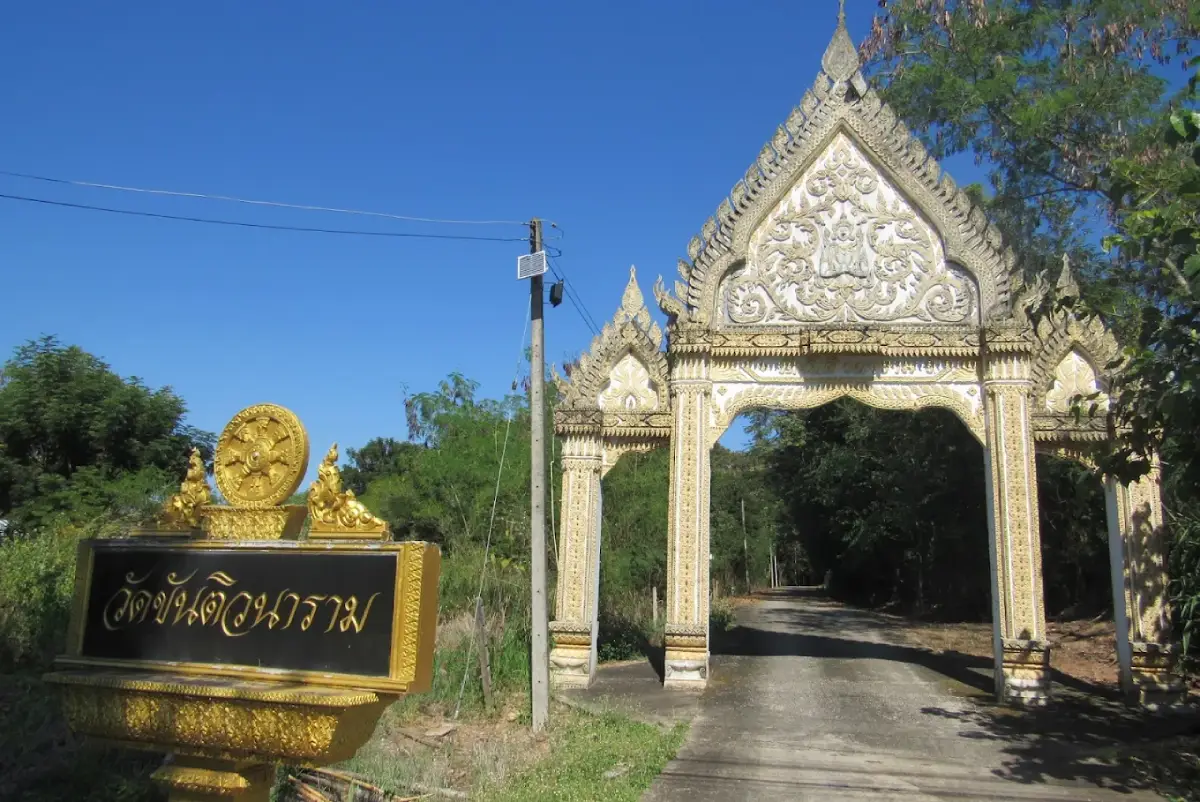
Open Days: Daily
Opening Hours: 08.00 – 17.00
Wat Khanti Wanaram is located in Village No. 3, Mae Ho Phra Subdistrict, Mae Taeng District, Chiang Mai Province. It is a private Buddhist temple under the Dhammayut order and serves as an important religious site for the Mae Ho Phra community. The temple was officially established in 1983 and received its royal consecrated boundary in 1984, giving it a clear status within the Thai Buddhist monastic system.
Wat Khanti Wanaram is a peaceful local temple suitable for merit-making, quiet worship, and a slow cultural stop along the Mae Taeng–Phrao route. The temple is not a large tourist attraction, but its value lies in its calm community setting and its role in local Buddhist life. Visitors can experience a more authentic side of rural Lanna temple culture, where temples continue to support village ceremonies, Buddhist observance days, and seasonal merit-making events.
The name “Khanti Wanaram” has a meaningful Buddhist interpretation. “Khanti” means patience, endurance, and steadiness of mind, while “Wanaram” suggests a peaceful monastery or forest-like temple environment. Together, the name evokes a place where the mind is trained toward calmness and patience. This meaning fits well with the character of a Dhammayut temple, which is often associated with simplicity, discipline, and composure.
The temple’s official history begins in 1983, when it was granted permission to be established as a temple. In rural communities, the formal establishment of a temple reflects more than the creation of religious buildings. It represents the faith of local people who need a shared place for worship, merit-making, Buddhist teaching, and community ceremonies. In 1984, Wat Khanti Wanaram received its royal consecrated boundary, allowing important monastic ceremonies to be conducted within the proper sacred boundary.
The royal consecrated boundary is an important element in Thai Buddhist temple administration. It marks the area where formal monastic acts may take place according to Buddhist discipline. For Wat Khanti Wanaram, receiving this boundary only one year after its official establishment shows that the temple quickly developed into a complete religious space for both monks and laypeople in the Mae Ho Phra community.
Mae Ho Phra Subdistrict combines village life, agricultural areas, local temples, scenic roads, and natural attractions in northern Mae Taeng. Wat Khanti Wanaram is part of this broader cultural landscape. It is connected not only to Buddhist practice but also to local identity, village gatherings, and the everyday rhythm of people living along the Chiang Mai–Phrao route. Visiting the temple helps travelers see Mae Taeng as a place shaped by both nature and community faith.
As a Dhammayut temple, Wat Khanti Wanaram has a quiet and restrained character. Dhammayut temples in rural areas often emphasize order, simplicity, and calm practice. This makes Wat Khanti Wanaram a suitable place for visitors who prefer a quiet temple visit rather than a crowded sightseeing stop. The atmosphere encourages slow walking, respectful worship, and a deeper appreciation of how Buddhism remains part of local life.
The temple grounds include areas used for Buddhist ceremonies, merit-making, community gatherings, and quiet worship. Like many local temples in northern Thailand, the space is used flexibly according to religious events and community needs. The courtyard functions as a gathering area, while the sacred boundary area gives the temple its formal religious role. These elements make the temple valuable not only as a place of worship but also as a community space.
What visitors should appreciate at Wat Khanti Wanaram is the overall sense of a working community temple. The temple is modest, peaceful, and closely tied to local villagers. Its significance does not depend on monumental architecture, but on its continuing role as a place where people make merit, gather for Buddhist events, and maintain religious traditions across generations.
Wat Khanti Wanaram supports local Buddhist life through observance days, Kathin ceremonies, robe-offering events, and merit-making activities according to the Buddhist calendar. These occasions bring villagers together and strengthen the relationship between temple, family, and community. In this sense, the temple remains a living religious space rather than only a place to visit.
The Mae Ho Phra area is also known for natural and community-based tourism. One of the most famous nearby attractions is Bua Tong Waterfall and Nam Phu Chet Si, a limestone waterfall and spring area known for its unique surface and clear water. Travelers can combine a visit to Wat Khanti Wanaram with this natural attraction to create a balanced trip that includes both Buddhist culture and outdoor scenery.
Another meaningful stop near the temple is the Mae Ho Phra agricultural tourism community enterprise. This local initiative reflects the area’s agricultural identity and community-based tourism potential. Combining Wat Khanti Wanaram with local agricultural learning and natural attractions gives travelers a fuller understanding of Mae Ho Phra as a place where faith, farming, and nature are closely connected.
A good travel route can begin with a morning visit to Wat Khanti Wanaram for worship and quiet reflection. Travelers can then continue to the Mae Ho Phra agricultural tourism community, stop at a local restaurant or cafe, and spend the afternoon at Bua Tong Waterfall and Nam Phu Chet Si. This route works well for visitors who want a slow day trip from Chiang Mai that includes temple culture, local food, community life, and nature.
Travelers interested in Dhammayut temples in Mae Taeng can also connect Wat Khanti Wanaram with other temples in the district, such as Wat Pa Achan Tue, Wat Aranyawiwake, and Wat Chittaram. Visiting these temples together shows different sides of Buddhist life in Mae Taeng, from local community temples to forest practice sites and more established meditation-related temples.
Wat Khanti Wanaram is best suited to travelers who value quietness, modest temple settings, and a deeper view of local culture. Visitors should dress respectfully, keep their voices low, and avoid disturbing monks or local worshippers. If a ceremony or merit-making event is taking place, visitors should allow space for community members to participate fully.
Getting There from Chiang Mai city is convenient by using the Chiang Mai–Phrao route or Highway 1001 toward Mae Ho Phra Subdistrict in Mae Taeng District. Wat Khanti Wanaram is located in Village No. 3, Mae Ho Phra. A private car, rental car, or hired local vehicle is the most convenient choice because travelers can visit the temple, local restaurants, cafes, community attractions, and Bua Tong Waterfall on the same route.
The best time to visit is in the morning or late afternoon when the weather is more comfortable. Travelers planning to continue to Bua Tong Waterfall and Nam Phu Chet Si should start early and allow enough time for nature walks. During the rainy season, road and trail conditions should be considered carefully, especially when combining temple visits with outdoor attractions.
Overall, Wat Khanti Wanaram is a meaningful community temple for travelers who want to see a quieter and more local side of Chiang Mai. Its strengths are its clear temple history, Dhammayut identity, peaceful atmosphere, and convenient location within the Mae Ho Phra travel route. A visit here adds cultural depth to a trip through Mae Taeng and connects Buddhist faith with the natural and agricultural landscape of northern Chiang Mai.
| Name | Wat Khanti Wanaram |
| Location | Village No. 3, Mae Ho Phra Subdistrict, Mae Taeng District, Chiang Mai Province |
| Address | Road 1001, Mae Ho Phra Subdistrict, Mae Taeng District, Chiang Mai Province 50150, Thailand |
| Highlights | A peaceful Dhammayut community temple suitable for worship, merit-making, and a Mae Ho Phra travel route connecting Bua Tong Waterfall and Nam Phu Chet Si |
| History | Officially established as a temple in 1983 and granted a royal consecrated boundary in 1984 |
| Name Origin | The name Khanti Wanaram suggests a peaceful monastery associated with patience, endurance, and steadiness of mind |
| Distinctive Features | A quiet Dhammayut community temple closely connected with local Buddhist life in Mae Ho Phra |
| Travel Information | From Chiang Mai city, use the Chiang Mai–Phrao route or Highway 1001 toward Mae Ho Phra Subdistrict. A private car, rental car, or hired local transport is recommended. |
| Current Status | An active local Buddhist temple open for respectful worship, merit-making, and community religious activities |
| Open Days | Daily |
| Opening Hours | 08.00 – 17.00 |
| Facilities | Temple courtyard, merit-making area, and Buddhist community activity spaces |
| Main Areas / Zones | Consecrated boundary area, merit-making space, temple courtyard, and Buddhist activity area |
| Traditions / Merit-Making Events | Buddhist observance days, Kathin, robe-offering ceremonies, and community merit-making events according to the Buddhist calendar |
| Nearby Tourist Attractions | 1. Mae Ho Phra Agricultural Tourism Community Enterprise, about 2 km 2. Bua Tong Waterfall and Nam Phu Chet Si, about 13 km 3. Wat Pa Achan Tue, about 16 km 4. Wat Aranyawiwake, about 18 km 5. Wat Den Sali Sri Muang Kaen, about 22 km 6. Mae Ngat Somboon Chon Dam, about 24 km |
| Nearby Restaurants | 1. Nong Chern Restaurant, about 2 km, Tel. 081-021-7402, 053-967-255 2. Som Tam Lam Lam, about 3 km, Tel. 090-286-7885 3. Baannai Homestay & Flower Tea, about 6 km, Tel. 099-654-5659 4. Kramfeine, about 5 km 5. Bua Tong Resort, about 12 km, Tel. 081-952-3259 |
| Nearby Accommodations | 1. Baannai Homestay & Flower Tea, about 6 km, Tel. 099-654-5659 2. Bua Tong Resort, about 12 km, Tel. 081-952-3259 3. Banana Village Resort Ban Cho Lae, about 23 km 4. Doona Resort, about 28 km 5. Mae Taeng Hotel, about 29 km |
Frequently Asked Questions (FAQ)
Q: Where is Wat Khanti Wanaram located?
A: Wat Khanti Wanaram is located in Village No. 3, Mae Ho Phra Subdistrict, Mae Taeng District, Chiang Mai Province.
Q: What are the opening hours of Wat Khanti Wanaram?
A: Wat Khanti Wanaram is open daily from 08.00 to 17.00.
Q: Which Buddhist order does Wat Khanti Wanaram belong to?
A: Wat Khanti Wanaram is a private Buddhist temple under the Dhammayut order.
Q: When was Wat Khanti Wanaram officially established?
A: Wat Khanti Wanaram was officially established as a temple in 1983 and received its royal consecrated boundary in 1984.
Q: What is the main highlight of Wat Khanti Wanaram?
A: The main highlight is its peaceful Dhammayut community temple atmosphere, suitable for worship, merit-making, and quiet reflection.
Q: What kind of travelers should visit Wat Khanti Wanaram?
A: The temple is suitable for travelers who enjoy quiet local temples, community culture, and routes connecting Buddhist sites with natural attractions in Mae Ho Phra.
Q: What nearby places can be visited with Wat Khanti Wanaram?
A: Nearby places include Mae Ho Phra Agricultural Tourism Community Enterprise, Bua Tong Waterfall, Nam Phu Chet Si, Wat Pa Achan Tue, Wat Aranyawiwake, and Wat Den Sali Sri Muang Kaen.
Q: How can travelers get from Chiang Mai city to Wat Khanti Wanaram?
A: Travelers can use the Chiang Mai–Phrao route or Highway 1001 toward Mae Ho Phra Subdistrict. A private car, rental car, or hired local transport is the most convenient option.
 Category: ●Places of Worship
 Group: ●Temple
Last Update : 2 MonthAgo
 Last Update : 2 MonthAgo
 Click to Access the Navigation Map GPS

 Muang Chiang Mai(121)Chom Thong(47)Mae Chaem(25)Chiang Dao(33)Doi Saket(68)Mae Taeng(85)Mae Rim(69)Samoeng(29)Fang(71)Mae Ai(59)Phrao(70)San Pa Tong(103)San Kamphaeng(66)San Sai(73)Hang Dong(73)Hot(32)Doi Tao(22)Omkoi(11)Saraphi(74)Wiang Haeng(15)Chai Prakan(28)Mae Wang(32)Mae On(22)Doi Lo(33)Galyani Vadhana(1)


