
lovethailand home >North Travel Attractions >Chiang Mai Travel Attractions >Mae Taeng >Sop Poeng > Wat Don Chiang
TL;DR: Wat Don Chiang is located at Ban Don Chiang, Moo 8, Sop Poeng Subdistrict, Mae Taeng District, Chiang Mai Province, open Daily, hours 08.00 – 17.00.

Wat Don Chiang
Open Days: Daily
Opening Hours: 08.00 – 17.00
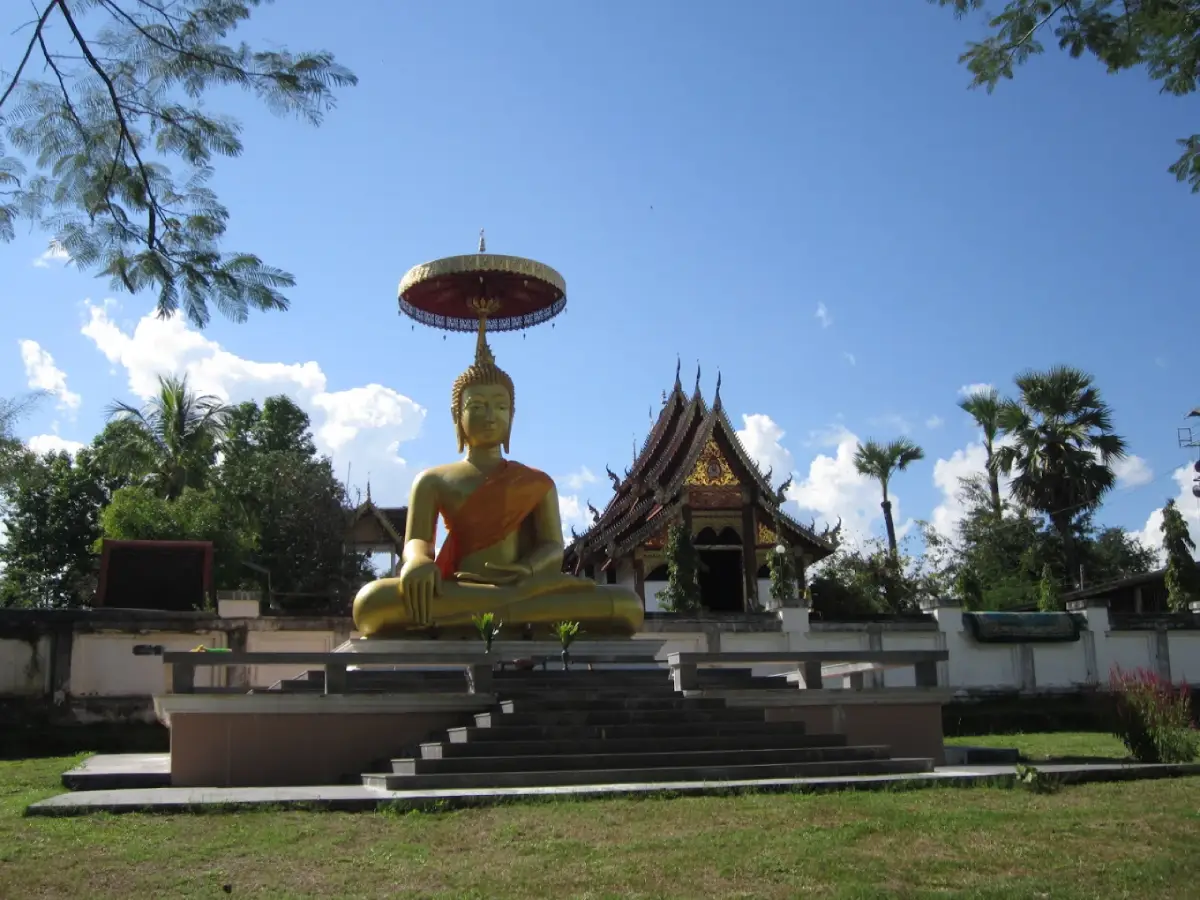
Wat Don Chiang is a local Buddhist temple under the Mahanikaya order, located in Ban Don Chiang, Moo 8, Sop Poeng Subdistrict, Mae Taeng District, Chiang Mai Province. It is an important community temple with religious, historical, and architectural value. The temple is listed under temple code 350060601 and is one of the notable village temples of Sop Poeng. Its most distinctive feature is an old Lanna-style viharn, over 100 years old, which preserves traditional northern Thai craftsmanship through its layered roof form, wooden structure, and joinery system that does not rely on nails or metal fasteners as the main structural method.
Wat Don Chiang is suitable for travelers who want to make merit, pay respect, and study a traditional Lanna community temple in Mae Taeng. It is not a large commercial tourist temple. Its value lies in its history, its connection with Ban Don Chiang, and its outstanding wooden architecture. Visiting the temple allows travelers to see how Buddhist faith, village cooperation, and local craftsmanship came together to create and preserve a sacred space for future generations.
Ban Don Chiang is part of Sop Poeng Subdistrict, an area of Mae Taeng known for rural communities, agricultural land, local roads, Highway 1095 on the Mae Malai-Pai route, the Mae Hao waterway, mixed deciduous forest, and mountain-linked landscapes. Sop Poeng lies about 10 kilometers from Mae Taeng District center and serves as both a local community area and a travel corridor for people heading toward Pai or other attractions in Mae Taeng. Wat Don Chiang therefore stands within a living community rather than as an isolated heritage site.
The name “Don Chiang” carries local place-name meaning. “Don” often suggests raised land or a small high ground, while “Chiang” evokes settlement, town, or local identity within northern Thai culture. Because the temple carries the same name as the village, it functions as both a sacred site and a marker of community identity. Wat Don Chiang is therefore not only a temple building, but also a reflection of local memory, faith, and the long relationship between people and place.
Wat Don Chiang was formerly known as Wat Si Don Chiang and has also been called Wat Siri Banphot. These names add historical depth to the temple. They suggest a layered identity connected with place, elevation, sacred geography, and village memory. Over time, local people came to call the temple Wat Don Chiang after the village itself, strengthening the bond between the temple and the community.
The temple was built in 1842. It occupies 13 rai, 1 ngan, and 69 square wah of temple land, with 4 plots of monastic land totaling 35 rai, 2 ngan, and 91 square wah. This long history and land foundation show the temple’s importance to the local community. A village temple founded in the mid-19th century helps reveal patterns of settlement, community faith, and Buddhist continuity in Sop Poeng and Mae Taeng.
The temple area includes key functional zones such as the Buddhist worship area and the monks’ residential area. The worship area supports merit-making, ceremonies, and devotional practice, while the monks’ area supports monastic residence and daily temple life. This organization reflects the typical structure of a Lanna community temple, where sacred activity and monastic life are both carefully accommodated.
Important structures and cultural elements at Wat Don Chiang include Phra Borommathat Siwichai, the Lanna-style viharn, the sermon hall, bell tower, monks’ residences, merit-making hall, kitchen, museum, and cultural learning area. These features make the temple more than a place for ceremonies. It is also a cultural space where visitors can learn about Buddhism, Lanna architecture, traditional woodwork, and the relationship between temple and village.
The Lanna-style viharn is the main highlight of Wat Don Chiang. Built more than a century ago, it features a layered roof form associated with northern Thai temple architecture. The rhythm of the roof tiers, wooden structure, and decorative details reflects the skill of local craftsmen. Its beauty does not depend on newness or grandeur, but on the harmony between timber, form, roofline, ornament, and the quiet atmosphere of a village temple.
The most remarkable aspect of the viharn is its wooden structure. Traditional craftsmen constructed the building without relying on nails or metal fasteners as the main method of joining. Instead, they cut holes, grooves, and fitted sections in the timber so that one piece of wood could be inserted into, locked with, or supported by another. This technique requires deep knowledge of weight, pressure, proportion, and material behavior. When executed correctly, the structure remains stable and durable. Wat Don Chiang is therefore an important example of Lanna carpentry wisdom.
The viharn was built through the collective effort of villagers, with traditional craftsmen supervising the construction. This reflects the Lanna way of temple-building, where sacred architecture emerged from shared faith and community labor. Villagers contributed time, materials, food, offerings, and support, while craftsmen guided the technical work. The temple is therefore not only an architectural achievement, but also a record of community devotion.
The viharn is also associated with the era of Khruba Chao Siwichai, the revered monk widely known as the saint of Lanna. The restoration of the temple during that period gives Wat Don Chiang additional historical and religious value. It connects the temple not only with local village faith, but also with the broader movement of Buddhist restoration and sacred-site renewal across northern Thailand.
Phra Borommathat Siwichai is another important sacred feature of the temple. In Lanna Buddhist culture, a relic shrine is not merely an architectural element. It is a devotional center where people pay respect, make merit, and connect with Buddhist memory. Together, the relic shrine, the old viharn, and the village setting give Wat Don Chiang religious, historical, and cultural depth.
The sermon hall, bell tower, monks’ residences, merit-making hall, kitchen, museum, and cultural learning area all support the temple’s role in the community. The sermon hall accommodates gatherings and merit-making activities. The bell tower symbolizes ritual time and temple communication. The monks’ residences support monastic life. The merit-making hall serves family and community ceremonies. The museum and cultural learning area help preserve local knowledge for younger generations.
Wat Don Chiang functions as a spiritual center for Ban Don Chiang and nearby communities. Local residents use the temple for Buddhist observances, Dhamma listening, family ceremonies, funerals, ordination-related events, merit-making, and annual religious activities. A village temple in northern Thailand often does more than provide a place for worship; it sustains relationships among generations and gives the community a shared spiritual anchor.
Religious activities at Wat Don Chiang follow the Buddhist calendar and Lanna village traditions. These include Buddhist holy days, Makha Bucha, Visakha Bucha, Asalha Bucha, Buddhist Lent, the end of Buddhist Lent, forest robe offerings, and Kathin offerings after Buddhist Lent. These events help maintain the temple, support monks, and strengthen the relationship between the temple and local residents.
Wat Don Chiang is especially valuable for those interested in traditional Lanna craftsmanship. Its wooden viharn shows how old craftsmen used patience, precision, and deep material understanding. Each timber element forms part of a structural system, and the joining of wood through cutting, fitting, insertion, and locking reveals both technical intelligence and artistic discipline. This makes the temple a meaningful destination for anyone interested in vernacular architecture and northern Thai heritage.
The main things to appreciate at Wat Don Chiang are the Lanna-style viharn, the nail-free wooden structure, Phra Borommathat Siwichai, the bell tower, the sermon hall, and the calm village-temple atmosphere. Visitors should observe the roofline, the wooden frame, and the relationship between the temple structures and the surrounding community. Because the old viharn is a heritage structure, visitors should avoid touching, leaning on, climbing, or damaging any wooden elements.
Sop Poeng Subdistrict has several village temples, including Wat Sop Poeng, Wat Tha Kham, Wat Doi Takaeng, Wat Pang Muang, Wat Pang Hang, Wat Nong Bua Luang, and Wat Sahakon Thung Mai. Wat Don Chiang is part of this local temple network, but it stands out for its Lanna viharn and its connection with Khruba Chao Siwichai-era restoration. Travelers interested in village temples can create a cultural route through Sop Poeng and nearby Mae Taeng communities.
Wat Don Chiang can be combined with a broader Mae Taeng travel route. For a cultural route, visitors can continue to Wat Tha Kham, Wat Sop Poeng, Wat Doi Takaeng, and Wat Pang Hang. For a nature and activity route, visitors can continue toward Mok Fa Waterfall, elephant conservation areas, and accommodation zones in Sop Poeng or Kuet Chang. This makes it possible to combine temple heritage, traditional craftsmanship, local food, nature, and accommodation in one trip.
Getting There is easiest by private car or rental car. From Chiang Mai city, take Chotana Road or Highway 107 toward Mae Taeng, then continue onto Highway 1095 on the Mae Malai-Pai route. From there, enter Sop Poeng Subdistrict and Ban Don Chiang via local roads. The route is connected to a main highway, but drivers should still be cautious in rainy weather, on wet roads, and on narrower village roads.
A half-day itinerary can begin at Wat Don Chiang for merit-making, a quiet temple visit, and a closer look at the old Lanna viharn. Visitors can then continue to nearby temples such as Wat Sop Poeng, Wat Tha Kham, or Wat Doi Takaeng, followed by a meal in the Sop Poeng area. A full-day route can include Mok Fa Waterfall, elephant-related attractions, or an overnight stay in Sop Poeng to experience Mae Taeng at a slower pace.
Wat Don Chiang is best suited to travelers interested in community temples, local history, Lanna art, traditional woodwork, and slow cultural routes. Photographers interested in architecture should focus on the roofline, timber details, and the overall village-temple atmosphere. Cultural travelers should also observe how the temple remains connected with the community, because the value of Wat Don Chiang lies not only in the old viharn but also in the way local people continue to care for it.
Visitors should dress modestly, speak quietly, respect monks’ areas, and avoid disturbing any religious activity. The old wooden viharn should be treated with care. Touching, scratching, climbing, or leaning against the structure may damage heritage materials that have survived for generations. A meaningful visit to Wat Don Chiang is one that respects both the sacred atmosphere and the craftsmanship preserved by the community.
Overall, Wat Don Chiang is a meaningful Mahanikaya community temple in Ban Don Chiang, Moo 8, Sop Poeng Subdistrict, Mae Taeng District, Chiang Mai. Built in 1842, it contains Phra Borommathat Siwichai, a Lanna-style viharn, a sermon hall, bell tower, monks’ residences, merit-making hall, kitchen, museum, and cultural learning area. Its old viharn, over 100 years old and built with traditional timber joinery rather than nails or metal fasteners as the main structural system, makes the temple one of Mae Taeng’s valuable cultural stops for understanding Lanna faith, craftsmanship, and community life.
| Name | Wat Don Chiang |
| Location | Ban Don Chiang, Moo 8, Sop Poeng Subdistrict, Mae Taeng District, Chiang Mai Province |
| Address | 85/8 Ban Don Chiang, Tha Kham-San Pa Yang Road, Moo 8, Sop Poeng Subdistrict, Mae Taeng District, Chiang Mai |
| Coordinates | 19.072775, 98.856734 |
| Open Days | Daily |
| Opening Hours | 08.00 – 17.00 |
| Temple Type | Community Buddhist Temple Under The Mahanikaya Order |
| Temple Code | 350060601 |
| Former / Alternative Names | Wat Si Don Chiang, Wat Siri Banphot |
| History | Built in 1842; the Lanna-style viharn is over 100 years old and was restored in the era of Khruba Chao Siwichai |
| Temple Land | 13 Rai, 1 Ngan, 69 Square Wah |
| Monastic Land | 4 Plots, 35 Rai, 2 Ngan, 91 Square Wah |
| Main Zones | Buddhist Worship Area And Monks’ Residential Area |
| Important Structures | Lanna-Style Viharn, Sermon Hall, Bell Tower, Monks’ Residences, Merit-Making Hall, Kitchen, Museum, And Cultural Learning Area |
| Sacred Features | Phra Borommathat Siwichai And The Old Lanna-Style Viharn |
| Highlights | Over-100-Year-Old Lanna-Style Viharn With Traditional Timber Joinery And No Reliance On Nails Or Metal Fasteners As The Main Structural System |
| Local Context | Sop Poeng lies on the Mae Malai-Pai route, connected with Highway 1095, Mae Hao waterway, agricultural villages, and mixed deciduous forest communities |
| Related Traditions | Buddhist holy day merit-making, Buddhist festivals, forest robe offerings, and Kathin offerings after Buddhist Lent |
| Travel Information | From Chiang Mai city, take Chotana Road or Highway 107 toward Mae Taeng, then continue onto Highway 1095 on the Mae Malai-Pai route and enter Ban Don Chiang in Sop Poeng Subdistrict. Private car or rental car is the most convenient option. |
| Current Status | Community Buddhist Temple Of Ban Don Chiang, Sop Poeng Subdistrict, Mae Taeng District, Chiang Mai |
| Nearby Tourist Attractions | 1. Wat Tha Kham, about 3 km 2. Wat Sop Poeng, about 5 km 3. Wat Doi Takaeng, about 6 km 4. Wat Pang Hang, about 8 km 5. Mok Fa Waterfall, about 18 km |
| Nearby Restaurants / Cafes | 1. Green Food Coffee, about 8 km, Tel. 089-998-9906 2. Pa Loi Restaurant, about 7 km, Tel. 080-673-5211 3. Baan Rai Lanna Resort Restaurant, about 6 km, Tel. 053-995-470 4. Veni Vana Valley Maetang, about 9 km, Tel. 080-031-2242 5. Sib San Cuisine, about 22 km, Tel. 081-980-9070, 098-924-2249 |
| Nearby Accommodations | 1. Baan Rai Lanna Resort, about 6 km, Tel. 053-995-470 2. Veni Vana Valley Maetang, about 9 km, Tel. 080-031-2242 3. Na Sompor Baan Din, about 10 km, Tel. 02-430-4464 4. Absolute Thai Hillside Villa Resort, about 11 km, Tel. 089-103-8322 5. Sibsan Resort & Spa Maetaeng, about 22 km, Tel. 081-980-9070, 098-924-2249 |
Frequently Asked Questions (FAQ)
Q: Where is Wat Don Chiang located?
A: Wat Don Chiang is located in Ban Don Chiang, Moo 8, Sop Poeng Subdistrict, Mae Taeng District, Chiang Mai Province.
Q: What type of temple is Wat Don Chiang?
A: Wat Don Chiang is a community Buddhist temple under the Mahanikaya order, listed under temple code 350060601.
Q: Why is Wat Don Chiang historically important?
A: Wat Don Chiang was built in 1842. It was formerly known as Wat Si Don Chiang and has also been called Wat Siri Banphot. Its old Lanna-style viharn is over 100 years old and was restored in the era of Khruba Chao Siwichai.
Q: What is special about the viharn at Wat Don Chiang?
A: The viharn is an old Lanna-style wooden structure with layered rooflines and traditional timber joinery. Its structure was built without relying on nails or metal fasteners as the main joining method.
Q: What important features can visitors see at Wat Don Chiang?
A: Important features include Phra Borommathat Siwichai, the Lanna-style viharn, sermon hall, bell tower, monks’ residences, merit-making hall, kitchen, museum, and cultural learning area.
Q: What kind of travelers is Wat Don Chiang suitable for?
A: It is suitable for travelers interested in community temples, Lanna architecture, traditional woodwork, local history, and slower cultural routes in Mae Taeng.
Q: What nearby places can be visited with Wat Don Chiang?
A: Nearby places include Wat Tha Kham, Wat Sop Poeng, Wat Doi Takaeng, Wat Pang Hang, Mok Fa Waterfall, and other attractions along the Mae Taeng-Pai route.
Q: How do travelers get to Wat Don Chiang from Chiang Mai city?
A: Take Chotana Road or Highway 107 toward Mae Taeng, continue onto Highway 1095 on the Mae Malai-Pai route, then enter Ban Don Chiang in Sop Poeng Subdistrict. Private car or rental car is the most convenient option.
 Category: ●Places of Worship
 Group: ●Temple
Last Update : 2 WeekAgo
 Last Update : 2 WeekAgo
 Click to Access the Navigation Map GPS
 Muang Chiang Mai(121)Chom Thong(47)Mae Chaem(25)Chiang Dao(33)Doi Saket(68)Mae Taeng(85)Mae Rim(69)Samoeng(29)Fang(71)Mae Ai(59)Phrao(70)San Pa Tong(103)San Kamphaeng(66)San Sai(73)Hang Dong(73)Hot(32)Doi Tao(22)Omkoi(11)Saraphi(74)Wiang Haeng(15)Chai Prakan(28)Mae Wang(32)Mae On(22)Doi Lo(34)Galyani Vadhana(1)


