
lovethailand home >North Travel Attractions >Chiang Mai Travel Attractions >Mae Taeng >Mae Ho Phra > Wat San Na Meng (Mae Ho Phra)
TL;DR: Wat San Na Meng (Mae Ho Phra) is located at Moo 7, Ban Na Meng, Mae Ho Phra Subdistrict, Mae Taeng District, Chiang Mai Province.

Wat San Na Meng (Mae Ho Phra)
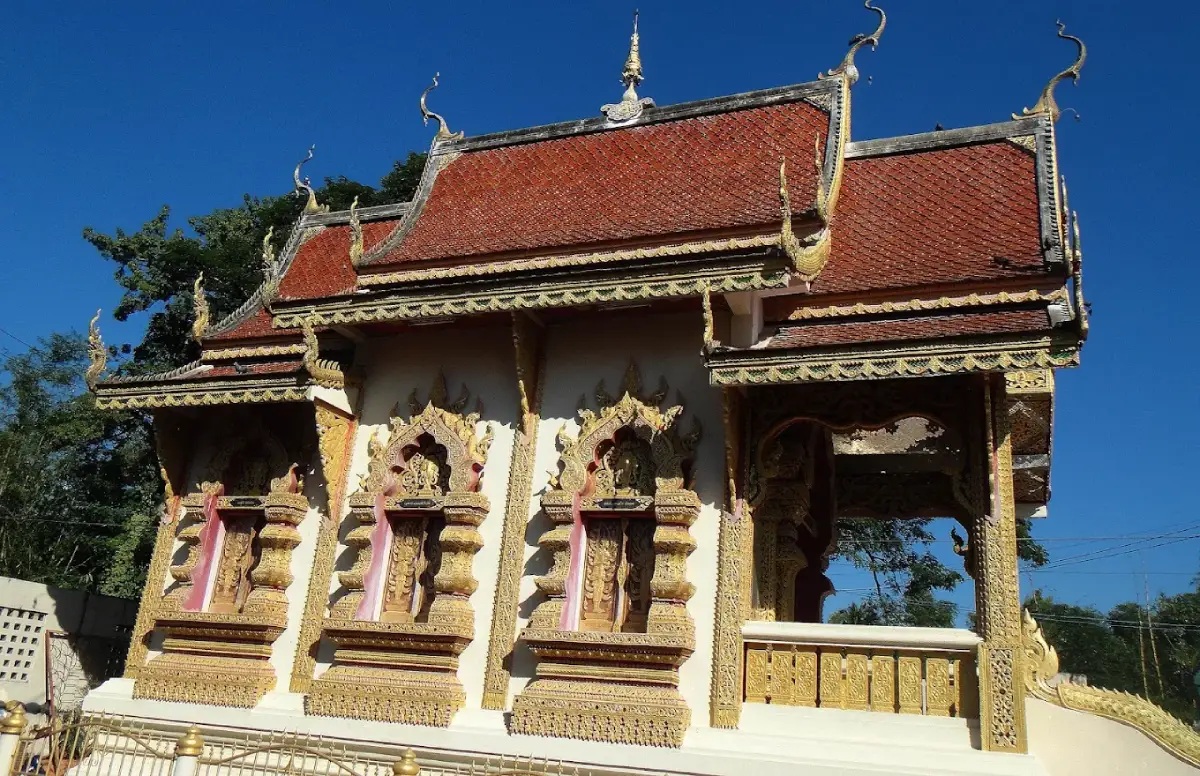
Operating day: Daily
Operating time: 08.00 - 17.00
Wat San Na Meng (Mae Ho Phra) is a local Buddhist temple in Moo 7, Ban Na Meng, Mae Ho Phra Subdistrict, Mae Taeng District, Chiang Mai Province 50150. It is a community temple under the Mahanikaya order and serves as a spiritual center for Ban Na Meng. The temple was officially established in 1937 and remains listed in Mae Taeng temple records under temple code 350060508.
Wat San Na Meng is suitable for travelers who want to make merit, pay respect, and experience a quiet village temple in Mae Taeng. It is not a major commercial tourist attraction. Its value lies in its role as a living community temple where local residents gather for Buddhist observances, merit-making, family ceremonies, annual religious events, and community activities.
Ban Na Meng is Moo 7 of Mae Ho Phra Subdistrict. The village is connected with Wat Na Meng School, local homes, village roads, agricultural surroundings, and the route toward Mae Taeng’s natural attractions. Wat San Na Meng therefore stands within a community setting where Buddhism, education, family life, and local roads are closely linked.
Mae Ho Phra Subdistrict is located in Mae Taeng District, Chiang Mai Province. The area includes rural villages, agricultural land, local schools, community temples, village roads, and natural attractions such as Bua Tong Waterfall and the Seven-Color Spring. Wat San Na Meng belongs to this cultural landscape where Buddhist life, education, rural communities, and nature exist side by side.
The official establishment of Wat San Na Meng in 1937 gives the temple strong local significance. In northern Thai village life, temples were not built only as sacred places. They also served as social centers for worship, Dhamma listening, ordination-related activities, funerals, family merit-making, and annual village gatherings. Wat San Na Meng continues this role for the Ban Na Meng community.
The name “San Na Meng” and the local place-name “Ban Na Meng” carry community identity. “San” in northern Thai place-names often suggests a ridge, raised ground, or settlement feature, while “Na Meng” preserves the name of the local village. A temple carrying this identity becomes both a place of worship and a marker of community memory. Wat San Na Meng therefore preserves the identity of Ban Na Meng within a religious and cultural context.
The abbot of Wat San Na Meng is Phra Athikan Sawat Thanapanyo. In a community temple, the abbot has an important role in guiding religious practice, maintaining the temple grounds, coordinating with local devotees, and preserving the relationship between the temple and the village. This role is essential for a local temple that continues to support community religious life.
As a Mahanikaya community temple, Wat San Na Meng supports the everyday Buddhist life of local residents. It serves as a place for worship, merit-making, ceremonies, and community gatherings throughout the year. Visitors should approach the temple as a sacred community space rather than as a commercial attraction.
The main appeal of Wat San Na Meng is its quiet village atmosphere. Visitors can pay respect, make merit, and observe the relationship between the temple and Ban Na Meng community life. The temple gives travelers a deeper view of Mae Ho Phra beyond Bua Tong Waterfall and nature-based tourism.
Wat Na Meng School adds an important community dimension to the area. The presence of both a temple and a school in the village reflects the social structure of a northern Thai community, where education, religion, family life, and local traditions are closely linked. The school supports young people, while the temple sustains spiritual practice, morality, and communal memory.
The area surrounding Wat San Na Meng shows another side of Mae Taeng. Instead of the more crowded activity-based tourism zones, Ban Na Meng has the atmosphere of a working community with homes, a school, local roads, agricultural surroundings, and routes leading toward natural attractions. A visit to Wat San Na Meng is therefore best understood as a slow cultural stop rather than a quick sightseeing point.
Wat San Na Meng serves as a religious center for Ban Na Meng. Villagers use the temple for Buddhist holy days, major Buddhist festivals, family merit-making, ordination-related activities, funerals, memorial ceremonies, and village events. The temple is therefore both a sacred space and a social anchor for the community.
Religious activities at Wat San Na Meng follow the Buddhist calendar and Lanna village traditions. These include Buddhist holy days, Makha Bucha, Visakha Bucha, Asalha Bucha, Buddhist Lent, the end of Buddhist Lent, forest robe offerings, and Kathin offerings after Buddhist Lent. These events help maintain the temple, support monks, and strengthen the relationship between local residents and their temple.
Kathin and forest robe offerings are especially meaningful for village temples. These merit-making events allow villagers, relatives, and supporters to help maintain temple facilities and support monastic life. For Wat San Na Meng, such events also reinforce community unity and the long-standing bond between the temple and Ban Na Meng.
Mae Ho Phra Subdistrict has several community temples spread across its villages, including Wat Mae Ho Phra, Wat Ban Phueng, Wat Mae Na Pak, Wat Pa Lao, Wat Phra That Sunantha, Wat Hua Fai, Wat Phu Din, Wat Lao Kong, and Wat Thep Nimit Nantharam. Wat San Na Meng is part of this local temple network, showing how each village maintains its own spiritual center within the wider subdistrict.
The access road to Wat San Na Meng is part of the village road network in Ban Na Meng. This is important for a community temple because local roads support daily merit-making, funeral ceremonies, ordination-related gatherings, annual events, and village activities. The temple is therefore closely connected with the everyday movement of the community.
Wat San Na Meng can be combined with Bua Tong Waterfall and the Seven-Color Spring, the most notable natural attraction in Mae Ho Phra. Bua Tong is a limestone waterfall with a grippy mineral surface that allows visitors to climb the waterfall carefully, while the Seven-Color Spring is a clear cool spring that feeds the mineral stream and waterfall system. Visiting Wat San Na Meng before or after the waterfall creates a more balanced route, combining temple life, village culture, and nature.
A useful travel route begins at Wat San Na Meng for merit-making and a quiet village-temple visit, then continues to Wat Mae Ho Phra, Wat Phra That Sunantha, Wat Ban Phueng, Wat Mae Na Pak, or Wat Pa Lao. Travelers can then continue to Bua Tong Waterfall and the Seven-Color Spring. This route is suitable for a half-day or full-day trip, especially for visitors who want to experience both local Buddhist culture and Mae Taeng’s natural scenery in one journey.
Getting to Wat San Na Meng is easiest by private car or rental car. From Chiang Mai city, take Chotana Road or Highway 107 toward Mae Taeng, then continue toward the Chiang Mai-Phrao route through Mae Ho Phra Subdistrict and Ban Na Meng. The route is generally more accessible than deep mountain routes, but careful driving is still recommended in rainy weather or on wet roads.
Travelers planning a half-day route can begin at Wat San Na Meng, visit nearby community temples, and finish at Bua Tong Waterfall and the Seven-Color Spring. A full-day route can include a local meal, cafe stop, or overnight stay around Mae Ho Phra, such as Baannai Homestay & Flower Tea or Bua Tong Resort. This makes the trip more relaxed and gives visitors more time to appreciate the area rather than treating it only as a waterfall stop.
Wat San Na Meng is best suited to travelers interested in community temples, local Buddhist practice, village culture, and less crowded cultural routes. It may not be one of Chiang Mai’s most famous tourist temples, but it has strong local importance. Its establishment year, Mahanikaya status, village setting, and relationship with Ban Na Meng make it meaningful within the religious geography of Mae Taeng.
Visitors should dress modestly, speak quietly, avoid disturbing monks’ residential areas, and respect any ongoing religious activity. If a ceremony or merit-making event is taking place, follow the guidance of monks or local residents. Proper etiquette helps preserve the calm atmosphere of Wat San Na Meng and shows respect for the community that continues to use the temple.
Overall, Wat San Na Meng is a meaningful community temple in Ban Na Meng, Mae Ho Phra Subdistrict, Mae Taeng District. With its official establishment in 1937, its status as a Mahanikaya local temple, its role under Phra Athikan Sawat Thanapanyo, and its relationship with a village community connected to Wat Na Meng School, local roads, agriculture, and the route toward Bua Tong Waterfall, the temple is a valuable cultural stop for travelers who want to understand the deeper village-based Buddhist life of Mae Taeng.
| Name | Wat San Na Meng (Mae Ho Phra) |
| Location | Moo 7, Ban Na Meng, Mae Ho Phra Subdistrict, Mae Taeng District, Chiang Mai Province |
| Address | Moo 7, Ban Na Meng, Mae Ho Phra Subdistrict, Mae Taeng District, Chiang Mai 50150, Thailand |
| Map Code | 4352+63C, Mae Ho Phra Subdistrict, Mae Taeng District, Chiang Mai |
| Temple Type | Community Buddhist Temple Under The Mahanikaya Order |
| Temple Code | 350060508 |
| Highlights | Community temple of Ban Na Meng, suitable for merit-making and learning about village-based Buddhist life in Mae Ho Phra Subdistrict |
| History | Officially established as a temple in 1937 |
| Local Context | Ban Na Meng is Moo 7 of Mae Ho Phra Subdistrict, connected with Wat Na Meng School, local roads, homes, agriculture, and the route toward Bua Tong Waterfall and the Seven-Color Spring |
| Distinctive Features | A village temple connected with Ban Na Meng, Wat Na Meng School, Lanna community life, the Chiang Mai-Phrao route, and Mae Taeng’s natural attractions |
| Abbot / Caretaker | Phra Athikan Sawat Thanapanyo |
| Related Traditions | Buddhist holy day merit-making, Buddhist festivals, forest robe offerings, and Kathin offerings after Buddhist Lent |
| Travel Information | From Chiang Mai city, take Chotana Road or Highway 107 toward Mae Taeng, then continue toward the Chiang Mai-Phrao route through Mae Ho Phra Subdistrict and Ban Na Meng. Private car or rental car is the most convenient option. |
| Current Status | Community Buddhist Temple Of Ban Na Meng, Mae Ho Phra Subdistrict, Mae Taeng District, Chiang Mai |
| Nearby Tourist Attractions | 1. Wat Mae Ho Phra, about 6 km 2. Wat Phra That Sunantha, about 7 km 3. Wat Mae Na Pak, about 8 km 4. Wat Ban Phueng, about 8 km 5. Bua Tong Waterfall And Seven-Color Spring, about 10 km |
| Nearby Restaurants / Cafes | 1. Baannai Homestay & Flower Tea, about 10 km, Tel. 099-654-5659 2. Local Food Shops In Mae Ho Phra Area, about 6 km 3. Food Shops Around Bua Tong Waterfall Area, about 10 km 4. Local Food Shops In Mae Malai Area, about 18 km 5. Cafes And Food Stops Along The Mae Taeng-Phrao Route, about 10 km |
| Nearby Accommodations | 1. Baannai Homestay & Flower Tea, about 10 km, Tel. 099-654-5659 2. Bua Tong Resort, about 11 km, Tel. 081-952-3259 3. Mae Malai Hotel, about 18 km, Tel. 053-842-620, 095-610-6489 4. Doona Resort, about 27 km, Tel. 093-275-3888 5. Lochi Chiangmai, about 30 km |
Frequently Asked Questions (FAQ)
Q: Where is Wat San Na Meng located?
A: Wat San Na Meng is located in Moo 7, Ban Na Meng, Mae Ho Phra Subdistrict, Mae Taeng District, Chiang Mai Province 50150.
Q: What type of temple is Wat San Na Meng?
A: Wat San Na Meng is a community Buddhist temple under the Mahanikaya order.
Q: Why is Wat San Na Meng historically important?
A: Wat San Na Meng was officially established in 1937 and serves as a community temple of Ban Na Meng in Mae Ho Phra Subdistrict.
Q: Who is the abbot of Wat San Na Meng?
A: The abbot of Wat San Na Meng is Phra Athikan Sawat Thanapanyo.
Q: What is the main highlight of Wat San Na Meng?
A: Its main highlight is its role as a village temple connected with Ban Na Meng, Wat Na Meng School, local roads, Lanna village life, and the route toward Bua Tong Waterfall.
Q: What kind of travelers is Wat San Na Meng suitable for?
A: It is suitable for travelers interested in merit-making, quiet village temples, local Buddhist culture, and a Mae Ho Phra route that combines temple life with nature.
Q: What nearby places can be visited with Wat San Na Meng?
A: Nearby places include Wat Mae Ho Phra, Wat Phra That Sunantha, Wat Mae Na Pak, Wat Ban Phueng, Bua Tong Waterfall, and the Seven-Color Spring.
Q: How do travelers get to Wat San Na Meng from Chiang Mai city?
A: Take Chotana Road or Highway 107 toward Mae Taeng, then continue toward the Chiang Mai-Phrao route through Mae Ho Phra Subdistrict and Ban Na Meng. Private car or rental car is the most convenient option.
 Category: ●Places of Worship
 Group: ●Temple
Last Update : 2 MonthAgo
 Last Update : 2 MonthAgo
 Click to Access the Navigation Map GPS
Wat San Na Meng (Mae Ho Phra) Map
Recommend

 Muang Chiang Mai(121)Chom Thong(47)Mae Chaem(25)Chiang Dao(33)Doi Saket(68)Mae Taeng(85)Mae Rim(69)Samoeng(29)Fang(71)Mae Ai(59)Phrao(70)San Pa Tong(103)San Kamphaeng(66)San Sai(73)Hang Dong(73)Hot(32)Doi Tao(22)Omkoi(11)Saraphi(74)Wiang Haeng(15)Chai Prakan(28)Mae Wang(32)Mae On(22)Doi Lo(33)Galyani Vadhana(1)


