
lovethailand home >North Travel Attractions >Chiang Mai Travel Attractions >Mae Taeng >Pa Pae > Wat Tha Pha
TL;DR: Wat Tha Pha is located at Moo 11, Ban Tha Pha, Pa Pae Subdistrict, Mae Taeng District, Chiang Mai Province. Highlights include Community temple of Ban Tha Pha, suitable for merit-making and learning about local highland Buddhist life in Pa Pae Subdistrict.

Wat Tha Pha
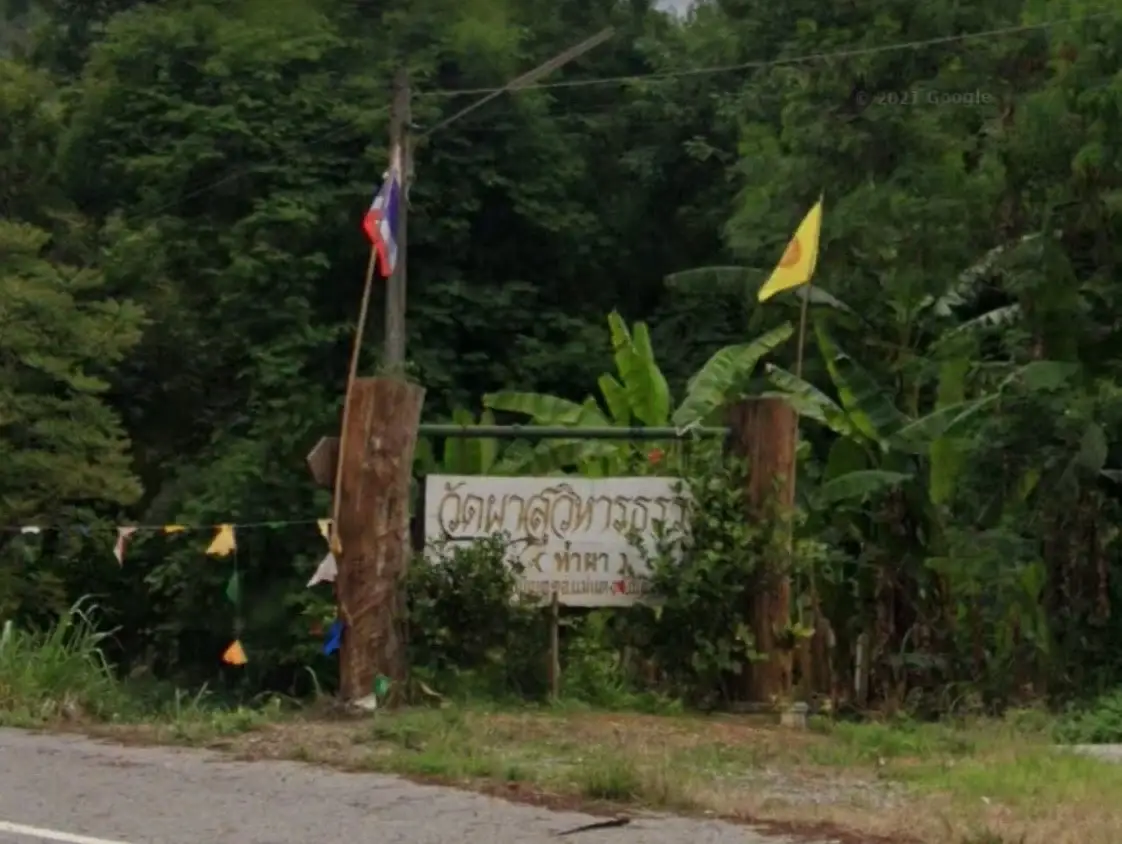
Operating day: Daily
Operating time: 08.00 - 17.00
Wat Tha Pha is a local Buddhist temple in Moo 11, Ban Tha Pha, Pa Pae Subdistrict, Mae Taeng District, Chiang Mai Province 50150. It is a community temple under the Mahanikaya order and serves as a religious center for Ban Tha Pha, a highland village in Pa Pae. The temple was officially established in 1928 and remains listed in temple records for Mae Taeng District, confirming its continuing status as an active community temple.
Wat Tha Pha is suitable for travelers who want to make merit, pay respect, and experience a quiet village temple in the highland area of Mae Taeng. It is not a major commercial tourist attraction. Its value lies in its role as a living community temple where local residents gather for Buddhist observances, merit-making, family ceremonies, annual religious events, and community activities.
Ban Tha Pha is Moo 11 of Pa Pae Subdistrict. The village is part of a highland community area along the Mae Taeng-Pai route. The Pa Pae area is known for mountains, highland agriculture, coffee, tea, cool air, and a mix of local communities including Thai lowland residents, Karen, and Lisu groups. Wat Tha Pha therefore reflects the relationship between Buddhism, village life, and highland culture in northern Chiang Mai.
Information from highland development records lists Ban Tha Pha as one of the 13 target villages in Pa Pae and records its elevation at about 703 meters above sea level. This highland setting gives the temple a different atmosphere from lowland temples in central Chiang Mai. Visitors will experience a temple that belongs to a mountain village community rather than a busy urban or mass-tourism setting.
The establishment of Wat Tha Pha in 1928 shows that Ban Tha Pha had a stable community and a clear need for its own Buddhist temple. In northern Thai village life, temples are built not only as sacred places, but also as social centers for worship, Dhamma listening, ordination-related events, funerals, family merit-making, and annual village gatherings. Wat Tha Pha continues this role for the local community.
The name “Tha Pha” has a strong geographical character. “Tha” often suggests a landing point, crossing point, or local passage, while “Pha” refers to a cliff or rocky highland feature. Many northern Thai temples are named after villages, streams, fields, forests, or surrounding terrain. Wat Tha Pha therefore preserves local geography and community identity within its name.
The abbot listed in the source information is Phra Khru Prachak Khemakhun Khemacharo. In a community temple, the abbot has an important role in guiding religious practice, maintaining the temple grounds, coordinating with local devotees, and preserving the relationship between the temple and the village. This role is essential for a local highland temple that continues to support community religious life.
Public architectural information about individual buildings at Wat Tha Pha is limited, but its function as a working village temple is clear. It serves as a place for worship, merit-making, ceremonies, and community gatherings throughout the year. Visitors should approach the temple as a sacred community space rather than as a commercial attraction.
The main appeal of Wat Tha Pha is its quiet village-temple atmosphere and its location in the Pa Pae highland community. A meaningful visit begins with paying respect, making merit, and observing the temple grounds respectfully. The value of the temple lies in its authenticity, its calm setting, and its connection with local life.
Wat Tha Pha serves as a religious center for Ban Tha Pha. Villagers use the temple for Buddhist holy days, major Buddhist festivals, family merit-making, ordination-related activities, funerals, memorial ceremonies, and village events. The temple is therefore both a sacred space and a social anchor for the community.
Religious activities at Wat Tha Pha follow the Buddhist calendar and Lanna village traditions. These include Buddhist holy days, Makha Bucha, Visakha Bucha, Asalha Bucha, Buddhist Lent, the end of Buddhist Lent, forest robe offerings, and Kathin offerings after Buddhist Lent. These events help maintain the temple, support monks, and strengthen the relationship between local residents and their temple.
Pa Pae Subdistrict has a strong highland identity. The area is connected with the Royal Project-style highland development work, local agriculture, coffee, tea, and mountain communities. Wat Tha Pha stands within this wider landscape. Visiting the temple can therefore be combined with learning about Pa Pae’s highland agriculture, village life, and natural surroundings.
Wat Tha Pha can be included in a broader Mae Taeng-Pai route. Nearby places include Ban Pa Pae, Pa Pae Highland Development Project area, 32 Coffee Hill & Resort, Harvest Moon Valley, Pong Dueat Hot Spring, and Huai Nam Dang National Park. Adding Wat Tha Pha to a travel route gives visitors a more balanced view of Mae Taeng by combining local temples, village culture, mountain agriculture, cafes, and nature.
Getting to Wat Tha Pha is easiest by private car or rental car. From Chiang Mai city, take Chotana Road or Highway 107 toward Mae Taeng District, then continue onto Highway 1095, the Mae Taeng-Pai road. From there, continue into Pa Pae Subdistrict and Ban Tha Pha using local roads. The route includes mountain and winding sections, so careful driving is recommended, especially in the rainy season or when mist is present.
A practical itinerary is to begin at Wat Tha Pha for a quiet temple visit and merit-making. Travelers can then continue to Ban Pa Pae, the Pa Pae highland development area, 32 Coffee Hill, or Harvest Moon Valley. Those with more time can continue toward Pong Dueat Hot Spring or Huai Nam Dang National Park. This route combines faith, village culture, highland agriculture, coffee, and mountain scenery in one trip.
Wat Tha Pha is best suited to travelers interested in community temples, highland villages, local Buddhist culture, and less crowded cultural routes. It may not be one of Chiang Mai’s most famous tourist temples, but it has strong local importance. Its establishment year, Mahanikaya status, current abbot, and continuing relationship with Ban Tha Pha make it meaningful within the religious geography of Mae Taeng.
Visitors should dress modestly, speak quietly, avoid disturbing monks’ residential areas, and respect any ongoing religious activity. If a ceremony or merit-making event is taking place, follow the guidance of monks or local residents. Proper etiquette helps preserve the calm atmosphere of Wat Tha Pha and shows respect for the community that continues to use the temple.
Overall, Wat Tha Pha is a meaningful community temple in Ban Tha Pha, Pa Pae Subdistrict, Mae Taeng District. With its official establishment in 1928, its status as a Mahanikaya local temple, and its continuing role as a spiritual center for a highland village community, the temple is a valuable cultural stop for travelers who want to understand the deeper village-based Buddhist life of Mae Taeng and the Pa Pae highlands.
| Name | Wat Tha Pha |
| Location | Moo 11, Ban Tha Pha, Pa Pae Subdistrict, Mae Taeng District, Chiang Mai Province |
| Address | Moo 11, Ban Tha Pha, Pa Pae Subdistrict, Mae Taeng District, Chiang Mai 50150, Thailand |
| Temple Type | Community Buddhist Temple Under The Mahanikaya Order |
| Highlights | Community temple of Ban Tha Pha, suitable for merit-making and learning about local highland Buddhist life in Pa Pae Subdistrict |
| History | Officially established as a temple in 1928 |
| Local Context | Ban Tha Pha is Moo 11 of Pa Pae Subdistrict, a highland community area of Mae Taeng with mountain scenery and local agricultural life |
| Distinctive Features | A village temple connected with Ban Tha Pha and the community temple network of Pa Pae Subdistrict |
| Abbot / Caretaker | Phra Khru Prachak Khemakhun Khemacharo |
| Related Traditions | Buddhist holy day merit-making, Buddhist festivals, forest robe offerings, and Kathin offerings after Buddhist Lent |
| Travel Information | From Chiang Mai city, take Chotana Road or Highway 107 toward Mae Taeng, then continue onto Highway 1095 toward Pa Pae and Ban Tha Pha. Private car or rental car is the most convenient option. |
| Current Status | Active community Buddhist temple listed in Mae Taeng temple records |
| Nearby Tourist Attractions | 1. Ban Pa Pae, about 8 km 2. Pa Pae Highland Development Project Area, about 8 km 3. 32 Coffee Hill & Resort, about 10 km 4. Harvest Moon Valley, about 13 km 5. Pong Dueat Hot Spring, about 30 km |
| Nearby Restaurants / Cafes | 1. 32 Coffee Hill, about 10 km, Tel. 053-047-581 2. Harvest Moon Valley, about 13 km, Tel. 093-536-5392 3. iRETREAT Jungle Bliss, Pa Pae Restaurant Area, about 8 km, Tel. 082-411-2255 4. Rai Phusaitran - Hostel Restaurant Area, about 22 km 5. Local Food Shops In Ban Pa Pae Area, about 8 km |
| Nearby Accommodations | 1. iRETREAT Jungle Bliss, Pa Pae, about 8 km, Tel. 082-411-2255 2. 32 Coffee Hill & Resort, about 10 km, Tel. 053-047-581 3. Lochi Chiangmai, about 9 km, Tel. 085-824-2149 4. LOUVREFER Chiang Mai, about 12 km 5. Rai Phusaitran - Hostel, about 22 km |
Frequently Asked Questions (FAQ)
Q: Where is Wat Tha Pha located?
A: Wat Tha Pha is located in Moo 11, Ban Tha Pha, Pa Pae Subdistrict, Mae Taeng District, Chiang Mai Province 50150.
Q: What type of temple is Wat Tha Pha?
A: Wat Tha Pha is a community Buddhist temple under the Mahanikaya order.
Q: Why is Wat Tha Pha historically important?
A: Wat Tha Pha was officially established in 1928 and serves as a community temple of Ban Tha Pha in Pa Pae Subdistrict.
Q: Who is the abbot of Wat Tha Pha?
A: The abbot of Wat Tha Pha is Phra Khru Prachak Khemakhun Khemacharo.
Q: What kind of travelers is Wat Tha Pha suitable for?
A: It is suitable for travelers interested in merit-making, quiet village temples, highland communities, and local Buddhist culture in Pa Pae.
Q: What nearby places can be visited with Wat Tha Pha?
A: Nearby places include Ban Pa Pae, the Pa Pae Highland Development Project area, 32 Coffee Hill & Resort, Harvest Moon Valley, and Pong Dueat Hot Spring.
Q: How do travelers get to Wat Tha Pha from Chiang Mai city?
A: Take Chotana Road or Highway 107 toward Mae Taeng, then continue onto Highway 1095 toward Pa Pae and Ban Tha Pha. Private car or rental car is the most convenient option.
 Category: ●Places of Worship
 Group: ●Temple
Last Update : 2 MonthAgo
 Last Update : 2 MonthAgo
 Click to Access the Navigation Map GPS

 Muang Chiang Mai(121)Chom Thong(47)Mae Chaem(25)Chiang Dao(33)Doi Saket(68)Mae Taeng(85)Mae Rim(69)Samoeng(29)Fang(71)Mae Ai(59)Phrao(70)San Pa Tong(103)San Kamphaeng(66)San Sai(73)Hang Dong(73)Hot(32)Doi Tao(22)Omkoi(11)Saraphi(74)Wiang Haeng(15)Chai Prakan(28)Mae Wang(32)Mae On(22)Doi Lo(33)Galyani Vadhana(1)


