
lovethailand home >North Travel Attractions >Chiang Mai Travel Attractions >Mae Taeng >Ban Chang > Wat Ban Chang
TL;DR: Wat Ban Chang is located at Moo 2, Ban Chang Subdistrict, Mae Taeng District, Chiang Mai Province, open Daily, hours 08.00 - 17.00.

Wat Ban Chang
Open Days: Daily
Opening Hours: 08.00 - 17.00
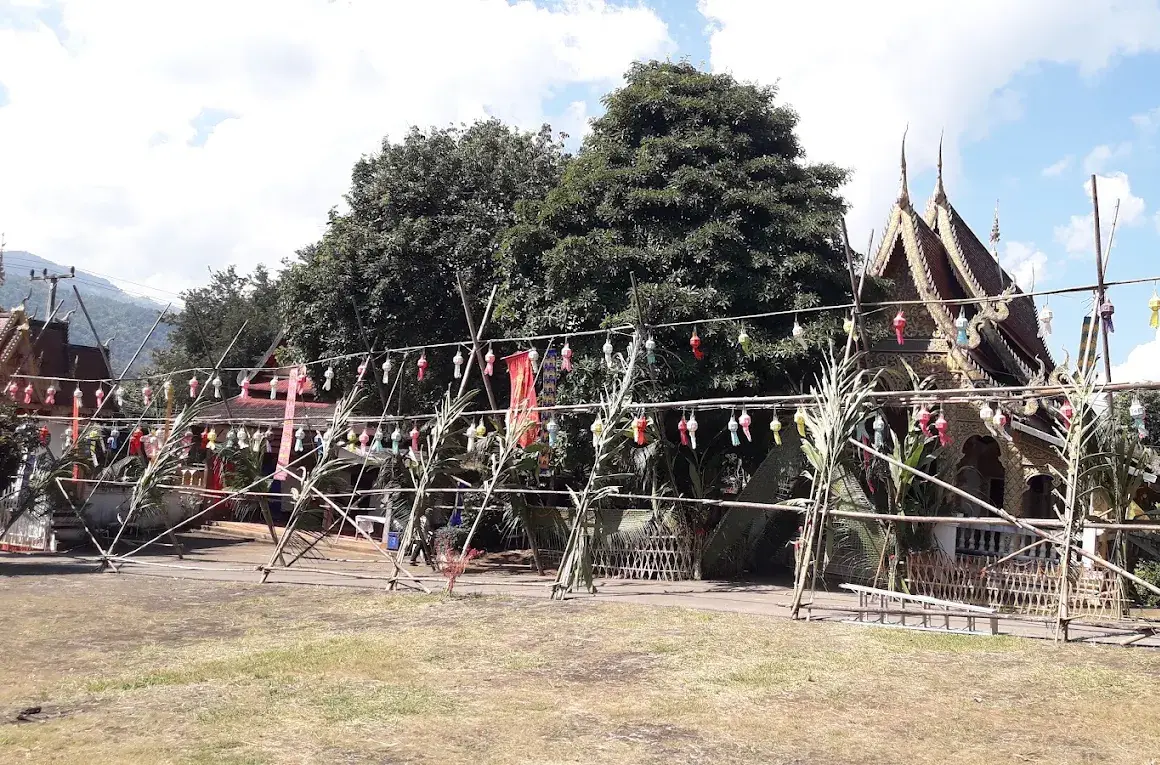
Wat Ban Chang is a local Buddhist temple in Moo 2, Ban Chang Subdistrict, Mae Taeng District, Chiang Mai Province. It is a community temple under the Mahanikaya order and has long served as a spiritual center for the Ban Chang community. The temple was officially established in 1907, making it one of the older community temples in this part of Mae Taeng. For travelers, Wat Ban Chang offers a quiet and authentic view of local Buddhist life in northern Thailand.
Wat Ban Chang is suitable for visitors who want to make merit, pay respect, and experience a peaceful village temple away from the busier tourist route. The temple is not known for large-scale architecture or heavy tourism. Its value comes from its role as a living community temple where local people continue to gather for Buddhist ceremonies, merit-making, family rituals, and annual religious events.
Ban Chang Subdistrict has a clear local history connected with elephants. The name “Ban Chang” is linked with the movement of elephant handlers and elephants into the area in the past. This history gives the subdistrict a distinct identity and explains why elephant-related tourism is so prominent in the wider Mae Taeng area today. Wat Ban Chang stands within this cultural landscape and adds a religious and community dimension to the area’s better-known elephant and nature attractions.
The subdistrict is located on the western side of Mae Taeng District and connects with areas such as Kued Chang, Khilek, and other northern Chiang Mai routes. The surrounding landscape includes rural roads, agricultural areas, elephant parks, tea gardens, and natural attractions. Within this setting, Wat Ban Chang functions as a village religious center that helps visitors understand the cultural side of Mae Taeng, beyond outdoor activities and scenic travel.
The temple’s official establishment in 1907 shows that Wat Ban Chang has supported the local community for more than a century. In northern Thai villages, a temple is more than a sacred site. It serves as a place for worship, moral education, ordination-related ceremonies, funerals, seasonal merit-making, and communal gatherings. Wat Ban Chang therefore preserves part of the local religious history of Ban Chang Subdistrict.
As a community temple, Wat Ban Chang reflects the relationship between Buddhism and daily life. Local residents use the temple for Buddhist holy days, family ceremonies, offerings to monks, and village merit-making. The temple provides a shared space where villagers can gather at important moments in life. This makes Wat Ban Chang both a sacred place and a social anchor for the surrounding community.
The current abbot of Wat Ban Chang is Phra Palat Charan Chantawongso. In a village temple, the abbot plays an important role in guiding religious activities, coordinating with local devotees, caring for temple grounds, and maintaining the continuity of annual merit-making. The abbot therefore helps connect the monastic community with the everyday life of the village.
Wat Ban Chang has a modest local atmosphere. Detailed public information about individual buildings is limited, but the temple continues to function as a place for worship, merit-making, and community religious activities. The most meaningful part of a visit is not architectural grandeur, but the opportunity to see a local temple that remains part of the village’s living religious culture.
Visitors should take time to pay respect, walk quietly around the temple grounds, and observe the surrounding village atmosphere. The temple’s appeal lies in its calm setting and connection with local life. It is a suitable stop for travelers who prefer slow cultural travel and want to understand how Buddhism continues to shape daily life in rural Chiang Mai.
Religious activities at Wat Ban Chang follow the Buddhist calendar and local Lanna traditions. These include Buddhist holy days, Makha Bucha, Visakha Bucha, Asalha Bucha, Buddhist Lent, the end of Buddhist Lent, forest robe offerings, and Kathin ceremonies. A 2025 Kathin listing recorded Wat Ban Chang with 5 resident monks and a Kathin ceremony scheduled on October 19, 2025. This reflects the temple’s continuing role as an active Buddhist site.
Kathin is an important post-Buddhist Lent tradition in which lay devotees offer robes and support to monks. In a village temple such as Wat Ban Chang, Kathin is also a community event. It brings local residents, devotees, and supporters together to maintain temple buildings, support monastic life, and renew the bond between the temple and the village.
Wat Ban Chang also helps complete the cultural picture of Ban Chang Subdistrict. The area is often associated with elephants, tea gardens, and nature-based travel. The temple adds another layer: the religious and community life of local people. A visit to Wat Ban Chang helps travelers understand that Mae Taeng is not only a place for outdoor activities, but also a district with deep village-based Buddhist traditions.
Wat Ban Chang can be connected with nearby attractions such as Araksa Tea Garden, Baan Chang Elephant Park, Maetaeng Elephant Park, Mae Taeng rafting routes, and Wat Pang Mai Daeng. Adding the temple to this route creates a more balanced itinerary that includes culture, faith, nature, local food, and elephant-related experiences.
Getting to Wat Ban Chang is easiest by private car or rental car. From Chiang Mai city, take Chotana Road or Highway 107 north toward Mae Taeng District, pass the Mae Rim and Mae Malai areas, and continue into Ban Chang Subdistrict using local roads. The journey usually takes about 1 hour to 1 hour 30 minutes depending on traffic. The final section uses local roads, so careful driving is recommended, especially during the rainy season.
A practical itinerary is to begin with Wat Ban Chang for a quiet temple visit and merit-making. After that, travelers can continue to Araksa Tea Garden for organic tea and scenic tea fields, or visit Baan Chang Elephant Park and Maetaeng Elephant Park along the same broader route. Travelers who prefer nature activities can continue toward Mae Taeng River rafting, Kued Chang, or the Maetaman area.
Wat Ban Chang is best suited to travelers who prefer quiet local places and cultural context rather than crowded attractions. It may not be the most famous temple in Mae Taeng, but it represents the religious foundation of the Ban Chang community. Visiting the temple gives travelers a clearer view of how village temples continue to support faith, family, and community life in northern Thailand.
Visitors should dress modestly, speak quietly, avoid disturbing monks’ residential areas, and respect any ongoing ceremonies. If a merit-making event is taking place, follow the guidance of temple members or local residents. Proper etiquette helps preserve the calm atmosphere of Wat Ban Chang and shows respect for the community that uses the temple as part of everyday life.
Overall, Wat Ban Chang is a meaningful community temple in Mae Taeng District. Its establishment in 1907, its role as a Mahanikaya local temple, its current abbot, and its connection with Ban Chang Subdistrict make it a valuable cultural stop for travelers who want to understand Mae Taeng beyond elephant parks, tea gardens, and nature attractions.
| Name | Wat Ban Chang |
| Location | Moo 2, Ban Chang Subdistrict, Mae Taeng District, Chiang Mai Province |
| Address | Ban Chang Subdistrict, Mae Taeng District, Chiang Mai 50150, Thailand |
| Coordinates | 19.17587, 98.85673 |
| Temple Type | Community Buddhist Temple Under The Mahanikaya Order |
| Highlights | Old community temple of Ban Chang, suitable for merit-making and learning about local Lanna Buddhist life in Mae Taeng |
| History | Officially established as a temple in 1907 |
| Name Origin Of The Area | Ban Chang Subdistrict is associated with elephant handlers who moved into the area with many elephants, giving rise to the local name |
| Distinctive Features | A village temple directly connected with Moo 2 Ban Chang and the local community of Mae Taeng |
| Abbot / Caretaker | Phra Palat Charan Chantawongso |
| Related Traditions | Buddhist holy day merit-making, Buddhist festivals, forest robe offerings, and Kathin offerings after Buddhist Lent |
| Travel Information | From Chiang Mai city, take Chotana Road or Highway 107 toward Mae Taeng, then continue into Ban Chang Subdistrict. Private car or rental car is the most convenient option. |
| Current Status | Active community Buddhist temple listed in Mae Taeng temple records |
| Open Days | Daily |
| Opening Hours | 08.00 - 17.00 |
| Nearby Tourist Attractions | 1. Araksa Tea Garden, about 7 km 2. Baan Chang Elephant Park, about 10 km 3. Maetaeng Elephant Park, about 13 km 4. Mae Taeng Rafting Area, about 14 km 5. Wat Pang Mai Daeng, about 4 km |
| Nearby Restaurants | 1. Araksa Tea House, about 7 km, Tel. 097-286-1230 2. Jungle De Cafe Kued Chang, about 12 km 3. Moonatic Shack, about 14 km 4. Lung Kasem Kaeng Kued, about 15 km 5. Cafe In Wild, about 16 km |
| Nearby Accommodations | 1. Natu Hut Farmstay & Cafe, about 5 km, Tel. 093-224-3469 2. Baanchang Elephants Paradise Resort, about 10 km, Tel. 080-491-4161 3. Baan Auy Som Homestay, about 18 km, Tel. 082-168-5665 4. Baan Sukkik Homestay, about 24 km, Tel. 083-982-5922 5. Huai Kub Kab The Villa, about 22 km |
Frequently Asked Questions (FAQ)
Q: Where is Wat Ban Chang located?
A: Wat Ban Chang is located in Moo 2, Ban Chang Subdistrict, Mae Taeng District, Chiang Mai Province.
Q: What type of temple is Wat Ban Chang?
A: Wat Ban Chang is a community Buddhist temple under the Mahanikaya order.
Q: Why is Wat Ban Chang historically important?
A: Wat Ban Chang was officially established in 1907, making it an old community temple of Ban Chang Subdistrict in Mae Taeng District.
Q: Who is the abbot of Wat Ban Chang?
A: The abbot of Wat Ban Chang is Phra Palat Charan Chantawongso.
Q: What kind of travelers is Wat Ban Chang suitable for?
A: It is suitable for travelers who want a quiet temple visit, merit-making, and a closer view of local Lanna Buddhist life in Mae Taeng.
Q: What nearby places can be visited with Wat Ban Chang?
A: Nearby places include Araksa Tea Garden, Baan Chang Elephant Park, Maetaeng Elephant Park, Mae Taeng rafting routes, and Wat Pang Mai Daeng.
Q: How do travelers get to Wat Ban Chang from Chiang Mai city?
A: Take Chotana Road or Highway 107 toward Mae Taeng, then continue into Ban Chang Subdistrict. Private car or rental car is the most convenient option.
 Category: ●Places of Worship
 Group: ●Temple
Last Update : 2 MonthAgo
 Last Update : 2 MonthAgo
 Click to Access the Navigation Map GPS

 Muang Chiang Mai(121)Chom Thong(47)Mae Chaem(25)Chiang Dao(33)Doi Saket(68)Mae Taeng(85)Mae Rim(69)Samoeng(29)Fang(71)Mae Ai(59)Phrao(70)San Pa Tong(103)San Kamphaeng(66)San Sai(73)Hang Dong(73)Hot(32)Doi Tao(22)Omkoi(11)Saraphi(74)Wiang Haeng(15)Chai Prakan(28)Mae Wang(32)Mae On(22)Doi Lo(33)Galyani Vadhana(1)


