
lovethailand home >North Travel Attractions >Chiang Mai Travel Attractions >Mae Taeng >Khi Lek > Wat Ma Ong Nok
TL;DR: Wat Ma Ong Nok is located at Ban Dong Pa Lan, Moo 3, Khi Lek Subdistrict, Mae Taeng District, Chiang Mai Province.

Wat Ma Ong Nok
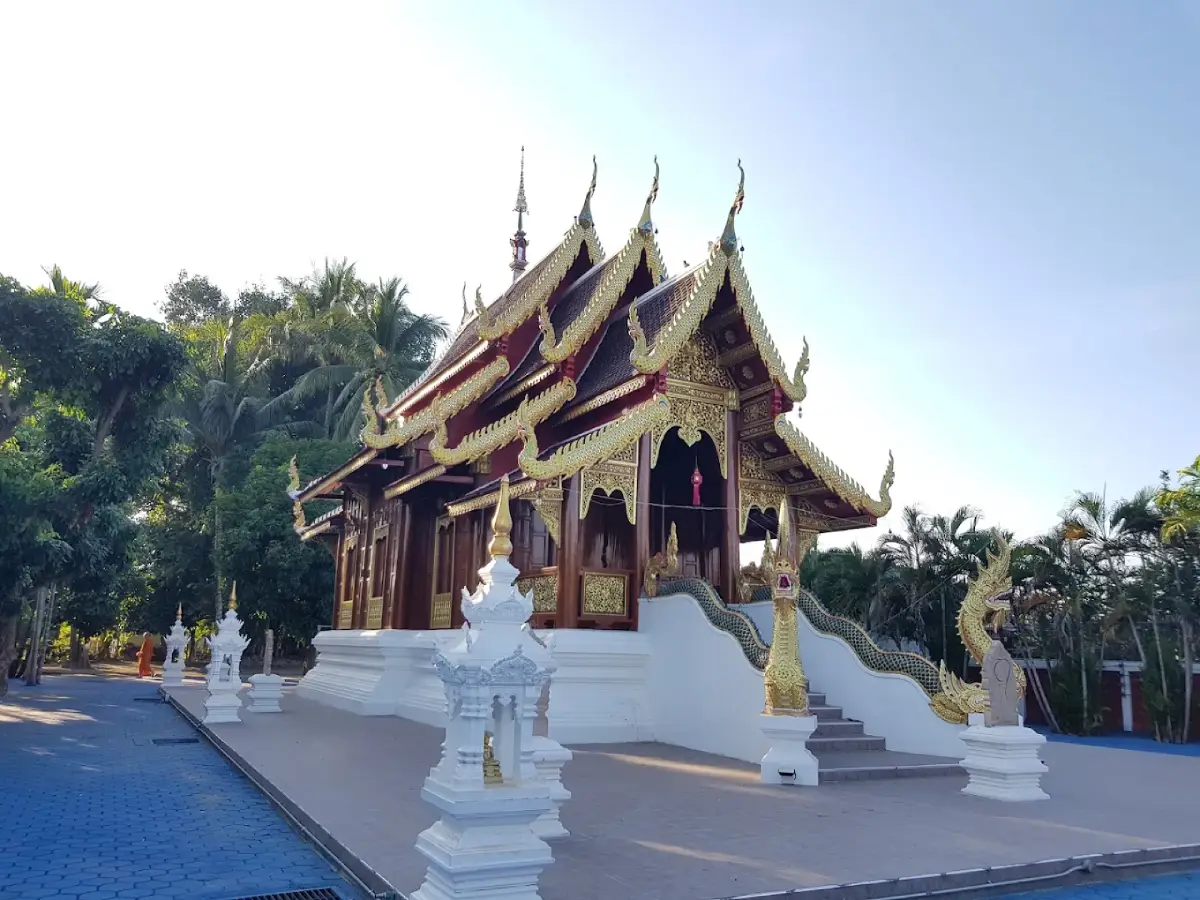
Operating day: Daily
Operating time: 08.00 - 17.00
Wat Ma Ong Nok is located at No. 64, Ban Dong Pa Lan, Moo 3, Khi Lek Subdistrict, Mae Taeng District, Chiang Mai Province. It is a public Buddhist temple under the Mahanikaya order and a meaningful community temple on the Chiang Mai-Fang route. The temple was officially re-established from an abandoned temple site on 20 October 1987 and received its royal ubosot boundary on 9 February 1999. Phra Khru Phisan Wiriyakit Mahawiriyo serves as the abbot. Wat Ma Ong Nok is important because it combines the memory of an old abandoned temple, the faith of Ban Dong Pa Lan villagers, and the living role of a community temple in Mae Taeng.
Ban Dong Pa Lan, Moo 3 of Khi Lek Subdistrict, is located in a community area near Mae Malai and the main Chiang Mai-Fang road. The area includes village homes, shops, agricultural land, irrigation canals, and local temples that form the spiritual network of Khi Lek Subdistrict. Wat Ma Ong Nok stands within this living community setting, making it both a village temple and a convenient cultural stop for travelers moving through Mae Taeng.
The history of Wat Ma Ong Nok begins with an old abandoned temple site. Local temple history states that the site existed as an abandoned temple before 1941. Traces of old bricks were found underground in front of the present vihara area. These remains give the temple a deeper historical layer than its official re-establishment in 1987. The current temple therefore stands on a place that had earlier religious meaning and was later restored by the faith of local villagers.
The revival of the temple began clearly on 9 June 1979, when Mr. Saen Wut, a former village headman of Moo 3, led Ban Dong Pa Lan villagers to develop the temple area. The old village pavilion was dismantled and rebuilt as a salabat, or merit-making hall. The villagers also invited Luang Pu Kruba Thammachai of Wat Thung Luang in Mae Taeng to preside over the installation of a Buddha image brought for the temple. This beginning shows that Wat Ma Ong Nok was rebuilt through community effort rather than through a single large construction project.
The name “Ma Ong Nok” is one of the temple’s most distinctive features. The earlier form, “Ma Ong Nok,” was connected with a local tree known in northern Thai as the ma ong nok tree, also known in central and northeastern Thai as the prayer-bead tree. A ma ong nok tree once stood at the northeastern corner of the temple wall. Under this tree, villagers found many old Buddha images in different postures. Because these images were regarded as sacred, people did not dare to take them home. They believed the images should remain in the temple area.
Later, village elders agreed to adjust the temple name by adding letters to connect the name more clearly with the many Buddha images once found under the ma ong nok tree. The name became “Wat Ma Ong Nok” as used today. The name therefore preserves the memory of the tree, the old Buddha images, and the faith of the local community. It is not merely a place name, but a cultural record of what villagers remembered as sacred.
Although many of the old Buddha images once found beneath the ma ong nok tree later disappeared after road development and increased travel along Chotana Road, the temple continues to preserve the meaning of the place through its name and community history. Chotana Road, or the Chiang Mai-Fang road, brought greater access and change to the area. At the same time, the temple’s story helps preserve the identity of Ban Dong Pa Lan amid the transformation of a roadside community.
The temple occupies about 5 rai, 3 ngan, and 34 square wah of land. Its eastern boundary faces Chotana Road, the Chiang Mai-Fang road, while its western boundary is connected with a public irrigation canal. This location shows the temple’s close relationship with road access, water systems, and village settlement. Wat Ma Ong Nok is therefore shaped by both local geography and community life.
After the first community development in 1979, Wat Ma Ong Nok was officially re-established from an abandoned temple on 20 October 1987. It later received its royal ubosot boundary on 9 February 1999. A royal ubosot boundary allows a temple to conduct formal monastic acts such as ordination and other Sangha ceremonies. This gave Wat Ma Ong Nok a complete role within the Buddhist monastic system.
Phra Khru Phisan Wiriyakit Mahawiriyo is the abbot of Wat Ma Ong Nok. His lay name was Prasert Pankhrong, and he was born in Ban Thung Si Thong, Khi Lek Subdistrict, Mae Taeng District. He was ordained in 1978 and became the abbot of Wat Ma Ong Nok in 1988. His role is important not only for the temple, but also for monastic administration in Khi Lek Subdistrict. This gives Wat Ma Ong Nok significance at both village and local Sangha levels.
The known succession of abbots reflects the development of the temple after the abandoned site was revived. The early abbots included Phra Kongkaew Suthammo from 1979 to 1980, Phra Somboon Dhammavaro from 1980 to 1981, and Phra Khru Phisan Wiriyakit from 1982 onward. This continuity of monastic leadership helped transform the former abandoned site into an active community temple.
The main highlights of Wat Ma Ong Nok are its history as a revived abandoned temple, the origin of its name, the ma ong nok tree, the story of old Buddha images, its location on Chotana Road, and the role of Phra Khru Phisan Wiriyakit. It is not a large mainstream tourist attraction, but it is culturally valuable as a temple that reflects local memory and community effort.
Important areas within the temple include worship spaces, the salabat that developed from the village pavilion, the royal ubosot boundary area, the temple courtyard, monastic areas, and community-use spaces. Visitors should pay attention to the temple’s atmosphere as a living village temple and to the story of the ma ong nok tree, which gives the temple its unique identity.
Wat Ma Ong Nok serves Ban Dong Pa Lan as a place for merit-making, Dhamma listening, food offerings, Kathin, robe-offering ceremonies, the rains retreat, the end of the rains retreat, and community Buddhist activities. A public village temple in Lanna society functions as both a religious and social center. Wat Ma Ong Nok continues this role for local residents.
For cultural travelers, Wat Ma Ong Nok is suitable for those interested in community temples, unusual temple names, local stories, and restored abandoned temple sites. A visit should be quiet and respectful. The value of the temple lies in its story, its relationship with Ban Dong Pa Lan, and the way it preserves local Buddhist memory.
Traveling to Wat Ma Ong Nok is convenient because the temple is close to Chotana Road, also known as the Chiang Mai-Fang road. From Chiang Mai city, take the Chiang Mai-Mae Rim-Mae Taeng route toward Mae Taeng District, pass Mae Malai, and continue to Ban Dong Pa Lan, Moo 3, Khi Lek Subdistrict. A private car, rental car, or hired driver is the most convenient option, especially for visitors combining several temples in one day.
Travelers using public transportation can first reach Mae Malai or Mae Taeng District, then continue by local transport, hired vehicle, or pickup service to Ban Dong Pa Lan. Because the temple is near the main road, access is less complicated than temples located deep in mountain areas, but planning ahead is still recommended for a multi-stop temple route.
A suitable route can begin at Wat Ma Ong Nok for worship and learning about the ma ong nok tree and the temple’s abandoned-site history. Visitors can then continue to Wat Phra That Doi Chom Chaeng, Wat Sai Mun, Wat Buak Mue, Wat Nong Khong, or Wat Ram Poeng. For food, Mae Malai Market and nearby restaurants are convenient stops. For nature-based travel, the route can continue to Suan Son Mae Taeng, Mae Ngat Somboon Chon Dam, or Bua Tong Waterfall and Chet Si Spring.
Visitors should dress respectfully, keep quiet, avoid disturbing monks and local worshippers, avoid entering monastic or private areas without permission, and help keep the temple clean. Since Wat Ma Ong Nok is an active community temple for Ban Dong Pa Lan, respectful conduct is essential.
Overall, Wat Ma Ong Nok is a meaningful community temple of Khi Lek Subdistrict. Its value comes from its history as an abandoned temple site revived by villagers, its official re-establishment in 1987, its royal ubosot boundary in 1999, the origin of its name from the ma ong nok tree and old Buddha images, and the continuing leadership of Phra Khru Phisan Wiriyakit. It is a suitable stop for travelers who want to understand Mae Taeng through village temples, Lanna community faith, and local memory.
| Name | Wat Ma Ong Nok |
| Location | Ban Dong Pa Lan, Moo 3, Khi Lek Subdistrict, Mae Taeng District, Chiang Mai Province |
| Address | No. 64, Ban Dong Pa Lan, Moo 3, Khi Lek Subdistrict, Mae Taeng District, Chiang Mai 50150, Thailand |
| Temple Type | Public Buddhist Temple Under The Mahanikaya Order |
| Temple Code | 350060305 |
| History / Temple Status | Former abandoned temple site before 1941; first developed by Ban Dong Pa Lan villagers in 1979; officially re-established from an abandoned temple on 20 October 1987; received its royal ubosot boundary on 9 February 1999 |
| Abbot / Caretaker | Phra Khru Phisan Wiriyakit Mahawiriyo |
| Temple Area | About 5 Rai, 3 Ngan, 34 Square Wah |
| Name Origin | The name is connected with the ma ong nok tree, also known as the prayer-bead tree, and the local story of many old Buddha images once found under the tree in the temple area |
| Highlights | History as a revived abandoned temple, the story of the ma ong nok tree, old Buddha images in local memory, and the temple’s location near Chotana Road on the Chiang Mai-Fang route |
| Main Areas / Zones | Worship area, salabat, royal ubosot boundary area, temple courtyard, monastic areas, and community-use spaces |
| Community Role | A spiritual center for Ban Dong Pa Lan, used for Buddhist ceremonies, merit-making, Dhamma listening, Kathin, robe-offering ceremonies, and village religious activities |
| Travel Information | From Chiang Mai city, take the Chiang Mai-Mae Rim-Mae Taeng route or the Chiang Mai-Fang road, pass Mae Malai, then continue to Ban Dong Pa Lan, Moo 3, Khi Lek Subdistrict. Private car, rental car, or hired driver is recommended |
| Current Status | Open as a community temple and Buddhist religious site of Ban Dong Pa Lan, Khi Lek Subdistrict, Mae Taeng District, Chiang Mai Province |
| Important Traditions | Buddhist holy day merit-making, rains retreat, end-of-rains retreat, Kathin, robe-offering ceremonies, Dhamma listening, and local Buddhist rites |
| Visitor Etiquette | Dress respectfully, keep quiet, avoid disturbing monks and worshippers, do not enter monastic areas without permission, and keep the temple clean |
| Nearby Tourist Attractions | 1. Wat Phra That Doi Chom Chaeng, about 2 km 2. Wat Sai Mun, about 3 km 3. Wat Buak Mue, about 4 km 4. Mae Malai Market, about 5 km 5. Suan Son Mae Taeng, about 8 km |
| Nearby Restaurants | 1. Khun Nai Pimpa, Mae Malai Market, about 5 km, Tel. 091-078-0525 2. Moo Inter Mae Malai, about 5 km, Tel. 093-135-2929 3. Baan Suan Chomchan Mae Taeng, about 7 km, Tel. 053-047-111, 089-433-5819 4. Sri Kaew Restaurant @ Mae Taeng, about 10 km, Tel. 082-574-7870 5. Doona Resort Restaurant, about 17 km, Tel. 093-275-3888 |
| Nearby Accommodations | 1. Mae Malai Mansion, about 5 km, Tel. 053-842620, 095-6106489 2. Rub Lom Resort Mae Taeng, about 5 km, Tel. 091-915-9359 3. Baan Suan Chomchan Mae Taeng, about 7 km, Tel. 053-047-111, 089-433-5819 4. Maetaeng Homestay & Resort, about 8 km, Tel. 086-399-9144 5. Phutawanpundao, about 10 km |
Frequently Asked Questions (FAQ)
Q: Where is Wat Ma Ong Nok located?
A: Wat Ma Ong Nok is located at No. 64, Ban Dong Pa Lan, Moo 3, Khi Lek Subdistrict, Mae Taeng District, Chiang Mai 50150, Thailand.
Q: What type of temple is Wat Ma Ong Nok?
A: Wat Ma Ong Nok is a public Buddhist temple under the Mahanikaya order. Its temple code is 350060305.
Q: When was Wat Ma Ong Nok officially established?
A: Wat Ma Ong Nok was officially re-established from an abandoned temple on 20 October 1987 and received its royal ubosot boundary on 9 February 1999.
Q: Who is the abbot of Wat Ma Ong Nok?
A: Phra Khru Phisan Wiriyakit Mahawiriyo is the abbot of Wat Ma Ong Nok.
Q: What is the origin of the name Wat Ma Ong Nok?
A: The name is connected with the ma ong nok tree, also known as the prayer-bead tree, and the local story of many old Buddha images once found beneath the tree in the temple area.
Q: What is the main highlight of Wat Ma Ong Nok?
A: The main highlight is its history as a revived abandoned temple, the story of the ma ong nok tree and old Buddha images, and its role as a community temple near Chotana Road in Khi Lek Subdistrict.
Q: How can travelers get to Wat Ma Ong Nok?
A: From Chiang Mai city, take the Chiang Mai-Mae Rim-Mae Taeng route or the Chiang Mai-Fang road, pass Mae Malai, then continue to Ban Dong Pa Lan, Moo 3, Khi Lek Subdistrict. A private car or rental car is the most convenient option.
Q: What nearby places can be visited with Wat Ma Ong Nok?
A: Nearby places include Wat Phra That Doi Chom Chaeng, Wat Sai Mun, Wat Buak Mue, Mae Malai Market, Suan Son Mae Taeng, and other attractions in Mae Taeng District.
 Category: ●Places of Worship
 Group: ●Temple
Last Update : 2 MonthAgo
 Last Update : 2 MonthAgo
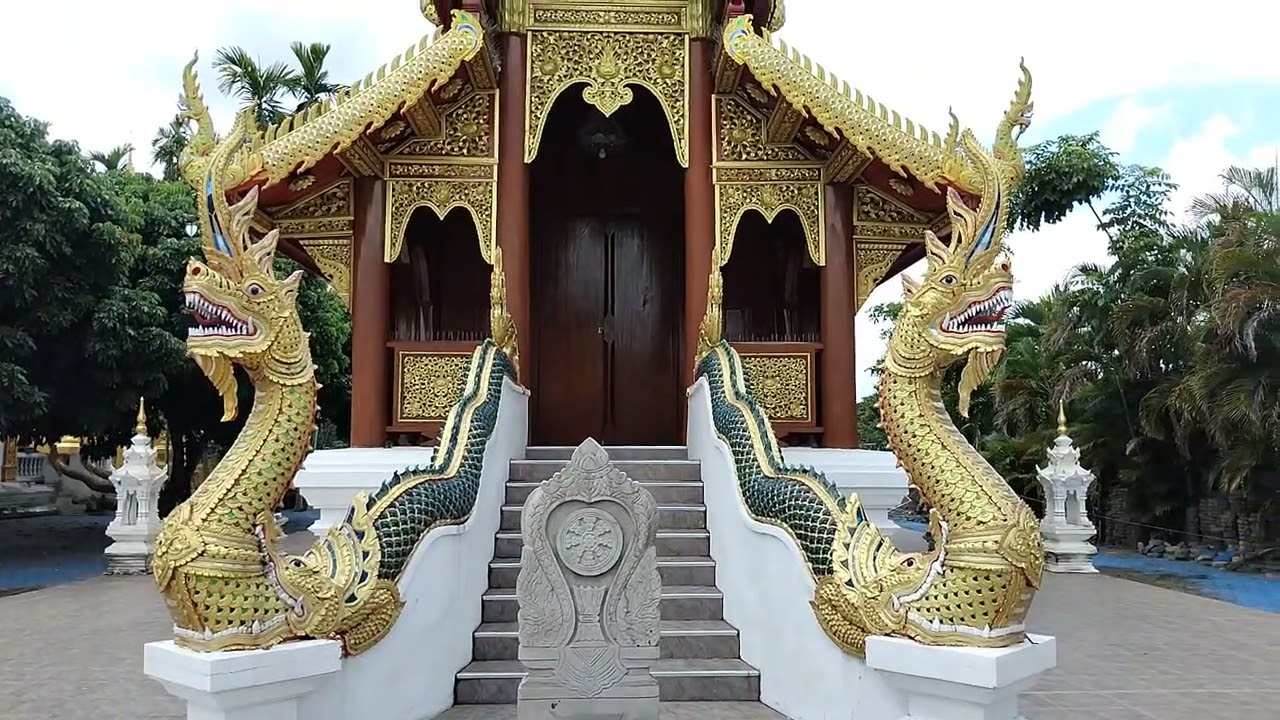
 Click to Access the Navigation Map GPS
Wat Ma Ong Nok Map
Recommend

 Muang Chiang Mai(121)Chom Thong(47)Mae Chaem(25)Chiang Dao(33)Doi Saket(68)Mae Taeng(85)Mae Rim(69)Samoeng(29)Fang(71)Mae Ai(59)Phrao(70)San Pa Tong(103)San Kamphaeng(66)San Sai(73)Hang Dong(73)Hot(32)Doi Tao(22)Omkoi(11)Saraphi(74)Wiang Haeng(15)Chai Prakan(28)Mae Wang(32)Mae On(22)Doi Lo(33)Galyani Vadhana(1)


