
lovethailand home >North Travel Attractions >Chiang Mai Travel Attractions >Mae Taeng >Khi Lek > Wat Phra That Doi Chom Chaeng
TL;DR: Wat Phra That Doi Chom Chaeng is located at Ban Chom Chaeng, Moo 5, Khi Lek Subdistrict, Mae Taeng District, Chiang Mai Province.

Wat Phra That Doi Chom Chaeng
Operating day: Daily
Operating time: 08.00 - 17.00
Wat Phra That Doi Chom Chaeng is located in Moo 5, Khi Lek Subdistrict, Mae Taeng District, Chiang Mai Province. It is a public Buddhist temple under the Mahanikaya order and one of the important community temples of Mae Taeng. The temple was established in 1857 and received its royal ubosot boundary in 1976. Phra Khru Adun Chediyaphiban Sujitto serves as the abbot. Wat Phra That Doi Chom Chaeng is especially significant because it combines a sacred chedi, local Buddhist legends, the memory of Kruba Srivichai, Phra Chao Fon Saen Ha, and the long-standing faith of the Khi Lek community.
The temple is situated near the Chiang Mai-Fang route in Khi Lek Subdistrict, making it accessible for travelers heading through Mae Taeng. Khi Lek is an important community area with villages, temples, schools, local markets, agricultural land, and roads connecting different parts of the district. Wat Phra That Doi Chom Chaeng therefore functions both as a community temple and as a sacred destination for visitors interested in Lanna Buddhist heritage.
The name “Chom Chaeng” is connected with a local legend. The story says that the Buddha and his disciples traveled to teach living beings, following the Mae Raming River to Chiang Dao Cave before reaching this hill in Mae Taeng at dawn. Because the Buddha arrived when daylight appeared, the place came to be known as “Chom Chaeng.” This name gives the temple both geographical and spiritual meaning.
The temple was founded in 1857 and is also known locally as Wat Chom Chaeng or Wat Phra That Chom Chaeng. Its founding in the mid-19th century makes it one of the old temples of Mae Taeng. It reflects the continuity of Buddhist faith and settlement in Khi Lek Subdistrict for more than 160 years. The temple is therefore not only a place for worship, but also a record of community history.
The temple received its royal ubosot boundary in 1976, giving it a formal monastic boundary for important Sangha acts such as ordination and other ceremonies. This confirms the temple’s complete role within the Buddhist monastic system. Wat Phra That Doi Chom Chaeng therefore serves both the religious life of local villagers and the formal functions of the Sangha.
The central sacred object of the temple is the chedi of Phra That Doi Chom Chaeng. Local tradition connects the chedi with sacred relics, including relics associated with the Buddha’s face-washing water, a right collarbone relic, a chest relic, and other revered items. Temple history also states that King Mengrai brought relics to be enshrined here and that Kruba Srivichai later built a chedi to cover the sacred relics. This gives the chedi a central role in the temple’s spiritual identity.
The story of Kruba Srivichai is one of the temple’s most important historical and devotional layers. Around 1927, Kruba Srivichai is said to have restored the chedi after receiving a vision about an important northern temple and sacred relics at this hill. The restoration involved monks, villagers, and lay supporters, and it became an important part of the temple’s living memory.
During the restoration associated with Kruba Srivichai, local tradition says that relics were found inside gold and silver reliquaries, along with valuable objects such as silver and gold boats, gems, and a gold Buddha image over 500 years old known as “Phra Chao Fon Saen Ha.” These accounts make Wat Phra That Doi Chom Chaeng a temple with strong sacred narratives, important relic traditions, and significant Buddha images.
Phra Chao Fon Saen Ha is one of the most important revered objects of the temple. Its name is associated with rain, abundance, and blessing. In northern agricultural communities, water and rain are closely tied to life and livelihood. The presence of a Buddha image with this name gives the temple a special relationship with local faith, fertility, and community well-being.
Other important Buddha images at the temple include a Buddha image in the posture of subduing Mara, Phra Phuttha Uttama Choti or Phra Udom Chok, and a reclining Buddha image enshrined in the reclining Buddha hall. Phra Phuttha Uttama Choti is depicted in a seated posture with the right hand raised in a teaching gesture, known as a posture of compassion and instruction. These sacred images add spiritual depth to the visitor experience.
The reclining Buddha image is another meaningful point of worship. Reclining Buddha images are connected with the Buddha’s final passing and the teaching of impermanence. Visitors should approach this area quietly and respectfully, using the visit as a moment for reflection rather than quick sightseeing.
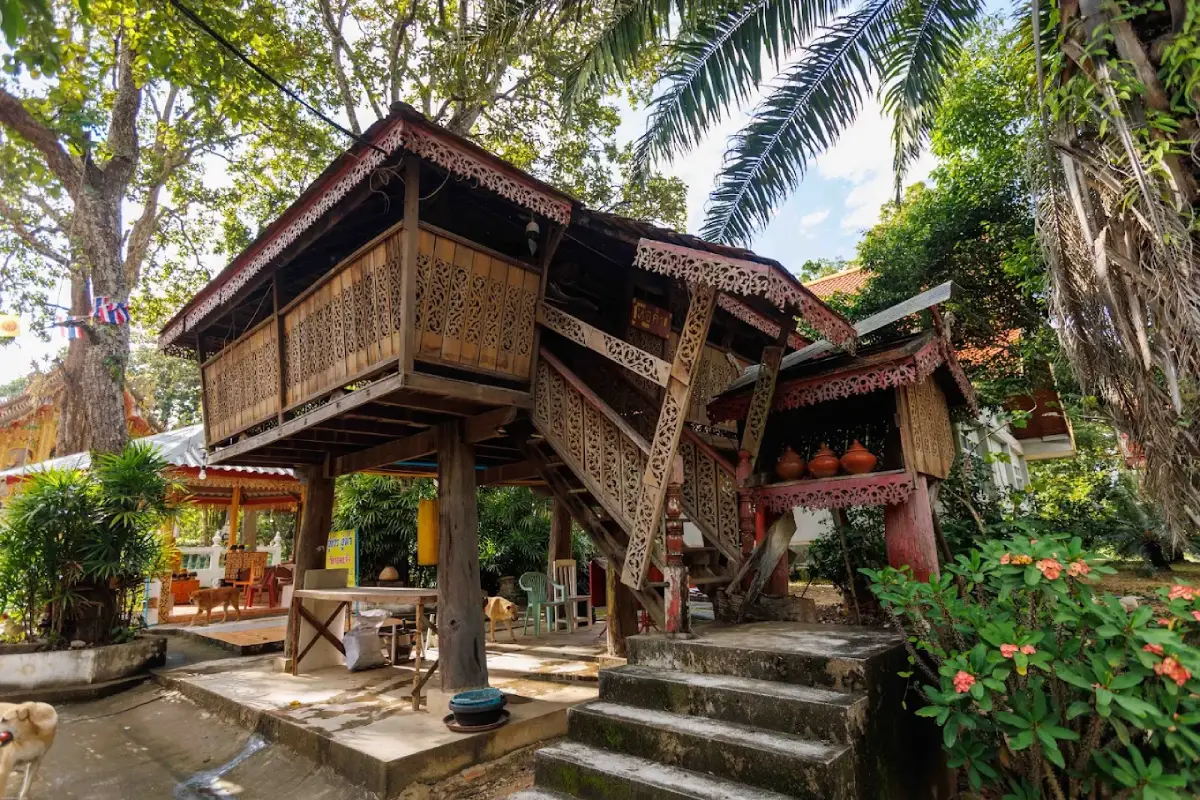
The temple’s religious structures include an ubosot, vihara, sermon hall, and monks’ residences. The ubosot is used for formal monastic acts. The vihara serves as a space for worship and religious gatherings. The sermon hall supports Dhamma listening and community activities, while the monks’ residences support the monastic life of the temple. Together, these structures make Wat Phra That Doi Chom Chaeng both a sacred site and a functioning community temple.
The temple covers approximately 25 rai of land, allowing space for sacred areas, temple buildings, community activities, and religious gatherings. This makes the temple suitable for Buddhist holy day merit-making, Kathin, robe-offering ceremonies, and other community religious events. The site remains important for both worship and local social life.
Wat Phra That Doi Chom Chaeng continues to serve the Khi Lek community as a center of faith. It is used for merit-making, Dhamma listening, chedi worship, Buddhist ceremonies, and community religious activities. For local residents, the temple is not only a sacred site, but also a place tied to family life, community memory, and shared devotion across generations.
Important things to see at Wat Phra That Doi Chom Chaeng include the main chedi, vihara, ubosot, sermon hall, Phra Phuttha Uttama Choti, Phra Chao Fon Saen Ha, the reclining Buddha image, the reclining Buddha hall, and the overall temple atmosphere in Khi Lek Subdistrict. Visitors should begin with the chedi, then continue respectfully to the other worship points.
The temple is suitable for travelers interested in old temples, sacred chedis, Kruba Srivichai traditions, revered Buddha images, and Buddhist routes in Mae Taeng. It should not be viewed only as a roadside stop. The temple helps visitors understand the relationship between Buddhism, local legend, community history, and the geography of Mae Taeng.
Religious activities at the temple follow the rhythm of Lanna village Buddhism. These include chedi worship, Buddhist holy day merit-making, the rains retreat, the end of the rains retreat, Kathin, robe-offering ceremonies, Dhamma listening, and community Buddhist rites. These activities help keep the relationship between monks and villagers active throughout the year.
Traveling to Wat Phra That Doi Chom Chaeng is convenient by private car, rental car, or hired driver. From Chiang Mai city, take the Chiang Mai-Mae Rim-Mae Taeng route or the Chiang Mai-Fang road toward Mae Taeng District, pass the Mae Malai area, then continue into Khi Lek Subdistrict. The temple is located near the main Mae Taeng route and can be combined with nearby temples and attractions.
Travelers using public transportation should first reach Mae Malai or Mae Taeng District, then continue by local transport, hired vehicle, or pickup service to the temple area. A private vehicle is more convenient for visitors who want to combine the temple with nearby restaurants, accommodations, local markets, and other temples in Khi Lek.
A suitable itinerary can begin at Wat Phra That Doi Chom Chaeng for worship at the chedi, then continue to Wat Sai Mun, Wat Nong Khong, Wat Ram Poeng, Wat Ma Ong Nok, or Wat Sahakorn Sri Don Chai. For food, travelers can stop in the Mae Malai area. For nature, the route can continue to Suan Son Mae Taeng, Mae Ngat Somboon Chon Dam, or Bua Tong Waterfall and Chet Si Spring.
Visitors should dress respectfully, keep quiet, avoid disturbing monks and worshippers, and treat the chedi, ubosot, vihara, and reclining Buddha hall with care. Do not touch sacred objects inappropriately, do not climb on religious structures, and help keep the temple clean. Wat Phra That Doi Chom Chaeng remains an active sacred place for the local community.
Overall, Wat Phra That Doi Chom Chaeng is one of Mae Taeng’s meaningful old temples. Its value comes from its founding in 1857, its royal ubosot boundary from 1976, its sacred chedi, Phra Chao Fon Saen Ha, Phra Phuttha Uttama Choti, the reclining Buddha image, the story of Kruba Srivichai’s restoration, and its role as a spiritual center of Khi Lek Subdistrict. It is a worthwhile stop for travelers who want to understand Mae Taeng through Buddhist faith, local legend, and Lanna community life.
| Name | Wat Phra That Doi Chom Chaeng |
| Other Names | Wat Chom Chaeng, Wat Phra That Chom Chaeng |
| Location | Ban Chom Chaeng, Moo 5, Khi Lek Subdistrict, Mae Taeng District, Chiang Mai Province |
| Address | Near The Chiang Mai-Fang Road, Moo 5, Khi Lek Subdistrict, Mae Taeng District, Chiang Mai 50150, Thailand |
| Temple Type | Public Buddhist Temple Under The Mahanikaya Order |
| Temple Code | 350060304 |
| History / Temple Status | Founded in 1857 and received its royal ubosot boundary in 1976 |
| Abbot / Caretaker | Phra Khru Adun Chediyaphiban Sujitto |
| Temple Area | About 25 Rai |
| Highlights | Phra That Doi Chom Chaeng Chedi, Phra Chao Fon Saen Ha, Phra Phuttha Uttama Choti, reclining Buddha image, vihara, ubosot, and the story of Kruba Srivichai’s restoration |
| Sacred Objects | Relics associated with the Buddha’s face-washing water, Phra Chao Fon Saen Ha, Buddha image in the posture of subduing Mara, Phra Phuttha Uttama Choti, and reclining Buddha image |
| Main Structures | Ubosot, vihara, sermon hall, monks’ residences, chedi, reclining Buddha hall, and religious activity areas |
| Community Role | A spiritual center for Khi Lek Subdistrict, used for chedi worship, merit-making, Dhamma listening, Kathin, robe-offering ceremonies, and community Buddhist activities |
| Travel Information | From Chiang Mai city, take the Chiang Mai-Mae Rim-Mae Taeng route or the Chiang Mai-Fang road, pass Mae Malai, then continue into Khi Lek Subdistrict. Private car, rental car, or hired driver is recommended |
| Current Status | Open as a community temple and sacred chedi site in Khi Lek Subdistrict, Mae Taeng District, Chiang Mai Province |
| Important Traditions | Chedi worship, Buddhist holy day merit-making, rains retreat, end-of-rains retreat, Kathin, robe-offering ceremonies, Dhamma listening, and local Buddhist rites |
| Visitor Etiquette | Dress respectfully, keep quiet, avoid disturbing monks and worshippers, do not touch sacred objects inappropriately, and treat the chedi, ubosot, vihara, and reclining Buddha hall with respect |
| Nearby Tourist Attractions | 1. Wat Sai Mun, about 2 km 2. Wat Nong Khong, about 3 km 3. Mae Malai Market, about 5 km 4. Wat Ma Ong Nok, about 5 km 5. Suan Son Mae Taeng, about 8 km |
| Nearby Restaurants | 1. Khun Nai Pimpa, Mae Malai Market, about 5 km, Tel. 091-078-0525 2. Moo Inter Mae Malai, about 5 km, Tel. 093-135-2929 3. Baan Suan Chomchan Mae Taeng, about 7 km, Tel. 053-047-111, 089-433-5819 4. Sri Kaew Restaurant @ Mae Taeng, about 10 km, Tel. 082-574-7870 5. Doona Resort Restaurant, about 17 km, Tel. 093-275-3888 |
| Nearby Accommodations | 1. Rub Lom Resort Mae Taeng, about 4 km, Tel. 091-915-9359 2. Mae Malai Mansion, about 5 km, Tel. 053-842620, 095-6106489 3. Baan Suan Chomchan Mae Taeng, about 7 km, Tel. 053-047-111, 089-433-5819 4. Maetaeng Homestay & Resort, about 8 km, Tel. 086-399-9144 5. Phutawanpundao, about 10 km |
Frequently Asked Questions (FAQ)
Q: Where is Wat Phra That Doi Chom Chaeng located?
A: Wat Phra That Doi Chom Chaeng is located in Ban Chom Chaeng, Moo 5, Khi Lek Subdistrict, Mae Taeng District, Chiang Mai Province, near the Chiang Mai-Fang road.
Q: What type of temple is Wat Phra That Doi Chom Chaeng?
A: Wat Phra That Doi Chom Chaeng is a public Buddhist temple under the Mahanikaya order. Its temple code is 350060304.
Q: When was Wat Phra That Doi Chom Chaeng founded?
A: The temple was founded in 1857 and received its royal ubosot boundary in 1976.
Q: Who is the abbot of Wat Phra That Doi Chom Chaeng?
A: Phra Khru Adun Chediyaphiban Sujitto is the abbot of Wat Phra That Doi Chom Chaeng.
Q: What is the main highlight of Wat Phra That Doi Chom Chaeng?
A: The main highlights are Phra That Doi Chom Chaeng Chedi, Phra Chao Fon Saen Ha, Phra Phuttha Uttama Choti, the reclining Buddha image, and the story of Kruba Srivichai’s restoration of the chedi.
Q: How is Wat Phra That Doi Chom Chaeng connected with Kruba Srivichai?
A: Local temple tradition says Kruba Srivichai restored the sacred chedi around 1927 and built a new chedi to cover the original relic site.
Q: What should visitors worship at Wat Phra That Doi Chom Chaeng?
A: Visitors should pay respect to the main chedi, Phra Chao Fon Saen Ha, Phra Phuttha Uttama Choti, the reclining Buddha image, and other sacred Buddha images within the temple.
Q: What nearby places can be visited with Wat Phra That Doi Chom Chaeng?
A: Nearby places include Wat Sai Mun, Wat Nong Khong, Mae Malai Market, Wat Ma Ong Nok, Suan Son Mae Taeng, and other attractions in Mae Taeng District.
 Category: ●Places of Worship
 Group: ●Temple
Last Update : 22 HourAgo
 Last Update : 22 HourAgo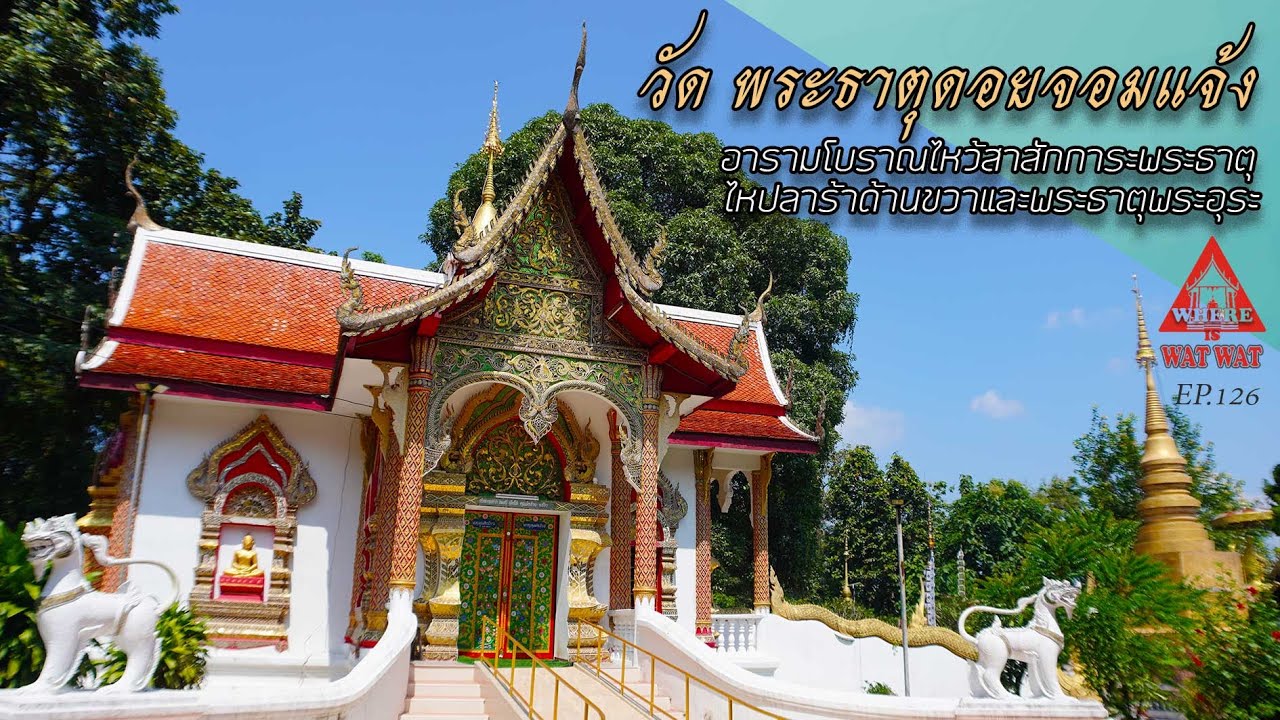
 Click to Access the Navigation Map GPS
Wat Phra That Doi Chom Chaeng Map
Recommend

 Muang Chiang Mai(121)Chom Thong(47)Mae Chaem(25)Chiang Dao(33)Doi Saket(68)Mae Taeng(85)Mae Rim(69)Samoeng(29)Fang(71)Mae Ai(62)Phrao(70)San Pa Tong(105)San Kamphaeng(66)San Sai(73)Hang Dong(74)Hot(32)Doi Tao(22)Omkoi(11)Saraphi(74)Wiang Haeng(15)Chai Prakan(28)Mae Wang(32)Mae On(22)Doi Lo(34)Galyani Vadhana(1)


