
lovethailand home >North Travel Attractions >Chiang Mai Travel Attractions >Mae Chaem >Chang Khoeng > Wat Mae Pan
TL;DR: Wat Mae Pan is located at Moo 10, Ban Mae Pan, Chang Khoeng Subdistrict, Mae Chaem District, Chiang Mai Province, open Daily, hours 08.00 - 17.00. Highlights include A local Mahanikaya Buddhist temple and spiritual center of Ban Mae Pan community.

Wat Mae Pan
Open Days: Daily
Opening Hours: 08.00 - 17.00
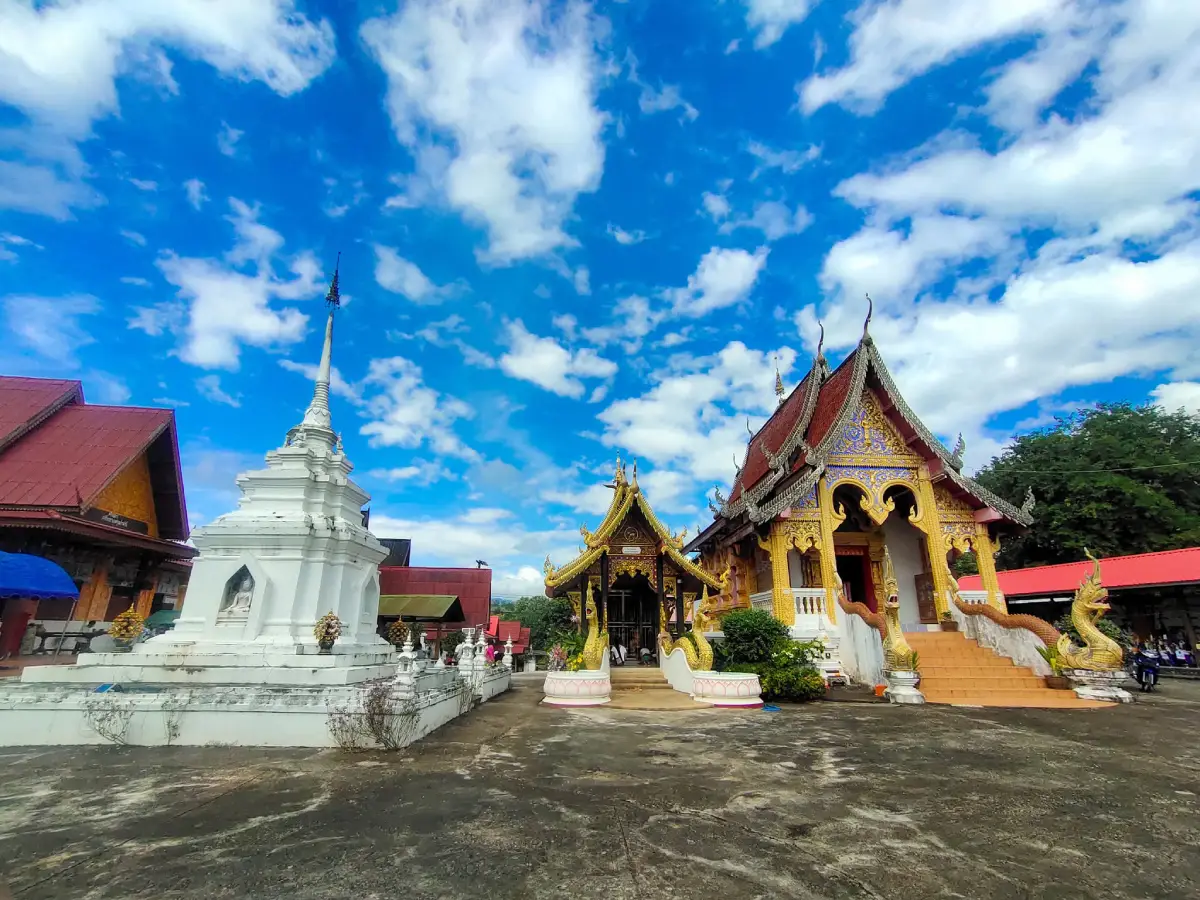
Wat Mae Pan is located in Moo 10, Ban Mae Pan, Chang Khoeng Subdistrict, Mae Chaem District, Chiang Mai Province. It is a local Buddhist temple under the Mahanikaya order and serves as an important spiritual center for the Ban Mae Pan community. This is not a large commercial tourist attraction, but a living village temple where local faith, Buddhist practice, and rural Lanna culture remain closely connected. For travelers who want to understand Mae Chaem beyond scenic rice terraces and mountain viewpoints, Wat Mae Pan offers a quiet and meaningful look at the role of a community temple in northern Thailand.
The main value of Wat Mae Pan lies in its long-standing relationship with the village. The temple was officially established in 1911 and later received its royal boundary for monastic rites in 2002. These milestones show that Wat Mae Pan has held a stable religious role for more than a century. In a northern Thai village, a temple is more than a place for worship; it is a social, cultural, and spiritual anchor where people make merit, listen to sermons, hold ceremonies, and preserve local customs through repeated seasonal rituals.
Ban Mae Pan is part of Chang Khoeng Subdistrict in Mae Chaem District, an area shaped by highland terrain, mountains, forests, agricultural fields, and local waterways. The village is about 7 km from Mae Chaem town, giving it a calmer rural atmosphere than the district center. Wat Mae Pan therefore belongs to a landscape where Buddhist life, farming communities, and mountain culture meet. The temple should be understood together with the surrounding village rather than as an isolated landmark.
The atmosphere of Wat Mae Pan is simple and peaceful. Visitors should not expect a grand monument or a crowded sightseeing site. Instead, the temple offers the quiet character of a real village wat, where monks, local residents, and visitors share the same sacred space respectfully. This makes the temple suitable for merit-making, quiet reflection, and cultural observation. Its understated setting is exactly what makes it valuable for travelers who prefer authentic local experiences over heavily promoted attractions.
Historically, the establishment of Wat Mae Pan in 1911 reflects the development of Ban Mae Pan as a settled community with enough religious faith and social organization to support a temple. In many parts of northern Thailand, temples and villages grew together. A village temple often records the presence of a stable community, local leadership, lay supporters, and shared religious life. Wat Mae Pan therefore also functions as cultural evidence of the Mae Chaem valley’s settlement history in the early 20th century.
The name “Mae Pan” is directly connected with the village and the surrounding locality. In northern Thailand, village temples are often named after the communities they serve, because the temple and the village are not separate parts of life. Wat Mae Pan carries the memory, identity, and faith of Ban Mae Pan. When people refer to this temple, they also refer to the community that has supported it for generations.
As a Mahanikaya local temple, Wat Mae Pan plays a practical role in everyday Buddhist life. It is used for merit-making, Buddhist holy days, sermons, funerary rites, Kathin ceremonies, and other community-based rituals. These activities help preserve the cultural rhythm of the village. They also show how Buddhism in Mae Chaem is lived through regular participation rather than preserved only as architecture or history.
Wat Mae Pan remains an active temple. The current abbot is Phra Athikan Praphat Pabhassarachitto. Information from the 2025 Kathin activity records five resident monks, confirming that the temple continues to operate as a functioning religious site rather than an abandoned or permanently closed place. For visitors, this means Wat Mae Pan can be included in a Mae Chaem cultural itinerary, provided that the visit is conducted respectfully.
One of the important religious activities connected with Wat Mae Pan is the Kathin ceremony, held after the end of Buddhist Lent. Kathin is highly meaningful for a village temple because laypeople gather to offer robes and support the monastery. It is also a time when local residents and supporters from outside the village come together to sustain Buddhist practice. At Wat Mae Pan, Kathin reflects the continuing bond between monks, villagers, and the wider Buddhist community.
For cultural travelers, Wat Mae Pan offers a gentle way to understand Mae Chaem’s Buddhist landscape. Mae Chaem is known for mountain scenery, rice terraces, weaving traditions, and old temples, but its deeper character comes from the way daily life still connects with local religious spaces. A visit to Wat Mae Pan helps travelers see this quieter side of the district. It is a place to observe how a temple serves a village and how faith remains woven into community life.
Wat Mae Pan can be combined with several nearby attractions, including Wat Phut En, Wat Kong Kan, Wat Pa Daet, Ban Pa Bong Piang, and other cultural or natural sites around Mae Chaem. A balanced itinerary can begin with a respectful temple visit, continue to historic temples in the district, and then move toward rice terrace viewpoints or mountain landscapes. This route gives travelers a fuller view of Mae Chaem through religion, history, village life, and nature.
Getting There is most convenient by private car, rental car, or a vehicle with a local driver. From Mae Chaem town, travel toward Chang Khoeng Subdistrict and Ban Mae Pan. The village is about 7 km from the district center. Travelers coming from Chiang Mai can reach Mae Chaem via Chom Thong and Doi Inthanon or by the Hot–Mae Chaem route, depending on the travel plan. Roads in Mae Chaem are mountainous and winding, so vehicles should be in good condition, fuel should be prepared in advance, and extra care is needed during the rainy season or in foggy morning and evening conditions.
The best time to visit Wat Mae Pan is in the morning or late afternoon, when the weather is more comfortable and the temple atmosphere is calmer. Visitors should dress modestly, avoid loud behavior, and respect monks and local worshippers. If the trip is combined with Mae Chaem’s rice terraces, the rainy season to early cool season offers green landscapes, while the cool season is suitable for travelers who enjoy misty mountain weather and a slower rural atmosphere.
Wat Mae Pan is worth visiting because it shows Mae Chaem as a living cultural district rather than only a scenic destination. The temple is modest, but its meaning is strong. It represents long-term faith, village identity, and the continuing role of Buddhism in the daily life of a northern Thai community. Travelers looking for a quiet temple, authentic local context, and a meaningful stop in Mae Chaem will find Wat Mae Pan a valuable addition to the journey.
| Name | Wat Mae Pan |
| Location | Moo 10, Ban Mae Pan, Chang Khoeng Subdistrict, Mae Chaem District, Chiang Mai Province |
| Address | Moo 10, Chang Khoeng Subdistrict, Mae Chaem District, Chiang Mai 50270, Thailand |
| Highlights | A local Mahanikaya Buddhist temple and spiritual center of Ban Mae Pan community |
| History | Officially established in 1911 and granted royal monastic boundary status in 2002 |
| Distinctive Features | Quiet village temple atmosphere closely connected with the rural Buddhist life of Mae Chaem |
| Importance | A community temple used for merit-making, Buddhist ceremonies, Kathin, and local religious activities |
| Travel Information | Best reached by private car, rental car, or local driver from Mae Chaem town toward Chang Khoeng Subdistrict and Ban Mae Pan, about 7 km from the district center |
| Current Status | Active temple with resident monks and ongoing Buddhist activities |
| Open Days | Daily |
| Opening Hours | 08.00 - 17.00 |
| Abbot / Caretaker | Phra Athikan Praphat Pabhassarachitto |
| Traditions / Rituals | Kathin ceremony after Buddhist Lent and merit-making activities on Buddhist holy days |
| Nearby Tourist Attractions | 1. Wat Lao Pa Tan, about 2 km 2. Wat Phut En, about 5 km 3. Wat Kong Kan, about 7 km 4. Wat Pa Daet, about 8 km 5. Ban Pa Bong Piang, about 22 km |
| Nearby Restaurants | 1. Mae Chaem Gate Restaurant, about 5 km, Tel. 085-671-3061 2. Sikon Restaurant, about 5 km, Tel. 087-067-8193 3. Pema Cafe, about 5 km, Tel. 082-033-7750 4. Moo Inter Mae Chaem, about 5 km, Tel. 061-354-2369 5. Khuang Na Restaurant, about 4 km |
| Nearby Accommodations | 1. Huean Him Pan Homestay, about 0.21 km 2. Monsonkeang Camping View, about 1.66 km, Tel. 081-784-8226 3. Khuang Na Farmview, about 3.94 km, Tel. 087-192-2583 4. Muangchaem House, about 4.05 km, Tel. 080-739-1184 5. Maechaem Hotel And Resort, about 4.08 km, Tel. 053-828-025 |
Frequently Asked Questions (FAQ)
Q: Where is Wat Mae Pan located?
A: Wat Mae Pan is located in Moo 10, Ban Mae Pan, Chang Khoeng Subdistrict, Mae Chaem District, Chiang Mai Province.
Q: Is Wat Mae Pan still open to visitors?
A: Yes. Wat Mae Pan remains an active Buddhist temple with resident monks and ongoing religious activities.
Q: Why is Wat Mae Pan important?
A: It is a long-standing village temple and a spiritual center of Ban Mae Pan, officially established in 1911.
Q: Who is the current abbot of Wat Mae Pan?
A: The current abbot is Phra Athikan Praphat Pabhassarachitto.
Q: How can travelers get to Wat Mae Pan?
A: Travelers can drive from Mae Chaem town toward Chang Khoeng Subdistrict and Ban Mae Pan. The temple is about 7 km from the district center.
Q: What type of trip is Wat Mae Pan suitable for?
A: It is suitable for merit-making, quiet temple visits, cultural travel, and a Mae Chaem village-life itinerary.
Q: What attractions can be visited near Wat Mae Pan?
A: Nearby attractions include Wat Phut En, Wat Kong Kan, Wat Pa Daet, Wat Lao Pa Tan, and Ban Pa Bong Piang.
 Category: ●Places of Worship
 Group: ●Temple
Last Update : 2 MonthAgo
 Last Update : 2 MonthAgo

 Click to Access the Navigation Map GPS
Wat Mae Pan Map
Recommend

 Muang Chiang Mai(121)Chom Thong(47)Mae Chaem(25)Chiang Dao(33)Doi Saket(68)Mae Taeng(85)Mae Rim(69)Samoeng(29)Fang(71)Mae Ai(59)Phrao(70)San Pa Tong(103)San Kamphaeng(66)San Sai(73)Hang Dong(73)Hot(32)Doi Tao(22)Omkoi(11)Saraphi(74)Wiang Haeng(15)Chai Prakan(28)Mae Wang(32)Mae On(22)Doi Lo(33)Galyani Vadhana(1)


