
lovethailand home >North Travel Attractions >Chiang Mai Travel Attractions >Phrao >Wiang > Wat Pa Ajarn Mun
TL;DR: Wat Pa Ajarn Mun is located at 75 Ban Mae Koi, Moo 6, Wiang Subdistrict, Phrao District, Chiang Mai Province, open Daily, hours 08.00 – 17.00.

Wat Pa Ajarn Mun
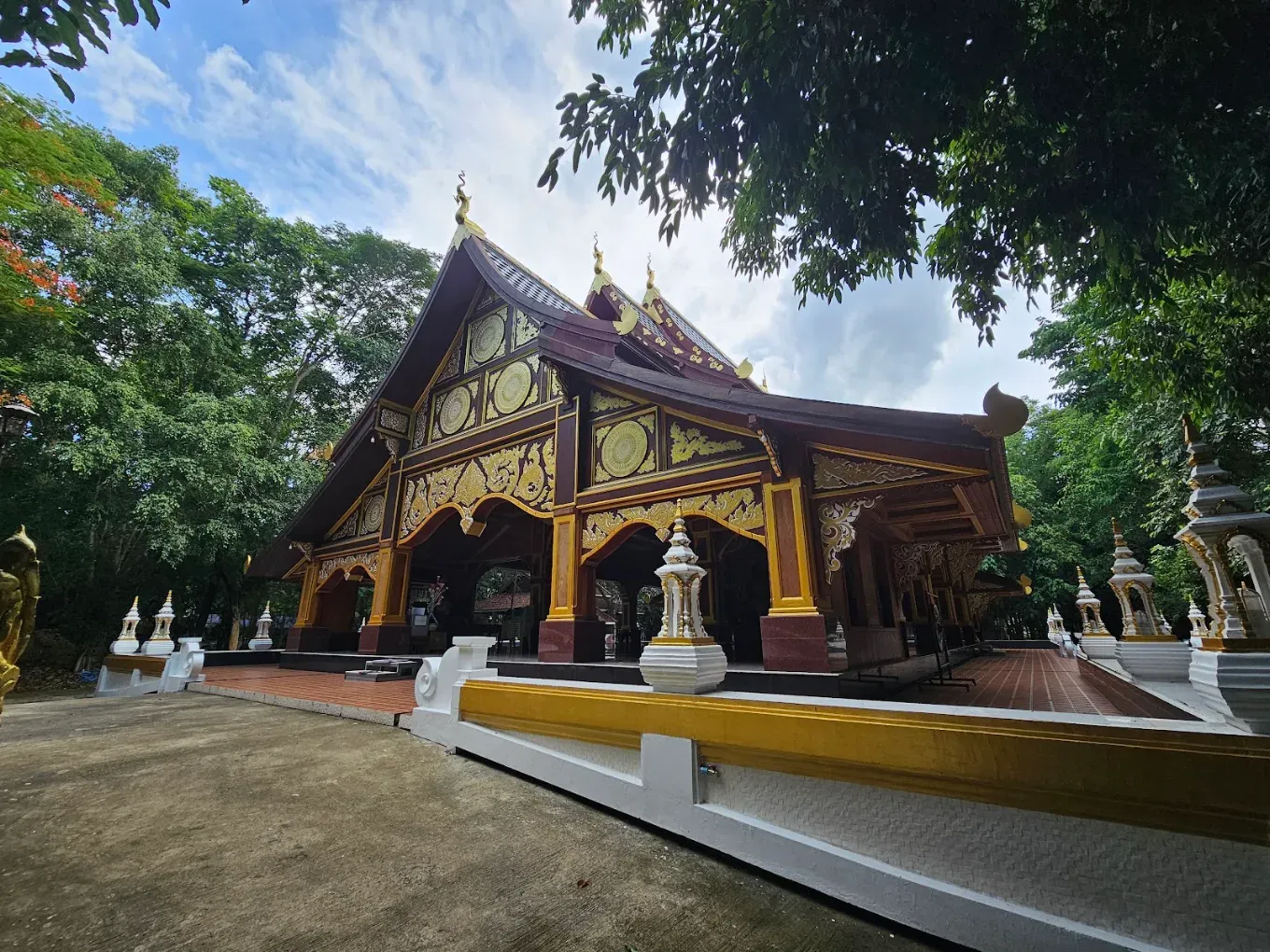
Open Days: Daily
Opening Hours: 08.00 – 17.00
Wat Pa Ajarn Mun is an important stop on the Thai forest meditation lineage route in Phrao District. It is ideal for visitors seeking a quiet Buddhist site, a respectful merit-making experience, and a deeper understanding of Ajahn Mun Bhuridatto’s presence in northern Thailand. The temple is known for its original walking meditation path, commemorative mondop, and peaceful forest-temple atmosphere in Ban Mae Koi.
Wat Pa Ajarn Mun is located at 75 Ban Mae Koi, Moo 6, Wiang Subdistrict, Phrao District, Chiang Mai Province. It is a Dhammayut Buddhist temple covering 9 rai and 92 square wah. The temple is closely associated with Ajahn Mun Bhuridatto, one of the most revered masters of the Thai forest meditation tradition. Before it became known as Wat Pa Ajarn Mun, the site was an abandoned temple locally called Wat Pa Daeng because the area once had many redwood trees. Local tradition also connects the old temple with a Mon origin before it fell into disuse and later became an important meditation site.
Ban Mae Koi is a village in Wiang Subdistrict, Phrao District, an area where local Lanna culture, agricultural life, old temple sites, and forest meditation history meet. Wat Pa Ajarn Mun is therefore more than a village temple. It is a religious and historical site that allows visitors to understand the connection between local community life and the Thai forest meditation lineage. The temple atmosphere is quiet, modest, and clearly different from the crowded temples in central Chiang Mai. Visitors can sense the character of a forest temple, the stillness of a meditation place, and the community’s deep respect for Ajahn Mun’s memory.
The historical importance of the temple begins with the abandoned Wat Pa Daeng site, which stood near the fields of Ban Mae Koi villagers. Old brick remains and traces of earlier structures survived in the area. Ajahn Mun Bhuridatto later came to stay and practice meditation at this site during his period of wandering and teaching in northern Thailand. Ban Mae Koi consequently became one of the important spiritual points in Phrao District, especially for followers and students of the forest meditation tradition.
During the period when Ajahn Mun stayed at the former Wat Pa Daeng in Ban Mae Koi, the area became a gathering point for meditation monks in Phrao. Several important teachers connected with Ajahn Mun’s lineage stayed in or around this area at different times, including Luang Pu Waen Sujinno, Luang Pu Tue Ajaladhammo, Luang Pu Khao Analayo, Luang Pu Sim Buddhacaro, and other meditation masters. This gives Ban Mae Koi a special place in the wider history of Thai forest Buddhism.
The most important feature to see at Wat Pa Ajarn Mun is the original walking meditation path associated with Ajahn Mun. The path is laid with old bricks and is regarded as a meaningful remnant of the time when he practiced here. It should not be treated as a simple photo spot. It is a place connected with diligence, restraint, and meditation practice. Visitors should walk quietly, avoid careless behavior, and approach the area as a sacred memorial of the forest meditation tradition.
Another important point is the mondop housing statues of meditation masters. It was built later by devotees as a place for worship and remembrance. This structure gives the temple the character of both a living forest temple and a spiritual memorial site. Visitors may pay respect, reflect on the discipline of the forest masters, and spend time quietly within the temple grounds. Wat Pa Ajarn Mun is best experienced slowly and respectfully rather than as a quick sightseeing stop.
The temple also contains the Luang Pu Sim pavilion, which represents another layer of history at the same site. Luang Pu Sim Buddhacaro was connected with the early support and development of the meditation monastery that eventually became Wat Pa Ajarn Mun. With the support of monks and lay devotees, the abandoned temple area was gradually restored, monks began to reside there again, and the site became an active forest temple.
The later restoration of the temple is an important part of its story. After the old temple had been abandoned, Phra Ajarn Thongsuk Uttarapanyo played a key role in restoring the site and developing it into a religious place once again. Lay supporters also contributed to the construction and revival of the temple. Phra Ajarn Thongsuk later became the first abbot in the late 1980s, marking an important turning point in the temple’s modern religious history.
The Phra Maha That Mondop Memorial for the forest meditation masters in Ajahn Mun’s lineage is another significant structure. It represents the devotion of the community and supporters who wanted to preserve the memory of the great meditation teachers. Such a memorial is not only an architectural feature. It is a symbol of reverence for the teachers who shaped Thai forest meditation practice. Visitors should appreciate the place not only visually but also through its spiritual and historical meaning.
The temple grounds also include a sermon hall, monks’ residences, forest-style lodgings, and meditation-related spaces. These structures support monastic life and the merit-making activities of lay visitors. Wat Pa Ajarn Mun does not emphasize grandeur. Its strength lies in simplicity, stillness, and its connection with meditation practice. Visitors should respect the monks’ living areas and maintain silence, especially around kutis and meditation zones.
The temple’s distinctive value is that it preserves a direct connection with the forest meditation tradition. It has the story of the old Wat Pa Daeng, the original walking meditation path, Ajahn Mun’s stay in Ban Mae Koi, the presence of many meditation teachers, and the continuing faith of the local community. Together, these elements give the temple historical, religious, and community significance. Visitors who learn about its background before arriving will understand the site much more deeply.
For Ban Mae Koi, the temple has both religious and cultural roles. It is a place for merit-making, Dhamma listening, Buddhist holy day activities, and seasonal ceremonies such as Buddhist Lent, the end of Buddhist Lent, Kathin robe offerings, forest robe offerings, and community merit-making. The temple also helps local residents maintain a connection with Ajahn Mun’s legacy, which is important not only in Phrao but also in the wider history of Thai Buddhism.
As a travel destination, Wat Pa Ajarn Mun is suitable for visitors interested in Buddhist pilgrimage, forest meditation history, quiet rural temples, and cultural routes in Phrao District. It is not appropriate for noisy or casual behavior because it remains a functioning temple with resident monks. Visitors should dress modestly, keep their shoulders and knees covered, lower their voices around kutis and the mondop, remove shoes before entering buildings, and avoid photographing monks during meditation or religious activities.
Getting There is most convenient by private car or rental car. From Chiang Mai city, drive toward Phrao District, then use Highway 1150 on the Chiang Dao – Phrao – Wiang Pa Pao route. Look for the turnoff around kilometer markers 29 – 30, then continue approximately 8 kilometers into Ban Mae Koi. The route passes through rural areas, so visitors should travel during daylight and allow enough time for temple visits and nearby stops.
A good connected route can begin at Wat Pa Ajarn Mun, then continue to nearby Wat Mae Koi, Wat Klang Wiang and the Phrao city pillar shrine, or extend farther to Wat Doi Mae Pang, which is associated with Luang Pu Waen Sujinno. Travelers interested in the meditation lineage can plan a broader spiritual route in Phrao District, allowing enough time for each temple rather than rushing through the journey.
Visitors interested in Ajahn Mun’s life should view Wat Pa Ajarn Mun as one of the places that completes the story of his northern wandering years. Ajahn Mun practiced in many parts of northern Thailand, but Ban Mae Koi preserves tangible traces of his presence, including the walking meditation path, memorial structures, and the quiet atmosphere of a forest temple. This makes the temple an important destination for learning about Thai forest Buddhism with respect and mindfulness.
The best time to visit is in the morning or late afternoon during opening hours. These periods are more comfortable for walking through the temple grounds and paying respect. During the rainy season, travelers should check road and weather conditions in advance, as some sections are rural roads. During the cool season, Phrao is especially pleasant for a merit-making and overnight cultural trip. The visit should be unhurried, quiet, and respectful.
Overall, Wat Pa Ajarn Mun in Ban Mae Koi is a valuable temple for those interested in the Thai forest meditation tradition, local faith, and rural cultural travel in Chiang Mai. Its highlights include Ajahn Mun’s original walking meditation path, the mondop of meditation masters, the Luang Pu Sim pavilion, and the calm forest-temple setting. It is an ideal place for merit-making, reflection, and learning about the spiritual history of Phrao District.
| Name | Wat Pa Ajarn Mun |
| Location | 75 Ban Mae Koi, Moo 6, Wiang Subdistrict, Phrao District, Chiang Mai Province |
| Address | 75 Moo 6, Ban Mae Koi, Wiang Subdistrict, Phrao District, Chiang Mai 50190, Thailand |
| Coordinates | 19.3691920, 99.1949134 |
| Temple Type | Dhammayut Buddhist Temple / Forest Meditation Temple / Site Associated With Ajahn Mun Bhuridatto |
| Temple Area | 9 Rai And 92 Square Wah |
| Former Name | Wat Pa Daeng |
| History | Originally an abandoned temple known as Wat Pa Daeng. Ajahn Mun Bhuridatto later stayed and practiced meditation here. Phra Ajarn Thongsuk Uttarapanyo later played a key role in restoring the abandoned temple and developing it into Wat Pa Ajarn Mun. |
| Abbot / Caretaker | Phra Khru Sathaporn Thammasophon (Wichit Sophano) |
| Contact Number | 080-129-0545 (Temple Lay Steward) |
| Open Days | Daily |
| Opening Hours | 08.00 – 17.00 |
| Admission Fee | Free Admission |
| Important Structures / Areas | Ajahn Mun’s original walking meditation path Mondop housing statues of meditation masters Luang Pu Sim pavilion Phra Maha That Mondop Memorial for forest meditation masters in Ajahn Mun’s lineage Reconstructed kuti and forest-style lodgings Sermon hall and monks’ residences |
| Highlights | Original walking meditation path, quiet forest-temple atmosphere, memorial structures, and the story of Ajahn Mun’s stay in Ban Mae Koi |
| Community Role | A spiritual center for Ban Mae Koi and a place for merit-making, Dhamma practice, and remembrance of the Thai forest meditation masters |
| Related Traditions | Buddhist holy days, Buddhist Lent, the end of Buddhist Lent, Kathin robe offerings, forest robe offerings, and local community merit-making |
| Travel Information | Private car or rental car is the most convenient option. From Chiang Mai city, drive toward Phrao District, use Highway 1150 on the Chiang Dao – Phrao – Wiang Pa Pao route, look for the turnoff around kilometer markers 29 – 30, and continue about 8 km to Ban Mae Koi. |
| Current Status | Active temple and religious site in Wiang Subdistrict, Phrao District, Chiang Mai Province |
| Nearby Tourist Attractions | 1. Wat Mae Koi, about 300 m 2. Wat Klang Wiang And Phrao City Pillar Shrine, about 9 km 3. Wiang Phrao Fresh Market, about 9 km 4. Wat Phra Chao Lan Thong, about 10 km 5. Ku Wiang Ying, about 12 km 6. Wat Doi Mae Pang, about 35 km |
| Nearby Restaurants | 1. Laab 11 Phrao, about 10 km, Tel. 095-791-1952 2. Phrao Proud Restaurant, about 11 km, Tel. 095-675-6509 3. Khun Muen Boat Noodles, about 17 km, Tel. 088-138-8457 4. Kummoon Cafe, about 18 km, Tel. 095-683-9698 5. Kerb Krun At Phrao Cafe, about 12 km |
| Nearby Accommodations | 1. Phrao Place & Market, about 9 km, Tel. 086-301-3004 2. Siam Lanna Homestay, about 18 km, Tel. 099-269-5415 3. Konkubdin Homestay, about 35 km, Tel. 087-183-2992 4. Mon Saeng Jun Homestay, about 38 km, Tel. 095-446-0556 5. Khoom Kam Kaew, about 30 km |
Frequently Asked Questions (FAQ)
Q: Where is Wat Pa Ajarn Mun located?
A: Wat Pa Ajarn Mun is located at 75 Ban Mae Koi, Moo 6, Wiang Subdistrict, Phrao District, Chiang Mai Province 50190.
Q: What are the open days and opening hours?
A: Wat Pa Ajarn Mun is open daily from 08.00 to 17.00.
Q: Is there an admission fee?
A: There is no admission fee.
Q: What is the most important thing to see at Wat Pa Ajarn Mun?
A: The most important feature is Ajahn Mun’s original walking meditation path, together with the mondop of meditation masters, the Luang Pu Sim pavilion, and the Phra Maha That Mondop Memorial.
Q: What was the temple’s former name?
A: The site was formerly known as Wat Pa Daeng.
Q: How is the temple connected with Ajahn Mun Bhuridatto?
A: Ajahn Mun Bhuridatto stayed, observed the rains retreat, and practiced meditation at the former Wat Pa Daeng site in Ban Mae Koi, which later became Wat Pa Ajarn Mun.
Q: How should visitors behave at the temple?
A: Visitors should dress modestly, keep shoulders and knees covered, speak quietly around kutis and the mondop, remove shoes before entering buildings, and avoid photographing monks during meditation.
Q: What nearby places can be visited with Wat Pa Ajarn Mun?
A: Nearby places include Wat Mae Koi, Wat Klang Wiang, the Phrao city pillar shrine, Wat Phra Chao Lan Thong, Ku Wiang Ying, and Wat Doi Mae Pang.
 Category: ●Places of Worship
 Group: ●Temple
Last Update : 1 MonthAgo
 Last Update : 1 MonthAgo
 Click to Access the Navigation Map GPS
Wat Pa Ajarn Mun Map
Recommend

 Muang Chiang Mai(121)Chom Thong(47)Mae Chaem(25)Chiang Dao(33)Doi Saket(68)Mae Taeng(85)Mae Rim(69)Samoeng(29)Fang(71)Mae Ai(59)Phrao(70)San Pa Tong(103)San Kamphaeng(66)San Sai(73)Hang Dong(73)Hot(32)Doi Tao(22)Omkoi(11)Saraphi(74)Wiang Haeng(15)Chai Prakan(28)Mae Wang(32)Mae On(22)Doi Lo(33)Galyani Vadhana(1)


