
lovethailand home >North Travel Attractions >Chiang Mai Travel Attractions >Phrao >Mae Waen > Wat Nikhom Sahakon
TL;DR: Wat Nikhom Sahakon is located at Moo 7, Mae Waen Subdistrict, Phrao District, Chiang Mai Province, open Daily, hours 08.00 – 17.00.

Wat Nikhom Sahakon
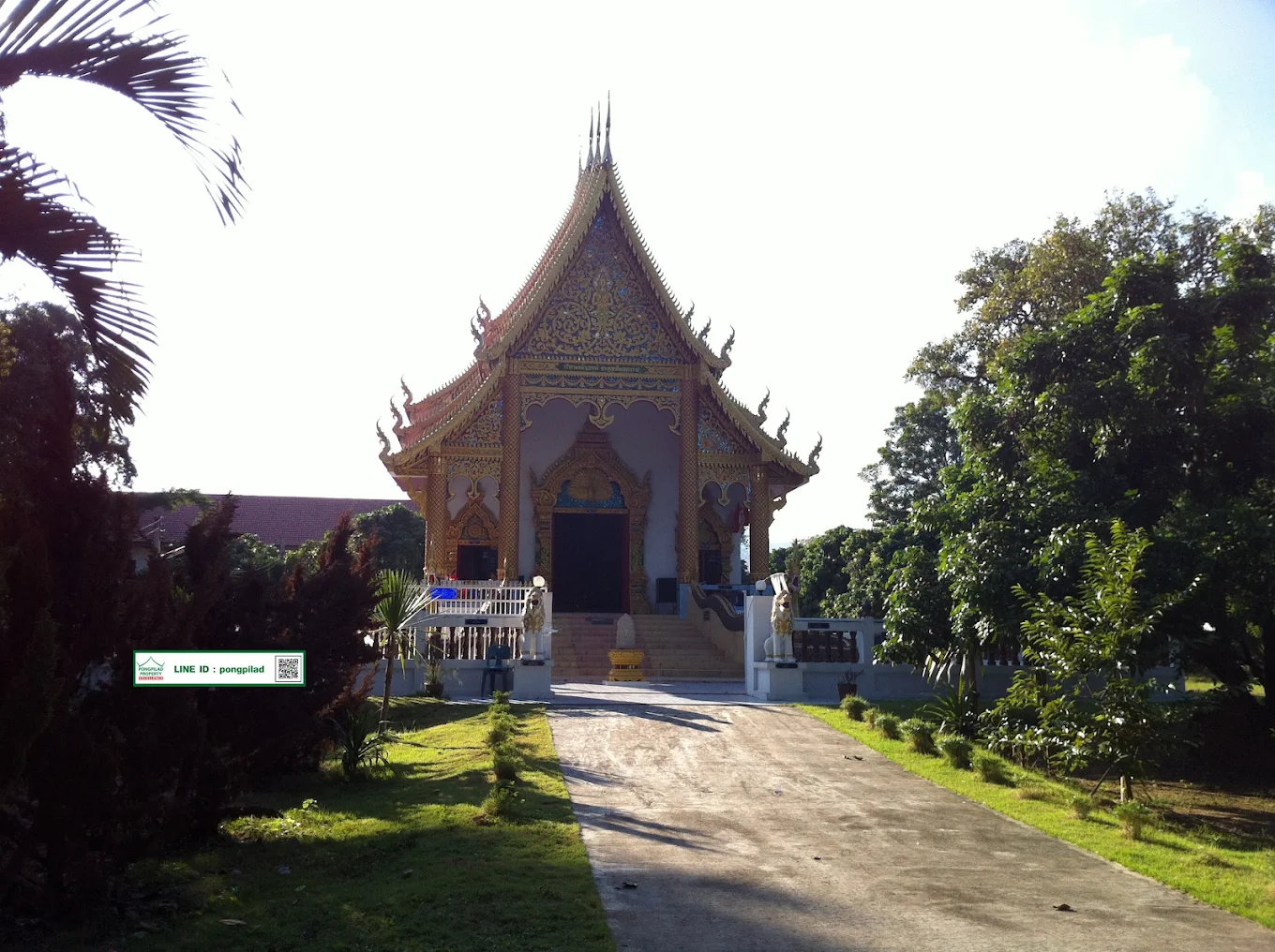
Open Days: Daily
Opening Hours: 08.00 – 17.00
Wat Nikhom Sahakon is a local Dhammayut Buddhist temple in Mae Waen Subdistrict, Phrao District, Chiang Mai Province. It is suitable for travelers who want to visit a quiet rural temple, understand the community context of the Phrao Cooperative Settlement area, and explore a less-commercial side of northern Thailand. The temple can be combined with nearby Mae Waen temples, local restaurants, and homestays in Phrao District.
Wat Nikhom Sahakon is located in Moo 7, Mae Waen Subdistrict, Phrao District, Chiang Mai Province. It is a local Buddhist temple under the Dhammayut order. The temple was officially permitted to be established in 1989 and received its royal Wisungkhamsima in 1998. Phra Khru Phaisan Satsanakit Panyawaro serves as the abbot. This temple is closely connected with the local community and the wider context of the Phrao Cooperative Settlement area, where Buddhist faith, agricultural life, and rural community development intersect.
The temple is not a large mainstream tourist attraction. Its value lies in its role as a living community temple. For local residents, Wat Nikhom Sahakon is a place for merit-making, Buddhist observances, family ceremonies, and village activities. For travelers, it offers a quieter and more grounded experience of Chiang Mai than the major temples in the old city. Visiting this temple is less about sightseeing in a conventional sense and more about understanding how Buddhism remains embedded in everyday rural life.
Mae Waen Subdistrict is an important area of Phrao District, with agricultural communities, village roads, local temples, and settlement areas connected to the cooperative development system. The temple name “Nikhom Sahakon” reflects this local identity. It suggests a relationship with cooperative settlement, land use, farming livelihoods, and community organization. A temple in this setting does more than provide a religious space. It supports the social and emotional structure of the community by giving residents a shared place for worship, gathering, and continuity.
Although Wat Nikhom Sahakon is relatively recent when compared with older Lanna temples in Phrao, its establishment in 1989 is historically meaningful in the context of local community growth. Many village temples were founded because residents needed a nearby place for merit-making and Buddhist ceremonies. A temple within the community reduced the need to travel far for religious activities and helped strengthen local identity. In this sense, Wat Nikhom Sahakon represents the development of a modern rural community temple rather than an ancient monument.
The temple’s royal Wisungkhamsima, granted in 1998, is another important milestone. A Wisungkhamsima relates to the consecrated boundary used for significant monastic acts. Receiving this status strengthened the formal religious identity of the temple and allowed it to function more fully as a recognized Buddhist temple. For those interested in temple history, the establishment year and Wisungkhamsima year provide a clear timeline for understanding the temple’s development.
Wat Nikhom Sahakon belongs to the Dhammayut order, which makes it distinctive within the local religious landscape. Many temples in northern Thai villages belong to the Mahanikaya order, while this temple is part of the Dhammayut tradition. This gives visitors a chance to observe the diversity of Thai Buddhist institutions at the local level. Even without elaborate tourism infrastructure, the temple adds an important layer to the cultural and religious map of Mae Waen Subdistrict.
Phra Khru Phaisan Satsanakit Panyawaro, the abbot of Wat Nikhom Sahakon, plays a central role in maintaining the temple’s religious life and community function. In a village temple, the abbot often oversees religious activities, temple order, merit-making events, and coordination with local supporters. A temple can remain active only when monks, lay supporters, community leaders, and residents continue to care for it together. Wat Nikhom Sahakon should therefore be appreciated as a community-supported sacred space.
The main things to appreciate at Wat Nikhom Sahakon are its temple grounds, merit-making spaces, worship area, Buddhist activity zones, and calm local atmosphere. Visitors should approach the temple with respect. Dress modestly, speak quietly, avoid disturbing monks’ residential areas, and do not photograph monks or local residents at close range without permission. If a ceremony or community activity is taking place, visitors should observe politely and give priority to the religious needs of the local community.
As a rural community temple, Wat Nikhom Sahakon is naturally connected with Buddhist holy days, Buddhist Lent, the end of Buddhist Lent, Kathin robe offerings, forest robe offerings, and other local merit-making events. These activities are not only religious rituals. They are social practices that bring families, neighbors, elders, and younger generations together. Through these events, a temple helps preserve both religious practice and social cohesion in the village.
In the Lanna cultural context, local temples also help transmit values across generations. Children learn temple manners by accompanying their families. Elderly residents use the temple for worship, Dhamma listening, and merit-making. Adults support temple activities through offerings and community work. This shared participation gives a temple its real strength. Wat Nikhom Sahakon therefore has cultural value not because it is a famous monument, but because it remains connected with the daily life of people in Mae Waen.
The cooperative settlement context gives Wat Nikhom Sahakon additional meaning. The Phrao Cooperative Settlement area is associated with land development, agricultural livelihoods, and rural community organization. A temple within this context helps support the human side of settlement life. It provides a place for spiritual comfort, community unity, and moral continuity. This makes the temple part of the social infrastructure of the area, not merely a religious building.
Getting There is most convenient by private car or rental car. From Chiang Mai city, drive toward Phrao District via the Chiang Mai–Mae Jo–Phrao route, then continue into Mae Waen Subdistrict and Moo 7 using local roads. Self-driving is the best option because it allows travelers to combine the temple with nearby temples, restaurants, and accommodation in Phrao. During the rainy season, allow extra travel time and drive carefully on rural roads.
A practical cultural route can begin at Wat Nikhom Sahakon, then continue to nearby temples such as Wat Mae Waen, Wat Mae Hia, Wat Pa Khaem, and Wat Nong Bua Chai Mongkhon. Travelers who want a broader route can continue into Phrao town for local food and cafes, or extend the trip toward nearby subdistricts such as Mae Pang and Long Khot. This makes Wat Nikhom Sahakon a useful stop within a broader rural temple and community route rather than a stand-alone destination.
The most practical time to visit is during the day, especially in the morning or late afternoon. The temple is open daily from 08.00 to 17.00. Visitors who plan to make merit on Buddhist holy days or during festival periods should dress appropriately and respect local religious activities. Community temples are best experienced slowly and quietly, with attention to the people who use the temple as part of their everyday lives.
Wat Nikhom Sahakon is suitable for travelers interested in rural temples, local Buddhism, cooperative settlement communities, and cultural travel in Phrao District. It may not have the heavy tourism visibility of Chiang Mai’s famous temples, but its modest character is part of its strength. For travelers who want to see Chiang Mai beyond the main tourist circuit, this temple provides a direct and meaningful glimpse into the religious life of Mae Waen Subdistrict.
Overall, Wat Nikhom Sahakon is a Dhammayut community temple that reflects the relationship between Buddhism, cooperative settlement, agriculture, and local life in Phrao District. Its official establishment in 1989, royal Wisungkhamsima in 1998, and leadership under Phra Khru Phaisan Satsanakit Panyawaro make it an important local temple. Visitors can include it in a Mae Waen cultural route with nearby temples, local restaurants, and homestays to experience a quieter and more community-based side of Chiang Mai.
| Name | Wat Nikhom Sahakon |
| Location | Moo 7, Mae Waen Subdistrict, Phrao District, Chiang Mai Province |
| Address | Moo 7, Mae Waen Subdistrict, Phrao District, Chiang Mai 50190, Thailand |
| Temple Type | Local Buddhist Temple Under The Dhammayut Order |
| Highlights | A community temple in the Phrao Cooperative Settlement context, suitable for merit-making and learning about rural Dhammayut Buddhist life |
| History | Officially permitted to be established as a temple in 1989 and received its royal Wisungkhamsima in 1998 |
| Distinctive Features | A modest rural temple linked with the cooperative settlement area, agricultural community life, and Mae Waen local culture |
| Community Role | A spiritual center for merit-making, Dhamma listening, and Buddhist ceremonies of the local community |
| Main Areas / Zones | Merit-making area, temple courtyard, Buddhist activity area, and community religious space |
| Abbot / Caretaker | Phra Khru Phaisan Satsanakit Panyawaro |
| Related Traditions | Buddhist holy days, Buddhist Lent, the end of Buddhist Lent, Kathin robe offerings, forest robe offerings, and local community merit-making |
| Travel Information | Private car or rental car is the most convenient option. From Chiang Mai city, drive toward Phrao District via the Chiang Mai–Mae Jo–Phrao route, then continue to Mae Waen Subdistrict and Moo 7. |
| Current Status | Local Dhammayut Buddhist temple in Mae Waen Subdistrict, Phrao District, Chiang Mai Province |
| Open Days | Daily |
| Opening Hours | 08.00 – 17.00 |
| Nearby Tourist Attractions | 1. Wat Mae Waen, about 4 km 2. Wat Mae Hia, about 5 km 3. Wat Pa Khaem, about 6 km 4. Wat Nong Bua Chai Mongkhon, about 8 km 5. Phrao Cooperative Settlement, about 9 km 6. Phrao Town, about 16 km |
| Nearby Restaurants | 1. Khunmune Boat Noodles, about 5 km, Tel. 088-138-8457 2. Kummoon Cafe, about 7 km, Tel. 095-683-9698 3. Laab 11 Phrao, about 15 km, Tel. 095-791-1952 4. Phrao Proud Restaurant, about 16 km, Tel. 095-675-6509 5. Kerb Krun at Phrao Cafe, about 19 km, Tel. 083-544-9788 |
| Nearby Accommodations | 1. Siam Lanna Homestay, about 10 km, Tel. 099-269-5415 2. Phrao Place & Market, about 16 km, Tel. 086-301-3004 3. Konkubdin Homestay, about 26 km, Tel. 087-183-2992 4. Mon Saeng Jun Homestay, about 30 km, Tel. 081-716-3626 5. Khoom Kam Kaew, about 32 km, Tel. 098-749-6601 |
Frequently Asked Questions (FAQ)
Q: Where is Wat Nikhom Sahakon located?
A: Wat Nikhom Sahakon is located in Moo 7, Mae Waen Subdistrict, Phrao District, Chiang Mai Province 50190.
Q: What are the open days and opening hours of Wat Nikhom Sahakon?
A: Wat Nikhom Sahakon is open daily from 08.00 to 17.00.
Q: What type of temple is Wat Nikhom Sahakon?
A: It is a local Buddhist temple under the Dhammayut order.
Q: Why is Wat Nikhom Sahakon historically important?
A: The temple was officially permitted to be established in 1989 and received its royal Wisungkhamsima in 1998.
Q: Who is the abbot of Wat Nikhom Sahakon?
A: The abbot is Phra Khru Phaisan Satsanakit Panyawaro.
Q: What kind of travelers is Wat Nikhom Sahakon suitable for?
A: It is suitable for travelers interested in quiet rural temples, merit-making, local Buddhist culture, and community-based travel in Phrao District.
Q: What nearby places can be visited with Wat Nikhom Sahakon?
A: Nearby places include Wat Mae Waen, Wat Mae Hia, Wat Pa Khaem, Wat Nong Bua Chai Mongkhon, and Phrao town.
 Category: ●Places of Worship
 Group: ●Temple
Last Update : 1 MonthAgo
 Last Update : 1 MonthAgo
 Click to Access the Navigation Map GPS

 Muang Chiang Mai(121)Chom Thong(47)Mae Chaem(25)Chiang Dao(33)Doi Saket(68)Mae Taeng(85)Mae Rim(69)Samoeng(29)Fang(71)Mae Ai(59)Phrao(70)San Pa Tong(103)San Kamphaeng(66)San Sai(73)Hang Dong(73)Hot(32)Doi Tao(22)Omkoi(11)Saraphi(74)Wiang Haeng(15)Chai Prakan(28)Mae Wang(32)Mae On(22)Doi Lo(33)Galyani Vadhana(1)


