
lovethailand home >North Travel Attractions >Chiang Mai Travel Attractions >Phrao >Long Khot > Wat Pa Ha
TL;DR: Wat Pa Ha is located at Village No. 5, Ban Pa Ha, Long Khot Subdistrict, Phrao District, Chiang Mai Province, open Daily, hours 08.00 – 17.00.

Wat Pa Ha
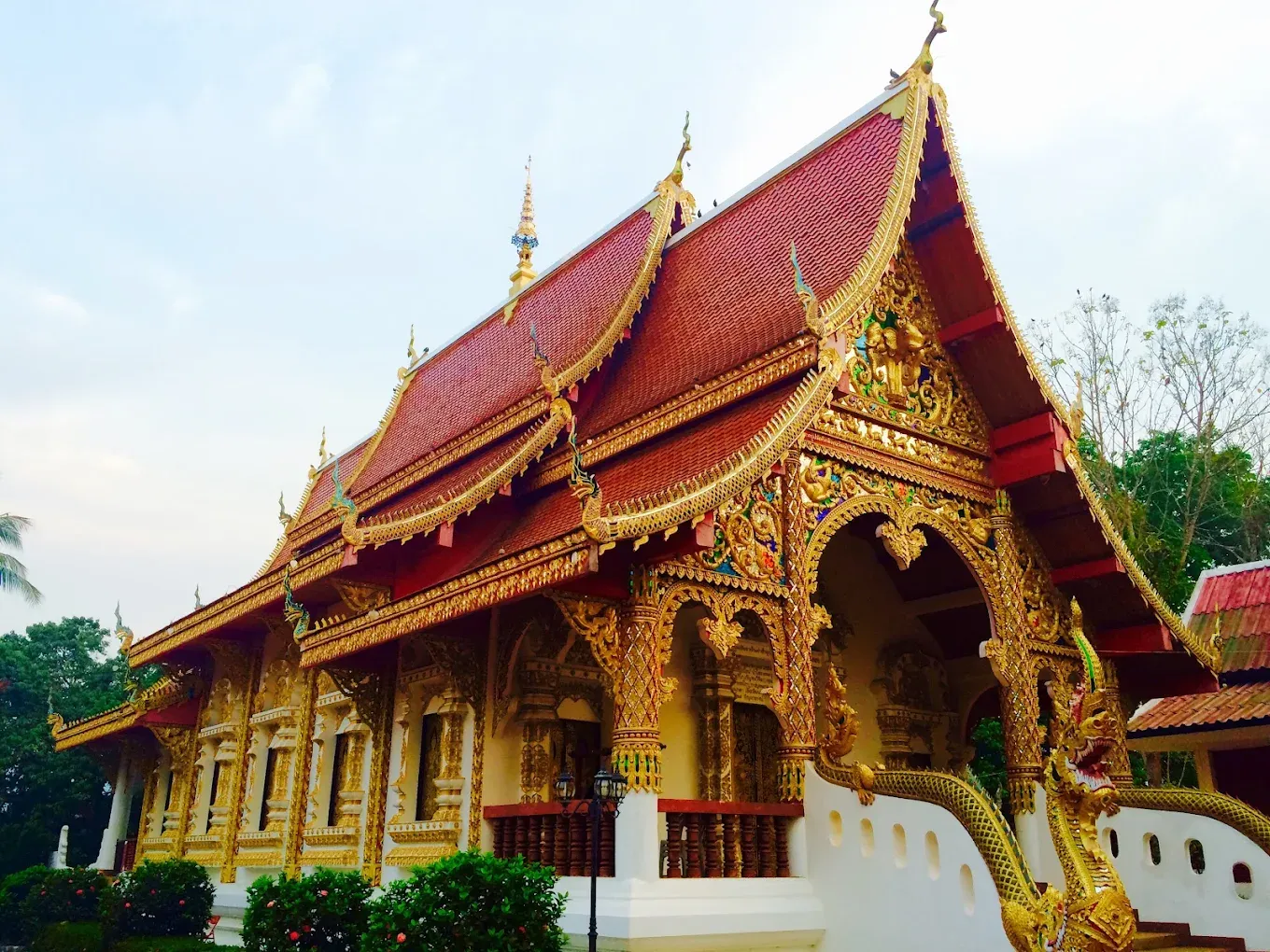
Open Days: Daily
Opening Hours: 08.00 – 17.00
Wat Pa Ha is located in Village No. 5, Ban Pa Ha, Long Khot Subdistrict, Phrao District, Chiang Mai Province. It is a local Buddhist temple under the Maha Nikaya tradition. The temple was officially established in 1867 and received its royal consecrated boundary in 1950. The recorded abbot is Phra Anan Thanaviro. Wat Pa Ha is an important community temple of Ban Pa Ha and one of the long-established Buddhist sites in Long Khot Subdistrict.
Wat Pa Ha is suitable for travelers who want to make merit, worship, and experience a quiet rural Lanna temple in Phrao District. Its value does not come from large-scale tourism or grand spectacle. Instead, it lies in its role as a village temple where local residents gather for Buddhist ceremonies, Dhamma listening, community merit-making, and seasonal religious activities.
The temple’s history is significant because it was officially established in 1867. This gives Wat Pa Ha a long-standing place in the religious and community history of Long Khot. The establishment of a temple during that period reflects the presence of a settled community with enough faith, organization, and local support to maintain a Buddhist place of worship for the village.
The royal consecrated boundary granted in 1950 is another important milestone. In Thai Buddhism, a consecrated boundary is required for formal monastic acts connected with Sangha ceremonies. This gives Wat Pa Ha a complete religious function, supporting both community merit-making and formal Buddhist rituals performed by monks.
Ban Pa Ha, Village No. 5, Long Khot Subdistrict, is part of Phrao’s rural landscape, where temples, farmland, forested areas, village roads, and mountain routes are closely connected. Wat Pa Ha should therefore be understood not as an isolated temple, but as part of a living cultural landscape where homes, temples, fields, forests, and local routes are connected.
The name “Pa Ha” is linked directly to the village. In Thai, “pa” refers to forest or woodland, while “ha” forms part of the local place name. When the village name became the temple name, Wat Pa Ha also became a spiritual symbol of the community. The name preserves local identity and reflects the connection between settlement, natural surroundings, and Buddhist life.
Long Khot Subdistrict has a dense Buddhist and cultural landscape. Nearby religious sites include Wat Ban Luang, Wat Thung Daeng, Wat Dong Ma Fai, Wat Chedi Banphot, Wat Si Maha Pho, Wat Phra That Doi Wiang Chai Mongkhon, and Wat Pa Ha. The presence of many temples in the same subdistrict shows how Buddhism has long shaped village organization, local identity, and everyday life in this part of Phrao.
The recorded abbot of Wat Pa Ha is Phra Anan Thanaviro. In a village temple, the abbot plays a central role in maintaining the temple, leading Buddhist ceremonies, coordinating merit-making events, and preserving the relationship between the Sangha and local residents. Community temples remain active through cooperation between monks, village leaders, and lay supporters.
The character of Wat Pa Ha is peaceful and local. Visitors should not expect a commercial tourist site. The experience is centered on quiet worship, respectful observation, and understanding the role of a Buddhist temple in village life. The temple grounds, community worship area, temple courtyard, and surrounding village setting together reveal how the temple functions within everyday life.
The most meaningful things to observe at Wat Pa Ha are the calm atmosphere and the connection between the temple and Ban Pa Ha. This type of temple offers value through simplicity, continuity of faith, and its role in sustaining local Buddhist practice. Cultural travelers should take time to observe the rhythm of the community and the way the temple remains part of local social life.
Wat Pa Ha has several community roles. First, it is a religious site for worship, merit-making, Dhamma listening, and Buddhist ceremonies. Second, it is a social space where villagers gather during annual and seasonal events. Third, it is a cultural space where Lanna customs, Buddhist etiquette, and local cooperation are passed from older generations to younger people.
Typical Buddhist activities connected with Wat Pa Ha include merit-making on Buddhist holy days, Buddhist Lent, the end of Buddhist Lent, Kathin, robe-offering ceremonies, Dhamma listening, and annual village merit-making events. During these occasions, the temple becomes a shared space where villagers prepare food, flowers, candles, incense, offerings, and donations for the monks and the community.
From a Lanna cultural perspective, Wat Pa Ha reflects the relationship between home, temple, and tradition. Children and young people learn Buddhist manners, respect for elders, generosity, and participation in community activities through temple events. These values are passed on through practice and observation, not only through formal teaching.
The wider context of Long Khot adds depth to Wat Pa Ha. The area includes old temples, hilltop sacred sites, village routes, homestays, and community-based cultural tourism. Wat Pa Ha should therefore be viewed as part of a cultural landscape that includes Ban Pa Ha, Ban Luang, Ban Thung Daeng, Ban Dong Ma Fai, farmland, forests, and the local roads that connect villages together.
For travelers interested in a temple route around Long Khot, Wat Pa Ha can be paired with Wat Phra That Doi Wiang Chai Mongkhon. The latter is one of Phrao’s important sacred sites, known for its large stupa, local historical narratives, and meditation role. Combining a village temple such as Wat Pa Ha with this major sacred site creates a route that shows both village-level and district-level Buddhist devotion.
Wat Ban Luang is another suitable stop in the same area. A route combining Wat Pa Ha, Wat Ban Luang, and Wat Phra That Doi Wiang Chai Mongkhon helps visitors understand the continuity of religious sites in Long Khot, from community temples to meditation-related temples and sacred hilltop landmarks.
Wat Dong Ma Fai, Wat Thung Daeng, Wat Chedi Banphot, and Wat Si Maha Pho can also be included in a Long Khot temple route. Each temple has its own village context and historical background. Visiting several temples in the same subdistrict gives travelers a clearer view of the Buddhist landscape of Long Khot than visiting only one temple.
With more time, travelers can continue to Wat Doi Mae Pang, one of Phrao’s important temples associated with meditation practice and revered teachers. This route allows visitors to move from a long-established community temple to larger and better-known Buddhist destinations in the district.
Travelers who want to include nature can connect Wat Pa Ha with Bua Tong Waterfall and the Seven Colors Spring, or stay overnight at homestays in Ban Luang and Long Khot. The Chiang Mai–Phrao route offers temples, villages, mountains, restaurants, cafés, homestays, and natural attractions, making Wat Pa Ha a meaningful cultural stop in a slow travel itinerary.
Visitors should dress modestly, cover shoulders and knees, speak quietly, avoid disturbing monks or worshippers, and refrain from close photography during ceremonies without permission. Wat Pa Ha remains an active place of worship for the local community, so respectful behavior is essential.
Getting There from Chiang Mai city is most convenient by private car or rental car. Take the Chiang Mai–Phrao route toward Phrao District, then continue into Long Khot Subdistrict and Village No. 5, Ban Pa Ha. Public transport to Phrao may be available, but onward local transport should be arranged in advance. A private vehicle is recommended for travelers who want to combine the temple with nearby temples, restaurants, homestays, and natural attractions.
The best time to visit is in the morning or late afternoon, when the weather is more comfortable and the temple atmosphere is calm. Travelers planning to combine Wat Pa Ha with Wat Phra That Doi Wiang Chai Mongkhon, Wat Ban Luang, Wat Dong Ma Fai, Wat Thung Daeng, and local homestays should allow at least half a day to one full day for a relaxed itinerary.
In summary, Wat Pa Ha is a long-established temple of Ban Pa Ha, Long Khot Subdistrict, Phrao District, Chiang Mai Province. It was officially established in 1867 and received its royal consecrated boundary in 1950. Its value lies in its community role, peaceful atmosphere, long history, connection with Ban Pa Ha, and position within a wider route of temples, homestays, villages, and natural attractions in Phrao District.
| Name | Wat Pa Ha |
| Location | Village No. 5, Ban Pa Ha, Long Khot Subdistrict, Phrao District, Chiang Mai Province |
| Address | Ban Pa Ha, Village No. 5, Long Khot Subdistrict, Phrao District, Chiang Mai 50190, Thailand |
| Highlights | A long-established Maha Nikaya village temple of Ban Pa Ha, suitable for merit-making, worship, and a quiet cultural route in Phrao District |
| History | Officially established as a temple in 1867 and granted its royal consecrated boundary in 1950 |
| Name Origin | The name is linked to Ban Pa Ha; “pa” refers to forest or woodland, while “ha” forms part of the local place name and community identity |
| Distinctive Features | Peaceful Lanna village-temple atmosphere, suitable for worship, merit-making, and learning about rural community life in northern Chiang Mai |
| Travel Information | From Chiang Mai city, take the Chiang Mai–Phrao route toward Phrao District, then continue to Long Khot Subdistrict and Village No. 5; private car or rental car is recommended |
| Current Status | Open for visits and religious activities |
| Open Days | Daily |
| Opening Hours | 08.00 – 17.00 |
| Main Areas / Zones | Religious area, consecrated boundary area, temple courtyard, and community merit-making spaces |
| Abbot / Caretaker | Phra Anan Thanaviro |
| Nearby Tourist Attractions | 1. Wat Phra That Doi Wiang Chai Mongkhon, about 5 km 2. Wat Ban Luang, about 6 km 3. Khon Kap Din Homestay And Ban Luang Community Route, about 6 km 4. Wat Dong Ma Fai, about 7 km 5. Wat Thung Daeng, about 8 km 6. Wat Chedi Banphot, about 9 km 7. Wat Doi Mae Pang, about 20 km 8. Bua Tong Waterfall And Seven Colors Spring, about 35 km |
| Nearby Restaurants | 1. Kin Ka Thung By Namwan, about 6 km, Tel. 092-185-2841, 080-121-2942 2. SUAN HUN NA, about 8 km, Tel. 084-874-0990 3. Krua Mon Saeng Chan, about 8 km 4. Jin Jum And Made-To-Order Restaurant, about 18 km, Tel. 053-475-209 5. Phrao Proud, about 20 km, Tel. 095-675-6509 6. Rain Tree Cafe, about 25 km, Tel. 093-131-0928, 087-660-0933 |
| Nearby Accommodations | 1. Khon Kap Din Homestay, about 6 km, Tel. 087-183-2992 2. Ban Khun Mor, about 6 km, Tel. 098-982-5244 3. Ban Im Suk / Ban Luang Community Homestay, about 6 km, Tel. 095-134-1887 4. Mon Saeng Chan Homestay, about 8 km 5. Phrao Camping Village, about 20 km, Tel. 091-564-2641 6. Phrao Boutique Hotel, about 22 km, Tel. 098-280-7099, 098-280-7100 |
Frequently Asked Questions (FAQ)
Q: Where is Wat Pa Ha located?
A: Wat Pa Ha is located in Village No. 5, Ban Pa Ha, Long Khot Subdistrict, Phrao District, Chiang Mai Province.
Q: What are the opening days and hours of Wat Pa Ha?
A: Wat Pa Ha is open daily from 08.00 to 17.00.
Q: Why is Wat Pa Ha historically important?
A: Wat Pa Ha is a local Maha Nikaya temple of Ban Pa Ha. It was officially established in 1867 and received its royal consecrated boundary in 1950.
Q: Who is the abbot of Wat Pa Ha?
A: The abbot is Phra Anan Thanaviro.
Q: What type of traveler is Wat Pa Ha suitable for?
A: It is suitable for travelers interested in local temples, merit-making, rural Lanna culture, and quiet community-based travel in Phrao District.
Q: What nearby places can be visited with Wat Pa Ha?
A: Nearby places include Wat Phra That Doi Wiang Chai Mongkhon, Wat Ban Luang, Wat Dong Ma Fai, Wat Thung Daeng, Wat Chedi Banphot, Wat Doi Mae Pang, and Bua Tong Waterfall with the Seven Colors Spring.
Q: How do travelers get to Wat Pa Ha?
A: From Chiang Mai city, take the Chiang Mai–Phrao route toward Phrao District, then continue to Long Khot Subdistrict and Village No. 5. A private car or rental car is recommended.
 Category: ●Places of Worship
 Group: ●Temple
Last Update : 2 MonthAgo
 Last Update : 2 MonthAgo
 Click to Access the Navigation Map GPS

 Muang Chiang Mai(121)Chom Thong(47)Mae Chaem(25)Chiang Dao(33)Doi Saket(68)Mae Taeng(85)Mae Rim(69)Samoeng(29)Fang(71)Mae Ai(59)Phrao(70)San Pa Tong(103)San Kamphaeng(66)San Sai(73)Hang Dong(73)Hot(32)Doi Tao(22)Omkoi(11)Saraphi(74)Wiang Haeng(15)Chai Prakan(28)Mae Wang(32)Mae On(22)Doi Lo(33)Galyani Vadhana(1)


