
lovethailand home >North Travel Attractions >Chiang Mai Travel Attractions >Phrao >San Sai > Wat Nong Pit
TL;DR: Wat Nong Pit is located at Village No. 2, San Sai Subdistrict, Phrao District, Chiang Mai Province, open Daily, hours 08.00 – 17.00.

Wat Nong Pit
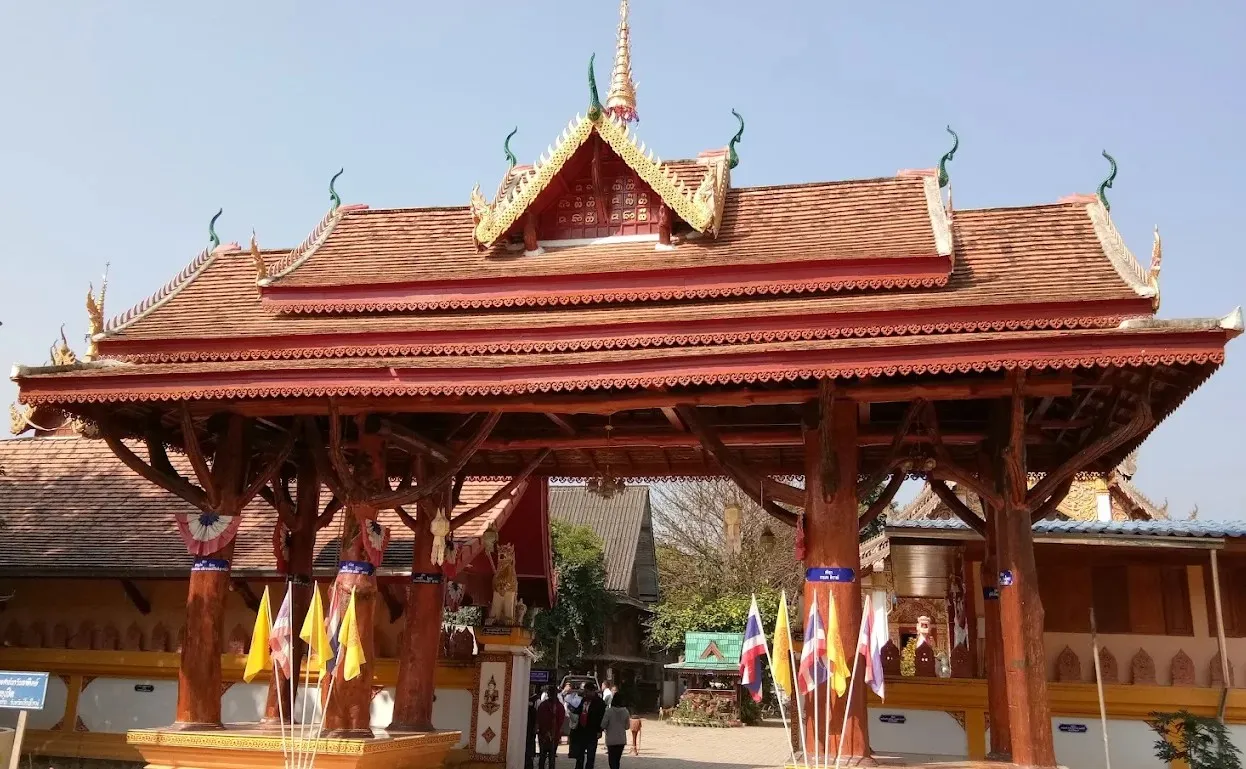
Open Days: Daily
Opening Hours: 08.00 – 17.00
Wat Nong Pit is located in Village No. 2, Ban Nong Pit, San Sai Subdistrict, Phrao District, Chiang Mai Province. It is a local Buddhist temple under the Maha Nikaya tradition and was officially established in 1912. The temple serves as a spiritual center for Ban Nong Pit and is part of the quiet rural temple network of San Sai Subdistrict in northern Chiang Mai.
Wat Nong Pit is best understood as a living village temple rather than a large-scale tourist attraction. Its importance lies in the role it plays in everyday community life. Local residents use the temple for merit-making, worship, Dhamma listening, Buddhist ceremonies, and seasonal religious events. For travelers, it offers a calm and local experience of Lanna Buddhist culture in Phrao District.
The temple’s history is anchored in its official establishment in 1912. During that period, rural communities in Phrao were closely connected with agriculture, local roads, schools, temples, and village-based social life. Establishing a temple in Ban Nong Pit reflected the community’s faith and readiness to maintain a proper Buddhist site for local religious practice.
Ban Nong Pit, Village No. 2, is a rural community in San Sai Subdistrict. It is surrounded by local roads, Ban Nong Pit School, agricultural areas, and nearby communities such as Ban Nong Khrok, Ban San Pong, Ban Huai San, and Ban Tha Ma Kiang. Wat Nong Pit is therefore part of a village landscape where temples, schools, homes, and farmland are closely connected.
The name “Nong Pit” is linked to the village name and local geography. In Thai place names, “nong” often refers to a pond, wetland, or water-related landscape. The temple name preserves the identity of Ban Nong Pit and reflects the close relationship between settlement, local memory, and Buddhist life in Phrao.
Wat Nong Pit is one of the local Maha Nikaya temples in San Sai Subdistrict. Temples of this kind help sustain Buddhism at the village level because they are easily accessible to local residents and remain connected with everyday rituals, community activities, and the passing on of Buddhist manners to younger generations.
Publicly available sources provide limited details about specific temple buildings at Wat Nong Pit. For visitors, the main experience is therefore the overall atmosphere of the temple grounds, the religious space, the community worship area, and the quiet relationship between the temple and the surrounding village. This type of temple is best appreciated slowly and respectfully.
The key things to observe are the calm temple atmosphere, the village setting, the nearby local roads, and the surrounding agricultural landscape. These elements help visitors understand that Wat Nong Pit is not separate from the community. It forms part of the everyday life and shared identity of Ban Nong Pit.
Wat Nong Pit has several community roles. First, it is a religious site for merit-making, worship, and Buddhist ceremonies. Second, it is a social space where villagers gather during annual and seasonal events. Third, it is a cultural space where Lanna customs, Buddhist etiquette, and community cooperation are maintained and passed on.
Typical Buddhist activities connected with Wat Nong Pit include merit-making on Buddhist holy days, Buddhist Lent, the end of Buddhist Lent, Kathin, robe-offering ceremonies, and annual village merit-making events. During these occasions, the temple becomes a shared space where local people prepare offerings, food, flowers, candles, and other items for Buddhist ceremonies.
Wat Nong Pit is also connected with local learning and moral education. Community temples often function as places where children and young people learn Buddhist values, respect, generosity, and proper conduct. Local activities held at the temple show that the site continues to serve as a place of shared learning, not only as a ceremonial space.
For cultural travelers, Wat Nong Pit is a useful example of a rural Lanna temple. Unlike larger temples in central Chiang Mai, it offers a quieter and more community-based experience. Visitors should come with respect, observe the temple calmly, and appreciate the rhythm of local life rather than expecting a commercial tourist site.
Wat Nong Pit can be included in a temple route around San Sai Subdistrict. Nearby temples such as Wat Nong Khrok, Wat Kham Sum Pa, Wat Phra That Klang Chai Mueang, Wat San Pong, and Wat San Sai help travelers understand how village temples are distributed across the subdistrict. Each temple has a similar community role but reflects a different village context.
Wat Nong Khrok is one of the nearby temples that can be paired with Wat Nong Pit. Ban Nong Khrok is also known for Nong Khrok Hot Spring, a local wellness attraction. A combined route can include merit-making at Wat Nong Pit, a visit to Wat Nong Khrok, and relaxation at the hot spring, creating a balanced itinerary of culture, community, and nature.
Wat San Pong and Wat Kham Sum Pa are also suitable stops in the same area. Visiting these temples together gives travelers a clearer view of San Sai Subdistrict as a village-based Buddhist landscape. These temples may not be large tourist destinations, but they are meaningful places of faith and memory for local communities.
For a broader Buddhist route, visitors can continue to Wat Doi Mae Pang, one of the important temples in Phrao District. This route allows travelers to move from a quiet village temple to a more widely known Buddhist site, creating a fuller understanding of Phrao’s religious heritage.
Travelers who want to combine temple visits with nature can connect Wat Nong Pit with Nong Khrok Hot Spring and Bua Tong Waterfall with the Seven Colors Spring. The Chiang Mai–Phrao route offers temples, communities, restaurants, cafés, accommodations, and natural attractions, making Wat Nong Pit a meaningful cultural stop in a Phrao itinerary.
Visitors should dress modestly, cover shoulders and knees, speak quietly, and avoid close photography of monks or ceremonies without permission. Wat Nong Pit remains an active place of worship for the local community, so respectful behavior is essential.
Getting There from Chiang Mai city is most convenient by private car or rental car. Take the Chiang Mai–Phrao route toward Phrao District, then continue into San Sai Subdistrict and Village No. 2, Ban Nong Pit. Public transport to Phrao may be available, but onward local transport should be arranged in advance. A private vehicle is recommended for travelers who want to combine Wat Nong Pit with nearby temples, restaurants, and attractions.
The best time to visit is in the morning or late afternoon, when the weather is more comfortable and the temple atmosphere is calm. Travelers planning to visit nearby temples and Nong Khrok Hot Spring should allow at least half a day to one full day for a relaxed itinerary.
In summary, Wat Nong Pit is a long-established local temple of Ban Nong Pit with a history dating to 1912. It is a Maha Nikaya temple that reflects the role of community Buddhism in Phrao District. Its value lies in its peaceful atmosphere, its connection with the village, and its position within a wider local route of temples, hot springs, restaurants, and rural Lanna communities.
| Name | Wat Nong Pit |
| Location | Village No. 2, San Sai Subdistrict, Phrao District, Chiang Mai Province |
| Address | Ban Nong Pit, Village No. 2, San Sai Subdistrict, Phrao District, Chiang Mai 50190, Thailand |
| Coordinates | 19.42547, 99.16564 |
| Highlights | A local Maha Nikaya village temple of Ban Nong Pit, suitable for merit-making, worship, and a quiet cultural route in Phrao District |
| History | Officially established as a temple in 1912 and has served Ban Nong Pit and San Sai Subdistrict as a community Buddhist temple |
| Name Origin | The name is linked to Ban Nong Pit, Village No. 2, San Sai Subdistrict, and reflects the local identity of Phrao District |
| Distinctive Features | Peaceful Lanna village-temple atmosphere, suitable for worship, merit-making, and learning about rural community life in northern Chiang Mai |
| Travel Information | From Chiang Mai city, take the Chiang Mai–Phrao route toward Phrao District, then continue to San Sai Subdistrict and Village No. 2; private car or rental car is recommended |
| Current Status | Open for visits and religious activities |
| Open Days | Daily |
| Opening Hours | 08.00 – 17.00 |
| Main Areas / Zones | Religious area, temple courtyard, and community merit-making spaces |
| Nearby Tourist Attractions | 1. Wat Nong Khrok, about 2 km 2. Wat Kham Sum Pa, about 2 km 3. Wat Huai San, about 2 km 4. Wat San Pong, about 3 km 5. Wat Phra That Klang Chai Mueang, about 6 km 6. Nong Khrok Hot Spring, about 6 km 7. Wat Doi Mae Pang, about 25 km |
| Nearby Restaurants | 1. Jin Jum And Made-To-Order Restaurant, about 6 km, Tel. 053-475-209 2. Phrao Proud, about 8 km, Tel. 095-675-6509 3. Rain Tree Cafe, about 13 km, Tel. 093-131-0928 4. Rain Tree Cafe / Chamchuri Cafe, about 13 km, Tel. 087-660-0933 5. Kaprao Thad Maejo, about 52 km, Tel. 053-498-894, 084-612-7442 |
| Nearby Accommodations | 1. Phrao Place & Market, about 7 km, Tel. 086-301-3004, 065-001-9949 2. Phrao Boutique Hotel, about 10 km, Tel. 098-280-7099, 098-280-7100 3. Baan Suan Naam Lom Homestay, about 12 km, Tel. 082-866-6456 4. Phrao Camping Village, about 15 km, Tel. 061-279-9015 5. Om Doi Resort, about 18 km, Tel. 081-925-5855 |
Frequently Asked Questions (FAQ)
Q: Where is Wat Nong Pit located?
A: Wat Nong Pit is located in Village No. 2, Ban Nong Pit, San Sai Subdistrict, Phrao District, Chiang Mai Province.
Q: What are the opening days and hours of Wat Nong Pit?
A: Wat Nong Pit is open daily from 08.00 to 17.00.
Q: Why is Wat Nong Pit historically important?
A: Wat Nong Pit is a local Maha Nikaya temple of Ban Nong Pit and was officially established in 1912.
Q: What type of traveler is Wat Nong Pit suitable for?
A: It is suitable for travelers interested in local temples, merit-making, rural Lanna culture, and quiet community-based travel in Phrao District.
Q: What nearby places can be visited with Wat Nong Pit?
A: Nearby places include Wat Nong Khrok, Wat Kham Sum Pa, Wat San Pong, Wat Phra That Klang Chai Mueang, Nong Khrok Hot Spring, and Wat Doi Mae Pang.
Q: How do travelers get to Wat Nong Pit?
A: From Chiang Mai city, take the Chiang Mai–Phrao route toward Phrao District, then continue to San Sai Subdistrict and Village No. 2. A private car or rental car is recommended.
Q: Is there an admission fee for Wat Nong Pit?
A: The summary table does not list an admission fee because no publicly verified fee information was found. Visitors may make merit donations at the temple according to their faith.
 Category: ●Places of Worship
 Group: ●Temple
Last Update : 2 DayAgo
 Last Update : 2 DayAgo
 Click to Access the Navigation Map GPS
 Muang Chiang Mai(121)Chom Thong(47)Mae Chaem(25)Chiang Dao(33)Doi Saket(68)Mae Taeng(85)Mae Rim(69)Samoeng(29)Fang(71)Mae Ai(59)Phrao(70)San Pa Tong(103)San Kamphaeng(66)San Sai(73)Hang Dong(74)Hot(32)Doi Tao(22)Omkoi(11)Saraphi(74)Wiang Haeng(15)Chai Prakan(28)Mae Wang(32)Mae On(22)Doi Lo(34)Galyani Vadhana(1)


