
lovethailand home >North Travel Attractions >Chiang Mai Travel Attractions >Phrao >San Sai > Wat San Sai (Phrao)
TL;DR: Wat San Sai (Phrao) is located at Village No. 7, San Sai Subdistrict, Phrao District, Chiang Mai Province, open Daily, hours 08.00 – 17.00.
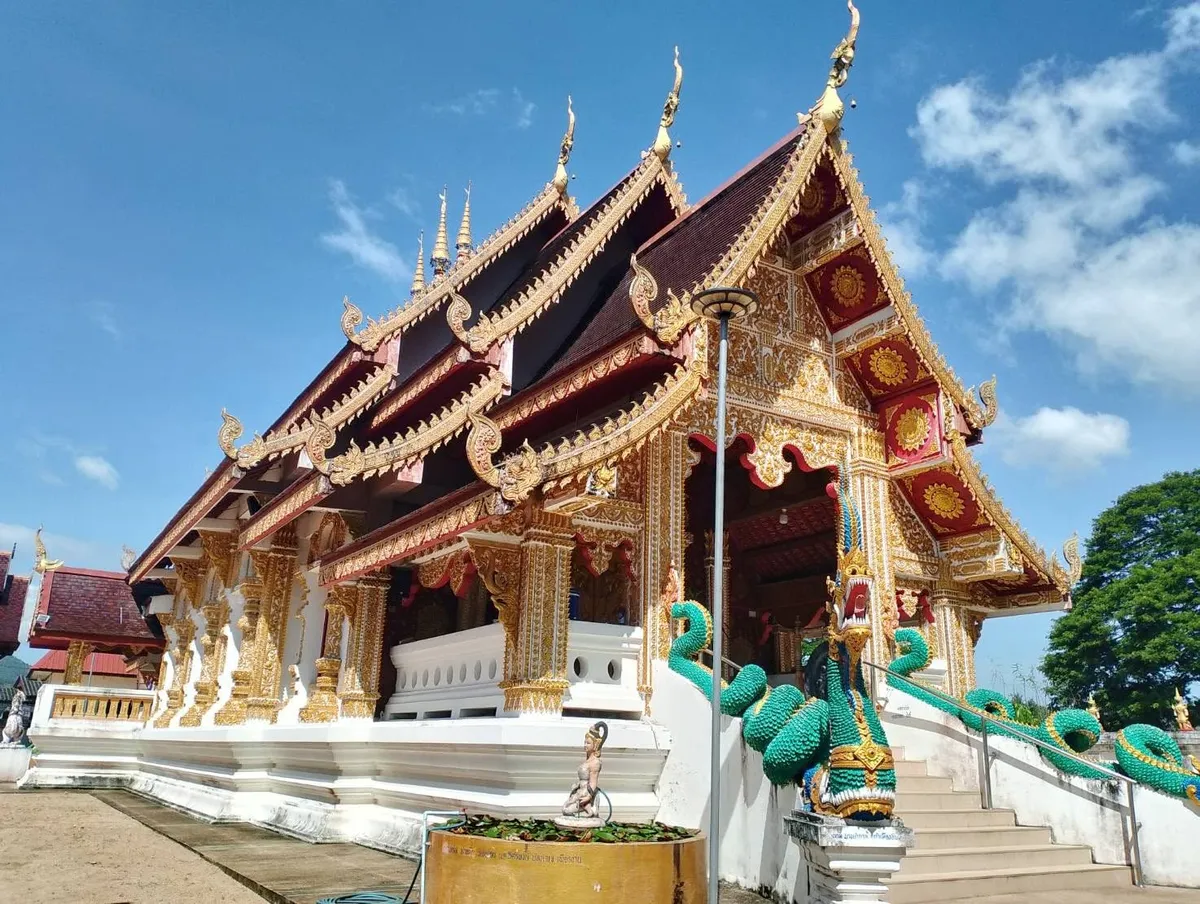
Wat San Sai (Phrao)
Open Days: Daily
Opening Hours: 08.00 – 17.00
Wat San Sai (Phrao) is located in Village No. 7, San Sai Subdistrict, Phrao District, Chiang Mai Province. It is a local Buddhist temple under the Maha Nikaya tradition and was officially permitted to be established as a temple in 1870. For travelers exploring the quieter cultural side of northern Chiang Mai, this temple offers a calm and meaningful stop in a rural Lanna community rather than a crowded mainstream attraction.
Wat San Sai is important because it represents the everyday relationship between Buddhism and village life in Phrao. The temple has served Ban San Sai and the surrounding community for more than 150 years. Its value does not come from large-scale tourist infrastructure, but from its role as a spiritual center where local people gather for merit-making, Buddhist observances, community ceremonies, and seasonal religious activities.
The temple was officially established in 1870, a period when rural communities in Phrao were closely tied to agriculture, temple-centered social life, and local Buddhist traditions. In such communities, a temple was not only a religious site. It functioned as a shared public space, a place for moral learning, a venue for village gatherings, and a cultural anchor that helped maintain continuity between generations.
The name “San Sai” is connected with the local place name of Ban San Sai and San Sai Subdistrict. In northern Thai usage, words related to ridges, raised ground, sandy soil, and settlement geography often appear in community names. The temple’s name therefore reflects both the landscape and the identity of the village. Visiting Wat San Sai helps travelers understand how place names, geography, and religious life are connected in rural Lanna culture.
Phrao District has a distinct character. It sits in a broad basin surrounded by mountains and retains a slower rural atmosphere compared with central Chiang Mai. A visit to Wat San Sai allows travelers to experience this quieter side of the province, where temples, farms, village roads, and local traditions remain closely linked. The temple is especially suitable for visitors who want to understand local culture beyond the well-known temples in Chiang Mai Old City.
The current abbot recorded for Wat San Sai is Phra Khru Panyawalukkakhet Panyawachiro. Visitors should treat the temple as an active religious site, not only as a sightseeing location. Modest clothing, quiet behavior, and respect for monks and worshippers are essential. If ceremonies or local merit-making activities are taking place, visitors should keep a respectful distance and avoid interrupting religious practice.
Wat San Sai is a good destination for cultural travelers because it shows the role of a community temple in northern Thailand. Regular Buddhist activities such as merit-making on Buddhist holy days, Buddhist Lent, the end of Buddhist Lent, Kathin, and robe-offering ceremonies are part of the temple-centered rhythm of village life. These activities connect families, elders, monks, and young people through shared acts of faith and community responsibility.
The temple is best appreciated slowly. Instead of looking only for a famous landmark or a large photo spot, travelers should observe the overall temple atmosphere, the open temple grounds, the religious spaces, and the quiet presence of the local community. This kind of visit offers a more grounded understanding of Lanna Buddhism and the way temples continue to support local identity in rural Chiang Mai.
Wat San Sai can also be included in a broader Phrao cultural route. Nearby temples in San Sai Subdistrict, such as Wat Phra That Klang Chai Mueang, Wat San Pong, Wat Bo Tao, and other village temples, show how Buddhist sites are distributed across the local landscape. Together, they form a network of religious and community spaces that help define the cultural geography of Phrao.
For travelers interested in more widely known religious sites, Wat Doi Mae Pang can be added to the same trip. This temple is one of Phrao’s important Buddhist destinations and is associated with Luang Pu Waen Sujinno. Combining Wat San Sai with Wat Doi Mae Pang creates a route that moves from a quiet village temple to a better-known meditation-related temple, giving visitors a fuller view of the district’s Buddhist heritage.
Nature-based travelers can also connect Wat San Sai with Bua Tong Waterfall and the Seven Colors Spring. This limestone waterfall and spring area is one of the most distinctive natural attractions on the Chiang Mai–Phrao route. A combined itinerary can include temple visits in Phrao and a nature stop on the way to or from Chiang Mai, making the trip balanced between culture, faith, and landscape.
The best time to visit Wat San Sai is in the morning or late afternoon, when the light is softer and the atmosphere is more comfortable for walking around the temple grounds. Visitors who plan to continue to other temples, cafés, homestays, or natural attractions in Phrao should start early, as local travel distances can take longer than they appear on a map.
Getting There from Chiang Mai city is most convenient by private car or rental car. Take the Chiang Mai–Phrao route toward Phrao District, then continue into San Sai Subdistrict and Village No. 7. Public transport to Phrao may be available in some periods, but onward local transport to the village should be planned in advance. A private vehicle is the best option for travelers who want to combine Wat San Sai with nearby temples, restaurants, and accommodations.
Visitors should dress modestly, cover shoulders and knees, avoid loud conversations, and refrain from photographing monks or ceremonies at close range without permission. Wat San Sai remains a living place of worship for the local community. A respectful approach will make the visit more meaningful and help preserve the peaceful character of the temple.
Wat San Sai (Phrao) is therefore best suited for travelers who want a deeper, quieter, and more local experience of Chiang Mai. It is not a destination built around spectacle. Its strength lies in its age, its community role, its connection with Ban San Sai, and its position within the cultural landscape of Phrao District. For those who want to understand rural Lanna temple life, Wat San Sai is a worthwhile stop.
| Name | Wat San Sai (Phrao) |
| Location | Village No. 7, San Sai Subdistrict, Phrao District, Chiang Mai Province |
| Address | Village No. 7, San Sai Subdistrict, Phrao District, Chiang Mai 50190, Thailand |
| Highlights | A long-established local Maha Nikaya temple in Ban San Sai, suitable for merit-making and quiet cultural travel in Phrao District |
| History | Officially permitted to be established as a temple in 1870 and has served the Ban San Sai community for more than 150 years |
| Name Origin | The name is linked to Ban San Sai and San Sai Subdistrict, reflecting local geography and community identity in Phrao |
| Distinctive Features | Peaceful village-temple atmosphere, suitable for merit-making, respectful visits, and learning about rural Lanna Buddhist culture |
| Travel Information | From Chiang Mai city, take the Chiang Mai–Phrao route toward Phrao District, then continue to San Sai Subdistrict and Village No. 7; private car or rental car is recommended |
| Current Status | Open for visits and religious activities |
| Open Days | Daily |
| Opening Hours | 08.00 – 17.00 |
| Main Areas / Zones | Religious area, temple grounds, and community merit-making spaces |
| Abbot / Caretaker | Phra Khru Panyawalukkakhet Panyawachiro |
| Nearby Tourist Attractions | 1. Wat Phra That Klang Chai Mueang, about 1 km 2. Wat Kham Sum Pa, about 2 km 3. Wat San Pong, about 5 km 4. Wat Bo Tao, about 6 km 5. Wat Doi Mae Pang, about 25 km 6. Bua Tong Waterfall and Seven Colors Spring, about 32 km |
| Nearby Restaurants | 1. Jin Jum and Made-to-Order Restaurant, about 6 km, Tel. 053-475-209 2. Phrao Proud, about 8 km, Tel. 095-675-6509 3. Rain Tree Cafe, about 13 km, Tel. 093-131-0928 4. Rain Tree Cafe / Chamchuri Cafe, about 13 km, Tel. 087-660-0933 5. Kaprao Thad Maejo, about 52 km, Tel. 053-498-894, 084-612-7442 |
| Nearby Accommodations | 1. Phrao Place & Market, about 6 km, Tel. 086-301-3004, 065-001-9949 2. Phrao Boutique Hotel, about 9 km, Tel. 098-280-7099, 098-280-7100 3. Baan Suan Naam Lom Homestay, about 11 km, Tel. 082-866-6456 4. Phrao Camping Village, about 12 km, Tel. 061-279-9015 5. Om Doi Resort, about 18 km, Tel. 081-925-5855 |
Frequently Asked Questions (FAQ)
Q: Where is Wat San Sai (Phrao) located?
A: Wat San Sai (Phrao) is located in Village No. 7, San Sai Subdistrict, Phrao District, Chiang Mai Province.
Q: What are the opening days and hours of Wat San Sai (Phrao)?
A: The temple is open daily from 08.00 to 17.00.
Q: Why is Wat San Sai (Phrao) historically important?
A: It was officially permitted to be established as a temple in 1870 and has served the Ban San Sai community for more than 150 years.
Q: Who is the abbot of Wat San Sai (Phrao)?
A: The recorded abbot is Phra Khru Panyawalukkakhet Panyawachiro.
Q: What type of traveler is Wat San Sai (Phrao) suitable for?
A: It is suitable for cultural travelers, temple visitors, and people who want to experience a quiet local Lanna Buddhist temple in Phrao District.
Q: What nearby places can be visited with Wat San Sai (Phrao)?
A: Nearby places include Wat Phra That Klang Chai Mueang, Wat San Pong, Wat Doi Mae Pang, and Bua Tong Waterfall with the Seven Colors Spring.
Q: How do travelers get to Wat San Sai (Phrao)?
A: From Chiang Mai city, take the Chiang Mai–Phrao route toward Phrao District, then continue to San Sai Subdistrict and Village No. 7. A private car or rental car is recommended.
 Category: ●Places of Worship
 Group: ●Temple
Last Update : 1 WeekAgo
 Last Update : 1 WeekAgo
 Click to Access the Navigation Map GPS
Wat San Sai (Phrao) Map
Recommend

 Muang Chiang Mai(121)Chom Thong(47)Mae Chaem(25)Chiang Dao(33)Doi Saket(68)Mae Taeng(85)Mae Rim(69)Samoeng(29)Fang(71)Mae Ai(59)Phrao(70)San Pa Tong(103)San Kamphaeng(66)San Sai(73)Hang Dong(73)Hot(32)Doi Tao(22)Omkoi(11)Saraphi(74)Wiang Haeng(15)Chai Prakan(28)Mae Wang(32)Mae On(22)Doi Lo(33)Galyani Vadhana(1)


