
lovethailand home >North Travel Attractions >Chiang Mai Travel Attractions >Phrao >Pa Tum > Wat Huai Ku
TL;DR: Wat Huai Ku is located at Ban Huai Ku, Moo 7, Pa Tum Subdistrict, Phrao District, Chiang Mai Province, open Daily, hours 08.00 – 17.00.

Wat Huai Ku
Open Days: Daily
Opening Hours: 08.00 – 17.00
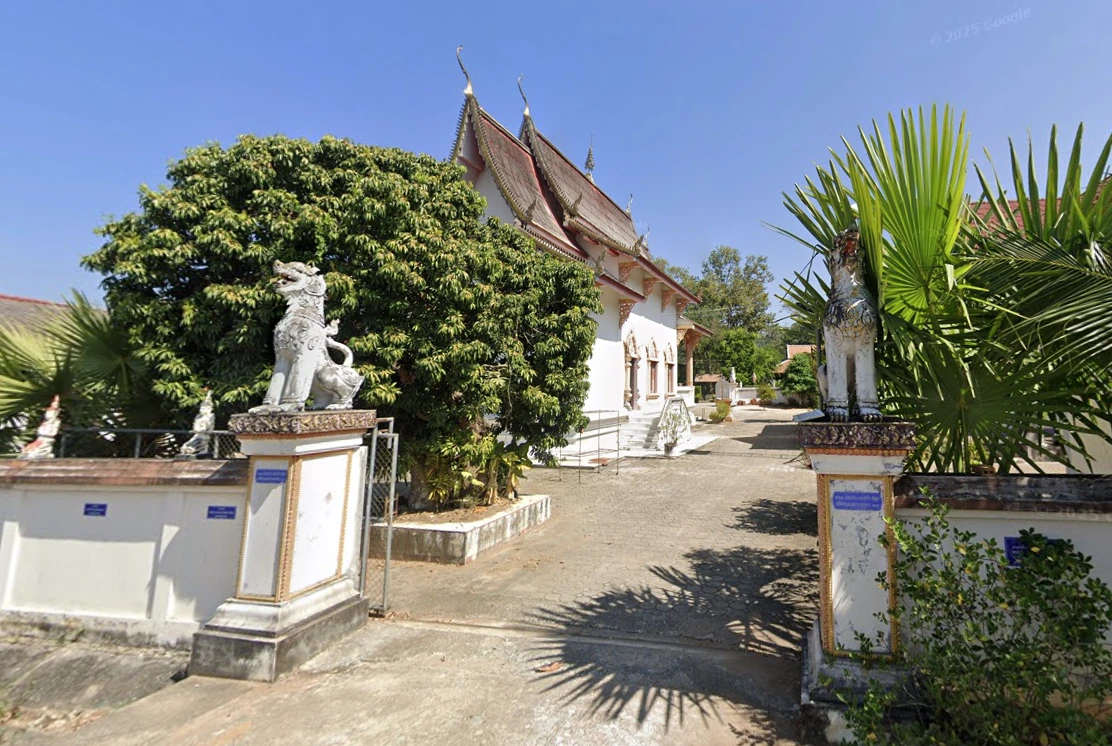
Wat Huai Ku is a local Mahanikaya Buddhist temple located in Moo 7, Ban Huai Ku, Pa Tum Subdistrict, Phrao District, Chiang Mai Province. The temple was officially permitted to be established in 1921 and is currently led by Phra Khru Sangkharak Wirot Wirotchano as abbot. Wat Huai Ku is the community temple of Ban Huai Ku, serving as a place for worship, merit-making, Buddhist ceremonies, Dhamma listening, and the preservation of local village life in Pa Tum Subdistrict.
Ban Huai Ku is Moo 7 of Pa Tum Subdistrict in Phrao District. The area belongs to the rural Lanna landscape of northern Thailand, where villages, temples, agricultural land, small streams, local roads, and mountain scenery form the setting of daily life. The name Huai Ku suggests a close relationship with a small stream or watercourse, a common feature in northern rural settlements. Wat Huai Ku is therefore not only a religious building within the village, but also a sacred place connected with the natural and social geography of Ban Huai Ku.
Pa Tum Subdistrict has a long community history and consists of several villages distributed across the rural landscape of Phrao. The name Pa Tum is associated with the Tum tree, once found in the area, and local communities have long been connected with farming, gardening, forest resources, village roads, and Buddhist temples. Wat Huai Ku should be understood within this wider setting: it is one of the village temples that help connect people in Pa Tum with Buddhism, seasonal merit-making, local identity, and Lanna cultural rhythms.
The establishment year of Wat Huai Ku, 1921, places the temple in the early modern development of rural northern communities. During that period, many villages were organizing their religious, educational, agricultural, and social spaces more clearly. A village temple was essential because it supported more than worship. It served as a place for moral learning, Dhamma teaching, communal gatherings, ceremonies, and social unity. The establishment of Wat Huai Ku in 1921 shows that Ban Huai Ku had become a stable community capable of maintaining its own Buddhist temple.
With more than a century of history, Wat Huai Ku carries the memory of several generations. It has served local families through changing times, from the generation that built and supported the temple, to later villagers who continued merit-making and community ceremonies, to younger generations who still connect with the temple during Buddhist festivals and local events. The value of Wat Huai Ku therefore does not come from grand architecture alone. It comes from continuity: the continuity of faith, village relationships, local memory, and the temple’s role in daily community life.
Wat Huai Ku is part of a broader network of village temples in Pa Tum Subdistrict. Nearby temples include Wat San Bua Nak, Wat Pa Tum Hong, Wat Pa Tum Don, Wat Thung Ha, Wat Thung Ku, Wat Ton Rung, Wat San Thanon, and Wat San Khamok. These temples show that Pa Tum is a subdistrict where each village has its own sacred center. Wat Huai Ku is one of the important points in this religious landscape, especially because Ban Huai Ku also includes Wat San Bua Nak, another significant Buddhist site in the same Moo 7 area.
Phra Khru Sangkharak Wirot Wirotchano serves as the abbot of Wat Huai Ku. In a village temple, the abbot has an important role in caring for the temple grounds, guiding religious activities, maintaining monastic order, and sustaining the relationship between monks and laypeople. A temple like Wat Huai Ku depends on cooperation among monks, the temple committee, local leaders, elders, and devotees. This shared responsibility allows the temple to remain active as the spiritual center of Ban Huai Ku.
The role of Wat Huai Ku in the village can be understood on several levels. Spiritually, it is a place where villagers make merit, listen to Dhamma, offer food to monks, offer Sangha donations, and join Buddhist holy day activities. Socially, it is a gathering space for local ceremonies and communal activities. Culturally, it helps maintain the rhythm of Lanna Buddhist life through Buddhist Lent, the end of Lent, Kathin, Pha Pa, candle offerings, and merit-making connected with family and ancestors.
Wat Huai Ku is also connected with contemporary community life. Ban Huai Ku has continued to appear in local municipal activities, including community events at the former Ban Huai Ku School field and candle-offering activities held at Wat Huai Ku by the Pa Tum Subdistrict Municipality Child Development Center. These examples show that Ban Huai Ku remains an active community and that the temple continues to function as a meaningful place for local religious and social participation.
Another important nearby sacred site is Wat San Bua Nak, located in Ban Huai Ku, Moo 7. Wat San Bua Nak has a history connected with an abandoned temple that was later raised to the status of a temple with resident monks. It is located about 1 kilometer from Wat Huai Ku. The close relationship between the two sites makes Ban Huai Ku a village with a dense Buddhist landscape. Travelers visiting Wat Huai Ku can also include Wat San Bua Nak in the same route to better understand the religious geography of Moo 7.
Publicly available details about specific buildings inside Wat Huai Ku are limited, but as an active village temple it includes areas for worship, merit-making, religious activities, the temple courtyard, and monastic residence. Visitors should approach the temple as a living sacred space used by local residents. The temple’s value lies in its role as a functioning community temple, not in mass-tourism facilities or monumental scale.
The main appeal of Wat Huai Ku is its quiet village atmosphere and its long-standing relationship with Ban Huai Ku. It is suitable for travelers who are interested in local temples, Lanna rural culture, community history, and slow cultural travel in Phrao District. A visit here allows travelers to see how a village temple continues to support daily religious life, community relationships, and local identity beyond Chiang Mai’s better-known tourist routes.
When visiting Wat Huai Ku, travelers should focus on the calm atmosphere, the role of the temple in Ban Huai Ku, and its connection with nearby Wat San Bua Nak. Visitors can make merit, pay respect in the worship area, walk quietly around the temple grounds, and observe how the temple fits into village life. The experience is most meaningful when approached with respect for local residents and an understanding that this is a community temple, not a staged tourist attraction.
Wat Huai Ku can be included in a Pa Tum temple route. A meaningful route may begin with Wat Huai Ku and Wat San Bua Nak in Ban Huai Ku, then continue to Wat Pa Tum Hong, Wat Pa Tum Don, Wat Thung Ha, Wat Thung Ku, Wat Ton Rung, and Wat San Thanon. This route shows how each village temple functions as a local center of faith. Wat Huai Ku stands out as the temple of Moo 7 and as a gateway to understanding the religious life of Ban Huai Ku.
The route can also be extended to Wat Phra Chao Lan Thong in Nam Phrae Subdistrict and Wat Klang Wiang in the center of Phrao. Wat Phra Chao Lan Thong is an important temple of the district, while Wat Klang Wiang helps visitors understand the historical center of Phrao. When combined with Wat Huai Ku, these places form a cultural route that moves from village temple to district-level Buddhist heritage.
Getting There is easiest by private car, rental car, or local hired transport. From Chiang Mai city, travel toward Phrao District, then continue into Pa Tum Subdistrict and Ban Huai Ku, Moo 7. Before departure, search for “Wat Huai Ku, Pa Tum, Phrao” or “Ban Huai Ku, Pa Tum” in a map application. Since the temple is located within a village rather than on a major tourist road, preparing navigation in advance will make the trip smoother. A private vehicle also makes it easier to visit nearby temples, restaurants, and accommodations in Phrao.
The best time to visit is in the morning or late afternoon, when the weather is more comfortable and the temple atmosphere is calm. Travelers who plan to explore several temples in Pa Tum Subdistrict should allow a half-day or full-day route. The late rainy season and cool season are especially pleasant for cultural travel in Phrao because the rural landscape, fields, villages, and mountains are more comfortable to explore slowly.
Visitors should dress modestly, speak quietly, respect monks and local worshippers, and avoid entering private monastic areas without permission. Photography should be done respectfully, especially around worship areas or during ceremonies. If a merit-making event is taking place, local participants should be given priority. Respectful behavior is essential because Wat Huai Ku is an active community temple used by local residents.
Overall, Wat Huai Ku is a meaningful cultural stop in Phrao District. It preserves a documented establishment year of 1921, a clear location in Ban Huai Ku, a current abbot, and an ongoing role in the religious and community life of Moo 7. Its importance lies not in large-scale architecture or broad fame, but in its function as an old village temple that continues to serve as the spiritual center of Ban Huai Ku. For travelers who want to understand Chiang Mai through village temples and local communities, Wat Huai Ku is a quiet but valuable destination.
| Name | Wat Huai Ku |
| Location | Ban Huai Ku, Moo 7, Pa Tum Subdistrict, Phrao District, Chiang Mai Province |
| Address | Moo 7, Ban Huai Ku, Pa Tum Subdistrict, Phrao District, Chiang Mai 50190, Thailand |
| Temple Type | Private-sector Buddhist temple under the Mahanikaya order |
| History | Officially established as a temple in 1921; a community temple of Ban Huai Ku in Pa Tum Subdistrict |
| Name Origin | Linked with Ban Huai Ku, Moo 7, and a local landscape associated with small streams or waterways |
| Highlights | Historic village temple of Ban Huai Ku, suitable for worship, merit-making, and learning about community temple life in Pa Tum |
| Distinctive Features | Community temple connected with Ban Huai Ku, Wat San Bua Nak, the former Ban Huai Ku School area, and local municipal activities |
| Main Areas / Zones | Worship area, merit-making area, temple courtyard, religious activity area, and monastic residential area |
| Community Role | Spiritual center of Ban Huai Ku, used for merit-making, Dhamma listening, Buddhist ceremonies, and community activities in Moo 7 |
| Important Activities / Ceremonies | Kathin, Pha Pa, Buddhist holy day merit-making, Buddhist Lent, candle offerings, end-of-Lent activities, and local Lanna community merit-making |
| Abbot / Caretaker | Phra Khru Sangkharak Wirot Wirotchano |
| Travel Information | Best reached by private car, rental car, or local hired transport from Chiang Mai toward Phrao District, then into Pa Tum Subdistrict and Ban Huai Ku, Moo 7 |
| Current Status | Active community temple in Pa Tum Subdistrict, Phrao District, Chiang Mai Province |
| Open Days | Daily |
| Opening Hours | 08.00 – 17.00 |
| Facilities | Worship area, merit-making area, temple courtyard, and parking space within or near the temple community |
| Nearby Tourist Attractions | 1. Wat San Bua Nak, about 1 km 2. Wat Pa Tum Hong, about 3 km 3. Wat Pa Tum Don, about 4 km 4. Wat Thung Ha, about 5 km 5. Wat Thung Ku, about 6 km 6. Wat Ton Rung, about 6 km 7. Phra That Chom Hin, about 7 km 8. Wat Phra Chao Lan Thong, about 17 km |
| Nearby Restaurants | 1. Nong Prince Chicken Rice, about 12 km, Tel. 094-559-0182 2. 135 Cafe, about 14 km, Tel. 083-549-6399 3. Jin Jum And Made-To-Order Food, about 15 km, Tel. 053-475-209 4. Krua Jae Kee Wild Food And River Fish, about 16 km, Tel. 084-488-8560 5. Rain Tree Cafe, about 20 km |
| Nearby Accommodations | 1. PK Hotel / PK Hostel, about 14 km, Tel. 088-992-2444 2. Phrao Boutique Hotel, about 15 km, Tel. 094-412-3466 3. Inthang Boutique Hotel, about 16 km, Tel. 084-849-5725 4. Phrao Camping Village, about 17 km, Tel. 091-564-2641 5. Anothai Place, about 18 km, Tel. 086-658-0405 |
Frequently Asked Questions (FAQ)
Q: Where is Wat Huai Ku located?
A: Wat Huai Ku is located in Moo 7, Ban Huai Ku, Pa Tum Subdistrict, Phrao District, Chiang Mai 50190, Thailand.
Q: What is the history of Wat Huai Ku?
A: Wat Huai Ku was officially established as a temple in 1921. It is a Mahanikaya community temple of Ban Huai Ku, Moo 7, in Pa Tum Subdistrict.
Q: Who is the abbot of Wat Huai Ku?
A: The abbot of Wat Huai Ku is Phra Khru Sangkharak Wirot Wirotchano.
Q: What makes Wat Huai Ku special?
A: Its value lies in its role as an old village temple of Ban Huai Ku, its quiet community atmosphere, and its connection with Wat San Bua Nak and local Pa Tum community activities.
Q: What are the opening days and hours of Wat Huai Ku?
A: Wat Huai Ku is open daily from 08.00 to 17.00.
Q: How can travelers get to Wat Huai Ku?
A: The temple is best reached by private car, rental car, or local hired transport from Chiang Mai toward Phrao District, then into Pa Tum Subdistrict and Ban Huai Ku, Moo 7.
Q: What kind of travelers is Wat Huai Ku suitable for?
A: It is suitable for travelers interested in local temples, Lanna village culture, merit-making, rural community life, and quiet cultural routes in Phrao District.
Q: What nearby places can be visited with Wat Huai Ku?
A: Nearby places include Wat San Bua Nak, Wat Pa Tum Hong, Wat Pa Tum Don, Wat Thung Ha, Wat Thung Ku, Wat Ton Rung, Phra That Chom Hin, and Wat Phra Chao Lan Thong.
 Category: ●Places of Worship
 Group: ●Temple
Last Update : 2 MonthAgo
 Last Update : 2 MonthAgo
 Click to Access the Navigation Map GPS

 Muang Chiang Mai(121)Chom Thong(47)Mae Chaem(25)Chiang Dao(33)Doi Saket(68)Mae Taeng(85)Mae Rim(69)Samoeng(29)Fang(71)Mae Ai(59)Phrao(70)San Pa Tong(103)San Kamphaeng(66)San Sai(73)Hang Dong(73)Hot(32)Doi Tao(22)Omkoi(11)Saraphi(74)Wiang Haeng(15)Chai Prakan(28)Mae Wang(32)Mae On(22)Doi Lo(33)Galyani Vadhana(1)


