
lovethailand home >North Travel Attractions >Chiang Mai Travel Attractions >Phrao >Pa Tum > Wat San Thanon
TL;DR: Wat San Thanon is located at Ban San Thanon, Moo 6, Pa Tum Subdistrict, Phrao District, Chiang Mai Province, open Daily, hours 08.00 – 17.00.

Wat San Thanon
Open Days: Daily
Opening Hours: 08.00 – 17.00
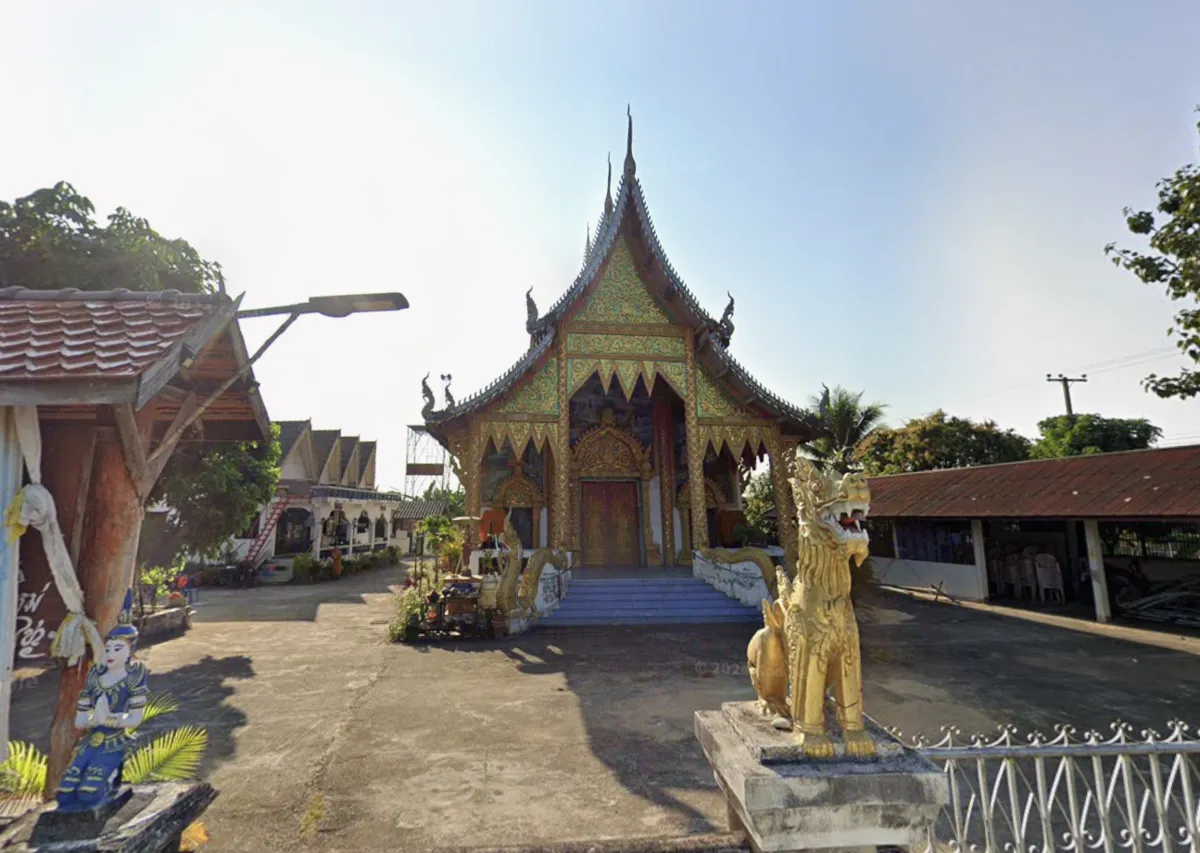
Wat San Thanon is a local Mahanikaya Buddhist temple located at 139 Moo 6, Ban San Thanon, Pa Tum Subdistrict, Phrao District, Chiang Mai Province. The temple was officially permitted to be established in 1881 and is currently led by Phra Amnuayphon Chutindharo as abbot. Wat San Thanon is an important community temple for Ban San Thanon, serving as a place for worship, merit-making, Buddhist ceremonies, Dhamma listening, and the preservation of village identity within Pa Tum Subdistrict.
Wat San Thanon is part of a wider network of village temples in Pa Tum Subdistrict. Nearby temples include Wat Thung Ku, Wat Ton Rung, Wat Thung Ha, Wat San Khamok, Wat Pa Tum Don, Wat Pa Tum Hong, and Wat Huai Ku. These temples are not merely religious buildings; they are community anchors that reflect settlement history, local faith, agricultural life, and Lanna village culture. Wat San Thanon should therefore be understood as a living village temple rather than a conventional tourist attraction.
Pa Tum Subdistrict is an old community area of Phrao District, with rural landscapes shaped by villages, agricultural land, local roads, temples, and mountains. The name Pa Tum is associated with the Tum tree, a local tree once found in the area. Ban San Thanon is one of the villages in this subdistrict and has a settlement history linked with people from Nan Province, San Sai District, and San Kamphaeng District of Chiang Mai. The temple developed within this community context as a spiritual center for villagers who gradually established their homes, farms, and social life in Phrao.
The name San Thanon also reveals something about the village landscape. In northern Thai place names, the word “san” often suggests a raised ridge, line of land, or route-like formation, while “thanon” means road. Together, the name gives a sense of a community connected with local pathways and settlement lines. Because the temple carries the same name as the village, Wat San Thanon functions as a marker of both geography and identity. It represents the sacred center of Ban San Thanon.
The temple’s establishment in 1881 makes Wat San Thanon more than a century old. This period was a time when many northern communities were organizing their villages, temples, agricultural areas, and routes more clearly. A village temple was essential because it served religious, educational, social, and cultural purposes. It was where people made merit, listened to Dhamma, gathered for ceremonies, learned moral values, and strengthened community ties. The establishment of Wat San Thanon in 1881 shows that Ban San Thanon had developed into a community capable of sustaining a Buddhist temple as its spiritual center.
The early settlement history of Ban San Thanon is significant. Local research describes the first groups of people in the village as coming from Nan Province, San Sai District, and San Kamphaeng District of Chiang Mai. This kind of multi-origin settlement is common in many Lanna communities, where villages were shaped by migration, farming knowledge, local belief, and social cooperation. Wat San Thanon helped unify these layers of settlement through shared rituals, merit-making, and Buddhist community life.
Another important element in the local memory of Ban San Thanon is the mention of an abandoned temple named Wat Dong Ton Po. In Lanna communities, abandoned temples are often more than physical ruins. They can preserve memories of former settlements, sacred groves, changed routes, old monastic sites, or earlier religious landscapes. Wat San Thanon today can therefore be understood together with this older sacred memory. The present temple continues the Buddhist life of the village while the memory of Wat Dong Ton Po adds depth to the cultural history of the area.
Publicly available details about specific buildings inside Wat San Thanon are limited, but as an active village temple, it includes areas for worship, merit-making, religious activities, the temple courtyard, and monastic residence. Visitors should approach the temple as a living sacred space used by local residents. The value of the temple lies not in monumental architecture, but in its role as a functioning center of faith for Ban San Thanon.
Phra Amnuayphon Chutindharo serves as the abbot of Wat San Thanon. In a local temple, the abbot plays an important role in caring for the temple grounds, guiding religious activities, maintaining monastic order, and sustaining the relationship between monks and villagers. A temple like Wat San Thanon depends on cooperation among the abbot, resident monks, temple committee members, elders, community leaders, and local devotees. This shared care allows the temple to remain active across generations.
The role of Wat San Thanon in the village can be understood on several levels. Spiritually, it is where villagers make merit, listen to Dhamma, offer food to monks, and join Buddhist holy day activities. Socially, it is a gathering place for ceremonies, community events, and shared responsibilities. Culturally, it preserves the memory of Ban San Thanon, including the early settlers, the old temple site of Wat Dong Ton Po, and the relationship between the village and the wider temple network of Pa Tum Subdistrict.
Wat San Thanon is also notable because Ban San Thanon, Moo 6, includes both Wat San Thanon and Suwan Church in the same village area. This reflects the presence of more than one religious space within the local community. Wat San Thanon continues to serve as the Buddhist spiritual center of the village, while the wider religious landscape shows the diversity of faith spaces in rural communities. This context makes the temple an important point for understanding social life in Ban San Thanon.
The main appeal of Wat San Thanon is its local depth rather than large-scale architecture. It is suitable for travelers interested in village temples, Lanna community life, local settlement history, and the quieter cultural routes of Phrao District. Visiting the temple offers a chance to observe how a Buddhist temple functions in daily village life: as a place of worship, merit-making, ceremony, memory, and social continuity.
The temple is connected with annual and seasonal Buddhist activities such as Kathin, Pha Pa, Buddhist holy day merit-making, Buddhist Lent, the end of Buddhist Lent, candle offerings, and local community merit-making. These activities are important because they bring villagers together, reinforce community cooperation, and connect younger generations with local Buddhist traditions. Through such events, Wat San Thanon continues to serve both religious and social functions.
Wat San Thanon can be included in a Pa Tum temple route together with Wat Ton Rung, Wat Thung Ha, Wat Thung Ku, Wat San Khamok, Wat Pa Tum Don, Wat Pa Tum Hong, Phra That Chom Hin, and Wat Phra Chao Lan Thong. This route helps travelers understand how each village temple serves as a local spiritual center. Wat San Thanon stands out as the temple of Ban San Thanon, with a documented establishment date in 1881 and community memory connected with earlier settlement and Wat Dong Ton Po.
A broader Phrao cultural route can also connect Wat San Thanon with Wat Phra Chao Lan Thong in Nam Phrae Subdistrict and Wat Klang Wiang in the district center. Wat Phra Chao Lan Thong adds the dimension of an important district-level sacred site, while Wat Klang Wiang helps explain the historical center of Phrao. When combined with Wat San Thanon, these places create a route that moves from village temple to district-level Buddhist heritage.
Getting There is easiest by private car, rental car, or local hired transport. From Chiang Mai city, travel toward Phrao District, then continue into Pa Tum Subdistrict and Ban San Thanon, Moo 6. Before departure, search for “Wat San Thanon, Pa Tum, Phrao” or “Ban San Thanon, Pa Tum” in a map application. Since the temple is located within a village rather than on a major tourist road, preparing navigation in advance will make the trip smoother. A private vehicle also makes it easier to visit nearby temples, restaurants, and accommodations in Phrao.
The best time to visit is in the morning or late afternoon, when the weather is more comfortable and the temple atmosphere is calm. Travelers who plan to explore several temples in Pa Tum Subdistrict should allow a half-day or full-day route. This slower approach makes it easier to appreciate the relationship between villages, temples, agricultural landscapes, and local memory.
Visitors should dress modestly, speak quietly, respect monks and local worshippers, and avoid entering private monastic areas without permission. Photography should be done respectfully, especially around worship areas or during ceremonies. If a merit-making activity is taking place, local participants should be given priority. Respectful behavior is essential because Wat San Thanon is an active community temple, not simply a sightseeing location.
Overall, Wat San Thanon is a meaningful cultural stop in Phrao District. It preserves a clear establishment year of 1881, a specific location in Ban San Thanon, a current abbot, and a community context linked with early settlers from several areas and the memory of Wat Dong Ton Po. Its importance lies in its role as a village temple that continues to support Buddhist practice, community life, and local identity. For travelers who want to understand Chiang Mai through village temples and local traditions, Wat San Thanon is a quiet but valuable destination.
| Name | Wat San Thanon |
| Location | Ban San Thanon, Moo 6, Pa Tum Subdistrict, Phrao District, Chiang Mai Province |
| Address | 139 Moo 6, Ban San Thanon, Pa Tum Subdistrict, Phrao District, Chiang Mai 50190, Thailand |
| Temple Type | Private-sector Buddhist temple under the Mahanikaya order |
| History | Officially established as a temple in 1881; an old community temple of Ban San Thanon in Pa Tum Subdistrict |
| Name Origin | Linked with Ban San Thanon, a village name suggesting a raised route or road-related settlement line |
| Highlights | Historic village temple of Ban San Thanon, suitable for worship, merit-making, and learning about community temple life in Pa Tum |
| Distinctive Features | Connected with the settlement history of Ban San Thanon, early residents from Nan, San Sai, and San Kamphaeng, and the memory of the abandoned temple Wat Dong Ton Po |
| Main Areas / Zones | Worship area, merit-making area, temple courtyard, religious activity area, and monastic residential area |
| Community Role | Spiritual center of Ban San Thanon, used for merit-making, Dhamma listening, Buddhist ceremonies, and community gatherings |
| Important Activities / Ceremonies | Kathin, Pha Pa, Buddhist holy day merit-making, Buddhist Lent, end-of-Lent activities, candle offerings, and local Lanna community merit-making |
| Abbot / Caretaker | Phra Amnuayphon Chutindharo |
| Travel Information | Best reached by private car, rental car, or local hired transport from Chiang Mai toward Phrao District, then into Pa Tum Subdistrict and Ban San Thanon, Moo 6 |
| Current Status | Active community temple in Pa Tum Subdistrict, Phrao District, Chiang Mai Province |
| Open Days | Daily |
| Opening Hours | 08.00 – 17.00 |
| Facilities | Worship area, merit-making area, temple courtyard, and parking space within or near the temple community |
| Nearby Tourist Attractions | 1. Wat Ton Rung, about 1 km 2. Wat Thung Ha, about 2 km 3. Wat Thung Ku, about 3 km 4. Wat San Khamok, about 4 km 5. Wat Pa Tum Don, about 4 km 6. Wat Pa Tum Hong, about 5 km 7. Phra That Chom Hin, about 6 km 8. Wat Phra Chao Lan Thong, about 13 km |
| Nearby Restaurants | 1. Nong Prince Chicken Rice, about 9 km, Tel. 094-559-0182 2. 135 Cafe, about 11 km, Tel. 083-549-6399 3. Jin Jum And Made-To-Order Food, about 12 km, Tel. 053-475-209 4. Krua Jae Kee Wild Food And River Fish, about 13 km, Tel. 084-488-8560 5. Rain Tree Cafe, about 18 km |
| Nearby Accommodations | 1. PK Hotel / PK Hostel, about 11 km, Tel. 088-992-2444 2. Phrao Boutique Hotel, about 12 km, Tel. 094-412-3466 3. Inthang Boutique Hotel, about 13 km, Tel. 084-849-5725 4. Phrao Camping Village, about 14 km, Tel. 091-564-2641 5. Anothai Place, about 15 km, Tel. 086-658-0405 |
Frequently Asked Questions (FAQ)
Q: Where is Wat San Thanon located?
A: Wat San Thanon is located at 139 Moo 6, Ban San Thanon, Pa Tum Subdistrict, Phrao District, Chiang Mai 50190, Thailand.
Q: What is the history of Wat San Thanon?
A: Wat San Thanon was officially established in 1881 as a Mahanikaya community temple of Ban San Thanon in Pa Tum Subdistrict.
Q: What does the name San Thanon mean?
A: The name is linked with Ban San Thanon. The word “san” suggests a raised line or ridge, while “thanon” means road, reflecting a village identity connected with local routes and settlement lines.
Q: What makes Wat San Thanon special?
A: Its value lies in its role as an old village temple, its connection with Ban San Thanon’s settlement history, and local memory related to the abandoned temple Wat Dong Ton Po.
Q: What are the opening days and hours of Wat San Thanon?
A: Wat San Thanon is open daily from 08.00 to 17.00.
Q: How can travelers get to Wat San Thanon?
A: The temple is best reached by private car, rental car, or local hired transport from Chiang Mai toward Phrao District, then into Pa Tum Subdistrict and Ban San Thanon, Moo 6.
Q: What kind of travelers is Wat San Thanon suitable for?
A: It is suitable for travelers interested in community temples, Lanna village culture, local history, and quiet cultural routes in Phrao District.
Q: What nearby places can be visited with Wat San Thanon?
A: Nearby places include Wat Ton Rung, Wat Thung Ha, Wat Thung Ku, Wat San Khamok, Wat Pa Tum Don, Wat Pa Tum Hong, Phra That Chom Hin, and Wat Phra Chao Lan Thong.
 Category: ●Places of Worship
 Group: ●Temple
Last Update : 1 MonthAgo
 Last Update : 1 MonthAgo
 Click to Access the Navigation Map GPS

 Muang Chiang Mai(121)Chom Thong(47)Mae Chaem(25)Chiang Dao(33)Doi Saket(68)Mae Taeng(85)Mae Rim(69)Samoeng(29)Fang(71)Mae Ai(59)Phrao(70)San Pa Tong(103)San Kamphaeng(66)San Sai(73)Hang Dong(73)Hot(32)Doi Tao(22)Omkoi(11)Saraphi(74)Wiang Haeng(15)Chai Prakan(28)Mae Wang(32)Mae On(22)Doi Lo(33)Galyani Vadhana(1)


