
lovethailand home >North Travel Attractions >Chiang Mai Travel Attractions >Phrao >Pa Tum > Wat Thung Ha
TL;DR: Wat Thung Ha is located at Ban Thung Ha, Moo 5, Pa Tum Subdistrict, Phrao District, Chiang Mai Province, open Daily, hours 08.00 – 17.00.

Wat Thung Ha
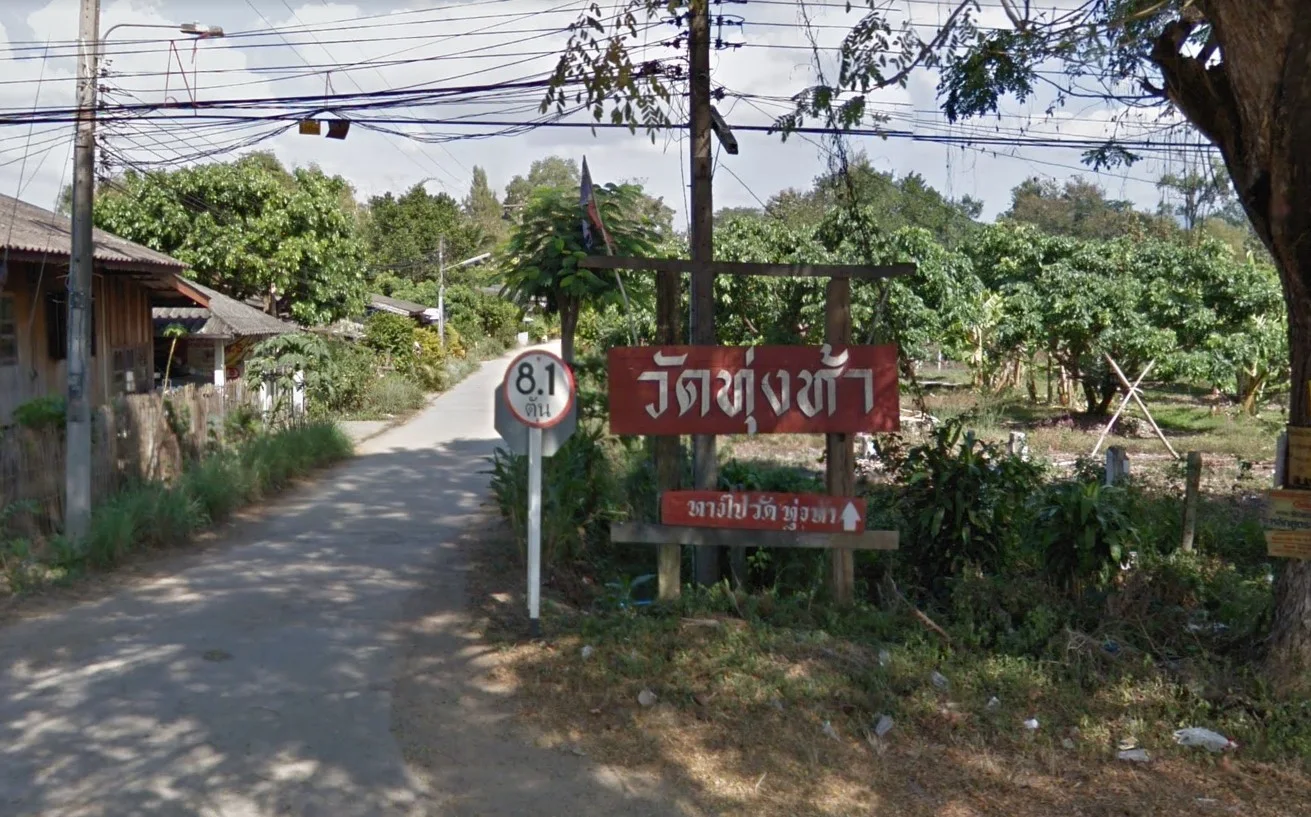
Open Days: Daily
Opening Hours: 08.00 – 17.00
Wat Thung Ha is a local Mahanikaya Buddhist temple located at 1 Moo 5, Ban Thung Ha, Pa Tum Subdistrict, Phrao District, Chiang Mai Province. The temple was officially permitted to be established in 1832 and received its royal consecrated boundary, or Wisungkhamsima, on 25 September 2012. It is one of the community temples of Pa Tum Subdistrict that remains closely tied to Ban Thung Ha, the agricultural landscape of Phrao, and the living Buddhist traditions of rural northern Thailand.
Wat Thung Ha is not a large commercial tourist attraction. Its value lies in its role as a village temple where local people make merit, attend religious activities, and maintain community faith. For travelers who want to understand Chiang Mai beyond the old city and famous mountain temples, Wat Thung Ha offers a quieter, more grounded view of Lanna Buddhist life in Phrao District. The temple is best appreciated as a working sacred space connected with homes, fields, waterways, and the daily rhythm of the local community.
The temple grounds cover 6 rai and 65 square wah. Its northern boundary meets the Mae Sa Ruam stream, while the southern and western sides meet public irrigation canals. The eastern side adjoins privately owned rice fields. These boundaries reveal an important aspect of Wat Thung Ha: it is part of a village landscape shaped by water, farming, local paths, and communal space. The temple does not stand apart from the community; it is woven into the physical and spiritual geography of Ban Thung Ha.
The name Wat Thung Ha is connected with Ban Thung Ha, Moo 5 of Pa Tum Subdistrict. In Thai place names, “thung” often suggests open fields or lowland agricultural land, while “ha” links the temple to the village name and the Moo 5 community. The name therefore expresses both geography and belonging. This is a temple of Ban Thung Ha, a sacred place created and sustained by the faith of the surrounding community.
The history of Wat Thung Ha begins clearly with its official establishment in 1832. During that period, many rural northern communities organized themselves around homes, agricultural land, water sources, and temples. A village temple was not only a place of worship; it was also a center for moral education, communal gatherings, seasonal merit-making, and social continuity. The establishment of Wat Thung Ha in 1832 shows that Ban Thung Ha had developed a stable Buddhist community capable of building and maintaining a temple as its spiritual center.
The temple’s later receipt of Wisungkhamsima on 25 September 2012 is another important milestone. Wisungkhamsima is the formally granted boundary used for monastic acts under Buddhist discipline. For a local temple, receiving this boundary strengthens its status as a complete religious institution and allows important Sangha activities to be performed properly. Wat Thung Ha therefore carries both an early 19th-century foundation and a modern milestone that confirms its continuing religious importance.
The main monastic structures at Wat Thung Ha include a sermon hall, monks’ residences, and a viharn. The sermon hall serves as a space for merit-making, listening to Dhamma, and community religious gatherings. The monks’ residences support the daily monastic life of the temple, while the viharn functions as an important worship space for local devotees. Together, these structures show the practical character of a Lanna community temple: the buildings are not merely decorative, but are used for real religious and community purposes.
Phra Chan Chutipunyo serves as the abbot of Wat Thung Ha. In a village temple, the abbot plays a central role in maintaining the temple grounds, guiding religious activities, caring for monastic order, and sustaining the relationship between monks and villagers. A temple like Wat Thung Ha depends on the combined support of the abbot, resident monks, lay committees, and local devotees. This shared care helps the temple remain active as a place of worship and community identity.
The atmosphere of Wat Thung Ha is calm and modest. Visitors should not expect a crowded sightseeing landmark. Instead, they will find a local sacred space suitable for worship, quiet observation, respectful photography, and a slower style of travel. The temple is ideal for travelers who appreciate community temples, local history, and rural Lanna culture. It offers a different experience from the famous temples of Chiang Mai city because it reflects the quieter religious life of Phrao’s village communities.
Wat Thung Ha can be included in a local temple route through Pa Tum Subdistrict. Nearby temples include Wat Thung Ku, Wat Ton Rung, Wat San Thanon, Wat Pa Tum Don, and Wat Pa Tum Hong. Visiting these temples together helps travelers understand how each village temple functions as a local spiritual center. Wat Thung Ha is one point within this wider network of faith, and its connection with Ban Thung Ha makes it especially meaningful for understanding the village structure of Pa Tum.
One of the most important nearby cultural sites is Phra That Chom Hin, located in the Ban Thung Ha area of Pa Tum Subdistrict. Local narratives describe the chedi on a hill known as Doi That, along with long-held beliefs connected with mysterious lights seen around the hill on certain lunar nights. This nearby sacred site adds depth to a visit to Wat Thung Ha because it shows how temple culture, relic worship, hills, local belief, and community memory are closely connected in Phrao District.
Travelers can also connect Wat Thung Ha with other important destinations in Phrao, including Wat Phra Chao Lan Thong in Nam Phrae Subdistrict and Wat Klang Wiang in the district center. Wat Phra Chao Lan Thong is associated with an important Buddha image and local worship traditions, while Wat Klang Wiang helps visitors understand the historical center of old Phrao. These connections make Wat Thung Ha part of a broader cultural route that includes village temples, sacred hills, local legends, and district-level Buddhist landmarks.
Wat Thung Ha is suitable for travelers who want a meaningful temple visit rather than a quick photo stop. The best way to experience the temple is to move slowly, dress modestly, speak quietly, and remember that it is an active place of worship for local residents. Visitors should avoid disturbing monks, entering private monastic areas without permission, or treating the temple as a purely recreational space. Respectful behavior helps preserve the dignity of the temple and creates a better experience for both visitors and the local community.
Throughout the Buddhist year, community temples in northern Thailand are connected with activities such as Buddhist holy day merit-making, offerings to monks, Dhamma listening, Buddhist Lent, the end of Buddhist Lent, Kathin, Pha Pa, and seasonal religious ceremonies. Pa Tum Subdistrict also has traditions connected with bathing sacred relics and local sacred sites, including Phra That Chom Hin. A visit to Wat Thung Ha can therefore be combined with learning about the ritual calendar and spiritual landscape of the wider Pa Tum community.
Getting There is easiest by private car, rental car, or local hired transport. From Chiang Mai city, travel toward Phrao District, then continue into Pa Tum Subdistrict and Ban Thung Ha, Moo 5. Before departure, search for “Wat Thung Ha” or “Ban Thung Ha, Pa Tum, Phrao” in a map application. Since the temple is located in a village area rather than on a major tourist strip, having navigation ready will make the trip smoother. A private vehicle also makes it easier to visit nearby temples, Phra That Chom Hin, restaurants, and accommodations in Phrao.
The best time to visit is in the morning or late afternoon, when the weather is more comfortable and the temple atmosphere is calm. During the rainy season and early cool season, the surrounding rural landscape becomes especially green, while the cool season is suitable for a slow cultural trip through Phrao. A half-day or full-day route allows visitors to appreciate the temples, villages, sacred sites, cafés, local restaurants, and accommodations of the district more fully.
Overall, Wat Thung Ha is a valuable stop for travelers interested in the deeper cultural geography of Chiang Mai. It has a documented foundation in 1832, a later Wisungkhamsima milestone in 2012, main temple structures used for community religious life, and a landscape connected with the Mae Sa Ruam stream, public irrigation canals, and the village of Ban Thung Ha. Its beauty is not based on grandeur, but on continuity: the continuity of faith, village life, local history, and Lanna Buddhist practice in Phrao District.
| Name | Wat Thung Ha |
| Location | Ban Thung Ha, Moo 5, Pa Tum Subdistrict, Phrao District, Chiang Mai Province |
| Address | 1 Moo 5, Ban Thung Ha, Pa Tum Subdistrict, Phrao District, Chiang Mai 50190, Thailand |
| Temple Type | Private-sector Buddhist temple under the Mahanikaya order |
| History | Officially established as a temple in 1832 and received Wisungkhamsima on 25 September 2012 |
| Name Origin | Connected with Ban Thung Ha, Moo 5 of Pa Tum Subdistrict |
| Temple Area | 6 rai and 65 square wah |
| Boundaries | North: Mae Sa Ruam stream; South: public irrigation canal; East: privately owned rice fields; West: public irrigation canal |
| Highlights | Historic village temple of Ban Thung Ha, suitable for worship, merit-making, and learning about local Buddhist life in Phrao |
| Distinctive Features | Community temple connected with agricultural land, the Mae Sa Ruam stream, irrigation canals, and the temple network of Pa Tum Subdistrict |
| Important Structures | Sermon hall, monks’ residences, and viharn |
| Community Role | Spiritual center for Ban Thung Ha, used for merit-making, Dhamma listening, community ceremonies, and Lanna Buddhist practice |
| Abbot / Caretaker | Phra Chan Chutipunyo |
| Travel Information | Best reached by private car, rental car, or local hired transport from Chiang Mai toward Phrao District, then into Pa Tum Subdistrict and Ban Thung Ha, Moo 5 |
| Current Status | Active community temple in Pa Tum Subdistrict, Phrao District, Chiang Mai Province |
| Open Days | Daily |
| Opening Hours | 08.00 – 17.00 |
| Facilities | Worship area, merit-making space, sermon hall, and parking area within or near the temple community |
| Nearby Tourist Attractions | 1. Wat Thung Ku, about 1 km 2. Wat Ton Rung, about 1 km 3. Wat San Thanon, about 2 km 4. Wat Pa Tum Don, about 3 km 5. Wat Pa Tum Hong, about 4 km 6. Phra That Chom Hin, about 5 km 7. Wat Phra Chao Lan Thong, about 13 km |
| Nearby Restaurants | 1. Nong Prince Chicken Rice, about 8 km, Tel. 094-559-0182 2. 135 Cafe, about 10 km, Tel. 083-549-6399 3. Jin Jum And Made-To-Order Food, about 11 km, Tel. 053-475-209 4. Krua Jae Kee Wild Food And River Fish, about 12 km, Tel. 084-488-8560 5. Rain Tree Cafe, about 17 km |
| Nearby Accommodations | 1. PK Hotel / PK Hostel, about 10 km, Tel. 088-992-2444 2. Phrao Boutique Hotel, about 11 km, Tel. 094-412-3466 3. Inthang Boutique Hotel, about 12 km, Tel. 084-849-5725 4. Phrao Camping Village, about 13 km 5. Anothai Place, about 14 km, Tel. 086-658-0405 |
Frequently Asked Questions (FAQ)
Q: Where is Wat Thung Ha located?
A: Wat Thung Ha is located at 1 Moo 5, Ban Thung Ha, Pa Tum Subdistrict, Phrao District, Chiang Mai 50190, Thailand.
Q: What is the history of Wat Thung Ha?
A: Wat Thung Ha was officially established as a temple in 1832 and received Wisungkhamsima on 25 September 2012. It is an old community temple of Ban Thung Ha in Pa Tum Subdistrict.
Q: What important structures are found at Wat Thung Ha?
A: The important structures include a sermon hall, monks’ residences, and a viharn, which support merit-making, Dhamma listening, and community religious activities.
Q: What are the opening days and hours of Wat Thung Ha?
A: Wat Thung Ha is open daily from 08.00 to 17.00.
Q: How can travelers get to Wat Thung Ha?
A: The temple is best reached by private car, rental car, or local hired transport from Chiang Mai toward Phrao District, then into Pa Tum Subdistrict and Ban Thung Ha, Moo 5.
Q: What kind of travelers is Wat Thung Ha suitable for?
A: It is suitable for travelers interested in quiet community temples, Lanna culture, local history, merit-making, and slow travel in Phrao District.
Q: What nearby places can be visited with Wat Thung Ha?
A: Nearby places include Wat Thung Ku, Wat Ton Rung, Wat San Thanon, Wat Pa Tum Don, Wat Pa Tum Hong, Phra That Chom Hin, and Wat Phra Chao Lan Thong.
Q: What should visitors wear when visiting Wat Thung Ha?
A: Visitors should dress modestly, speak quietly, respect monks and local worshippers, and avoid entering private monastic areas without permission.
 Category: ●Places of Worship
 Group: ●Temple
Last Update : 2 MonthAgo
 Last Update : 2 MonthAgo
 Click to Access the Navigation Map GPS

 Muang Chiang Mai(121)Chom Thong(47)Mae Chaem(25)Chiang Dao(33)Doi Saket(68)Mae Taeng(85)Mae Rim(69)Samoeng(29)Fang(71)Mae Ai(59)Phrao(70)San Pa Tong(103)San Kamphaeng(66)San Sai(73)Hang Dong(73)Hot(32)Doi Tao(22)Omkoi(11)Saraphi(74)Wiang Haeng(15)Chai Prakan(28)Mae Wang(32)Mae On(22)Doi Lo(33)Galyani Vadhana(1)


