
lovethailand home >North Travel Attractions >Chiang Mai Travel Attractions >Phrao >Thung Luang > Wat Pa Ji (Thung Luang)
TL;DR: Wat Pa Ji (Thung Luang) is located at Moo 2, Ban Pa Ji, Thung Luang Subdistrict, Phrao District, Chiang Mai Province.

Wat Pa Ji (Thung Luang)
Operating day: Daily
Operating time: 08.00 - 17.00
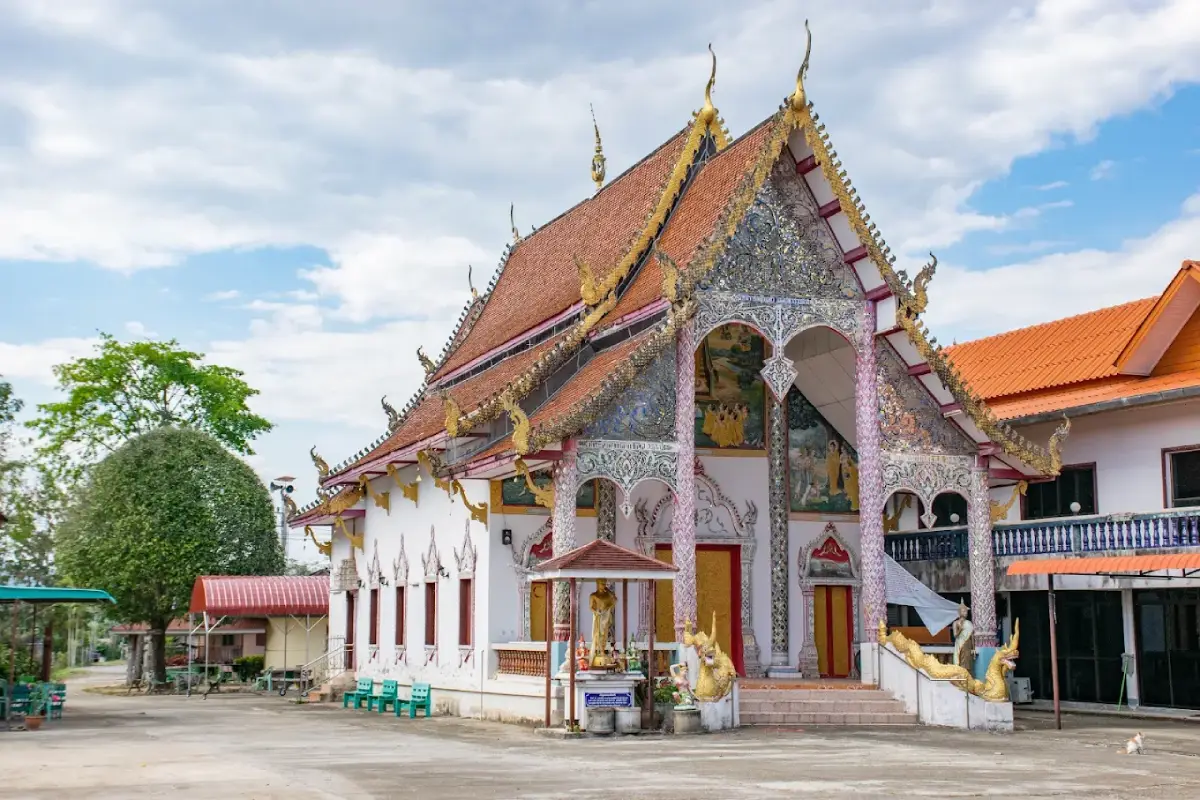
Wat Pa Ji (Thung Luang) is a private-sector Buddhist temple under the Mahanikaya order in Moo 2, Ban Pa Ji, Thung Luang Subdistrict, Phrao District, Chiang Mai Province 50190. The temple was officially permitted to be established in 1887 and received its Wisungkham Sima on 25 January 1897. The temple land covers 3 rai, 2 ngan and 58 square wah. Its main structures include a viharn, an ordination hall, a multipurpose hall, monks’ residences, a temple courtyard, and community religious activity areas. Wat Pa Ji is one of the old village temples of Thung Luang, closely connected with the agricultural community of Ban Pa Ji and the Lanna Buddhist way of life in Phrao District.
Ban Pa Ji is Moo 2 of Thung Luang Subdistrict, Phrao District, Chiang Mai Province. Thung Luang is an old community area south of the former Wiang Phrao settlement. The subdistrict is known for its lowland agricultural landscape, rice fields, village communities, and local temples. Communities in the area include Ban Thung Luang, Ban Pa Ji, Ban San Mana, Ban Mae Ngat, Ban Mo Bon, and Ban Mo Lang. Wat Pa Ji therefore stands within a cultural landscape where village life, Buddhist practice, rice farming, and annual merit-making remain closely connected.
The official history of Wat Pa Ji began in 1887, when the temple was permitted to be established. At that time, village temples in Phrao played a central role in both religious and social life. A temple was not only a place for worship. It was also a place for monks to reside, villagers to make merit, elders to listen to Dhamma, and the community to gather for ceremonies. Wat Pa Ji therefore reflects the long-standing Buddhist faith of Ban Pa Ji and the wider Thung Luang area.
The temple received its Wisungkham Sima on 25 January 1897. The sacred boundary measures 8 meters wide and 16 meters long. In Thai Buddhist tradition, Wisungkham Sima is a royal grant of sacred boundary used for important monastic acts. This status confirms the temple’s formal role within the Sangha and shows that Wat Pa Ji became a recognized Buddhist institution early in its history.
The first abbot of Wat Pa Ji was Khruba Intha, who served from 1887 to 1914. His name is closely connected with the early foundation of the temple. In that period, building and maintaining a temple required strong cooperation between monks, local leaders, and villagers. Wat Pa Ji therefore grew directly from community faith, local effort, and the need for a shared Buddhist center in Ban Pa Ji.
The temple land covers 3 rai, 2 ngan and 58 square wah. Its northern boundary adjoins a public road, the southern boundary adjoins rice fields, the eastern boundary adjoins the San Sai–Phrao national road, and the western boundary adjoins rice fields. This setting shows how the temple stands between local transport routes and agricultural land. It is accessible from community roads while still preserving the atmosphere of a rural temple surrounded by fields.
The name Wat Pa Ji is directly connected with the village name. A temple carrying the same name as its village preserves local identity and community memory. When people speak of Wat Pa Ji, they also refer to Ban Pa Ji, its farming households, local ceremonies, elders, temple traditions, and the long relationship between Buddhism and village life in Thung Luang.
The important structures of Wat Pa Ji include the viharn, ordination hall, multipurpose hall, and monks’ residences. The viharn supports worship, Dhamma listening, and merit-making. The ordination hall is connected with important Sangha ceremonies. The multipurpose hall supports community gatherings and temple events, while the monks’ residences support monastic life. Together, these structures make Wat Pa Ji a complete village temple serving both religious and community needs.
What visitors should appreciate at Wat Pa Ji is its character as an old community temple rather than a large tourist temple. The temple’s value lies in its history, its quiet rural setting, and its continuing role in local Buddhist life. Visitors can pay respect, make merit, walk through the temple grounds respectfully, and observe how a Lanna village temple remains connected with surrounding rice fields and community life.
Ban Pa Ji is closely connected with rice farming and local agricultural knowledge. Academic work on safe rice production in Ban Pa Ji shows the agricultural foundation of the community. Wat Pa Ji therefore stands in a farming society shaped by land, water, labor, seasons, and community cooperation. During merit-making periods, the temple becomes a place where villagers rest from farm work, make offerings, receive blessings, and renew their shared faith.
Wat Pa Ji plays religious, social, cultural, and historical roles. Religiously, it is a place for worship, merit-making, Dhamma listening, precepts, and Buddhist ceremonies. Socially, it is a gathering place for villagers during holy days and annual events. Culturally, it helps preserve Lanna Buddhist customs and local temple manners. Historically, it records the continuity of Ban Pa Ji’s Buddhist faith since 1887.
Temple activities at Wat Pa Ji follow the Buddhist calendar and local Lanna traditions. Important activities include Buddhist holy day merit-making, Pha Pa, Kathin, Dhamma listening, Buddhist Lent activities, end-of-Lent activities, Northern Thai New Year, Loy Krathong, and annual community merit-making events. These activities bring villagers together to prepare the temple, offer food, receive blessings, listen to teachings, and maintain community unity.
The wider Ban Pa Ji community also has local wisdom and village learning activities. Public information mentions village learning areas and community wisdom such as weaving and development activities supported by Wiang Phrao Municipality. This shows that Wat Pa Ji is located in a living community with ongoing cultural, social, and economic activity, not merely in a historical village frozen in time.
Wat Pa Ji has also appeared in contemporary community activity contexts, including municipal Buddhist and environmental activities. The temple has been mentioned alongside other local temples as an example in waste-separation activity, showing that its role in the present extends beyond religious ceremonies into community discipline, environmental awareness, and local public participation.
A visit to Wat Pa Ji is suitable for travelers interested in old temples, village Buddhism, rural Lanna culture, and the agricultural communities of Phrao. The temple is not primarily a large-scale tourist attraction. Its value lies in its age, peaceful atmosphere, connection with Ban Pa Ji, and role as a living place of worship for the local community.
Wat Pa Ji can be included in a temple route through Thung Luang and Phrao District. Nearby places include Wat Thung Luang, Wat Ban Mo, Mae Chat religious site, Wat Phra That Doi Wiang Chai Mongkhon, Wat Khuean Phak, Wat Huai Bong, and Wat Sahakon Plaeng Song. This route allows travelers to experience old temples, community museums, village temples, agricultural landscapes, and Lanna Buddhist culture in one trip.
Getting There is most convenient by private car, rental car, or local hired transport. From Chiang Mai city, travel toward Phrao District, then continue into Thung Luang Subdistrict and Ban Pa Ji, Moo 2. The temple is connected with public roads and the San Sai–Phrao route. Travelers can search for “Wat Pa Ji Thung Luang Phrao Chiang Mai” or “Ban Pa Ji Moo 2 Thung Luang Phrao” in a map application before departure.
From Phrao town, Wat Pa Ji can be visited together with nearby temples in Thung Luang. A half-day route can include Wat Pa Ji, Wat Thung Luang, and Wat Ban Mo. With more time, visitors can continue to Wat Phra That Doi Wiang Chai Mongkhon or to the Khuean Phak route, which includes Wat Khuean Phak, Wat Huai Bong, and Wat Sahakon Plaeng Song.
Visitors should dress modestly, speak quietly, respect monks and worshippers, avoid entering private monastic areas, and take photographs respectfully, especially around the viharn, ordination hall, and ceremony areas. Since Wat Pa Ji is an active community temple, visitors should treat it as a sacred space used by local residents rather than only as a sightseeing stop.
In summary, Wat Pa Ji (Thung Luang) is a Mahanikaya private-sector temple in Ban Pa Ji, Moo 2, Thung Luang Subdistrict, Phrao District, Chiang Mai Province. Established in 1887 and granted Wisungkham Sima on 25 January 1897, the temple covers 3 rai, 2 ngan and 58 square wah and includes a viharn, ordination hall, multipurpose hall, and monks’ residences. Its value lies in its long history, agricultural community context, Lanna Buddhist identity, and continuing role as the spiritual center of Ban Pa Ji.
| Name | Wat Pa Ji (Thung Luang) |
| Location | Moo 2, Ban Pa Ji, Thung Luang Subdistrict, Phrao District, Chiang Mai Province |
| Address | Moo 2, Ban Pa Ji, Thung Luang Subdistrict, Phrao District, Chiang Mai 50190, Thailand |
| Temple Type | Private-Sector Buddhist Temple, Mahanikaya Order |
| Temple Area | 3 rai, 2 ngan and 58 square wah |
| Highlights | Historic village temple of Ban Pa Ji, established in 1887, granted Wisungkham Sima in 1897, and located within the agricultural landscape of Thung Luang |
| History | Officially permitted to be established in 1887 and granted Wisungkham Sima on 25 January 1897 |
| Wisungkham Sima Boundary | 8 meters wide and 16 meters long |
| Temple Boundaries | North: public road; South: rice fields; East: San Sai–Phrao national road; West: rice fields |
| First Abbot | Khruba Intha, 1887–1914 |
| Abbot / Caretaker | Phra Khru Phairoj Weerakon Mahaviro |
| Main Areas / Structures | Viharn, ordination hall, multipurpose hall, monks’ residences, temple courtyard, merit-making area, sermon area, and community ceremony spaces |
| Community Context | Ban Pa Ji is an agricultural community in Thung Luang Subdistrict, connected with rice farming, safe rice production, and local wisdom in Phrao District |
| Community Role | Spiritual center for worship, merit-making, Dhamma listening, Buddhist ceremonies, and preservation of Lanna traditions in Ban Pa Ji |
| Important Activities / Ceremonies | Buddhist holy day merit-making, Pha Pa, Kathin, Dhamma sermons, Buddhist Lent activities, end-of-Lent activities, Northern Thai New Year, Loy Krathong, and annual Lanna community merit-making events |
| Travel Information | Best reached by private car, rental car, or local hired transport from Chiang Mai toward Phrao District, then into Thung Luang Subdistrict and Ban Pa Ji, Moo 2 |
| Current Status | Listed in temple directories, travel information, and local Ban Pa Ji community activity sources; no public record found indicating permanent closure |
| Nearby Tourist Attractions | 1. Wat Thung Luang, about 4 km 2. Wat Ban Mo, about 4 km 3. Mae Chat Religious Site, about 6 km 4. Wat Phra That Doi Wiang Chai Mongkhon, about 18 km 5. Wat Khuean Phak, about 20 km 6. Wat Huai Bong, about 22 km 7. Wat Sahakon Plaeng Song, about 23 km |
| Nearby Restaurants | 1. 135 Cafe, about 6 km, Tel. 083-549-6399 2. Jin Jum And Made-To-Order Food, about 8 km, Tel. 053-475-209 3. Krua Jae Kee, about 9 km, Tel. 084-488-8560 4. Krua Ban Mong, about 10 km, Tel. 099-345-0782 5. Rain Tree Cafe, about 16 km, Tel. 087-660-0933 6. Nong Prince Chicken Rice, about 18 km, Tel. 094-559-0182 |
| Nearby Accommodations | 1. PK Hotel / PK Hostel, about 8 km, Tel. 088-992-2444 2. Phrao Boutique Hotel, about 9 km 3. Inthang Boutique Hotel, about 10 km 4. Phrao Camping Village, about 13 km, Tel. 091-564-2641 5. Mae Wan Resort, about 20 km |
Frequently Asked Questions (FAQ)
Q: Where is Wat Pa Ji (Thung Luang) located?
A: Wat Pa Ji is located in Moo 2, Ban Pa Ji, Thung Luang Subdistrict, Phrao District, Chiang Mai Province 50190.
Q: What is the history of Wat Pa Ji?
A: Wat Pa Ji is a private-sector Mahanikaya temple officially established in 1887 and granted Wisungkham Sima on 25 January 1897.
Q: Who was the first abbot of Wat Pa Ji?
A: The first abbot of Wat Pa Ji was Khruba Intha, who served from 1887 to 1914.
Q: What important structures are found at Wat Pa Ji?
A: Important structures include the viharn, ordination hall, multipurpose hall, monks’ residences, temple courtyard, and community ceremony areas.
Q: What is the main highlight of Wat Pa Ji?
A: Its main highlight is its identity as an old village temple of Ban Pa Ji, established in 1887, with a sacred boundary granted in 1897 and a strong connection to the agricultural community of Thung Luang.
Q: What kind of visit is Wat Pa Ji suitable for?
A: It is suitable for worship, merit-making, learning about old temples in Phrao, exploring Ban Pa Ji community life, and joining a temple route through Thung Luang Subdistrict.
Q: How can travelers get to Wat Pa Ji?
A: The most convenient way is by private car, rental car, or local hired transport from Chiang Mai toward Phrao District, then into Thung Luang Subdistrict and Ban Pa Ji, Moo 2.
Q: What places can be visited together with Wat Pa Ji?
A: Nearby places include Wat Thung Luang, Wat Ban Mo, Mae Chat religious site, Wat Phra That Doi Wiang Chai Mongkhon, Wat Khuean Phak, Wat Huai Bong, and Wat Sahakon Plaeng Song.
 Category: ●Places of Worship
 Group: ●Temple
Last Update : 2 DayAgo
 Last Update : 2 DayAgo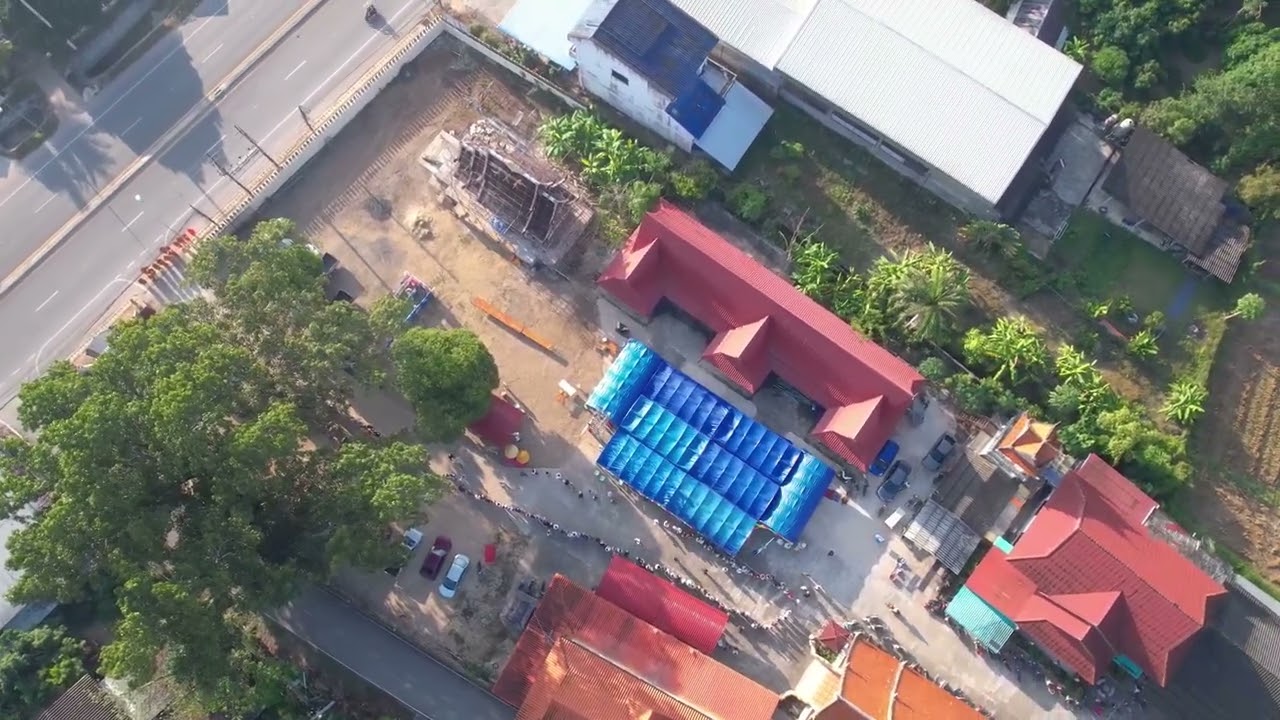
 Click to Access the Navigation Map GPS
Wat Pa Ji (Thung Luang) Map
Recommend

 Muang Chiang Mai(121)Chom Thong(47)Mae Chaem(25)Chiang Dao(33)Doi Saket(68)Mae Taeng(85)Mae Rim(69)Samoeng(29)Fang(71)Mae Ai(59)Phrao(70)San Pa Tong(105)San Kamphaeng(66)San Sai(73)Hang Dong(74)Hot(32)Doi Tao(22)Omkoi(11)Saraphi(74)Wiang Haeng(15)Chai Prakan(28)Mae Wang(32)Mae On(22)Doi Lo(34)Galyani Vadhana(1)


