
lovethailand home >North Travel Attractions >Chiang Mai Travel Attractions >Doi Lo >Santi Suk > Wat Nong Hoi Kao (Aram Nong Hoi Kao)
TL;DR: Wat Nong Hoi Kao (Aram Nong Hoi Kao), open Daily, hours 08.00 - 17.00.

Wat Nong Hoi Kao (Aram Nong Hoi Kao)
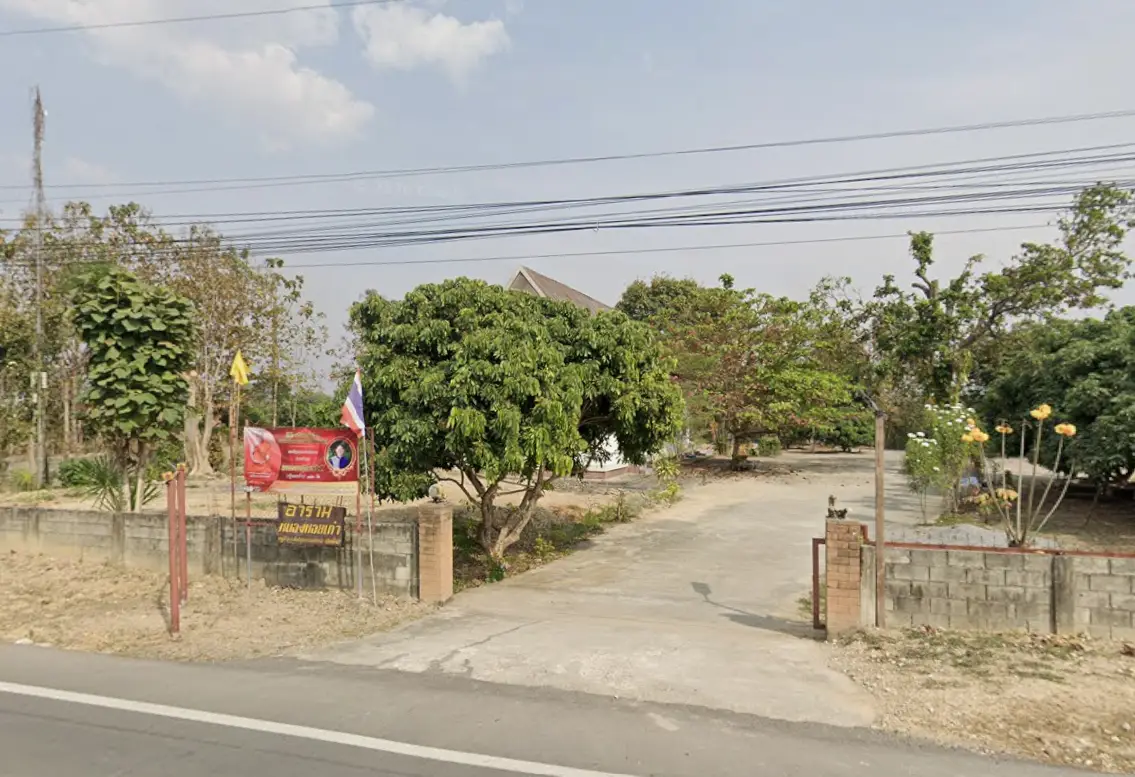
Open Days: Daily
Opening Hours: 08.00 - 17.00
Aram Nong Hoi Kao is a Maha Nikaya Buddhist monastic sanctuary in Ban Mae Taeng, Moo 8, Santi Suk Subdistrict, Doi Lo District, Chiang Mai Province 50160. Established around 1936, the sanctuary is closely connected with the history of the local village, the Lanna monastic tradition, and an annual Buddha-footprint bathing ceremony that remains part of the cultural program of Santi Suk Municipality. Aram Nong Hoi Kao is not a monumental tourist temple. Its importance comes from the community that created it, the monks who helped sustain it, and the continuing role it plays in local religious life.
Aram Nong Hoi Kao occupies approximately 3 rai, 1 ngan, and 65 square wah in Ban Mae Taeng. Current local records identify Ban Mae Taeng as Moo 8 of Santi Suk Subdistrict. Older documents may use different village numbers or list the area under Yang Khram Subdistrict and Chom Thong District because the administrative boundaries of the area changed over time. The sanctuary itself remained in the same local community while the official administrative names surrounding it evolved.
Understanding Ban Mae Taeng helps explain the character of the sanctuary. The western part of Santi Suk contains rural agricultural areas, hills, forests, and communities whose cultural life remains closely connected with Lanna traditions. A local Buddhist sanctuary therefore functions as more than a religious building. It can serve as a place for community ceremonies, family merit-making, collective memory, and the transmission of religious traditions between generations.
The origin of Aram Nong Hoi Kao is tied directly to the practical difficulties faced by villagers in the past. Before modern roads and transportation, residents had to travel considerable distances to make merit and participate in Buddhist ceremonies at temples in other communities. This was particularly difficult for older people, children, and families. Villagers therefore discussed establishing a small local religious site where Buddhist activities could take place closer to home.
During its early period, the site was known as Aram Nong Pu. Around 1936, Khruba Chaiya from Wat Khanthawat in the wider Chom Thong area came to help establish the religious site. He constructed a simple roofed pavilion where monks could stay during the Buddhist rains retreat and other periods. Although the first building was modest, it gave the community something it had previously lacked: a permanent place where monks could reside near the village.
In a rural community nearly a century ago, the presence of resident monks had major social significance. Monks provided more than ritual services. They taught Buddhist principles, advised families, led ceremonies, and served as spiritual figures whom villagers could approach without making a long journey. The establishment of the sanctuary therefore strengthened the social structure of Ban Mae Taeng as well as its religious life.
After Khruba Chaiya laid the foundation, his disciple Khruba Bunpan Panyo later helped care for the sanctuary. This transfer of responsibility through a teacher-disciple relationship reflects an important feature of Lanna monastic culture. Small rural religious sites often survived through networks of senior monks and their disciples long before formal transportation and temple administration became as developed as they are today.
During a later period, village headman Bunpan Chumjai and local Buddhist supporters continued to support the sanctuary. At that time, the community was recorded as Moo 11 of Yang Khram Subdistrict in Chom Thong District. Villagers invited Khruba In Intho, who was still a young monk, to assist with the care of the sanctuary.
Khruba In Intho later became closely associated with Buddhist communities across the southern part of Chiang Mai. His appearance in the history of Aram Nong Hoi Kao is therefore significant. It shows how younger monks traveled between communities and supported small religious sites that did not yet have a stable resident monastic community.
The continued existence of the sanctuary depended on cooperation between monks and lay residents. Villagers provided food, maintenance, materials, and support for Buddhist ceremonies, while monks provided spiritual leadership and continuity. The history of Aram Nong Hoi Kao is therefore not the story of a single founder but of a continuing relationship between the Sangha and Ban Mae Taeng.
Historical material later mentioned Phra Singkham Jakkawaro among the monks caring for the sanctuary. However, those records are now old, and no sufficiently recent public source confirms the present caretaker in 2026. The name should therefore be treated as part of the sanctuary's historical record rather than automatically presented as its current administrator.
The most clearly documented sacred feature today is the Buddha footprint. Santi Suk Municipality maintains an annual program specifically titled the Buddha-Footprint Bathing Tradition of Aram Nong Hoi Kao. The project was carried out in fiscal year 2025, confirming that the ceremony remains a living local tradition rather than merely a historical reference.
In Lanna Buddhist culture, bathing a Buddha footprint is an act of reverence and merit-making. The footprint functions as a symbolic reminder of the Buddha and provides a sacred focus for communal worship. The annual ceremony brings villagers together and gives younger generations an opportunity to participate in a ritual preserved by older members of the community.
Santi Suk Subdistrict supports similar annual traditions at several village temples and monastic sites, but Aram Nong Hoi Kao is distinctive because the local ritual centers on a Buddha footprint rather than a stupa. This makes the ceremony one of the clearest features distinguishing the sanctuary from other Buddhist sites in the subdistrict.
For Ban Mae Taeng residents, the annual ceremony connects the sanctuary's past with its present. The original religious site was created because earlier generations wanted a convenient place for merit-making. Today, descendants still return to the same sanctuary for a major community ritual. The continuity gives Aram Nong Hoi Kao a role that extends beyond architecture.
Santi Suk remains a predominantly Buddhist community with strong Lanna cultural traditions. Local religious sites are distributed among its villages, each serving as a spiritual and social center for a different community. Aram Nong Hoi Kao forms part of this wider network together with Wat Khanthawat, Wat Huai Din Chi, Wat Mai Nong Hoi, and other religious sites across the subdistrict.
Ban Mae Taeng also has a distinct rural character. Local development information identifies the area with hills and upland communities, while traditional economic activities include woodcarving. This wider cultural setting helps visitors understand the sanctuary as part of a living village rather than an isolated tourist landmark.
Current public sources do not provide enough reliable detail to assign specific construction dates or architectural descriptions to a vihara, ubosot, chedi, bell tower, sermon hall, or principal Buddha image at the sanctuary. Those details should therefore not be invented. The Buddha footprint and the annual bathing ceremony remain the most firmly documented religious focal point.
The sanctuary covers a relatively compact area, creating an intimate relationship with the surrounding village. Visitors should approach it as a community religious space built primarily for local Buddhist practice rather than as a large temple complex designed around tourism.
The most meaningful activities for visitors are paying respect at the Buddha footprint, making merit, and spending time quietly observing the sanctuary's setting. Visiting during the annual Buddha-footprint bathing ceremony provides the clearest view of the sanctuary's social role because the local community actively gathers around the site.
Travelers interested in local Buddhist history should pay particular attention to the connections among Khruba Chaiya, Khruba Bunpan Panyo, and Khruba In Intho. Their involvement illustrates the networks through which Lanna monks supported small rural communities. The monks did not remain only at their principal temples but traveled to communities that needed religious guidance and resident clergy.
The administrative history of the area also explains discrepancies in older addresses. Ban Mae Taeng was once associated with Yang Khram Subdistrict in Chom Thong District. Santi Suk Subdistrict was created in 1991 from villages formerly under Yang Khram, and Doi Lo later separated from Chom Thong. Today, the correct local administrative reference is Ban Mae Taeng, Moo 8, Santi Suk Subdistrict, Doi Lo District.
Published visitor information lists the sanctuary as open daily from 08.00 to 17.00. Because Aram Nong Hoi Kao is a community religious site rather than a ticketed tourist attraction, daytime visits are the most appropriate. Groups or visitors wishing to attend the annual ceremony should coordinate locally in advance.
No official admission fee is currently published. Visitors may make voluntary Buddhist merit donations as appropriate. Modest clothing is recommended, shoulders and knees should be covered, voices should be kept low, and private monastic areas should not be entered without permission.
No sufficiently recent public source confirms a current telephone number or present monastic caretaker. Visitors requiring advance arrangements should therefore contact Santi Suk Municipality or local Ban Mae Taeng community representatives rather than relying on older online contact information.
Getting There is easiest by private car or rental car. From central Chiang Mai, travel south through Hang Dong and San Pa Tong toward Doi Lo District, then continue into Santi Suk Subdistrict and Ban Mae Taeng, Moo 8. Using the full search name “Aram Nong Hoi Kao, Ban Mae Taeng, Doi Lo” is recommended to avoid confusion with other places using the name Nong Hoi.
The final section of the journey follows local roads through rural communities. Private transportation is considerably more practical than public transport, especially for travelers who want to combine the sanctuary with several nearby attractions.
Pha Chor in Mae Wang National Park is one of the strongest nearby natural attractions. The site is known for dramatic eroded earth cliffs and columns reached by a walking trail. Combining Aram Nong Hoi Kao with Pha Chor creates a route that includes both community culture and natural geology.
Wat Khanthawat in Ban Thung Pui is another meaningful stop because it is connected with Khruba Chaiya in the sanctuary's historical account. Visiting the two places together allows travelers to understand the historical monastic network behind the development of Aram Nong Hoi Kao.
Other nearby religious sites include Wat Pong Cho and Wat Mai Nong Hoi. Each developed within a different community context, making a multi-temple journey through Santi Suk useful for travelers interested in the diversity of village Buddhism.
Travelers with more time can continue to the Ganesha Museum in Doi Lo or extend the route toward Wiang Tha Kan in San Pa Tong. Such a full-day route can combine Buddhist history, local belief, art, archaeology, and rural landscapes.
Food and café options in Santi Suk include Tree Coffee, Kangbaancafe, Phupha Coffee Bar, Wan Cham Café, and Ran Ku Restaurant. Several are small local businesses, so checking same-day opening times is advisable.
Accommodation options in the wider Doi Lo area include De Aerng Boutique Hotel, Chiang Mai Inthanon Golf and Natural Resort, Huan Janto Homestay, Pimprajan Homestay, and Green Tree Resort. Staying locally is practical for travelers continuing toward Chom Thong, Doi Inthanon, Mae Wang, or San Pa Tong.
Aram Nong Hoi Kao is best suited to travelers interested in community heritage rather than monumental architecture. Its strongest themes are local Buddhist history, Lanna monastic networks, the Buddha-footprint tradition, and the development of a rural religious center created to meet the practical needs of villagers.
The sanctuary also demonstrates how small Buddhist institutions function in Lanna society. It began because villagers needed a place for religious practice closer to home. From that simple need grew a monastic presence, teacher-disciple networks, and an annual community ritual that remains part of local life.
Nearly nine decades after its establishment, Aram Nong Hoi Kao has lived through changes in monastic caretakers, administrative boundaries, roads, and village life. Its continuing Buddha-footprint bathing tradition provides the clearest evidence that the sanctuary still matters to Ban Mae Taeng.
The most rewarding way to visit Aram Nong Hoi Kao is therefore not to ask only what monuments there are to photograph, but to understand what the sanctuary represents. It records the efforts of earlier villagers, the work of Lanna monks, and the continuing determination of the community to preserve a shared religious tradition.
| Name | Aram Nong Hoi Kao |
| Type | Community Buddhist Monastic Sanctuary, Maha Nikaya Tradition |
| Current Location | Ban Mae Taeng, Moo 8, Santi Suk Subdistrict, Doi Lo District, Chiang Mai 50160, Thailand |
| Area | Approximately 3 rai, 1 ngan, 65 square wah |
| Established | Around 1936 |
| Founding Purpose | Created because villagers had difficulty traveling long distances to make merit and needed a Buddhist religious site closer to the community |
| Important Historical Monks | Khruba Chaiya, Khruba Bunpan Panyo, and Khruba In Intho |
| Historical Caretaker Record | Phra Singkham Jakkawaro appears in older records; current status is not sufficiently confirmed in 2026 |
| Main Sacred Feature | Buddha footprint used as the focal point of the sanctuary's annual tradition |
| Important Tradition | Annual Buddha-Footprint Bathing Tradition of Aram Nong Hoi Kao |
| Community Role | Religious center for Ban Mae Taeng, merit-making site, ceremony venue, and center for maintaining Lanna traditions |
| Local Heritage | Ban Mae Taeng is also associated with local woodcarving products |
| Open Days | Daily |
| Opening Hours | 08.00 - 17.00 |
| Admission Fee | No current official admission fee is publicly listed |
| Current Status | Active community religious site with an annual Buddha-footprint bathing tradition supported by Santi Suk Municipality |
| Travel Information | Drive south from Chiang Mai through Hang Dong and San Pa Tong toward Doi Lo, then continue to Santi Suk and Ban Mae Taeng, Moo 8. Private car or rental car is recommended. |
| Nearby Attractions | 1. Pha Chor, Mae Wang National Park 2. Pha Chor Tourist Center 3. Wat Khanthawat, Ban Thung Pui 4. Wat Pong Cho 5. Wat Mai Nong Hoi 6. Ganesha Museum |
| Restaurants And Cafés In The Area | 1. Tree Coffee 2. Kangbaancafe, Tel. +66 95 807 1166 3. Phupha Coffee Bar, Tel. +66 83 822 7403 4. Wan Cham Café 5. Ran Ku Restaurant, Tel. +66 88 285 5979 |
| Accommodation In Doi Lo And Nearby | 1. De Aerng Boutique Hotel, Tel. +66 61 316 0822 2. Chiang Mai Inthanon Golf and Natural Resort, Tel. +66 52 001 645 3. Huan Janto Homestay 4. Pimprajan Homestay, Tel. +66 90 885 1545 5. Green Tree Resort, Tel. +66 63 383 3183 |
Frequently Asked Questions (FAQ)
Q: Where is Aram Nong Hoi Kao located?
A: Aram Nong Hoi Kao is located in Ban Mae Taeng, Moo 8, Santi Suk Subdistrict, Doi Lo District, Chiang Mai Province 50160.
Q: When was Aram Nong Hoi Kao established?
A: The sanctuary was established around 1936, when Khruba Chaiya constructed a simple pavilion where monks could stay near the community.
Q: Why was Aram Nong Hoi Kao established?
A: Villagers previously had to travel long distances to make merit, so the community created a nearby religious site where Buddhist ceremonies and merit-making could take place more conveniently.
Q: What is the main sacred feature at Aram Nong Hoi Kao?
A: The Buddha footprint is the most clearly documented sacred feature and serves as the focus of the sanctuary's annual bathing ceremony.
Q: Which monks are important in the sanctuary's history?
A: Historical records mention Khruba Chaiya, Khruba Bunpan Panyo, and Khruba In Intho as monks who played important roles in the development and care of the sanctuary.
Q: What annual tradition is held at Aram Nong Hoi Kao?
A: The sanctuary holds an annual Buddha-footprint bathing tradition supported by Santi Suk Municipality as part of local cultural preservation.
Q: What are the opening hours?
A: Published visitor information lists opening hours as 08.00 to 17.00 daily. Visitors attending a ceremony or traveling in a group should confirm local arrangements in advance.
Q: What can be visited after Aram Nong Hoi Kao?
A: Nearby options include Pha Chor, Wat Khanthawat, Wat Pong Cho, Wat Mai Nong Hoi, and the Ganesha Museum, making the sanctuary easy to include in a cultural and nature itinerary around Doi Lo.
 Category: ●Places of Worship
 Group: ●Temple
Last Update : 1 MonthAgo
 Last Update : 1 MonthAgo
 Click to Access the Navigation Map GPS
Wat Nong Hoi Kao (Aram Nong Hoi Kao) Map
Recommend

 Muang Chiang Mai(121)Chom Thong(47)Mae Chaem(25)Chiang Dao(33)Doi Saket(68)Mae Taeng(85)Mae Rim(69)Samoeng(29)Fang(71)Mae Ai(59)Phrao(70)San Pa Tong(103)San Kamphaeng(66)San Sai(73)Hang Dong(73)Hot(32)Doi Tao(22)Omkoi(11)Saraphi(74)Wiang Haeng(15)Chai Prakan(28)Mae Wang(32)Mae On(22)Doi Lo(33)Galyani Vadhana(1)


