
lovethailand home >North Travel Attractions >Chiang Mai Travel Attractions >Doi Lo >Santi Suk > Wat Huai Din Chi
TL;DR: Wat Huai Din Chi, open Daily, hours 08.00 - 17.00. is a community Buddhist temple of the Maha Nikaya tradition located at 279 Moo 5, Ban San Nok Kaeo, Santi Suk Subdistrict, Doi Lo District.

Wat Huai Din Chi
Open Days: Daily
Opening Hours: 08.00 - 17.00
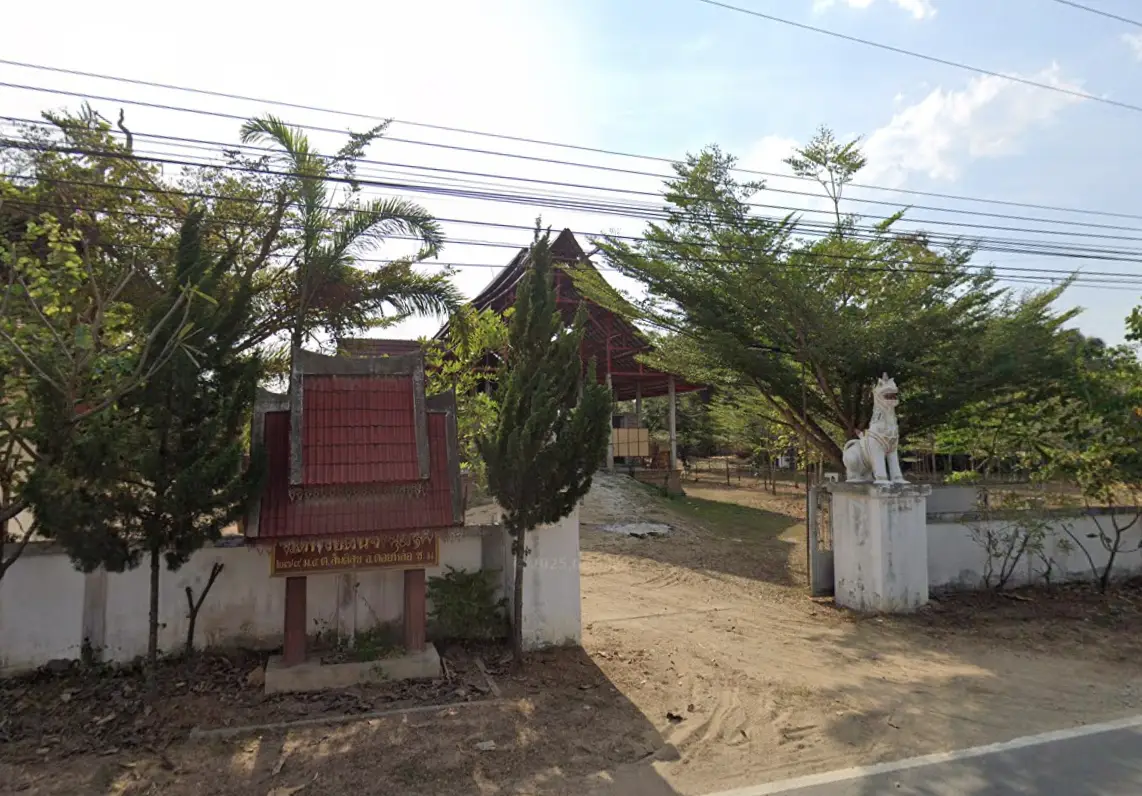
Wat Huai Din Chi is a community Buddhist temple of the Maha Nikaya tradition located at 279 Moo 5, Ban San Nok Kaeo, Santi Suk Subdistrict, Doi Lo District, Chiang Mai Province 50160. Its history combines several layers: memories of an older temple, a long period of abandonment, and a community-led restoration that began in 1971. Wat Huai Din Chi remains an active monastery today. Information for the 2026 kathin season identifies Phra Athikan Khrongtham Dhammathiro as the current abbot and records five monks residing at the temple during the rains retreat.
The cultural value of Wat Huai Din Chi comes less from monumental scale than from the story of how a village community reclaimed an abandoned religious site. Local temple history places the origins of an earlier monastery around 1796. The site was later neglected for such a long period that little physical evidence of the original structures remained. In 1971, residents of Ban San Nok Kaeo began clearing the abandoned grounds and rebuilding the monastery, beginning a new chapter in the religious life of the community.
The local residents named in the restoration account include Kamnan Det Luibunpeng, Ui Kham Ui Ai, Tip Kiang, Chan Nanophrom, Noi Chuen Wong-inta, and village headman Pan Surinta, together with other members of the Ban San Nok Kaeo community. They contributed labor and resources according to their means. The restoration was therefore not a large institutional development project but a grassroots effort by villagers who wanted to restore a Buddhist center for their own community.
Early structures constructed during the restoration period included a merit-making pavilion, a restroom building containing two toilets, and a two-storey wooden monks' residence. These practical buildings show how the community prioritized the essential functions of a working temple: space for religious gatherings, accommodation for monks, and basic facilities required for daily use.
In 1973, the Land Department issued a land-use certificate, recorded as document No. 6, covering approximately 6 rai, 2 ngan, and 67 square wah. Later temple information gives a larger area of 8 rai, 2 ngan, and 29 square wah. These figures come from different periods in the temple's development and together form part of the documented history of the property.
The abandoned site was historically known as Wat Rang Huai Lin Chi, or the abandoned Huai Lin Chi Temple. It was later re-established as a monastery where monks could reside and was renamed Wat Huai Din Chi. This earlier name is significant because it confirms that the religious landscape did not begin entirely in the 1970s. The villagers were restoring a sacred site remembered as an older temple rather than creating a completely new monastery on unused land.
Local residents have also traditionally called the temple Wat Huai Hin Tong. This name is associated with stone found around the area that was described as resembling laterite. Behind the temple, a stream passes through the landscape and is locally known as Huai Chang Tai, or “Dead Elephant Stream.” These place names connect the monastery closely with the natural environment and demonstrate a common northern Thai practice of naming settlements, temples, and localities after streams, landforms, vegetation, or memorable physical features.
The word “huai,” meaning a small stream or creek, is therefore more than a descriptive element in the temple's name. Small waterways historically shaped rural settlement, agriculture, and movement across northern Thailand. By preserving the word in the name Wat Huai Din Chi, the temple also preserves part of the environmental memory of Ban San Nok Kaeo.
Older records place the temple at 279 Moo 10, Ban San Nok Kaeo, Yang Khram Subdistrict, Chom Thong District, Chiang Mai. The current address is 279 Moo 5, Ban San Nok Kaeo, Santi Suk Subdistrict, Doi Lo District. The difference reflects administrative changes rather than relocation. Santi Suk Subdistrict was separated from Yang Khram in 1991. Doi Lo was then separated from Chom Thong and established as a minor district in 1995 before becoming a full district in 2007.
This administrative history is useful for travelers and researchers because historical documents may list Yang Khram and Chom Thong even though modern maps identify the site as Santi Suk and Doi Lo. Wat Huai Din Chi has remained in the Ban San Nok Kaeo area while the administrative names around it have changed.
Ban San Nok Kaeo is now Moo 5 of Santi Suk Subdistrict, one of nine villages in the subdistrict. The area remains predominantly rural and closely connected with agriculture and local road networks. Buddhism and Lanna cultural traditions continue to play a major role in community life. Wat Huai Din Chi is part of a network of local temples that includes Wat Nong Hiang, Wat Sila Mongkhon, Wat Khanthawat, Wat Mai Nong Hoi, and other religious sites across Santi Suk.
Wat Huai Din Chi received official permission to be established as a temple in 1984. The current temple registry records it under code 350240404 as a Maha Nikaya temple in Santi Suk Subdistrict, Doi Lo District, Chiang Mai Province, Moo 5. This registration provides a clear institutional link between the community restoration of the 1970s and the active monastery that exists today.
The temple received a royal grant of Wisungkhamsima in 1992. In Thai Theravada Buddhism, a Wisungkhamsima is an officially designated monastic boundary used for formal acts of the Sangha, particularly ordination. Receiving this status marked another important stage in the development of Wat Huai Din Chi after the villagers began restoring the abandoned site in 1971.
An especially important feature of the temple's cultural life is the annual Phra That bathing tradition. Santi Suk Municipality includes the Wat Huai Din Chi stupa-bathing tradition in its local cultural program, confirming that the monastery continues to function as a center for community heritage. In Lanna culture, bathing a sacred stupa combines Buddhist merit-making, reverence for sacred relics, and the gathering of residents around a shared religious tradition.
The ceremony has social importance in addition to its religious meaning. Temple festivals allow older and younger generations to meet, encourage residents who live outside the community to return, and preserve local ritual knowledge. The stupa-bathing tradition at Wat Huai Din Chi therefore helps maintain the relationship between the monastery, Ban San Nok Kaeo, and the wider Santi Suk community.
Wat Huai Din Chi also participates in the annual kathin tradition. For 2026, the kathin ceremony is scheduled for 15 November at 09.00. The same record lists five monks residing at the temple during the rains retreat. Kathin is one of the most important annual Buddhist events after the end of the monastic rains retreat and provides an opportunity for lay Buddhists to present robes and essential supplies to the Sangha.
The current abbot is Phra Athikan Khrongtham Dhammathiro, according to 2026 kathin information updated on 24 September 2026. This is important because older online material still names Phra Chaloem Chittasangwaro as abbot. Phra Chaloem belongs to an earlier period in the temple's history and should not be presented as the current administrator of the monastery.
The change of abbot illustrates the importance of separating historical records from current information. Wat Huai Din Chi has been active for many decades since its restoration, so several generations of monks and community leaders have been involved in its development. Updated information is essential for travelers seeking the current temple administration.
Structures specifically recorded from the early restoration period include the merit-making pavilion, the two-storey wooden monks' residence, and basic facilities. The later grant of Wisungkhamsima and the continued stupa-bathing tradition show that the temple developed further and includes sacred spaces used for formal Buddhist practice. However, current reliable sources do not provide enough detailed architectural documentation to assign exact construction dates or artistic classifications to every present-day building.
For visitors, the most meaningful way to experience Wat Huai Din Chi is to approach it as a living community monastery. Pay respect in the main religious area, observe the temple grounds quietly, and consider the history of the site as a restored monastery. If visiting during the Phra That bathing tradition, the role of the temple as a community cultural center becomes particularly visible.
The atmosphere is best suited to travelers interested in local Buddhist life rather than large commercial attractions. Ban San Nok Kaeo and Santi Suk retain a rural character, creating a very different experience from the heavily visited temples of Chiang Mai's Old City. Here, the monastery remains integrated into the everyday life of residents.
The 1971 restoration is central to understanding the temple's relationship with the community. Villagers themselves cleared the land, constructed religious buildings, and helped create the conditions for monks to return. This pattern reflects a core characteristic of many northern Thai village temples: the monastery exists through cooperation between the Sangha and local lay supporters.
In Lanna communities, a temple commonly serves as a spiritual center, a place for family merit-making, a venue for communal ceremonies, and a setting where traditions are transmitted from one generation to the next. At Wat Huai Din Chi, the stupa-bathing ceremony provides a particularly strong example of this function because the ritual requires participation from monks, community leaders, local government, and residents.
The natural landscape surrounding Ban San Nok Kaeo also helps explain the temple's names. Earlier residents used streams, stone deposits, forests, fields, and other recognizable features to describe and organize local space. The traditions surrounding Huai Chang Tai and the laterite-like stone known locally around the temple therefore preserve the way the community understood its environment.
The administrative development of the area adds another layer to the temple's history. When villagers restored the monastery in 1971, Ban San Nok Kaeo belonged to Yang Khram Subdistrict in Chom Thong District. Santi Suk became a separate subdistrict in 1991. Doi Lo was created as a minor district in 1995 and became a full district in 2007. Wat Huai Din Chi therefore remained in the same physical community while passing through several different administrative designations.
The land records also document different periods in the development of the temple. The 1973 land-use certificate refers to approximately 6 rai, 2 ngan, and 67 square wah, while later temple information records 8 rai, 2 ngan, and 29 square wah. Preserving both figures gives a more complete picture of the temple's property history than selecting only one period's measurement.
Visitors should dress modestly, covering shoulders and knees, and keep noise to a minimum around monks' living quarters and religious buildings. Residential monastic areas should not be entered without permission. During ceremonies such as the stupa-bathing tradition or kathin, travelers should follow local instructions and remember that these are community religious events rather than staged tourism performances.
Wat Huai Din Chi is particularly suitable for cultural travelers, visitors interested in abandoned and restored temples, people studying Lanna place names, and travelers seeking a quieter view of Buddhist life in rural Chiang Mai. Photography can be part of the visit, but respect for monks, residents, and active ceremonies should always come first.
A temple route through Santi Suk can include Wat Sila Mongkhon, Wat Nong Hiang, Wat Mai Nong Hoi, Wat Khanthawat, and Wat Pa Santi Suk. Visiting several temples in the same subdistrict reveals how each village developed its own religious center and how individual temple histories differ even within a relatively small geographical area.
Travelers can also continue to the Ganesh Museum in Doi Lo or extend the journey toward Wat Phra That Doi Noi and other attractions in southern Chiang Mai. A full-day route through Doi Lo, San Pa Tong, and Chom Thong can combine Buddhist heritage, community history, rural landscapes, and regional culture.
Small cafés and restaurants are available throughout Santi Suk and along the main roads of Doi Lo. Nearby options include Kangbaancafe, Phupha Coffee Bar, Ran Ku Restaurant, Wan Cham Café, Tree Coffee, and Rin Coffee at Doi Lo. Because many are small local businesses, travelers should check current opening hours on the day of travel.
Accommodation in and around Doi Lo includes Pimprajan Homestay, Huan Janto Homestay, Green Tree Resort, Bandin Resort, and Chiang Mai Inthanon Golf and Natural Resort. Staying in this area can be practical for travelers continuing south toward Chom Thong and Doi Inthanon or north toward San Pa Tong rather than returning to central Chiang Mai each evening.
Getting There is easiest by private car or rental car. From central Chiang Mai, travel south on the Chiang Mai-Hot route through Hang Dong and San Pa Tong toward Doi Lo District. Continue into Santi Suk Subdistrict and Ban San Nok Kaeo, Moo 5. Wat Huai Din Chi is associated with Rural Road 7009. Searching for “Wat Huai Din Chi, Santi Suk, Doi Lo” in navigation services helps distinguish it from similarly named places elsewhere.
First-time visitors should use the village and subdistrict names together with the temple name. Older documents may still list Yang Khram Subdistrict and Chom Thong District because they predate the creation of Santi Suk and Doi Lo. The current address is 279 Moo 5, Ban San Nok Kaeo, Santi Suk Subdistrict, Doi Lo District, Chiang Mai 50160.
Published visiting hours are 08.00 to 17.00 daily. Morning generally offers a quieter atmosphere and cooler weather. Travelers planning to participate in a ceremony, meet monks, or attend a festival should check the annual schedule because event times change according to the Buddhist calendar and local arrangements.
An older public listing gives the telephone number +66 86 192 9155, but this number is not sufficiently confirmed by current independent sources to be presented as the temple's active public contact in 2026. Travelers requiring advance coordination should contact Santi Suk Municipality or the Ban San Nok Kaeo community for updated contact information.
Wat Huai Din Chi therefore has value on several levels: the memory of an ancient temple dating in local tradition to around 1796, the long period of abandonment, the 1971 community restoration, the 1973 land documentation, official temple status in 1984, the 1992 Wisungkhamsima grant, and the continuation of stupa-bathing and kathin traditions today. Together, these layers show how religion, landscape, and community have shaped the monastery over time.
For travelers who want to understand Chiang Mai beyond its famous urban temples, Wat Huai Din Chi offers a useful window into rural Buddhist life in the southern part of the province. Its history is not centered on royal patronage or monumental architecture. Instead, it is the story of ordinary villagers clearing an abandoned sacred site, building basic monastic structures with their own resources, and sustaining traditions until the monastery once again became a community center.
From an abandoned site with few surviving structures to a monastery with five resident monks and an active abbot in 2026, Wat Huai Din Chi demonstrates the resilience of local Buddhist faith. Visitors gain the most from the experience when they look beyond the buildings and explore the stories of Ban San Nok Kaeo, the names Huai Din Chi and Huai Hin Tong, Huai Chang Tai, the community restoration, and the annual stupa-bathing tradition that continues to give the temple a distinctive identity within Doi Lo's cultural landscape.
| Name | Wat Huai Din Chi |
| Type | Community Buddhist Temple, Maha Nikaya Tradition |
| Temple Code | 350240404 |
| Current Location | 279 Moo 5, Ban San Nok Kaeo, Santi Suk Subdistrict, Doi Lo District, Chiang Mai 50160, Thailand |
| Historical Address | 279 Moo 10, Ban San Nok Kaeo, Yang Khram Subdistrict, Chom Thong District, Chiang Mai, before later administrative changes |
| Road Location | Rural Road 7009, Santi Suk Subdistrict, Doi Lo District |
| Early History | Local tradition places an earlier temple at the site around 1796. It was later abandoned until very little of the original construction remained. |
| Community Restoration | Residents of Ban San Nok Kaeo cleared the abandoned site and began rebuilding the monastery in 1971. |
| Former Abandoned-Temple Name | Wat Rang Huai Lin Chi |
| Local Alternative Name | Wat Huai Hin Tong |
| Local Name Origin | Associated with laterite-like stone formerly collected near the temple and a stream behind the monastery locally known as Huai Chang Tai. |
| Land Record In 1973 | Approximately 6 rai, 2 ngan, 67 square wah under land-use certificate No. 6 |
| Later Recorded Temple Area | 8 rai, 2 ngan, 29 square wah |
| Official Temple Establishment | 1984 |
| Wisungkhamsima | Royal grant received in 1992 |
| Early Restoration Structures | Merit-making pavilion, restroom building with two toilets, and one two-storey wooden monks' residence |
| Important Traditions | Wat Huai Din Chi Phra That bathing tradition supported by Santi Suk Municipality and annual post-rains-retreat kathin ceremonies |
| 2026 Kathin | 15 November 2026 at 09.00; five monks recorded during the rains retreat |
| Abbot | Phra Athikan Khrongtham Dhammathiro |
| Open Days | Daily |
| Opening Hours | 08.00 - 17.00 |
| Current Status | Active registered Maha Nikaya temple in Doi Lo District with resident monks and ongoing Buddhist activities in 2026 |
| Travel Information | Drive south from Chiang Mai on the Chiang Mai-Hot route through Hang Dong and San Pa Tong toward Doi Lo, then continue to Santi Suk and Ban San Nok Kaeo, Moo 5. Private car or rental car is the most convenient option. |
| Nearby Tourist Attractions | 1. Wat Sila Mongkhon, approximately 2 km 2. Wat Nong Hiang, approximately 3 km 3. Wat Mai Nong Hoi, approximately 4 km 4. Wat Khanthawat, approximately 5 km 5. Wat Pa Santi Suk, approximately 5 km 6. Ganesh Museum, approximately 7 km |
| Nearby Restaurants And Cafés | 1. Kangbaancafe, approximately 2 km, Tel. +66 95 807 1166 2. Phupha Coffee Bar, approximately 3 km, Tel. +66 83 822 7403 3. Ran Ku Restaurant, approximately 3 km, Tel. +66 88 285 5979 4. Wan Cham Café, approximately 4 km 5. Tree Coffee, approximately 5 km 6. Rin Coffee at Doi Lo, approximately 8 km, Tel. +66 89 953 8276 |
| Nearby Accommodations | 1. Huan Janto Homestay, approximately 3 km 2. Green Tree Resort, approximately 3.4 km 3. Pimprajan Homestay, approximately 4 km, Tel. +66 90 885 1545 4. Bandin Resort, approximately 7 km, Tel. +66 53 360 189 5. Chiang Mai Inthanon Golf and Natural Resort, approximately 12 km, Tel. +66 52 001 645 |
Frequently Asked Questions (FAQ)
Q: Where is Wat Huai Din Chi located?
A: Wat Huai Din Chi is located at 279 Moo 5, Ban San Nok Kaeo, Santi Suk Subdistrict, Doi Lo District, Chiang Mai Province 50160, along Rural Road 7009.
Q: When was Wat Huai Din Chi founded?
A: Local tradition places an older temple at the site around 1796. It later became abandoned before Ban San Nok Kaeo residents restored the site beginning in 1971. The monastery received official temple status in 1984.
Q: Why is Wat Huai Din Chi also called Wat Huai Hin Tong?
A: The local name is connected with laterite-like stone once collected around the area and with a stream behind the temple known locally as Huai Chang Tai. The names preserve the environmental memory of the community.
Q: Who is the current abbot of Wat Huai Din Chi?
A: Phra Athikan Khrongtham Dhammathiro is identified as the current abbot in 2026 kathin information.
Q: What important tradition is held at Wat Huai Din Chi?
A: The temple is associated with a Phra That bathing tradition supported by Santi Suk Municipality and also holds annual kathin activities after the Buddhist rains retreat.
Q: What are the opening hours of Wat Huai Din Chi?
A: Published visiting hours are 08.00 to 17.00 daily. Travelers attending a specific ceremony should confirm the annual event schedule before visiting.
Q: Why do older records list Wat Huai Din Chi in Chom Thong District?
A: Ban San Nok Kaeo was formerly part of Yang Khram Subdistrict in Chom Thong District. Santi Suk became a separate subdistrict in 1991, and Doi Lo was separated from Chom Thong as a minor district in 1995 before becoming a full district in 2007. The temple did not move; its administrative address changed.
Q: What nearby places can be combined with a visit to Wat Huai Din Chi?
A: A local route can include Wat Sila Mongkhon, Wat Nong Hiang, Wat Mai Nong Hoi, Wat Khanthawat, Wat Pa Santi Suk, and the Ganesh Museum in Doi Lo.
 Category: ●Places of Worship
 Group: ●Temple
Last Update : 1 MonthAgo
 Last Update : 1 MonthAgo
 Click to Access the Navigation Map GPS

 Muang Chiang Mai(121)Chom Thong(47)Mae Chaem(25)Chiang Dao(33)Doi Saket(68)Mae Taeng(85)Mae Rim(69)Samoeng(29)Fang(71)Mae Ai(59)Phrao(70)San Pa Tong(103)San Kamphaeng(66)San Sai(73)Hang Dong(73)Hot(32)Doi Tao(22)Omkoi(11)Saraphi(74)Wiang Haeng(15)Chai Prakan(28)Mae Wang(32)Mae On(22)Doi Lo(33)Galyani Vadhana(1)


