
lovethailand home >North Travel Attractions >Chiang Mai Travel Attractions >Doi Lo >Yang Khram > Wat Mai Phatthana
TL;DR: Wat Mai Phatthana is located at Ban Mai Phatthana, Moo 13, Yang Kram Subdistrict, Doi Lo District, Chiang Mai Province 50160. Highlights include A community-founded Buddhist temple closely associated with Ban Mai Phatthana and local Buddhist life.

Wat Mai Phatthana
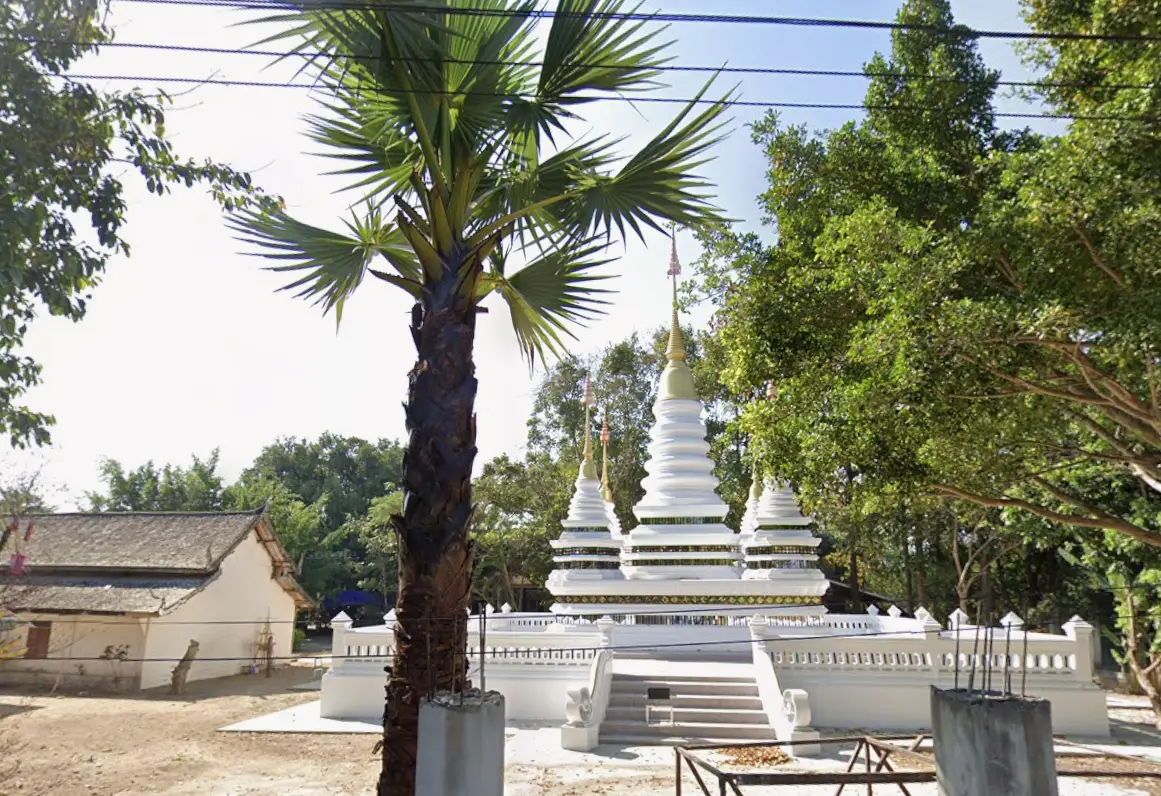
Operating day: Daily
Operating time: 08.00 - 17.00
Wat Mai Phatthana is a community Buddhist temple of the Maha Nikaya tradition in Ban Mai Phatthana, Moo 13, Yang Kram Subdistrict, Doi Lo District, Chiang Mai Province 50160. The temple is closely connected with the development of its village community. Permission to establish the temple was granted on January 27, 1988, and the Ministry of Education formally proclaimed it as a Buddhist temple on August 31, 1988. Wat Mai Phatthana remains listed in current Buddhist administrative records under temple registration code 350240309.
Travelers searching for Wat Mai Phatthana in Chiang Mai should understand that this is not a major tourist temple centered on monumental architecture or nationally famous sacred objects. Its value lies in its role as a functioning village temple and in the way its history illustrates the relationship between Buddhism and rural community life in southern Chiang Mai Province.
Historical temple records identify Mr. Duangchan Intun as the person who donated the land for the temple and submitted the applications for its construction and formal establishment. The original temple property covered approximately 3 rai and 16 square wah. This land donation demonstrates how local Buddhist institutions were often created through community faith and lay support.
Older records identify Wat Mai Phatthana as being in Yang Kram Subdistrict, Chom Thong District. Current records place it in Yang Kram Subdistrict, Doi Lo District. This difference reflects administrative boundary changes rather than a relocation of the temple. Today the temple is clearly registered within Doi Lo District, Chiang Mai Province.
The history of the religious community predates the formal establishment of the temple in 1988. Historical records identify Phra Chanthip Kittiyano as a monk responsible for the temple from 1971 to 1988, followed by Phra Phachern Siriwanno from 1989 onward according to the historical record. This chronology shows that monastic and religious activity existed before official administrative recognition was completed.
This pattern is common among village temples in northern Thailand. A community may first establish a religious space where monks reside and villagers gather for Buddhist activities. As the settlement grows, the site may acquire additional buildings, permanent facilities, and eventually formal temple status.
The name “Mai Phatthana,” which can be understood as “new development,” is directly associated with Ban Mai Phatthana. The temple's name therefore reflects the identity of the local settlement rather than an ancient royal legend or archaeological tradition.
Historical documentation lists several important structures at the temple: a wihan, sermon hall, monks' residences, multipurpose pavilion, and monks' dining hall. These buildings illustrate the practical organization of a community monastery. The wihan serves religious worship, the sermon hall supports Buddhist teaching and meetings, the monks' quarters provide accommodation, while the multipurpose pavilion and dining hall support everyday monastic and community activities.
Current information does not provide sufficient verification for specific details concerning an ubosot, chedi, sacred relic shrine, bell tower, or principal Buddha image. These features should therefore not be described as established highlights without reliable evidence. Visitors should instead focus on the documented history and community character of the temple.
Wat Mai Phatthana also has a connection with Buddhist education. Records from Thailand's monastic examination system have included monks or novice monks affiliated with the temple. This is important evidence that Wat Mai Phatthana has continued to participate in the educational life of the Thai Sangha rather than existing only as a name in historical documents.
Nak Tham Buddhist studies teach monks and novices Buddhist doctrine, monastic discipline, and other knowledge required for religious life. A village temple connected to this educational system therefore functions not only as a ceremonial site but also as an environment for transmitting Buddhist knowledge.
Wat Mai Phatthana belongs to the Buddhist administrative area of Yang Kram together with other temples such as Wat Nong Lua, Wat Yang Kram, Wat Si Sai Mun, Wat Chetawan, Wat Si Daen Mueang, Wat Don Chai, and Wat Ban Tham. This network reflects the traditional northern Thai pattern in which individual villages maintain their own Buddhist centers.
Because community temples are embedded in everyday village life, their importance is different from that of major tourism-oriented temples. They provide places for merit-making, Buddhist observances, monastic education, family ceremonies, and community gatherings. Wat Mai Phatthana should therefore be visited as a living religious place rather than simply as a sightseeing attraction.
The surrounding landscape of Yang Kram and Doi Lo is much less urban than central Chiang Mai. Agricultural areas, dispersed villages, and local temples continue to dominate the landscape. Travelers interested in rural culture may find this setting particularly valuable because it shows a side of Chiang Mai that differs considerably from the Old City, Nimman, and Doi Suthep.
Visitors should not expect a large archaeological complex. Instead, the main reason to visit Wat Mai Phatthana is to understand how a relatively modern village temple developed from community land donation into a recognized Buddhist institution with buildings for worship, teaching, monastic residence, and communal activities.
The temple can be combined with several nearby cultural sites. Ganesh Museum in Yang Kram is particularly close and contains a large collection of Ganesha images and material related to Hindu belief and iconography. Other nearby Buddhist sites include Wat Don Chai, Wat Si Sai Mun, and Wat Yang Kram.
Travelers with more time can continue to Pha Chor in Mae Wang National Park, located in Doi Lo District. Pha Chor is a distinctive eroded sediment formation with tall earth cliffs and pillars. Combining Pha Chor with the temples and cultural sites around Yang Kram creates a varied one-day itinerary covering Buddhism, community culture, religious art, and natural landscapes.
Getting There From central Chiang Mai, follow the Chiang Mai–Hot road south through San Pa Tong toward Doi Lo. From Doi Lo, continue into Yang Kram Subdistrict and Ban Mai Phatthana. A private car or rental vehicle is the most practical choice because temples, restaurants, and other attractions are spread across several villages.
The reference coordinates for Wat Mai Phatthana are approximately 18.54665, 98.81837. When using a navigation application, enter the full destination as “Wat Mai Phatthana, Yang Kram, Doi Lo, Chiang Mai,” because several Buddhist temples elsewhere in Thailand share the same name.
Visitors should wear modest clothing and keep noise to a minimum. Monks' residences are private areas and should not be entered without permission. Permission should also be requested before taking close photographs of monks, novices, or people participating in religious activities.
Current Buddhist records continue to list Wat Mai Phatthana as a Maha Nikaya temple in Moo 13, Yang Kram Subdistrict, Doi Lo District. This confirms that the temple remains part of the formal Buddhist administrative structure.
Reliable contemporary sources do not provide sufficiently consistent information for the temple's daily opening hours, admission arrangements, direct telephone number, or current abbot. These details are therefore not stated as facts. Travelers who wish to meet monks or access particular buildings should visit during normal daytime hours and ask locally upon arrival.
Wat Mai Phatthana is ultimately best appreciated as a community temple rather than a conventional tourist attraction. Its history records a local land donation, monastic leadership before formal recognition, official establishment in 1988, and the development of facilities serving both monks and villagers. For travelers interested in rural Buddhism and local culture in Chiang Mai, this provides a meaningful perspective on the continuing role of temples in everyday northern Thai life.
| Name | Wat Mai Phatthana |
| Temple Type | Community Buddhist Temple, Maha Nikaya Tradition |
| Location | Ban Mai Phatthana, Moo 13, Yang Kram Subdistrict, Doi Lo District, Chiang Mai Province 50160 |
| Coordinates | 18.54665, 98.81837 |
| Temple Registration Code | 350240309 |
| Buddhist Order | Maha Nikaya |
| History / Important Dates | Permission to establish the temple was granted on January 27, 1988; the Ministry of Education formally proclaimed it as a temple on August 31, 1988 |
| Land Donor | Mr. Duangchan Intun |
| Historical Site Area | Approximately 3 rai and 16 square wah |
| Name Origin | The temple shares its name with Ban Mai Phatthana, reflecting its close relationship with the village community |
| Historically Recorded Buildings | Wihan, sermon hall, monks' residences, multipurpose pavilion, and monks' dining hall |
| Historically Recorded Monastic Leadership | Phra Chanthip Kittiyano, 1971–1988; Phra Phachern Siriwanno from 1989 according to historical temple records |
| Highlights | A community-founded Buddhist temple closely associated with Ban Mai Phatthana and local Buddhist life |
| Community Role | Buddhist worship, religious education, monastic activities, and community gatherings |
| Current Status | Currently listed in the Maha Nikaya temple registry for Yang Kram, Doi Lo District, Chiang Mai |
| Travel Information | Travel south from Chiang Mai along the Chiang Mai–Hot road through San Pa Tong toward Doi Lo, then continue into Yang Kram and Ban Mai Phatthana. Private car or rental car is the most convenient option. |
| Nearby Tourist Attractions | 1. Ganesh Museum, about 1.6 km, Tel. 053-024287 2. Wat Don Chai, Yang Kram, about 2–3 km 3. Wat Si Sai Mun, Yang Kram, about 3–4 km 4. Wat Yang Kram, about 4–5 km 5. Pha Chor, Mae Wang National Park, about 12 km, Tel. 082-7658524 |
| Nearby Restaurants | 1. Huen Por Ooi, about 1.6 km, Tel. 065-4432201 2. Krua Khun Pook, about 1.7 km, Tel. 095-7367839 3. Ban Nok Khok Na Restaurant & Cafe, about 4.3 km, Tel. 065-4643993 4. Cowboy Coffee Doi Lo, about 5 km, Tel. 065-9964658 5. Huen Doi Lo Cafe, about 6.9 km, Tel. 083-2402611 |
| Nearby Accommodations | 1. Doi Lo Homestay Coff or Drunk, about 3.4 km, Tel. 096-6985875 2. Suan San Doi Resort, about 3.7 km 3. Baan Doi Lo, about 10.4 km 4. Chom Thong Boutique House, about 19 km, Tel. 081-5829889 5. B-tel Chom Thong Resort Chiang Mai, about 19.5 km, Tel. 098-7592003 |
Frequently Asked Questions (FAQ)
Q: Where is Wat Mai Phatthana located?
A: Wat Mai Phatthana is located in Ban Mai Phatthana, Moo 13, Yang Kram Subdistrict, Doi Lo District, Chiang Mai Province 50160.
Q: When was Wat Mai Phatthana established?
A: Permission to establish the temple was granted on January 27, 1988, and it was formally proclaimed a Buddhist temple on August 31, 1988.
Q: Who donated the land for Wat Mai Phatthana?
A: Mr. Duangchan Intun donated the land and submitted the applications for construction and formal temple establishment.
Q: What important buildings are recorded at Wat Mai Phatthana?
A: Historical records list a wihan, sermon hall, monks' residences, multipurpose pavilion, and monks' dining hall.
Q: Is Wat Mai Phatthana still active?
A: Yes. The temple remains listed in the current Maha Nikaya temple registry for Yang Kram, Doi Lo District, Chiang Mai.
Q: What makes Wat Mai Phatthana worth visiting?
A: The temple provides insight into the relationship between Buddhism and rural village life, including community land donation, monastic education, and the development of a local religious center.
Q: What attractions can be combined with a visit to Wat Mai Phatthana?
A: Nearby places include Ganesh Museum, Wat Don Chai, Wat Si Sai Mun, Wat Yang Kram, and Pha Chor in Mae Wang National Park.
Q: How do travelers reach Wat Mai Phatthana from Chiang Mai city?
A: Follow the Chiang Mai–Hot road south through San Pa Tong toward Doi Lo, then continue into Yang Kram Subdistrict and Ban Mai Phatthana. A private car or rental vehicle is the most convenient option.
 Category: ●Places of Worship
 Group: ●Temple
Last Update : 2 MonthAgo
 Last Update : 2 MonthAgo
 Click to Access the Navigation Map GPS

 Muang Chiang Mai(121)Chom Thong(47)Mae Chaem(25)Chiang Dao(33)Doi Saket(68)Mae Taeng(85)Mae Rim(69)Samoeng(29)Fang(71)Mae Ai(59)Phrao(70)San Pa Tong(103)San Kamphaeng(66)San Sai(73)Hang Dong(73)Hot(32)Doi Tao(22)Omkoi(11)Saraphi(74)Wiang Haeng(15)Chai Prakan(28)Mae Wang(32)Mae On(22)Doi Lo(33)Galyani Vadhana(1)


