
lovethailand home >North Travel Attractions >Chiang Mai Travel Attractions >Doi Lo >Santi Suk > Wat Pa Lan
TL;DR: Wat Pa Lan, open Daily, hours 08:00 - 17:00. is a historic community Buddhist temple of the Maha Nikaya order located at 132 Ban San Makha, Moo 1, Santi Suk Subdistrict, Doi Lo.

Wat Pa Lan
Open Days: Daily
Opening Hours: 08:00 - 17:00
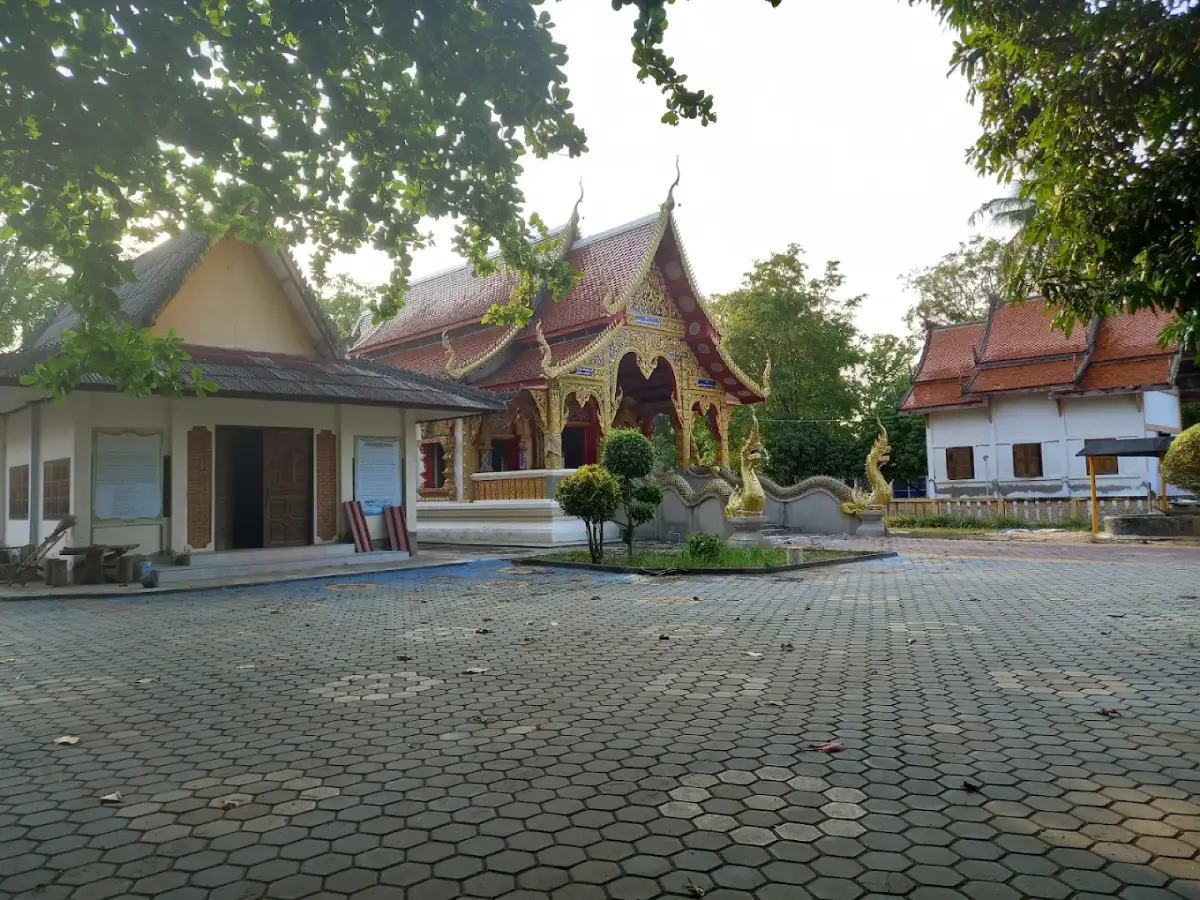
Wat Pa Lan is a historic community Buddhist temple of the Maha Nikaya order located at 132 Ban San Makha, Moo 1, Santi Suk Subdistrict, Doi Lo District, Chiang Mai Province 50160. The monastery is especially significant because its story reaches back to an abandoned sacred site that existed long before its twentieth-century restoration. Surviving evidence includes an old chedi, the remains and sacred boundary of an earlier ubosot, and stone boundary markers embedded around the ordination area. The site was once heavily overgrown with lan palms, bamboo, and other forest vegetation, leading local people to remember the abandoned sacred area as “Ku Pa Lan.”
Wat Pa Lan has passed through several administrative landscapes. Historically it was associated with Yang Kram in Chom Thong District. After local administrative boundaries changed and Santi Suk was separated from Yang Kram, the temple became part of Santi Suk Subdistrict. Doi Lo was established as a minor district in 1995 and became a full district in 2007. Today Wat Pa Lan belongs to Ban San Makha, Moo 1, Santi Suk, although the older description “Wat Pa Lan, Yang Kram” can still be found in historic records and some databases.
Santi Suk consists of nine villages: Ban San Makha, Ban Nong Hiang, Ban Thung Pui, Ban Sop Ao, Ban San Nok Kaeo, Ban Mai Nong Hoi, Ban Pong Cho, Ban Mae Taeng, and Ban Santi Suk. The subdistrict remains strongly connected with agriculture, village roads, irrigation systems, Buddhist temples, schools, and community institutions. Wat Pa Lan forms part of this living rural landscape rather than functioning as an isolated tourist attraction.
The earliest period in the history of Wat Pa Lan survives through local oral tradition. Elders remembered the site as an ancient abandoned monastery whose original foundation date was no longer known. An old chedi remained visible, at one stage with a tree growing through its structure, together with an old ordination area and stone boundary markers.
The abandoned grounds were densely covered with wild lan palms, bamboo, and other trees. Local residents were reluctant to enter the overgrown area and called the ruins “Ku Pa Lan.” In northern Thai usage, “ku” commonly refers to an ancient religious ruin, chedi, or sacred structure, while “pa lan” describes the grove of lan palms that once characterized the site.
The lan palm also has broader cultural associations with Buddhism in mainland Southeast Asia because palm leaves were historically used for Buddhist manuscripts. Although the local temple history does not state that palms from Wat Pa Lan were specifically used for manuscripts, the survival of the plant in the place name preserves an important memory of the original landscape.
A major revival began in 1917 when Kruba Phrom, abbot of Wat Nong Lua, recognized that nearby monastic communities lacked a suitable ubosot for formal Sangha ceremonies. He therefore led the restoration of the old ordination hall at Wat Pa Lan, rebuilding it to approximately the scale of the earlier structure.
The restoration continued for several years and was completed in 1920. The rebuilt ubosot allowed monks from surrounding monasteries to conduct formal Sangha ceremonies at Wat Pa Lan. After ceremonies were completed, the monks returned to their own temples because Wat Pa Lan still lacked a permanent resident monastic community.
The surviving stone boundary markers are an important part of this history. A Buddhist ordination hall requires a clearly defined sacred boundary for certain ecclesiastical acts. The stone markers around the ubosot therefore represent both religious function and physical evidence of the site's earlier monastic use.
Although the ubosot had been restored by 1920, Wat Pa Lan had not yet fully returned to life as a resident monastery. Its religious use was still primarily connected with monks traveling from surrounding temples to conduct formal ceremonies.
A second important revival took place under Kruba Chaiya, abbot of Wat Khanthawat. He saw Wat Pa Lan as an old abandoned monastery with a quiet environment well suited to meditation and Buddhist practice. He began staying at the site and gradually restored regular religious life there.
As increasing numbers of lay supporters came to make merit and practice meditation, the existing space became insufficient. Kruba Chaiya therefore led the construction of a viharn to provide an appropriate place for worship, merit-making, sermons, and meditation.
The viharn was modest in scale but suitable for the community of that period. Monks, novices, mae chi, and local laypeople came to practice at the temple, transforming Wat Pa Lan from an occasional ceremonial site into an active place of religious practice.
The viharn was completed in 1938. By this time Wat Pa Lan had regained a much fuller Buddhist role, serving both the Sangha and lay followers rather than simply preserving the remains of an abandoned sacred site.
Kruba Chaiya continued practicing at Wat Pa Lan until 1938, when he became seriously ill. Local supporters took him to Wat Thung Pui, now known as Wat Khanthawat, for treatment. He later passed away peacefully.
After his cremation, his ashes were returned to Wat Pa Lan and enshrined near the base of the old chedi. This made the chedi area significant not only as an archaeological and religious feature but also as a place of memory connected with the monk who helped restore the monastery's spiritual life.
The community remembers Kruba Chaiya as a monk devoted to proper Buddhist practice and as the first important resident monk of the modern revival period. His presence transformed the site into a place of meditation and community merit-making after a long period of abandonment.
The old chedi is therefore one of the most important features to see at Wat Pa Lan. It is the clearest surviving reminder that the sacred site existed before the documented twentieth-century restoration. Although its exact construction date and artistic period have not been established, its relationship with the old ubosot and boundary stones confirms the historic depth of the monastery.
Visitors should treat the chedi carefully and respectfully. Climbing on the base, moving old material, or entering restricted conservation areas should be avoided. Physical traces such as the chedi and boundary stones are irreplaceable parts of the temple's history.
The ubosot is important because of its direct connection with Kruba Phrom's restoration between 1917 and 1920. It restored Wat Pa Lan's ability to serve the surrounding Sangha for formal ecclesiastical ceremonies before a resident monastic community was re-established.
The viharn, by contrast, is closely connected with Kruba Chaiya and the return of lay Buddhist activity. It was created because growing numbers of residents needed a place to make merit, listen to teachings, and practice. Together, the ubosot and viharn represent two different stages in the revival of the temple.
Wat Pa Lan remains an active temple within the contemporary Buddhist administration of Santi Suk. National Buddhist administrative records group Wat Pa Lan with Wat Khanthawat, Wat Nong Hiang, Wat Huai Din Chi, Wat Silamongkhon, and Wat Mai Nong Hoi in the local Sangha structure.
The monastery has also participated in the Kathin system of Chiang Mai temples. Kathin is held after Buddhist Lent and brings lay supporters together to offer robes and financial support to resident monks and the monastery. The exact date changes each year.
A particularly important local tradition is the Wat Pa Lan relic-bathing ceremony. Santi Suk Municipality continues to support a community project for the annual bathing of the temple's sacred chedi or relic monument as part of its cultural preservation program.
This tradition connects historic architecture with living Buddhist practice. Residents come to pay respect, offer scented water, make merit, and participate in community activities. The old chedi is therefore not simply a surviving monument; it continues to function as a focus of local devotion.
The inclusion of the Wat Pa Lan relic-bathing tradition in Santi Suk's 2025 local cultural plan confirms the temple's continuing importance to the subdistrict. The municipality's support reflects a broader effort to preserve Lanna religious customs and community identity.
Other Buddhist observances include Makha Bucha, Visakha Bucha, Asalha Bucha, Buddhist Lent, the end of Lent, Kathin, forest-robe offerings, and regular merit-making on Buddhist holy days.
Ban San Makha and the wider Santi Suk community remain strongly connected with Buddhism and Lanna cultural traditions. Settlement is distributed along village roads and agricultural areas, with temples and schools forming important social centers. Wat Pa Lan therefore continues the classic role of a northern Thai community temple.
The publicly listed temple address is 132 Moo 1, Santi Suk, Doi Lo, Chiang Mai 50160. A published contact number is 053-367-312. Visitors planning ceremonies, group visits, or trips during major festivals can contact the temple in advance.
General visiting hours are daily from 08:00 to 17:00. No official admission charge is published. Wat Pa Lan remains a community monastery rather than a ticketed tourist attraction, and voluntary merit donations can be made according to local arrangements.
Visitors should dress modestly, remove shoes where required, speak quietly, and avoid disturbing monks or worshippers. Particular care should be taken around the old chedi, ubosot, boundary stones, and any areas used for ceremonies.
Historic stone markers and older architectural remains should not be handled, moved, or interpreted casually as belonging to a particular artistic period without documentary evidence. The temple has undergone several phases of restoration, and the present structures may contain material from different periods.
The old name “Ku Pa Lan” also reveals how nature and religious memory shaped local perception. During the abandoned period, the sacred ruins were hidden in a dense grove and were regarded as an isolated place. Once monks returned and restoration began, the same forest setting became valued for meditation and Buddhist practice.
The transformation from abandoned ruins to an active monastery occurred gradually: first through the restoration of the ubosot, then through regular meditation practice, the construction of the viharn, and finally the renewal of community traditions. This long process is central to understanding the temple.
Kruba Phrom's contribution lay in restoring formal Sangha use of the site, while Kruba Chaiya helped re-establish resident religious practice and lay devotion. Their work represents two complementary stages in the revival of Wat Pa Lan.
The construction of the viharn under Kruba Chaiya demonstrates how growing lay support transformed the monastery. As more monks, novices, mae chi, and villagers came to practice, the temple required a dedicated communal worship space.
The modern relic-bathing ceremony completes this historical cycle. A chedi that once stood overgrown in an abandoned grove now serves again as a focus of public merit-making and cultural preservation.
Getting There from Chiang Mai city is straightforward by private vehicle. Follow Highway 108 south through Hang Dong and San Pa Tong into Doi Lo District, then continue toward Santi Suk Subdistrict and Ban San Makha, Moo 1.
When using navigation, search for “Wat Pa Lan, Santi Suk, Doi Lo, Chiang Mai.” Searching only for “Wat Pa Lan” can lead to confusion because several temples in Chiang Mai share the same name, including other Wat Pa Lan temples within Doi Lo District.
Wat Khanthawat, also known as Wat Thung Pui, is one of the most meaningful nearby temples because it is directly connected with the history of Kruba Chaiya. Visiting the two monasteries together provides important context for his role in the revival of Wat Pa Lan.
Wat Silamongkhon is another useful stop and also maintains a local relic-bathing tradition supported through Santi Suk's cultural program. Together, the temples provide insight into the importance of sacred chedi traditions in local Lanna Buddhism.
Wat Nong Hiang and Wat Huai Din Chi belong to the same local Buddhist network, while Wat Pa Santi Suk represents the Dhammayut tradition and offers a different monastic atmosphere within the same subdistrict.
Travelers interested in broader cultural attractions can continue to the Ganesha Himal Museum in Yang Kram, which contains a large collection of Ganesha images and related art.
Food and café options in Santi Suk include Phupha Coffee Bar, Tel. 083-822-7403; Ran Ku, Tel. 088-285-5979; Tree coffee; Pa Mon made-to-order restaurant; and Suan Koson.
Accommodation options include Pimprajan Homestay, Tel. 090-885-1545; Baan Suan Pa Tiang, Tel. 085-887-7383; Huan Janto Homestay - Metta; Baan tide; and Bandin Resort, Tel. 053-360-189.
A practical half-day itinerary can begin at Wat Pa Lan in the morning, allowing time to see the chedi, ubosot, stone boundary markers, and viharn before continuing to Wat Khanthawat and Wat Silamongkhon. A full-day route can add Wat Nong Hiang, Wat Huai Din Chi, Wat Pa Santi Suk, or the Ganesha Himal Museum.
The cultural strength of this route comes from the connections between the temples. Wat Khanthawat is associated with Kruba Chaiya, Wat Pa Lan preserves an old chedi and stone boundary markers, and Wat Silamongkhon and Wat Pa Lan both maintain relic-bathing traditions.
Wat Pa Lan demonstrates that the meaning of an “old temple” does not depend only on a known founding date. Physical remains, oral tradition, monastic restoration, and continuing community use can together preserve a much deeper historical story.
Kruba Phrom restored the temple's formal ecclesiastical function, while Kruba Chaiya restored its role as a place of meditation and lay devotion. These two stages transformed an abandoned ruin into a living Buddhist monastery.
The relic-bathing tradition continues that transformation today. A chedi once covered by vegetation and surrounded by an abandoned grove has again become a sacred center where the community gathers for Buddhist merit-making.
On an ordinary day, Wat Pa Lan is suitable for quiet worship, local history, and reflection. During the relic-bathing festival or Kathin season, visitors can experience the temple as an active center of Lanna community life.
Wat Pa Lan is therefore much more than an old chedi and restored ubosot. Its history moves through abandonment, restoration, meditation practice, community revival, and the preservation of living Buddhist traditions. From “Ku Pa Lan” hidden within an overgrown grove to an active monastery in Ban San Makha today, the temple presents one of the more distinctive community histories in Doi Lo.
For travelers exploring southern Chiang Mai, Wat Pa Lan is a worthwhile cultural stop for understanding the relationship between Buddhist monuments, monks, village communities, Lanna traditions, and changing administrative landscapes. A respectful visit offers both historical depth and a direct view of how local Buddhism continues to function in the present.
| Name | Wat Pa Lan |
| Historic Names | Wat Pa Lan (Yang Kram), Ku Pa Lan |
| Temple Type | Community Buddhist Temple, Maha Nikaya |
| Current Address | 132 Ban San Makha, Moo 1, Santi Suk Subdistrict, Doi Lo District, Chiang Mai 50160, Thailand |
| Early History | Ancient abandoned monastery of unknown original date with an old chedi, ubosot remains, and stone boundary markers |
| Ubosot Restoration | Led by Kruba Phrom of Wat Nong Lua from 1917 to 1920 |
| Meditation Revival | Kruba Chaiya of Wat Khanthawat established regular practice and community religious activity at the temple |
| Viharn | Built for monks, novices, mae chi, and lay supporters; completed in 1938 |
| Important Features | Old chedi, ubosot, stone boundary markers, viharn, and the memorial area containing Kruba Chaiya's ashes near the chedi |
| Important Traditions | Relic-bathing ceremony, Kathin, and major Buddhist holy-day activities |
| Contact Number | 053-367-312 |
| Open Days | Daily |
| Opening Hours | 08:00 - 17:00 |
| Admission | No official admission fee is published |
| Getting There | Follow Highway 108 south from Chiang Mai through Hang Dong and San Pa Tong into Doi Lo District, then continue to Ban San Makha, Moo 1, Santi Suk. Search for “Wat Pa Lan, Santi Suk, Doi Lo, Chiang Mai.” |
| Current Status | Active temple in the Santi Suk Sangha area with a continuing community relic-bathing tradition |
| Nearby Tourist Attractions | 1. Wat Khanthawat (Wat Thung Pui) 2. Wat Silamongkhon 3. Wat Nong Hiang 4. Wat Huai Din Chi 5. Wat Pa Santi Suk 6. Ganesha Himal Museum |
| Nearby Restaurants And Cafés | 1. Phupha Coffee Bar, Tel. 083-822-7403 2. Ran Ku, Tel. 088-285-5979 3. Tree coffee 4. Pa Mon Made-To-Order Restaurant 5. Suan Koson |
| Nearby Accommodations | 1. Pimprajan Homestay, Tel. 090-885-1545 2. Baan Suan Pa Tiang, Tel. 085-887-7383 3. Huan Janto Homestay - Metta 4. Baan tide 5. Bandin Resort, Tel. 053-360-189 |
Frequently Asked Questions (FAQ)
Q: Where is Wat Pa Lan located today?
A: Wat Pa Lan is located at 132 Ban San Makha, Moo 1, Santi Suk Subdistrict, Doi Lo District, Chiang Mai 50160.
Q: Why is the temple sometimes called Wat Pa Lan, Yang Kram?
A: The temple historically belonged to the Yang Kram area. After Santi Suk was separated as a new subdistrict, Wat Pa Lan became part of Santi Suk, although older records still sometimes retain the Yang Kram designation.
Q: When was Wat Pa Lan originally built?
A: The original foundation date is unknown. The site was already an ancient abandoned monastery with a chedi, old ubosot, and stone boundary markers before the documented restoration began in 1917.
Q: Who restored Wat Pa Lan?
A: Kruba Phrom of Wat Nong Lua led the restoration of the ubosot from 1917 to 1920. Kruba Chaiya of Wat Khanthawat later revived meditation practice and led construction of the viharn, completed in 1938.
Q: What are the main historic features?
A: Important features include the old chedi, ubosot, stone boundary markers, viharn, and the memorial area near the chedi where Kruba Chaiya's ashes were enshrined.
Q: What is the main temple tradition?
A: The relic-bathing ceremony is one of the temple's most important local traditions and continues to receive support through Santi Suk's cultural preservation program.
Q: What are the opening hours?
A: Wat Pa Lan is generally open daily from 08:00 to 17:00. No official admission fee is published.
Q: What nearby places can be combined with Wat Pa Lan?
A: Nearby options include Wat Khanthawat, Wat Silamongkhon, Wat Nong Hiang, Wat Huai Din Chi, Wat Pa Santi Suk, and the Ganesha Himal Museum.
 Category: ●Places of Worship
 Group: ●Temple
Last Update : 1 MonthAgo
 Last Update : 1 MonthAgo
 Click to Access the Navigation Map GPS

 Muang Chiang Mai(121)Chom Thong(47)Mae Chaem(25)Chiang Dao(33)Doi Saket(68)Mae Taeng(85)Mae Rim(69)Samoeng(29)Fang(71)Mae Ai(59)Phrao(70)San Pa Tong(103)San Kamphaeng(66)San Sai(73)Hang Dong(73)Hot(32)Doi Tao(22)Omkoi(11)Saraphi(74)Wiang Haeng(15)Chai Prakan(28)Mae Wang(32)Mae On(22)Doi Lo(33)Galyani Vadhana(1)


